





Henrik Aulbach is an experienced health editor with over 10 years of experience, an expert in plant-based active ingredients and cultivation, co-founder, book author, and freelance health writer since 2020.
Learn more about this author here .

Herbal sedatives
Inner restlessness, tension, nervousness, but also anxiety and problems falling or staying asleep: herbal s...
Inner restlessness, tension, nervousness, but also anxiety and problems falling or staying asleep: herbal sedatives have proven themselves as an alternative to conventional, mostly prescription medications for some complaints.
Too often, we strain our nerves by demanding too much from ourselves. The enormous stress brought by our modern lifestyle is not made for humans.
Herbal sedatives, on the other hand, are the perfect remedy, especially since they usually have no or fewer side effects than synthetic drugs. For problems falling asleep, the dragees offer effective help. The medicinal plants used in our film-coated tablets not only help with sleep disorders but also support restful sleep. A real alternative to sleeping pills! These herbal sedatives can also be used as traditional herbal medicines.
BALDRIPARAN supports calming with coated tablets. The filling of the valerian root capsules we sell takes place in Germany. Our selection of herbal sedatives is suitable for various applications. The portfolio ranges from soft capsules to calming dragees and hard capsules. Depending on tolerance, individual tinctures can also be used.
Alternative products from KLOSTERFRAU, KYTTA SEDATIVUM, Sedacur Forte, Pascoflair, LASEA soft capsules, and Lioran often offer similar options, depending on availability. Bach flower therapy for children in globule form is also a herbal sedative. Many German providers have successfully established themselves in the field of herbal sedatives in recent years. It is also important to consider the manufacturer's non-binding price recommendation to choose the right medicine for the right use.

Hildegards Tipp:
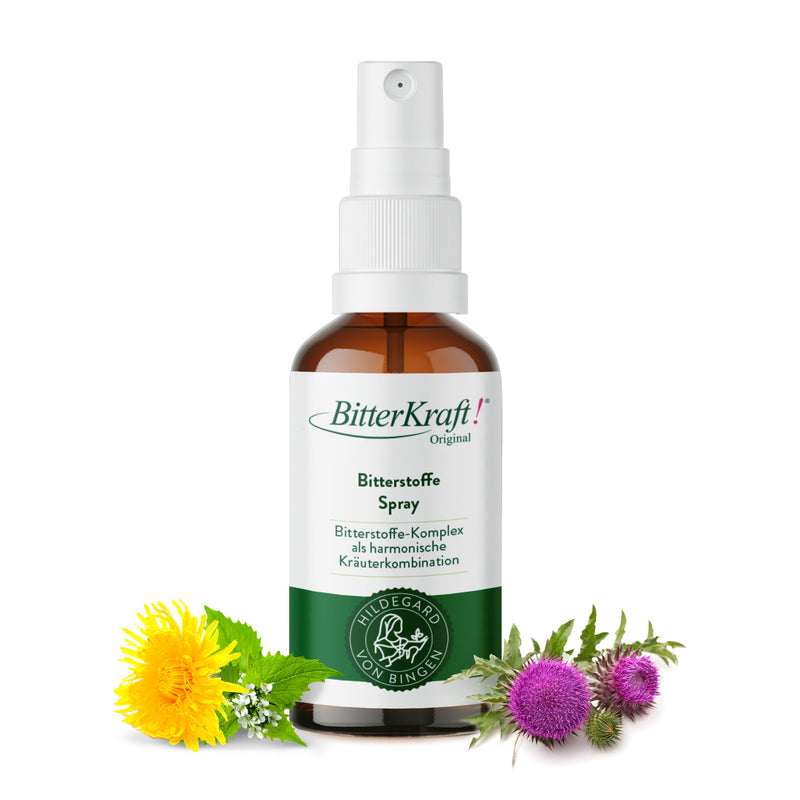
- Precious bitter drops based on Hildegard von Bingen's formula, in a convenient spray bottle—ideal for on the go
- A recipe based on 800 years of monastic knowledge
- Used by 4,000 alternative practitioners
- The Best in Natural Medicine: Organic & Vegan
How natural sedatives work
Natural sedatives work gently, unlike synthetically produced preparations. They have a wide range of effectiveness: some remedies can help with falling asleep, while others calm the nerves. Some natural sedatives are good at dissolving inner restlessness.
Relevant side effects are clearly more the exception than the rule with herbal remedies. There is no potential for addiction, which is often the case with many synthetic drugs. Herbal preparations are also available over the counter, which reflects their good tolerability.
The specific mode of action of natural sedatives is, unlike conventional medicine drugs, less well researched so far. However, scientific findings already suggest a sedative and anxiolytic (anxiety-reducing) effect for some plants. This applies especially to the plants Valerian, Hops, St. John's Wort, Passionflower and Lemon balm.
With natural sedatives, the effect usually does not occur after the first dose. Therefore, a little patience is needed. It usually takes up to two weeks before you feel the first effects.
It is quite interesting that conventional medicine drugs act very specifically, while plant-based active ingredients fulfill multiple effects. For example, lemon balm can have a calming and sleep-promoting effect. You can drink a good lemon balm tea if you want to fall asleep or relax. Sleep tablets, however, are only suitable for bedtime.
Lemon balm can also have antibacterial effects, possibly help with depression, or even relieve headaches. The modes of action are therefore very versatile, although the possible antidepressant effect is probably not very strong.
The advantages of natural sedatives
Furthermore, natural sedatives such as plants and herbs can be found directly in the nature around us or in the garden. Their gentle effect often proves to be an advantage as well. Unlike strong sedatives, they do not reduce performance.
Additionally, humans have lived side by side with these herbs for thousands of years and have consumed them for all kinds of ailments. Our bodies are therefore more or less designed to receive herbs and plant-based active ingredients, quite the opposite of synthetic medications.
Early humans fed on about 500 herbs and wild plants in their immediate surroundings. The plants in Central Europe differed significantly from those in, for example, East Asia. Today, humans worldwide consume roughly 17 cultivated plants. Many plant-based active ingredients that have accompanied us for millennia are thus lost.
Opportunities and limitations of herbal sedatives
Sedation is an effect that can be reliably achieved with medications, considering possible side effects, contraindications, interactions, and the like. The key word here is "reliably." The active ingredient in sedative medication has proven its effects through complex studies and tests. This is usually not the case with herbal sedatives. Knowledge of their effects is based on centuries—sometimes even millennia—of experience. However, this does not replace scientific proof.
Nevertheless, many herbal sedatives can be classified as (traditional herbal) medicines or phytotherapeutics. However, they must have approval under EU law to do so. Herbal sedatives are also available without this approval, for example as tea or dietary supplements.
Typical natural sedatives
Many plants and herbs in nature can serve as natural sedatives. These include:
- Valerian is certainly the best-known natural sedative and is primarily used for sleep problems. This effect seems to stem from valerian increasing GABA production while simultaneously inhibiting its breakdown.
- Hops are also said to have a sedative effect according to studies, best used in combination with valerian. This is attributed to a melatonin-like mode of action.
- Lemon Balm can contribute to relaxation and is recommended as a natural remedy for nervousness and restlessness.
- True St. John's Wort is considered a herbal antidepressant due to its mood-enhancing effects. It is also prescribed as a natural sedative for difficulty falling asleep, nervousness, and mild excitability.
- Passionflower herb is said to help treat nervous restlessness and irritability associated with sleep disorders. Since the herb can also lower blood pressure and relieve cramps, this natural sedative helps you even more.
- Lavender is used in phytotherapy as a herbal sedative. Lavender is especially favored in phytotherapy for nervous restlessness or anxious states.
- Chamomile is also a valued sedative in phytotherapy. Chamomile tea is already present in millions of households.
By the way: These effects are documented in the Monograph List of the EU Commission E. This list includes possible phytotherapeutic uses of various herbs and plants.
Often, the number of studies is limited
It should be noted, however, that all the herbal sedatives mentioned here often show significant effects in studies. Among the most convincing are valerian root alone, valerian root combined with hop cones, and St. John's wort. The other herbal sedatives, like the various combination options, are less researched, so only limited statements can be made about their possible effects.
Proper use of herbal sedatives
Because every person can react differently to herbal sedatives, we recommend consulting a doctor if you want to use herbal remedies as sedatives. This way, you can ensure that no complications occur.
At the next level, you need the highest quality preparation possible. Stiftung Warentest has scrutinized manufacturers of supposed herbal sedatives. It turned out that valerian root seems to be the most effective. Stiftung Warentest also found that only a certain preparation with a dry extract actually seems to help. Other capsules or valerian tablets showed no effect or were deemed "limited suitability." So be sure to check where you get your herbal sedatives from!
Herbal sedatives: Frequently asked questions
What complaints can be treated with natural sedatives?
Officially none. Herbal sedatives are used within phytotherapy. The EU publishes a monograph list of Commission E (phytotherapy), which regulates the corresponding areas of application. In connection with herbal sedatives, dissolving inner tension or nervousness is mentioned.
Are there known side effects when taking herbal sedatives?
Some of the natural sedatives listed can also have side effects. For example, if you want to take lavender oil capsules, you should consult a doctor first. Lavender oil can be very strong and cause side effects, so a doctor's visit is recommended.
How long does it usually take for natural sedatives to become noticeable?
It depends entirely. Some notice effects after the first use. Usually, a herbal remedy must be taken for several days to weeks before it becomes noticeable. However, it is also possible that you experience no improvement from herbal sedatives.
Are herbal sedatives also suitable for children or pregnant women?
Only your doctor can tell you that. Pregnant and breastfeeding women should always consult a doctor before taking any medication. The fetus or embryo can be very sensitive to substances taken. The same applies to children; you should also visit a doctor beforehand.

About the author Henrik Aulbach
Weitere Artikel

Stomach bitters before eating: Why the order is crucial
Stomach bitters before meals » According to Hildegard von Bingen ✓ No additives ✓ Made in Germany – Learn more now

Bitter-rich Smoothies: Green Recipes for Starting Digestion in the Morning
Bitter Compound Smoothies for the Morning » According to Hildegard von Bingen ✓ Vegan ✓ No Additives – Discover Recipes Now!

Hildegard von Bingen's Spelt Recipes for Healthy Digestion
Hildegard von Bingen's Spelt Recipes » According to Hildegard von Bingen ✓ No Additives ✓ Organic Certified – Discover Now


