

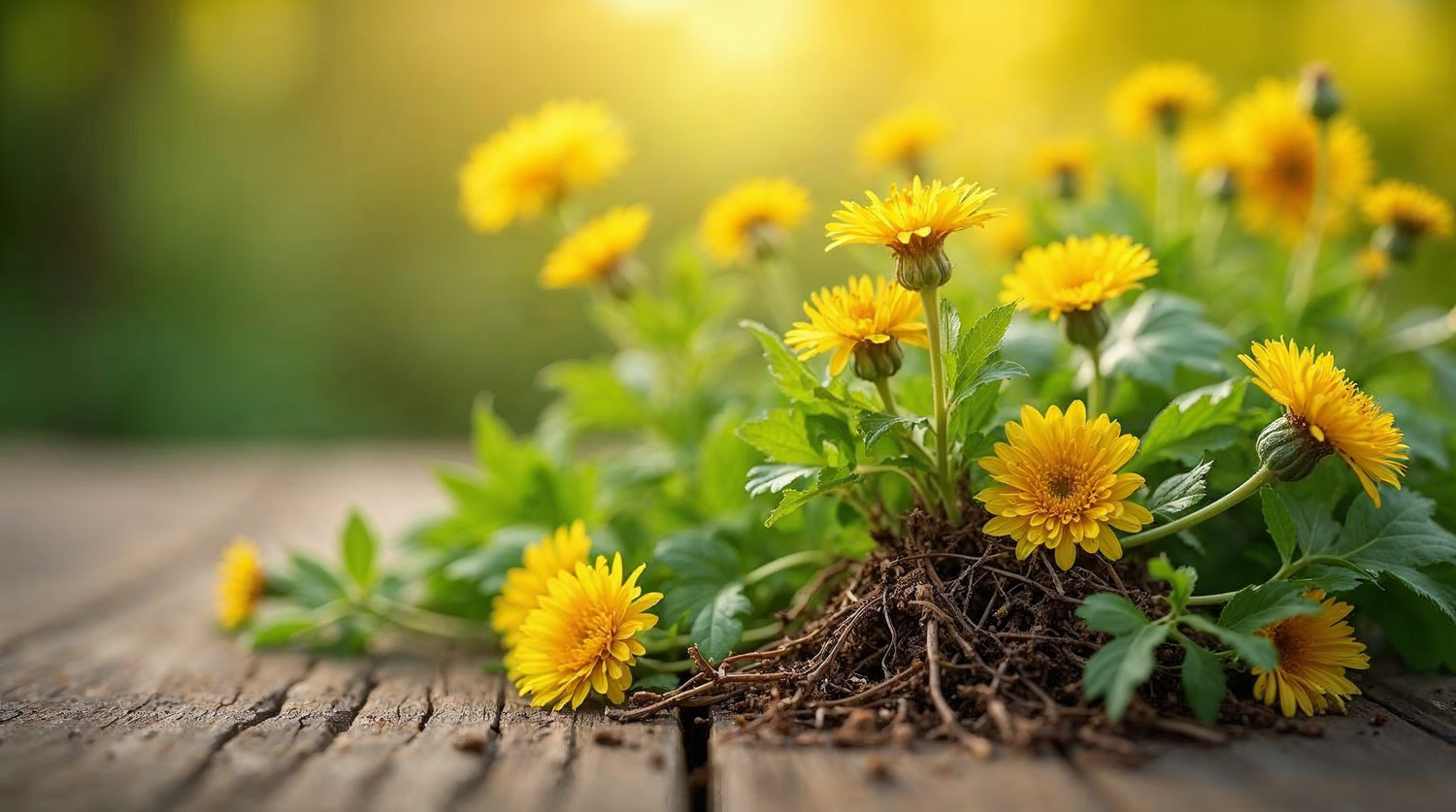
Wer morgens mit einem Glas grünem Smoothie in den Tag startet, folgt einem Ritual, das tiefer wurzelt als jeder moderne Ernährungstrend. Bereits in der Klostermedizin des Mittelalters wussten Kräuterkundige um die besondere Kraft der bitteren Pflanzenstoffe – und nutzten sie bewusst als tägliche Begleitung für ein ausgeglichenes Wohlbefinden. Heute erleben diese jahrhundertealten Erkenntnisse eine Renaissance: Grüne Smoothies mit Bitterpflanzen wie Löwenzahn, Rucola oder Schafgarbe sind nicht nur nährstoffreich, sondern verbinden moderne Ernährungsfreude mit dem traditionellen Wissen unserer Vorfahren. In diesem Artikel zeigen wir, wie du Bitterstoffpflanzen geschmackvoll in deine Morgenroutine integrierst – für einen bewussten Start in den Tag, der sich gut anfühlt.
Warum Bitterstoffe am Morgen besonders geschätzt werden
Das Morgenritual hat in der Naturheilkunde seit jeher einen besonderen Stellenwert. Nicht ohne Grund begann der Tag in mittelalterlichen Klöstern oft mit bitteren Kräutertinkturen oder Kräutertees – lange bevor die erste Mahlzeit eingenommen wurde. Die Idee dahinter: Der Körper ist nach einer langen Nacht in einem besonderen Zustand, und das bewusste Einleiten des Tages mit bestimmten Pflanzenritualen galt als Ausdruck von Fürsorge für sich selbst. Bitterpflanzen spielten dabei eine zentrale Rolle, da sie traditionell als „weckende" Begleiter des Morgens galten – kulturhistorisch verankert in nahezu jeder Kräutermedizin der Welt.
Bitterstoffpflanzen wie Löwenzahn, Schafgarbe und Enzian werden seit Jahrhunderten traditionell als morgendliche Begleiter geschätzt – ein Wissen, das von der Klostermedizin bis in die moderne Naturheilkunde überliefert wurde.
Hildegard von Bingen, die bedeutende Äbtissin und Kräuterkundige des 12. Jahrhunderts, beschrieb in ihren Schriften die Bedeutung der Bitterkeit als natürliches Korrektiv für den menschlichen Körper. In ihrer Vorstellung war Bitterkeit kein unangenehmes Übel, sondern ein notwendiges Prinzip der Natur, das dem Menschen hilft, sein inneres Gleichgewicht zu wahren. Hildegard von Bingen Produkte Sie empfahl verschiedene Bitterkräuter als Teil eines bewussten Tagesrhythmus – ein Gedanke, der sich erstaunlich gut mit modernen Ernährungskonzepten deckt, die Bitterstoffpflanzen als wertvolle Ergänzung einer ausgewogenen Ernährung sehen.
Das Besondere an einem bitterstoffreichen Smoothie am Morgen liegt auch in seiner sensorischen Qualität. Während wir unsere Geschmacksknospen heutzutage meist an Süße und Umami gewöhnt haben, ist der Bittergeschmack evolutionär einer der ältesten Signale unseres Körpers. Ihn bewusst und in angenehmer Dosierung – eingebettet in fruchtige, cremige Smoothie-Kombinationen – zu erleben, kann als achtsames Ritual den Tagesbeginn auf eine besondere Art prägen. Es ist kein Genuss im Übermaß, sondern ein bewusstes „Hinzufügen" einer Geschmacksdimension, die in unserem Alltag oft fehlt.
„Wer den bitteren Geschmack meidet, meidet einen Teil der Natur." – sinngemäß nach Hildegard von Bingen, Physica, 12. Jahrhundert. Die Äbtissin betrachtete Bitterstoffe als natürliches Prinzip, das zum Gleichgewicht des Menschen beiträgt.
Die besten Bitterpflanzen für deinen grünen Morgen-Smoothie
Nicht jede Bitterpflanze eignet sich gleich gut für den Smoothie-Mixer – Geschmack, Verfügbarkeit und die Kombination mit anderen Zutaten spielen eine entscheidende Rolle. Die gute Nachricht: Die Natur bietet eine erstaunliche Vielfalt an Bitterstoffpflanzen, von denen viele im eigenen Garten wachsen oder auf dem Wochenmarkt zu finden sind. Das Wissen um diese Pflanzen ist tief in der europäischen Kräutertradition verwurzelt und wird seit Generationen weitergegeben. BitterKraft Original
Diese Bitterpflanzen eignen sich ideal für grüne Smoothies:
- Löwenzahn (Taraxacum officinale): Eines der bekanntesten Bitterkräuter der europäischen Kräutertradition – Blätter und Blüten werden seit Jahrhunderten traditionell verwendet und lassen sich wunderbar in frische Smoothies integrieren.
- Rucola (Eruca sativa): Die würzig-bittere Rauke ist nicht nur ein Salatklassiker, sondern auch im Smoothie ein aromatischer Bitterstofflieferant mit langer Kultivierungsgeschichte in der mediterranen Kräucherküche.
- Schafgarbe (Achillea millefolium): Historisch eines der meistgeschätzten Kräuter der Volksmedizin – in der Klostermedizin als vielseitige Bitterpflanze bekannt; junge Blätter geben Smoothies eine fein-herbe Note.
- Chicorée / Wegwarte (Cichorium intybus): Verwandt mit dem Bittergemüse Chicorée, wird die Wegwarte in der Kräutertradition seit der Antike geschätzt; die milden Blätter lassen sich gut mit Früchten kombinieren.
- Artischockenblätter (Cynara scolymus): In der europäischen Naturheilkunde traditionell bekannt – als Blattextrakt oder frisch püriert geben sie dem Smoothie eine charakteristisch grüne, leicht herbe Tiefe.
- Brennnessel (Urtica dioica): Blanchiert oder als junges Blatt geerntet verliert die Brennnessel ihren Stich – als mineralstoffreiches Bitterkraut ist sie seit Jahrhunderten ein fester Bestandteil der Frühjahrskur in der europäischen Volksmedizin.
Wichtig beim Umgang mit frischen Bitterpflanzen: Qualität und Herkunft machen den Unterschied. Wer Kräuter aus dem eigenen unbehandelten Garten oder von zertifizierten Biohöfen bezieht, profitiert von einer möglichst naturbelassenen Pflanzenkraft. Wildkräuter sollten nur aus sicheren, schadstofffreien Gebieten gesammelt werden – und stets mit sicherer botanischer Bestimmung, denn nicht alle ähnlich aussehenden Wildpflanzen sind für den Verzehr geeignet.
Was steckt hinter Bitterstoffen?
Bitterstoffe – botanisch als Iridoide, Sesquiterpenlactone, Alkaloide oder Flavonoide – sind sekundäre Pflanzenstoffe, die Pflanzen als natürliche Schutzstrategie entwickelt haben. In der menschlichen Ernährung sind sie seit Jahrtausenden präsent: In Löwenzahn stecken Taraxacin und Taraxacerin, in der Schafgarbe Achillin, in der Wegwarte Lactucopikrin. Diese Verbindungen sind es, die dem Bittergeschmack sein charakteristisches Profil verleihen – und die in der Kräutertradition als wertvolle Pflanzenbestandteile geschätzt werden. Darm- und Verdauungsprodukte
Vier grüne Smoothie-Rezepte mit Bitterstoffpflanzen
Die Kunst des bitterstoffreichen Smoothies liegt im Gleichgewicht: Wer zu viel Bitterkeit auf einmal einsetzt, verschreckt den Gaumen – wer zu wenig verwendet, verpasst das Erlebnis. Die folgenden Rezepte sind so zusammengestellt, dass die Bitternote angenehm integriert ist und durch Süße, Säure und Cremigkeit harmonisch eingebettet wird. Sie eignen sich besonders gut als Morgenritual und können je nach Saison und persönlichem Geschmack variiert werden. Fasten-Produkte
Die goldene Smoothie-Regel für Bitterpflanzen: Mit einer kleinen Menge starten und langsam steigern – der Gaumen gewöhnt sich schrittweise an die Bitternote und lernt sie als angenehm zu empfinden.
Rezept 1: „Löwenzahn-Morgen" – der klassische Frühlingssmoothe
Zutaten (für 1 Portion): 1 Handvoll frische Löwenzahnblätter, 1 reife Banane, 1 Apfel (entkernt), Saft einer halben Zitrone, 200 ml Wasser oder ungesüßter Apfelsaft, optional: 1 TL Honig.
Zubereitung: Alle Zutaten in den Hochleistungsmixer geben und cremig pürieren. Sofort genießen. Tipp: Im Frühjahr sind Löwenzahnblätter besonders jung und mild – ideal für Einsteiger in die Bitterstoffwelt.
Rezept 2: „Grüner Waldrand" – Rucola trifft Kiwi
Zutaten: 2 Handvoll Rucola, 2 reife Kiwis (geschält), 1 Birne, 1 cm frischer Ingwer, 200 ml Kokoswasser.
Zubereitung: Alle Zutaten glatt pürieren. Die natürliche Säure der Kiwi balanciert die Rucola-Bitterkeit wunderbar aus – der Ingwer verleiht eine wärmende, belebende Note, die in der Klostermedizin ebenfalls hochgeschätzt war.
Rezept 3: „Klostergarten-Grün" – Schafgarbe & Apfel
Zutaten: 4–5 junge Schafgarbenblätter (sparsam dosieren – kräftig im Geschmack!), 2 Äpfel (entkernt), 1 Handvoll Babyspinat, Saft einer Orange, 150 ml Wasser, 1 TL gemahlene Leinsamen.
Zubereitung: Alle Zutaten mixen und sofort trinken. Schafgarbe ist intensiv bitter – für Einsteiger empfiehlt sich zunächst 1–2 Blätter. Dieses Rezept ist eine direkte Hommage an das Kräuterwissen mittelalterlicher Klostergärten.
Rezept 4: „Goldgrüner Morgen" – Brennnessel & Mango
Zutaten: 1 Handvoll junge Brennnesselblätter (blanchiert und abgekühlt, oder gefroren), 1 reife Mango, Saft einer halben Limette, 200 ml Mandelmilch (ungesüßt), 1 TL Kurkumapulver, Prise schwarzer Pfeffer.
Zubereitung: Pürieren und direkt genießen. Die süß-tropische Mango macht die Brennnessel-Bitterkeit praktisch unsichtbar – während Kurkuma eine goldene Farbe und ein weiteres traditionell geschätztes Pflanzenprofil einbringt.
Smoothie-Tipp aus der Praxis: Wer keinen Zugang zu frischen Wildkräutern hat, kann auf hochwertige Kräuterpulver in Bio-Qualität zurückgreifen – etwa getrocknetes Löwenzahnblatt, Artischockenblatt-Pulver oder Schafgarbenpulver. Ein halber bis ein Teelöffel reicht aus, um den Smoothie bitterstoffreich zu gestalten, ohne den Geschmack zu dominieren. Wichtig: Auf zertifizierte Bio-Qualität und seriöse Bezugsquellen achten.
Bewusstes Morgenritual: So integrierst du Bitterstoff-Smoothies nachhaltig in deinen Alltag
Ein Ritual entfaltet seine Wirkung nicht durch einmaligen Enthusiasmus, sondern durch beständige Wiederholung. Das wussten bereits die Mönche und Nonnen der mittelalterlichen Klöster, die ihre täglichen Kräuterpraktiken als festen Rhythmus des Lebens verstanden – nicht als medizinische Maßnahme, sondern als Ausdruck einer bewussten Lebensführung. Genauso kann der tägliche Bitterstoff-Smoothie zu einem kleinen, wertvollen Anker werden, der den Tag mit Intention beginnt. Hildegard von Bingen Produkte
Rituale wirken durch Regelmäßigkeit: Wer seinen Morgen-Smoothie konsequent zur gleichen Zeit und mit derselben Achtsamkeit zubereitet, schafft eine nachhaltige Gewohnheit, die weit über die Inhaltsstoffe hinauswirkt.
Praktisch bedeutet das: Den Smoothie am besten immer zum gleichen Zeitpunkt einplanen – idealerweise vor oder zum ersten Frühstück, wenn der Körper nach der Nachtruhe aus dem Fastenzustand tritt. Die Zubereitung selbst kann als bewusstes, medikatives Ritual gestaltet werden: Kräuter sorgfältig auswählen, die Farben und Aromen wahrnehmen, beim Trinken kurz innehalten. Das ist keine Esoterik, sondern schlichte Achtsamkeit, wie sie auch in der Klostermedizin als Teil des Heilungskonzepts galt. Hildegard von Bingen betonte stets, dass Essen und die Auswahl von Lebensmitteln ein bewusster Akt sein sollten – eine Haltung, die erstaunlich zeitgemäß klingt.
Für die nachhaltige Integration empfehlen sich einige praktische Strategien: Erstens sollte man mit einer einzigen Bitterpflanze beginnen – etwa Löwenzahn oder Rucola – und diese wöchentlich in den Smoothie integrieren, bevor weitere Bitterstoffe hinzugefügt werden. Zweitens lohnt es sich, saisonale Verfügbarkeiten zu nutzen: Im Frühling locken frische Wildkräuter, im Herbst und Winter können getrocknete Kräuterpulver einspringen. Drittens ist die Kombination mit einer Morgenroutine hilfreich – etwa nach dem Aufstehen und vor der ersten Tasse Kaffee oder Tee. Diese Abfolge gibt dem Ritual Struktur und macht es wahrscheinlicher, dass es dauerhaft beibehalten wird. Immunsystem-Produkte
Wer tiefer in die Welt der Bitterstoffpflanzen eintauchen möchte, findet in der umfangreichen Tradition der Klostermedizin eine unerschöpfliche Quelle der Inspiration. Von der einfachen Wegwarte am Wegesrand bis zum kultiviert angebauten Artischockenblatt – die Natur bietet ein reiches Repertoire, das darauf wartet, wieder entdeckt zu werden. Und der Morgen-Smoothie ist ein wunderbar niedrigschwelliger Einstieg: Er ist schnell zubereitet, schmeckt mit der richtigen Kombination ausgezeichnet und verbindet uraltes Kräuterwissen mit modernem Lebensstil – ganz ohne Kompromisse.
In einer Übersichtsarbeit zur Geschichte der europäischen Kräutermedizin (Wölk & Gründwald, 2018, Zeitschrift für Phytotherapie) wird festgehalten, dass bitterstoffreiche Pflanzen in nahezu allen traditionellen Heilsystemen Europas als tägliche Nahrungsergänzung empfohlen wurden – nicht als Medizin, sondern als bewusstes Lebensmittel im Sinne von „Lebensmittel als Lebensgestaltung".
Qualität & Einkauf: Worauf du bei Bitterstoffpflanzen achten solltest
Die beste Rezeptur ist nur so gut wie ihre Zutaten – das gilt für die Küche ebenso wie für die Naturheilkunde. Bei Bitterstoffpflanzen ist die Qualitätsfrage besonders relevant, denn viele wertvolle sekundäre Pflanzenstoffe sind empfindlich gegenüber falscher Lagerung, langen Transportwegen oder dem Einsatz von Pestiziden. Wer wirklich von der traditionellen Pflanzenkraft profitieren möchte, sollte auf zertifizierte Bio-Qualität setzen – und wenn möglich, auf regionale oder selbst angebaute Quellen zurückgreifen. alle Bitterkraft Produkte
Beim Kauf von getrockneten Kräutern oder Kräuterpulvern gilt es, auf einige Punkte zu achten: Erstens sollte das Produkt eine erkennbare Herkunftsangabe tragen und möglichst aus kontrolliert biologischem Anbau (kbA) stammen. Zweitens sind Schontrocknung und schonende Verarbeitung wichtig, da zu hohe Temperaturen flüchtige Pflanzenstoffe zerstören können. Drittens sollte das Produkt frei von künstlichen Zusatzstoffen, Trennmitteln oder Füllstoffen sein – besonders relevant bei Kapseln und Extrakten. Ein vertrauenswürdiger Anbieter gibt diese Informationen transparent an.
Für frische Wildkräuter gilt: Lieber weniger und sicher als viel und unbekannt. Wer sich nicht sicher ist, welche Pflanze er vor sich hat, sollte auf Bestimmungsbücher oder geführte Kräuterwanderungen zurückgreifen. Viele Volkshochschulen und Naturheilkunde-Verbände bieten solche Führungen an – ein wunderbarer Einstieg in die Welt der heimischen Wildkräuter. Im eigenen Garten lassen sich viele Bitterstoffpflanzen übrigens problemlos kultivieren: Löwenzahn, Schafgarbe und Brennnessel wachsen fast von selbst, während Artischocken und Chicorée als Gartenpflanzen mit wenig Aufwand zu kultivieren sind.
Qualitätsmerkmal auf einen Blick:
✓ Zertifizierter Bio-Anbau (EU-Bio, Demeter oder Naturland)
✓ Erkennbare Herkunftsangabe und Charge
✓ Schonende Trocknung (unter 40 °C für empfindliche Pflanzenstoffe)
✓ Frei von Rieselhilfen, Füllstoffen und künstlichen Aromen
✓ Möglichst kurze Lieferkette – regional bevorzugen
Diese Kriterien gelten für Teekräuter, Kräuterpulver und Pflanzenextrakte gleichermaßen.
Abschließend sei gesagt: Der Einstieg in die Welt der Bitterstoffpflanzen muss weder teuer noch kompliziert sein. Ein Bund Rucola vom Wochenmarkt, eine Handvoll Löwenzahnblätter aus dem Garten oder ein Glas getrockneter Brennnessel aus dem Naturkostladen – das sind alles zugängliche, alltagstaugliche Einstiegspunkte. Was zählt, ist die Regelmäßigkeit und die Freude an der Entdeckung dieser oft unterschätzten Pflanzenwelt. Die Tradition ist groß, die Vielfalt ist enorm, und der nächste grüne Smoothie mit Bitterstoffkraft wartet schon auf dich. Leber-Produkte von Bitterkraft

Hinterlasse einen Kommentar
Diese Website ist durch hCaptcha geschützt und es gelten die allgemeinen Geschäftsbedingungen und Datenschutzbestimmungen von hCaptcha.