

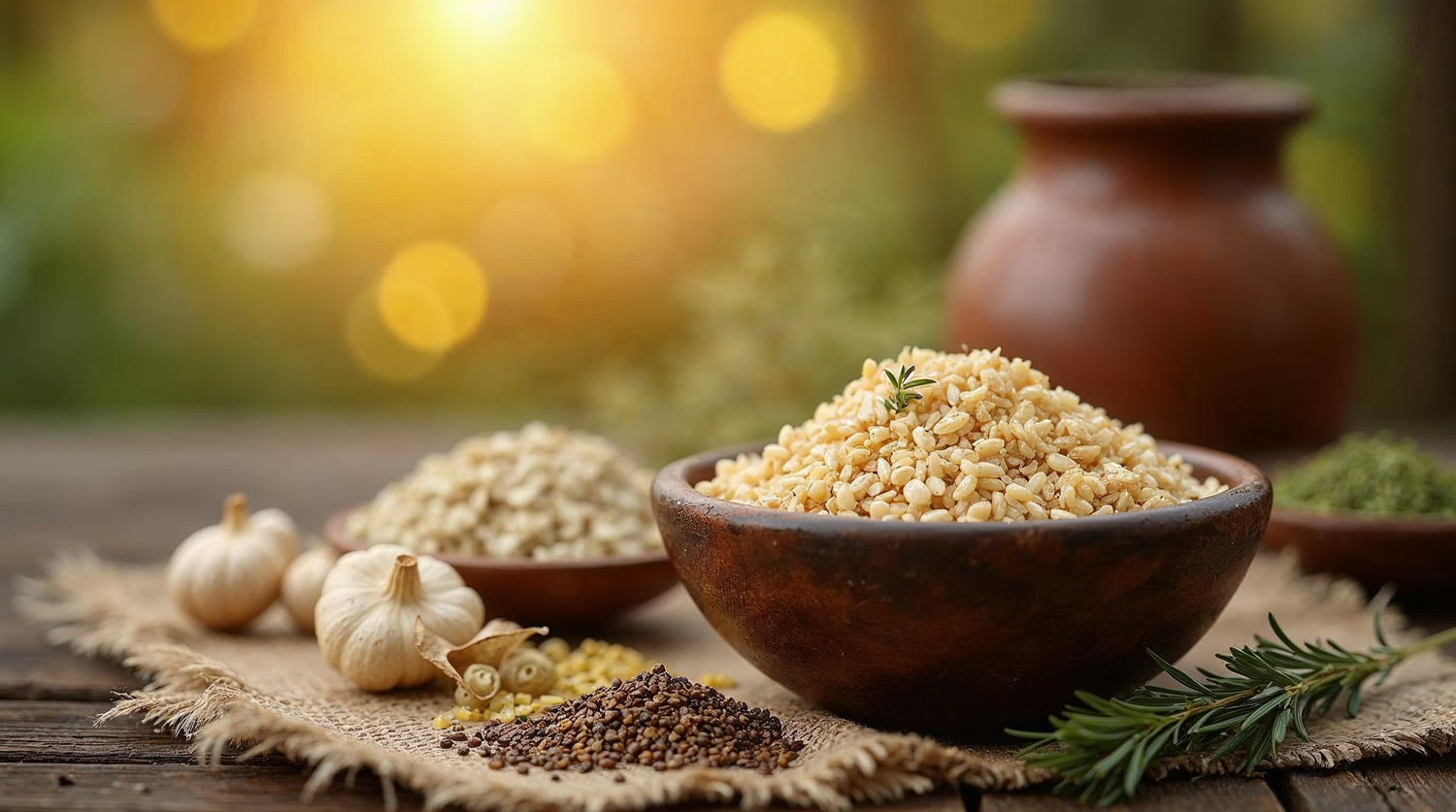
Wer sich mit traditioneller Klostermedizin beschäftigt, stößt unweigerlich auf eine der faszinierendsten Persönlichkeiten des Mittelalters: Hildegard von Bingen. Die Äbtissin, Mystikerin und Naturheilerin des 12. Jahrhunderts hinterließ uns ein Werk, das bis heute nichts von seiner Strahlkraft verloren hat. Besonders bemerkenswert ist ihre tiefe Überzeugung, dass Dinkel – das „Urgetreide" aus den Feldern des Abendlandes – eine Schlüsselrolle für das körperliche Wohlbefinden spielt. Ihre Aufzeichnungen in Physica und Causae et Curae sind bis heute Quelle der Inspiration für alle, die sich für Naturheilkunde und eine bewusste Ernährungsweise interessieren. In diesem Artikel tauchen wir ein in Hildegards Welt des Dinkels, erkunden ihre überlieferten Rezepte und zeigen, wie sich diese jahrtausendealte Weisheit in einen modernen Alltag integrieren lässt.
Hildegards Sicht auf Dinkel: Das „König der Getreide"
Hildegard von Bingen schrieb dem Dinkel eine besondere Stellung unter allen Getreidesorten zu. In ihrem Werk Physica bezeichnete sie ihn als das beste Getreide, das der Mensch zu sich nehmen kann – warm, fett und reich an Kraft. Für Hildegard war Dinkel kein gewöhnliches Nahrungsmittel, sondern ein Geschenk der Natur, das Leib und Seele gleichermaßen nährt. Diese Einschätzung war nicht willkürlich, sondern eingebettet in ihr umfassendes System der Viersäftelehre, wonach jedes Nahrungsmittel bestimmte Qualitäten wie Wärme, Kälte, Feuchtigkeit oder Trockenheit besitzt, die es mit dem menschlichen Organismus in Wechselwirkung treten lassen.
Hildegard von Bingen gilt als eine der bedeutendsten Persönlichkeiten der europäischen Klostermedizin – und Dinkel war in ihrem überlieferten Heilwissen das einzige Getreide, das sie ohne Einschränkung für alle Menschen empfahl.
Im Gegensatz zu Weizen, dem sie gemischte Eigenschaften zuschrieb, sah Hildegard im Dinkel eine ausgewogene, harmonische Getreideart. Sie betonte, dass Dinkelmehl, Dinkelbrei und Dinkelsuppe nicht nur sättigen, sondern das allgemeine Wohlbefinden des Menschen auf eine tiefe, ganzheitliche Weise begleiten können. Für die Mönche und Nonnen ihres Klosters in Rupertsberg war Dinkel deshalb ein täglicher Bestandteil der Mahlzeiten – nicht nur aus praktischen Gründen, sondern als bewusste Entscheidung für eine nährende, harmonische Kost. Hildegard von Bingen Produkte
Was Hildegard über Dinkel schrieb, klingt aus heutiger Sicht erstaunlich weitsichtig. Dinkel enthält im Vergleich zu modernem Weichweizen einen höheren Gehalt an bestimmten Mineral- und Ballaststoffen sowie ein charakteristisches Glutenprofil, das von vielen Menschen als verträglicher wahrgenommen wird. Die Traditionslinie, die von Hildegards Kloster bis in unsere Zeit reicht, ist deshalb mehr als bloße Nostalgie – sie ist ein lebendiges kulturelles Erbe, das es lohnt zu erkunden. In der Welt der BitterKraft Original Kräuter und der Naturheilkunde hat Dinkel heute wieder einen festen Platz erobert.
„Der Dinkel ist das beste Getreide, warm, fett und kräftig. Er bereitet dem, der ihn isst, rechtes Fleisch und rechtes Blut und macht die Seele heiter und bringt frohen Sinn." – Hildegard von Bingen, Physica (12. Jahrhundert)
Traditionelle Dinkelrezepte aus der Klosterküche
Die Klosterküche des Mittelalters war keine Küche des Mangels – sie war eine Küche der Weisheit. Hildegard von Bingen und ihre Gemeinschaft verbanden Ernährung mit Fürsorge, Ritual und tiefem Naturwissen. Die überlieferten Rezepte aus dieser Tradition sind einfach, aber mit Bedacht zusammengestellt. Sie basieren auf wenigen, hochwertigen Zutaten und zeigen, dass Genuss und Wohlbefinden seit jeher Hand in Hand gehen können. Drei Rezeptideen stehen dabei besonders im Mittelpunkt: der klassische Dinkelbrei, die Dinkelsuppe mit Kräutern und die Hildegard-Dinkelfladen.
Der Hildegard-Dinkelbrei ist wohl das bekannteste Rezept aus dieser Tradition. Er wird aus Dinkelschrot oder grobem Dinkelgrieß zubereitet, in Wasser oder Dinkelbrühe langsam geköchelt und mit einer Prise Galgant – einem von Hildegard hochgeschätzten Gewürz – verfeinert. Galgant gehörte zu Hildegards bevorzugten Gewürzen, die sie in zahlreichen ihrer Rezepte einsetzte. Ergänzt wird der Brei traditionell mit etwas Dinkel- oder Haferflockenbutter sowie einem Hauch Fenchelsamen, die in der Klostermedizin seit Jahrhunderten traditionell Verwendung finden. Das Ergebnis ist eine wärmende, sättigende Speise, die besonders in den Morgen- oder Abendstunden ihre Wirkung entfaltet. Darm- und Verdauungsprodukte
Hildegard-Dinkelbrei – Das Grundrezept:
• 100 g Dinkelschrot oder -grieß (grob)
• 500 ml Wasser oder selbst gekochte Dinkelbrühe
• 1 Messerspitze gemahlener Galgant
• ½ TL Fenchelsamen, leicht angedrückt
• 1 TL Butter oder Ghee
• Prise Meersalz
Zubereitung: Dinkelschrot in der Brühe unter ständigem Rühren bei mittlerer Hitze ca. 20 Minuten köcheln lassen. Galgant, Fenchel und Salz einrühren, zum Schluss Butter einschmelzen. Warm genießen.
Die Hildegard-Dinkelsuppe ist ein weiteres Herzstück der klösterlichen Speisefolge. Für diese Suppe wird Dinkel über Nacht eingeweicht, dann langsam in reichlich Wasser gegart, bis die Körner weich und leicht aufgequollen sind. Gewürzt wird mit Liebstöckel, Petersilie und – ganz nach Hildegards Empfehlung – einem Hauch Bertram (Anacyclus pyrethrum), einem weiteren Kräuterschatz, der in der Naturheilkunde seit Jahrhunderten traditionell bekannt ist. Die Suppe kann als Mittagsgericht gereicht werden und eignet sich hervorragend als wärmende, leichte Mahlzeit in der kälteren Jahreszeit. Wer möchte, verfeinert sie mit ein paar Tropfen Kürbiskernöl oder gerösteten Dinkelsamen.
Schließlich sind die Dinkelfladen zu erwähnen – flache Brote, die ohne Hefe gebacken werden und eine lange Tradition in der monastischen Bäckerei haben. Hildegard empfahl Dinkelmehl ausdrücklich für die Brotherstellung, da es aus ihrer Sicht besonders nährend und verträglich sei. Die Fladen werden aus Dinkelvollkornmehl, Wasser, etwas Salz und nach Belieben Gewürzen wie Kümmel oder Fenchel gemischt, zu flachen Scheiben geformt und in einer trockenen Pfanne oder im Ofen gebacken. Sie passen hervorragend zu Kräuterquark, reifem Käse oder einfach mit etwas Butter – ganz wie es in mittelalterlichen Klöstern üblich war.
Heilkräuter und Gewürze, die Hildegard zum Dinkel empfahl
Hildegards Dinkelrezepte waren nie als isolierte Mahlzeiten gedacht. In ihrer ganzheitlichen Sichtweise waren Gewürze und Kräuter unverzichtbare Begleiter, die jede Speise in ihrer Wirkung vervollständigten. Sie kannte die aromatischen Pflanzen ihrer Region genau und setzte sie gezielt ein – nicht als bloße Würzmittel, sondern als Ausdruck einer tiefen Verbindung zwischen Mensch, Natur und Nahrung. Galgant, Bertram, Fenchel, Liebstöckel und Quendel (wilder Thymian) tauchen in ihren Schriften immer wieder im Zusammenhang mit Dinkelgerichten auf. Hildegard von Bingen Produkte
Galgant – oft als „das Hildegard-Gewürz" bezeichnet – war in der mittelalterlichen Klostermedizin ein hochgeschätztes Aromamittel, das traditionell zu Getreidespeisen gereicht wurde und bis heute in der Naturheilkunde Verwendung findet.
Hildegards Lieblingsgewürze für Dinkelgerichte:
- Galgant (Alpinia officinarum): In der Hildegard-Medizin eines der bedeutendsten Gewürze überhaupt – wird seit Jahrhunderten traditionell zu wärmenden Getreidespeisen und in der Klostermedizin verwendet.
- Bertram (Anacyclus pyrethrum): Historisch bekannt als „Hildegards Hausgewürz" – traditionell in Suppen und Breien eingesetzt, um die Mahlzeit aromatisch zu bereichern.
- Fenchelsamen (Foeniculum vulgare): Seit der Antike in der europäischen Kräutertradition geschätzt, wird Fenchel in der Klostermedizin seit Jahrhunderten traditionell als Würzmittel für Getreidespeisen verwendet.
- Liebstöckel (Levisticum officinale): Das „Maggiekraut" der Klostergärten – historisch bekannt als aromatische Ergänzung zu Dinkelsuppen und herzhaften Breien.
- Quendel / Wilder Thymian (Thymus serpyllum): In mittelalterlichen Klostergärten weit verbreitet, wird seit Jahrhunderten traditionell als Würzkraut für Dinkelfladen und Suppen eingesetzt.
- Kümmel (Carum carvi): Eines der ältesten Gewürze Mitteleuropas – historisch bekannt als Begleiter zu Brot und Gebäck, in der Naturheilkunde seit Jahrhunderten traditionell verwendet.
Was Hildegards Kräuterauswahl so bemerkenswert macht, ist ihre Konsequenz: Sie kombinierte Dinkel stets mit Gewürzen, die in ihrer Temperaturlehre als „warm" oder „mäßig warm" galten und damit das Getreide in seiner Eigenschaft ergänzten. Galgant und Bertram etwa galten als feurig-warm, während Fenchel als leicht wärmend beschrieben wurde. Diese Kombinationslehre ist ein Spiegel des mittelalterlichen Weltbildes, in dem Nahrung, Natur und Wohlbefinden als eine unteilbare Einheit betrachtet wurden. Wer heute Hildegards Rezepte nachkocht, spürt diese Überzeugung in jedem Bissen – und versteht, warum diese Tradition auch nach fast tausend Jahren noch Menschen begeistert. BitterKraft Original
Ergänzend zu diesen Kräutern empfahl Hildegard auch den Einsatz von Dinkelbrühe als eigenständiges Getränk. Dazu werden Dinkelkörner einige Stunden in Wasser geköchelt, abgeseiht und die entstehende goldene Brühe warm getrunken. Diese Brühe wurde in Klöstern als nährendes, stärkendes Getränk geschätzt, das besonders in Zeiten von Schwäche oder nach langen Fasten-Produkte-Phasen traditionell gereicht wurde. Sie ist einfach herzustellen und bis heute ein wunderbares Ritual für einen achtsamen Moment im Alltag.
Dinkel im Alltag: Hildegards Weisheit modern interpretiert
Das Schöne an Hildegards Dinkelwelt ist ihre Zeitlosigkeit. Die Rezepte und Empfehlungen der mittelalterlichen Äbtissin lassen sich ohne großen Aufwand in einen modernen Tagesablauf integrieren – und das, ohne auf Genuss oder Vielfalt verzichten zu müssen. Wer Hildegards Philosophie aufgreift, denkt nicht in Verboten, sondern im Hinzufügen: mehr Dinkel, mehr Kräuter, mehr Bewusstsein für das, was täglich auf den Tisch kommt. Diese Haltung passt hervorragend zum Konzept einer ganzheitlichen, naturnahen Lebensweise, wie sie auch auf Hildegard von Bingen Produkte immer wieder thematisiert wird.
Eine praktische Möglichkeit, Hildegards Erbe in den Alltag zu holen, ist der bewusste Austausch: Weizenbrot durch Dinkelbrot ersetzen, weißen Grieß durch Dinkelgrieß, helle Pasta durch Dinkel-Vollkornnudeln. Wer morgens mit einem warmen Dinkelbrei in den Tag startet – verfeinert mit Galgant, Fenchel und einem Löffel Honig – folgt damit einer Tradition, die seit Jahrhunderten in klösterlichen Gemeinschaften gelebt wurde. Dieser kleine Ritualwechsel kann das allgemeine Wohlbefinden auf eine subtile, aber spürbare Weise bereichern. Besonders in Kombination mit anderen Aspekten der Hildegard-Kur, etwa dem gezielten Einsatz von BitterKraft Original Kräutern, entfaltet sich eine ganzheitliche Ernährungsphilosophie. Leber-Produkte von Bitterkraft
Wer Dinkel konsequent in seinen Speiseplan integriert und dabei auf Hildegards Gewürzempfehlungen zurückgreift, praktiziert eine der ältesten europäischen Ernährungstraditionen – und verbindet sich mit einer kulturellen Weisheit, die Generationen überdauert hat.
„In der Hildegard-Medizin wird Dinkel nicht als Diätmittel verstanden, sondern als Grundnahrungsmittel mit ganzheitlichem Anspruch – eine Sichtweise, die Ernährungswissenschaftler und Naturheilkundler heute gleichermaßen fasziniert." – Dr. Wighard Strehlow, Leiter des Hildegard-Zentrums Allgäu, aus einem Interview über klösterliche Ernährungsmedizin
Für Familien mit Kindern sind Hildegards Dinkelrezepte besonders interessant, weil sie einfach, nahrhaft und ohne künstliche Zusatzstoffe auskommen. Dinkelfladen etwa lassen sich im Handumdrehen mit Kindern zusammen zubereiten – das Kneten, Formen und Backen wird zum gemeinsamen Ritual, das Wissen über Naturkost und Kräuterwissen spielerisch vermittelt. Ähnliches gilt für den Dinkelbrei: Er kann süß mit Beeren und Honig, aber auch herzhaft mit Kräutern und Käse serviert werden und bietet damit eine Vielfalt, die auch wählerischen kleinen Esserinnen und Essern gefällt.
Wer tiefer in die Welt der Hildegard-Medizin eintauchen möchte, findet auf Hildegard von Bingen Produkte eine Fülle von weiterführenden Informationen, Produkten und Inspirationen rund um das ganzheitliche Naturheilwissen der mittelalterlichen Äbtissin. Ob klassische Hildegard-Kur, gezielte Gewürzmischungen oder hochwertige Dinkelprodukte aus biologischem Anbau – die Verbindung zwischen altem Wissen und modernem Leben ist heute lebendiger denn je. Und mit jedem warmen Löffel Dinkelbrei, gewürzt mit Galgant und Fenchel, wird diese Verbindung ein kleines Stück greifbarer und persönlicher. Das ist vielleicht das schönste Vermächtnis, das Hildegard von Bingen uns hinterlassen hat: die Einladung, Nahrung wieder als Geschenk zu betrachten – und achtsam, genussvoll und mit Freude zu kochen und zu essen.

Hinterlasse einen Kommentar
Diese Website ist durch hCaptcha geschützt und es gelten die allgemeinen Geschäftsbedingungen und Datenschutzbestimmungen von hCaptcha.