

Henrik Aulbach ist erfahrener Gesundheitsredakteur mit über 10 Jahren Erfahrung, Experte für pflanzliche Wirkstoffe und Kultivierung, Co-Gründer, Buchautor und selbstständiger Fachtexter im Gesundheitswesen seit 2020.
Erfahren Sie hier mehr über diesen Autor.

Habichtskraut: Wirkung, Anwendung und Dosierung
Vorkommen von Habichtskraut
Aus der Ferne erinnert Habichtskraut (Hieracium) stark an Löwenzahn, bei näherem Hinsehen unterscheidet es sich jedoch in einigen Merkmalen von den ebenfalls zur Familie d...

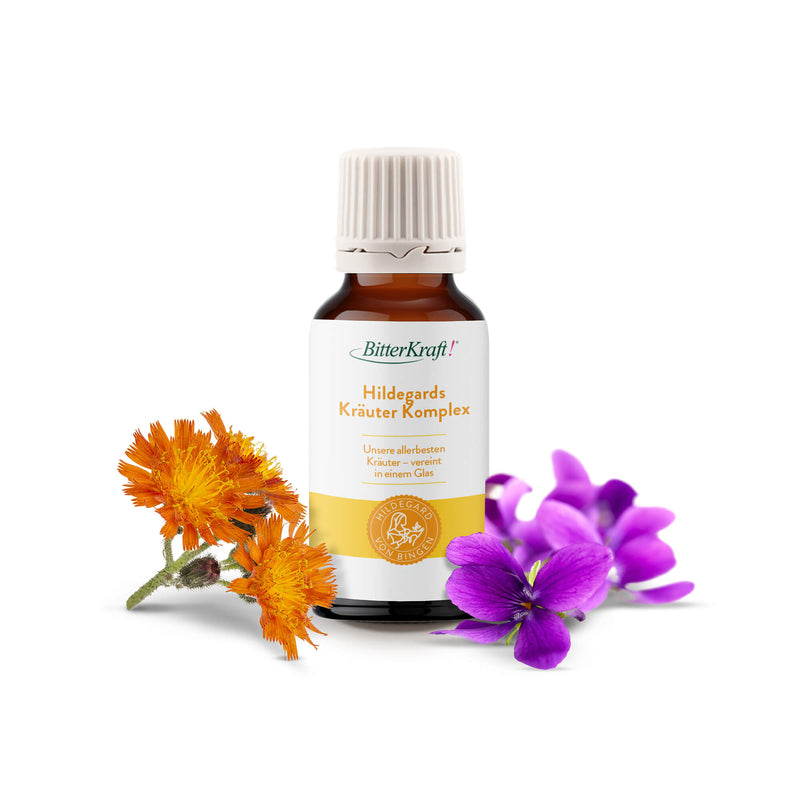
Hildegards Tipp:
- Milder Kräutergeist mit 5 Hildegard-Heilpflanzen für die Seele
- Rezeptur auf Basis von 800 Jahren Klosterwissen
- Bitterkraft – der Pionier seit 1996 von 4.000 Heilpraktikern verwendet!
- Beste Naturheilkunde: Bio & vegan
Vorkommen von Habichtskraut
Aus der Ferne erinnert Habichtskraut (Hieracium) stark an Löwenzahn, bei näherem Hinsehen unterscheidet es sich jedoch in einigen Merkmalen von den ebenfalls zur Familie der Korbblütler gehörenden Verwandten. Zahlreiche Vertreter der Pflanzengattung sind hierzulande weit verbreitet, wenn auch relativ unbekannt. Dazu zählen sowohl das Kleine als auch das Orangerote Habichtskraut, die früher häufig als heimische Heilkräuter genutzt wurden. Auch Hildegard von Bingen verwendete das Kraut gern.
Die krautigen Pflanzen sind recht anspruchslos und gedeihen selbst auf recht trockenen Böden. Habichtskräuter wachsen auf Wiesen, Waldlichtungen, am Wegesrand, aber ebenso in heimischen Gärten, wo sie schnell einen ausgedehnten Blumenteppich bilden können und andere Pflanzen verdrängen.
Inhaltsstoffe von Habichtskraut
Cumarine, Flavonoide, Schleimstoffe und Gerbstoffe stellen wichtige Inhaltsstoffe von Habichtskraut dar.
Wirkweise von Habichtskraut
Habichtskraut wird heute vielfach als Unkraut in Gärten angesehen. Dabei lässt sich die Pflanze wunderbar kulinarisch nutzen. Frische Blätter verfeinern klein gehackt Salate, Kräuterbutter sowie Aufstriche und Suppen. Die Blüten des Kleinen Habichtskrauts schmecken leicht süßlich und runden Frischkäse, Kräuterbutter sowie einen Salat gut ab – nicht zuletzt als reizvolle Dekoration.
In früheren Zeiten wurde das Habichtskraut vor allem als Heilpflanze geschätzt, die die Sehkraft eines Habichtes verleihen sollte. Auf diese Wirkung geht vermutlich auch der Name des Krautes zurück. Inzwischen hat man von dieser Verwendung Abstand genommen.
Im Mittelalter stellte Habichtskraut ein Bestandteil verschiedener Kräutermischungen dar, die die kräuterkundige Hildegard von Bingen anfertigte. Sie schrieb dem Kraut eine herzstärkende Wirkung zu und mischte es für verschiedene Zubereitungen mit Diptam und Galgant.
Auch bei Verdauungsbeschwerden, insbesondere bei Durchfall, soll die Gabe von Habichtskraut helfen. Deutlich gesicherter ist dagegen die Verwendung bei Entzündungen im Mund und Hals. Denn Habichtskraut gilt als adstringierend und entzündungshemmend. Verwendet wird es innerlich als Tee oder Auszug zum Spülen und Gurgeln. Äußerlich sollen sich damit Wunden behandeln lassen. Das Kleine Habichtskraut ist auch als Diuretikum bekannt, also für seine harntreibende Wirkung.
Aussehen von Habichtskraut
Zu den Habichtskräutern zählen unzählige Unterarten, die sich teilweise sehr schwer voneinander abgrenzen lassen. Es handelt sich um ausdauernde krautige Pflanzen, die sich zu beachtlichen Stauden entwickeln können. Die Pflanze bildet recht kräftige Pfahlwurzeln aus, der behaarte Stängel ragt aufrecht in die Höhe. Das Kleine Habichtskraut erreicht Wuchshöhen von 10 bis 30 Zentimetern, das Orangerote, das vor allem in europäischen Gebirgsregionen heimisch ist, wächst sogar bis zu 60 Zentimeter hoch. Die Laubblätter befinden sich an der Stängelbasis. Charakteristisch sind seine an Löwenzahn erinnernden Blüten, die beim Kleinen Habichtskraut gelb und beim Orangeroten – wie der Name bereits andeutet –gelborange bis orangerot gefärbt sind.

Über den Autor Henrik Aulbach
Weitere Artikel
Magenbitterstoffe vor dem Essen: Warum die Reihenfolge entscheidend ist
Magenbitterstoffe vor dem Essen » Nach Hildegard von Bingen ✓ Ohne Zusatzstoffe ✓ Made in Germany – Jetzt mehr erfahren
Bitterstoffreiche Smoothies: Grüne Rezepte für den Verdauungsstart am Morgen
Bitterstoff-Smoothies für den Morgen » Nach Hildegard von Bingen ✓ Vegan ✓ Ohne Zusatzstoffe – Jetzt Rezepte entdecken!
Hildegard von Bingens Dinkelrezepte für eine gesunde Verdauung
Hildegard von Bingens Dinkelrezepte » Nach Hildegard von Bingen ✓ Ohne Zusatzstoffe ✓ Biozertifiziert – Jetzt entdecken