

Henrik Aulbach ist erfahrener Gesundheitsredakteur mit über 10 Jahren Erfahrung, Experte für pflanzliche Wirkstoffe und Kultivierung, Co-Gründer, Buchautor und selbstständiger Fachtexter im Gesundheitswesen seit 2020.
Erfahren Sie hier mehr über diesen Autor.

Galgant: Das Wichtigste im Ueberblick
Vorkommen des Galgant
Der Galgant stammt ursprünglich aus China, wird aber heute in ganz Südostasien und Indien kultiviert. Als Heil- und Gewürzpflanze werden zwei Galgant-Arten verw...

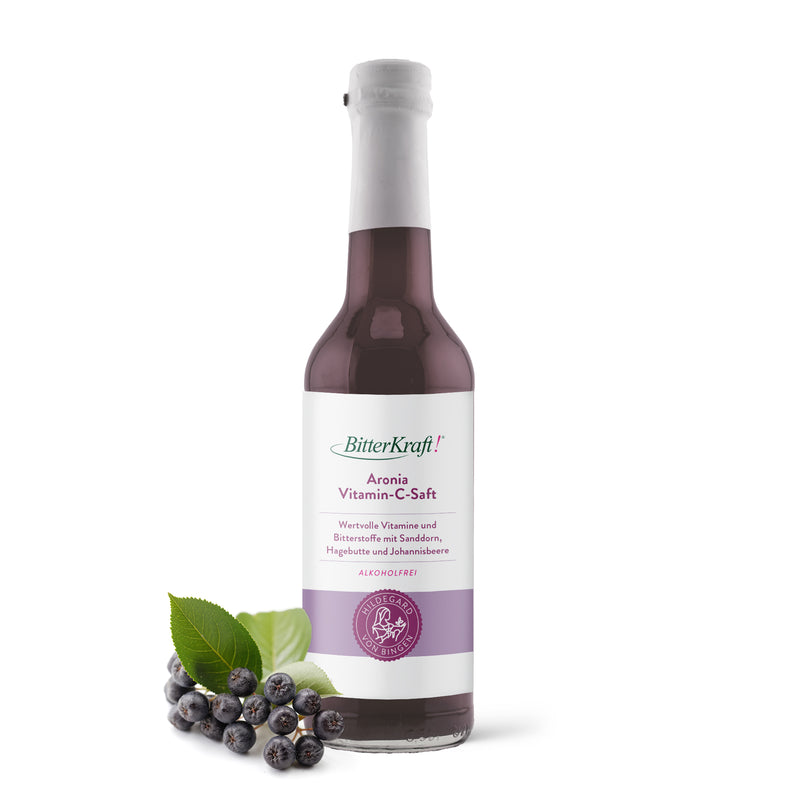
Hildegards Tipp:
- Saft aus erlesenen Bitterstoffe mit der Süße von Früchten
- Rezeptur auf Basis von 800 Jahren Klosterwissen
- Bitterkraft – der Pionier seit 1996 von 4.000 Heilpraktikern verwendet!
- Beste Naturheilkunde: Bio & vegan
Vorkommen des Galgant
Der Galgant stammt ursprünglich aus China, wird aber heute in ganz Südostasien und Indien kultiviert. Als Heil- und Gewürzpflanze werden zwei Galgant-Arten verwendet: der Kleine oder Echte Galgant (Alpinia officinarum), der in Asien fast noch beliebter ist als die verwandte Ingwerknolle. Und der Große Galgant (Alpinia galanga), der auch als Thai-Ingwer bezeichnet wird. Beide Galgant-Arten gehören zu den Ingwergewächsen und weisen zahlreiche Gemeinsamkeiten mit dem Ingwer auf.
Verwendung und Wirkweise des Galgant
Kulinarisch ist Galgant eine Gaumenfreude und gehört in zahlreichen ostasiatischen Gerichten wie Nasi Goreng als Gewürz einfach dazu. Verwendet wird er sowohl als gemahlenes Pulver als auch als frische Knolle, wo sein scharfer Geschmack gut zur Geltung kommt.
Die Rhizome (verdickte Wurzeln, ähnlich dem Ingwer) dieser Pflanze werden in fernöstlichen Ländern als traditionelle Medizin zur Linderung von Magenschmerzen, zur Stärkung des Kreislaufsystems, zur Behandlung von Erkältungen und zur Verringerung von Schwellungen verwendet. [3]
Der Galgant bei Hildegard von Bingen
Von Hildegard von Bingen heißt es, dass sie den Galgant einmal als Gewürz des Lebens bezeichnete und damit auf seine Nutzung als Heilpflanze anspielte. Denn im Mittelalter waren die Knolle und ihre Heilwirkungen den Menschen in Europa wohlbekannt. Hildegard von Bingen riet bei Magen-Darm-Beschwerden, aber auch bei Halsschmerzen zu Galgant. Heute wird Galgant nicht nur genutzt, wenn der Hals schmerzt. Bei Erkältungen soll er schleimlösend und fiebersenkend wirken. Hildegard von Bingen setzte Galgant ebenso bei Herzleiden ein. [1]
Der Galgant in der Wissenschaft
Der Galgant (Alpinia galanga) ist aber auch in der modernen Medizin eine wichtige Heilpflanze. Verschiedene Teile des Galgant werden eingesetzt wegen ihrer:
- antimykotischen (pilzhemmenden),
- antimikrobiellen (bakterienhemmenden),
- entzündungshemmenden,
- antidiabetischen,
- antioxidativen
- und vielen anderen Eigenschaften. [2]
Tatsächlich zeigen Galgant-Extrakte in verschiedenen Biotests im Vergleich zu Standard-Antioxidantien als leistungsstarke Antioxidantien. [3] Das heißt, sie neutralisieren effektiver als herkömmliche Antioxidantien die schädlichen freien Radikale, die für verschiedene Alterungs- und Krankheitsprozesse verantwortlich gemacht werden.
Inhaltsstoffe des Galgant
Von den Inhaltsstoffen ist vor allem das enthaltene ätherische Öl von Bedeutung, das sich aus Flavonoiden, Gerbstoffen und Terpenen zusammensetzt. Hier ähnelt Galgant weitestgehend dem verwandten Ingwer. So finden sich im Galgant die ebenfalls in der Ingwerknolle enthaltenen wertvollen Pflanzenstoffe Gingerole und Galangole.
Aber auch zahlreiche andere Wirkstoffe wurden aus der Pflanze extrahiert, wie 1,8-Cineol, α-Fenchyl-Acetat, β-Farnesen, β-Bisabolene, α-Bergamotene, β-Pinen, β-Sitosteroldiglucosid (AG-7) oder Hydroxy-Cinnamaldehyd, um nur einige zu nennen. [2,3]
So bezeichnen die beiden indischen Wissenschaftler Anirban und Santanu in ihrer 2018 erschienenen Übersichtsarbeit zum „phytochemischen und pharmakologischen Potential“ des Galgant, dass in der Pflanze ein „Goldschatz“ mit großem biologischen Potenzial vorhanden ist, und ziehen folgendes Fazit [2]:
Alpinia galanga (Linn.) ist eine medizinisch wichtige Pflanze, die zur Familie der Zingiberaceae gehört.
Hauptsächlich der Rhizomteil der Pflanze wird bei der Behandlung vieler Krankheiten wegen seiner antimykotischen, antitumoralen, antimikrobiellen, entzündungshemmenden, antidiabetischen, antioxidativen (...) und vielen anderen Eigenschaften verwendet.
Aus der Pflanze wurden mehrere Wirkstoffe extrahiert, die Bioaktivität zeigen.
Die Isolierung und Identifizierung der bioaktiven Leitmoleküle kann in der Therapie (..) verschiedener Krankheiten eingesetzt werden.
Aussehen
Über der Erde zeigt sich Galgant in Form großer Laubblätter und weißer Blüten. Der eigentlich interessante Teil der Pflanze verbirgt sich unter der Erde. Wie beim Ingwer erinnert das Rhizom an eine Knolle.
Wissenswertes
Weil Galgant die Durchblutung der Schleimhäute anregen soll, sollten Schwangere besser auf die scharfe Knolle verzichten.
Galgant: Häufig gestellte Fragen
Für was ist Galgant alles gut?
Wie oben bereits beschrieben, gibt es in Studien und Untersuchungen Hinweise darauf, dass Galgant folgende Eigenschaften haben könnte:
- pilzhemmende
- bakterienhemmende
- entzündungshemmende
- antidiabetische
- antioxidative
- und einige mehr
Aufgrund dieser Eigenschaften war der Galgant im Mittelalter bei Erkältungen, Fieber und Magen-Darm-Beschwerden sehr beliebt. Heute ist die Knolle immer weiter in Vergessenheit geraten, da die westliche Medizin nicht gerne mit pflanzlichen Produkten arbeitet. Als Hausmittel verwenden Deutsche das Gewächs jedoch nach wie vor gerne bei Erkältungen und Bauchschmerzen in Form von Tees.
Wo kann ich Galgant kaufen?
Online gibt es zahlreiche Händler, welche Galgant-Präparate in top Qualität verkaufen. Besonders ist, dass online meistens Präparate mit zahlreichen Extrakten und Pflanzenstoffen vorzufinden sind. Hier wird das Galgant-Extrakt mit weiteren Pflanzenextrakten kombiniert, um die besten Eigenschaften auszuloten.
Neben Onlineshops gibt es natürlich Apotheken, Drogerien und Reformhäuser. Hier können Sie natürlich ebenfalls nach Präparaten schauen, leider ist die Auswahl jedoch meistens begrenzt.
Was ist der Unterschied zwischen Galgant und Ingwer?
Der Galgant ähnelt optisch stark der Ingwer. Beide bilden etwa Knollen, die sich farblich stark ähneln. Die Knollen sind dabei der Wurzelstock der Pflanze, hier werden die Nährstoffe gespeichert, woher die hohe Dichte an sekundären Pflanzenstoffen rührt. Die Ähnlichkeit zum Ingwer liegt nicht zuletzt daran, dass der Galgant zur Familie der Ingwergewächse gehört. Darum können Sie in vielen Rezepten frische Ingwer bzw. Ingwerpulver direkt mit Galgant austauschen.
Spätestens am Geschmack erkennen Sie jedoch den Unterschied. Auch wenn sie sich geschmacklich stark ähneln, empfinden die meisten Galgant als feinaromiger. Der Galgant ist würziger, schärfer und schmeckt nach Pfeffer. Wie bei Ingwer können Sie die frische Knolle einfach in Stücke schneiden und damit einen gesunden Tee zaubern.
Wie würzt man mit Galgant?
Eingesetzt wird die Knolle meistens in indischen oder asiatischen Speisen. Greifen Sie auf originelle und authentische Rezepte zurück, ist bereits recht oft Galgant enthalten. Eingedeutschte Rezepte verwenden meistens nur Ingwer. Hier können Sie die Ingwer komplett mit Galgant ersetzen oder wahlweise nur einen Teil.
In würzigen Gebäcken wie Pfefferkuchen können Sie ebenfalls Galgant verbacken. Damit der Geschmack am Ende stimmt, sollten Sie darauf achten, von Anfang an ein Rezept mit Galgant zu verwenden.
Wie bereitet man Galgant zu?
Galgant wird oft in Pulverform verkauft, hier müssen Sie nichts mehr machen, als damit zu würzen. Kapseln verwenden Galgant als Supplement, meistens können Sie dann eine Kapsel am Tag einnehmen.
Wollen Sie Galgant in vollen Zügen ausnutzen, sollten Sie auf die frische Wurzelknolle setzen. Bei Krankheit fertigen viele einen Tee damit an, indem Sie die geschälten und kleingeschnittenen Knollen in kochendem Wasser ziehen lassen. Alternativ können Sie die Stückchen auch Speisen zugeben, meistens schneidet man so große Stücke, dass man sie im Anschluss wieder entfernen kann. Auf Galgant zu beißen, gibt einen sehr scharfen Geschmack, den die wenigsten genießen.
Wiederum gibt es einige Menschen, welche die rohe Knolle kauen. Diese meinen, dass durch die Schärfe die Atemwege befreit werden.
Quellen
- Dubois J. (2012) Hildegard von Bingen. Das Praxisbuch für ein gesundes Leben. Tandem Verlag, Potsdam.
- Anirban C und Santanu P. (2018) A Review on Phytochemical and Pharmacological Potential of Alpinia galangal. Pharmacognosy Journal. 10: 9–15. DOI:10.5530/pj.2018.1.2
- Polat L et al. (2015) LC–MS/MS analysis, antioxidant and anticholinergic properties of galanga (Alpinia officinarum Hance) rhizomes. Industrial Crops and Products 74: 712–721. DOI: 10.1016/j.indcrop.2015.05.034

Über den Autor Henrik Aulbach
Weitere Artikel
Magenbitterstoffe vor dem Essen: Warum die Reihenfolge entscheidend ist
Magenbitterstoffe vor dem Essen » Nach Hildegard von Bingen ✓ Ohne Zusatzstoffe ✓ Made in Germany – Jetzt mehr erfahren
Bitterstoffreiche Smoothies: Grüne Rezepte für den Verdauungsstart am Morgen
Bitterstoff-Smoothies für den Morgen » Nach Hildegard von Bingen ✓ Vegan ✓ Ohne Zusatzstoffe – Jetzt Rezepte entdecken!
Hildegard von Bingens Dinkelrezepte für eine gesunde Verdauung
Hildegard von Bingens Dinkelrezepte » Nach Hildegard von Bingen ✓ Ohne Zusatzstoffe ✓ Biozertifiziert – Jetzt entdecken