


Wasser in den Beinen
Wassereinlagerungen in den Beinen treten immer häufiger auf. Als Flüssigkeitsreten...
Wassereinlagerungen in den Beinen treten immer häufiger auf. Als Flüssigkeitsretention bezeichnet man diese Sachverhalt in der Medizin, der sich in der Form von Ergüssen und Ödemen in den Beinen äußert. Überschüssige Flüssigkeit sammelt sich dann im Gewebe der Beine an. Die Beine sind der Sammelpunkt, weil ganz einfach die Schwerkraft das Wasser nach unten zieht. Wir wollen hier Ursachen und Behandlungsmöglichkeiten für Wassereinalgerungen vorstellen.

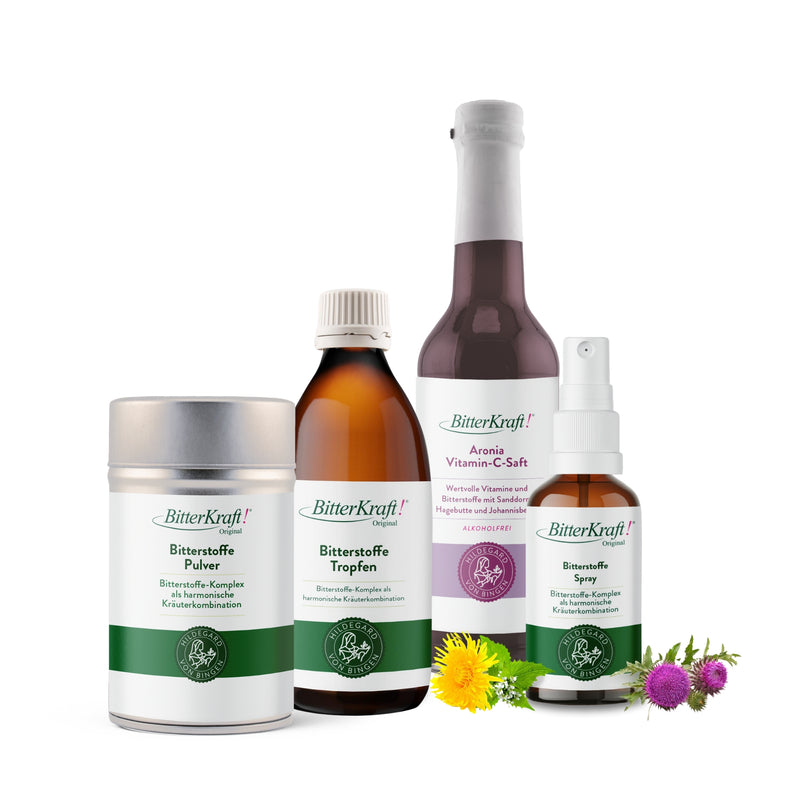
Hildegards Tipp:
- Wertvolle Bittertropfen nach Hildegard Von Bingen mit praktischem Spray - Ideal für unterwegs
- Rezeptur auf Basis von 800 Jahren Klosterwissen
- Bitterkraft - der Pionier seit 1996 von 4.000 Heilpraktikern verwendet!
- Beste Naturheilkunde: Bio & vegan
Ursachen für Wasser in den Beinen
Die Ursachen für zu viel Wasser im Körper können mannigfaltig sein. Oft ist die Flüssigkeitsretention das Problem. Hier speichert der Körper überschüssige Flüssigkeit im Gewebe der Beine. Folgende Faktoren wirken begünstigend auf eine Flüssigkeitsretention in den Beinen:
- hoher Salzkonsum
- mangelnde Bewegung (der Beine)
- hormonelle Wassereinlagerungen
- Medikamentengebrauch
Die Flüssigkeitsretention kann unangenehm sein, ist jedoch erstmal keine ernst zu nehmende Krankheit. Ihr kann jedoch eine ernste Krankheit zugrunde liegen, bspw. eine Herzinsuffizienz. Dann schafft es das Herz nicht mehr, genug Blut zu pumpen, wodurch sich Flüssigkeiten ansammeln können. Hier ist ärztliche Behandlung notwendig. Nierenprobleme können ähnlich wie die Herzinsuffizienz für vermehrte Flüssigkeitsansammlungen sorgen. Ähnliche Begebenheiten sind eine venöse Insuffizienz, bei welcher die Venen den Blutrückfluss nicht mehr vertragen oder lymphatische Probleme.
Ansonsten können noch Verletzungen und Entzündungen sowie Schwangerschaft Wassereinlagerungen bedingen. Wir sehen also, dass ein Arztbesuch bei Ödemen angebracht ist.

Wasser in den Beinen: Symptome
Wenn der Verdacht auf Ödeme besteht, solltest du einen Arzt besuchen. Folgende Symptome können den Verdacht auf Ödeme erhärten:
- Schwellungen: Wo sich das Wasser ansammelt, treten Schwellungen auf, die oft druckempfindlich und weich sind.
- Hautveränderungen: Die Haut kann sich angespannt fühlen und weich sein, manchmal verfärbt sie sich zudem.
- Abdrücke: Drückst du mit den Fingern auf die Hautstellen, kann ein sichtbarer Abdruck zurückbleiben, den man als Pitting-Ödem bezeichnet.
- Schweregefühl: Die Beine fühlen sich oft schwerer und langsamer an.
- Schmerzen: Schmerzen können bei größeren Flüssigkeitsansammlungen auftreten.
- Steifheit: Das überschüssige Wasser könnte Ihre Bewegung einschränken.
Medizinische Diagnose und Behandlung von Ödemen
Bei Ödemen sollten Sie zeitnah einen Arzt aufsuchen. Dieser wird direkt eine Anamnese und körperliche Untersuchungen durchführen. Im Anschluss können Laboruntersuchungen und bildgebende Verfahren erfolgen. Ihr Arzt wird nicht nur versuchen, die Ödeme festzustellen. Seine Hauptaufgabe besteht darin, organische Ursachen wie eine Herzinsuffizienz festzustellen. Hierfür können weitere Untersuchungen wie Herzuntersuchungen oder Sonographien erfolgen.
Die Behandlung hängt im Anschluss von der Ursache ab. Aquaretika sind entwässernde Lebensmittel, Ärzte verschreiben bei Ödemen Diuretika, was entwässernde Medikamente sind.
Weitere Behandlungsformen können folgende sein:
- Lebensstiländerungen
- Kompressionsstrümpfe
- zugrunde liegende Krankheit behandeln
- Medikamente
Wassereinlagerungen loswerden: Maßnahmen der Naturheilkunde
Die Naturheilkunde kennt einige eigene Behandlungsmethoden gegen Wasser in den Beinen. Diese umfassen Lebensmittel und Heilkräuter wie Brennnesseltee oder kaliumreiche Speisen. Daneben gibt es in der Naturheilkunde noch die folgenden Ansätze:
- Lymphdrainagen-Massagen: Die Lymphknoten oder das Lymphsystem massieren, damit diese ihre Flüssigkeiten austauschen.
- Wechselduschen: Eine hilfreiche Wirkung ist nicht belegt, dennoch werden Wechselduschen aus traditionellen Gründen gerne eingesetzt.
- Salzreduktion: Zu viel Salz kann den Körper dabei stören, seinen Flüssigkeitshaushalt zu regulieren.

Wasser im Fuß und Bein vorbeugen
Falls Sie noch keine Ödeme in den Beinen haben, können Sie probieren, die nachfolgenden Punkte umzusetzen. Hierdurch helfen Sie Ihrem Körper, Ödeme bestens vorzubeugen. Sollten Sie dennoch Wassereinlagerungen bemerken, suchen Sie bitte einen Arzt auf.
- Weniger Salz essen.
- Ausreichend Wasser trinken.
- Ballaststoffreich ernähren.
- Regelmäßig bewegen.
- Beine öfter hochlagern.
- Langes Sitzen oder Stehen vermeiden.
- Enge Kleidung vermeiden.
- Nicht zu viel Alkohol und Kaffee trinken.
Wasser in den Beinen: Häufig gestellte Fragen
Wasser in den Beinen: Was tun?
Wenn Sie Wassereinlagerungen bzw. Ödeme in den Beinen bemerken, ist es Zeit für einen Arztbesuch. Dieser muss in erster Linie ausschließen, dass eine Erkrankung wie eine Nieren- oder Herzinsuffizienz der Flüssigkeitsretention zugrunde liegt. Anschließend kann er mit Ihnen Behandlungsmöglichkeiten besprechen, welche sich durch die Naturheilkunde ergänzen lassen.
Was tun bei Wasser in den Beinen?
Bei Wasser in den Beinen sollten Sie erst abklären lassen, dass keine organische Erkrankung hierfür verantwortlich ist. Sind Sie also bis auf die Ödeme gesund, sollten Sie sich mehr bewegen, mehr Wasser trinken und ggf. entwässernde Lebensmittel zu sich nehmen.

Magenbitterstoffe vor dem Essen: Warum die Reihenfolge entscheidend ist
Magenbitterstoffe vor dem Essen » Nach Hildegard von Bingen ✓ Ohne Zusatzstoffe ✓ Made in Germany – Jetzt mehr erfahren

Bitterstoffreiche Smoothies: Grüne Rezepte für den Verdauungsstart am Morgen
Bitterstoff-Smoothies für den Morgen » Nach Hildegard von Bingen ✓ Vegan ✓ Ohne Zusatzstoffe – Jetzt Rezepte entdecken!
Hildegard von Bingens Dinkelrezepte für eine gesunde Verdauung
Hildegard von Bingens Dinkelrezepte » Nach Hildegard von Bingen ✓ Ohne Zusatzstoffe ✓ Biozertifiziert – Jetzt entdecken