

Henrik Aulbach ist erfahrener Gesundheitsredakteur mit über 10 Jahren Erfahrung, Experte für pflanzliche Wirkstoffe und Kultivierung, Co-Gründer, Buchautor und selbstständiger Fachtexter im Gesundheitswesen seit 2020.
Erfahren Sie hier mehr über diesen Autor.

Hautbild verbessern: Mittel der Naturheilkunde
Unsere Haut ist unser größtes Organ. Sie schützt unser gesamtes Innenleben vor schädlichen Einflüssen von außen ab. Tagein tagaus ist unsere Haut damit beschäftigt, Krankheitserreger abzuwehren, un...
Unsere Haut ist unser größtes Organ. Sie schützt unser gesamtes Innenleben vor schädlichen Einflüssen von außen ab. Tagein tagaus ist unsere Haut damit beschäftigt, Krankheitserreger abzuwehren, unsere Körpertemperatur zu regulieren und zahlreiche weitere lebenswichtige Funktionen zu erfüllen. Ein schönes Hautbild ist ein Anzeichen für eine gesunde Haut, weshalb wir hier Möglichkeiten besprechen wollen, das eigene Hautbild zu verbessern.

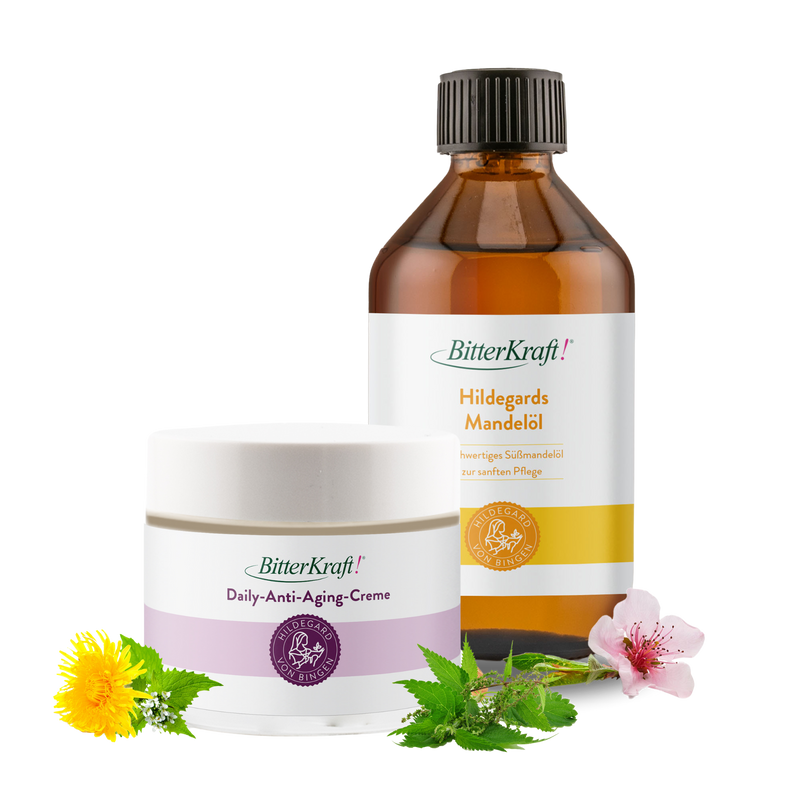
Hildegards Tipp:
- Die richtige Pflege für die kalte Jahreszeit
- Rezeptur auf Basis von 800 Jahren Klosterwissen
- Bitterkraft - der Pionier seit 1996 von 4.000 Heilpraktikern verwendet!
- Beste Naturheilkunde: Bio & vegan
Was macht ein schönes Hautbild aus?
Wer möchte schon nicht eine schönere und bessere Haut bekommen? Hierfür ist es hilfreich, sich klarzuwerden, welche Aspekte ein schönes Hautbild und eine schöne Gesichtshaut ausmachen. In der Kosmetik nennt man meistens die nachfolgenden Punkte:
- Gleichmäßiger Teint ohne auffällige Rötungen, Farbflecken oder sonstige Verfärbungen
- Glanz und Strahlkraft: Jugendlich strahlende Haut zeugt von guter Feuchtigkeit der Haut.
- Feuchtigkeit: Glatt und prall sollte gesunde Haut erscheinen.
- Feine Poren: Kleine und unauffällige Poren weisen auf gesunde und schöne Haut hin.
- Elastizität: Genug Kollagen und Elastin sorgen für eine feste und elastische Haut.
- Wenige Falten: Wenige Falten lassen die Haut jünger erscheinen.
- Keine Unreinheiten: Unreinheiten der Haut werden oft nicht als attraktiv empfunden. Pickel weisen bspw. auf verstopfte Poren hin.
Gepflegtes Erscheinungsbild: Eine saubere, gut befeuchtete und nicht sonnengeschädigte Haut weist auf eine gute Pflege und schöne Haut hin.

Symptome der Haut richtig deuten
Ihre Haut wird es Ihnen sagen, wenn sie nicht ausreichend gepflegt wird. Mangelt es ihr an Feuchtigkeit oder einem ausreichenden Schutzmantel, kann Ihre Haut trocken werden, was zu Spannungsgefühlen, Juckreiz und weiteren Irritationen führen kann. Im Winter können die Hände aufgrund mangelnder Feuchtigkeit sehr rau werden, ansonsten sind es die Ellbogen und Knie.
Ein unregelmäßiger Teint mit Pigmentflecken oder Rötungen weist auf eine mangelhafte Pflege hin. Zu starke Sonnenbelastungen können bspw. Pigmentflecken verursachen.
Vergrößerte Poren sind ebenfalls ein Anzeichen für eine unzureichend gepflegte Haut. Dann wird bspw. zu viel Talg produziert, was zu Akne und Unreinheiten führen kann. Diese sind meistens auf verstopfte Poren zurückzuführen, was wiederum ein Anzeichen unzureichender Pflege oder Reinigung sein kann.
Fettige Haut ist allerdings auch oft ein Anzeichen unzureichend gepflegter Haut. Dann muss die Haut übermäßig Talg produzieren, um ihrer Schutzfunktion gerecht zu werden.
Bemerken Sie bereits im jungen Alter Anzeichen der Hautalterung, machen Sie ggf. etwas falsch. Falten oder alt erscheinende Haut können bspw. auf unzureichenden Sonnenschutz hindeuten, da die aggressive Sonnenstrahlung Schäden verursachen kann.
Idealerweise suchen Sie einen Hautarzt auf, wenn Sie derartige Symptome Ihrer Haut bemerken. Es könnten auch ernst zu nehmende Krankheiten hinter den Hautveränderungen stecken.
Welchen Hauttyp haben Sie?
Ihre Hautpflege sollte an Ihren Hauttyp angepasst werden. Wenn Sie bspw. bereits eine fettige Haut haben, kann die Zufuhr von noch mehr Fett für Probleme sorgen. Dementsprechend ist es wichtig, dass Sie Pflegeprodukte verwenden, welche auf Ihre Bedürfnisse zugeschnitten sind. Wir unterscheiden in der Kosmetik maßgeblich zwischen 5 Hauttypen:
- Normale Haut: Diese ist gut ausbalanciert und weder zu trocken, noch zu fettig. Die Poren erscheinen klein und die Haut wirkt allgemein gesund.
- Trockene Haut: Dieser Hauttyp fühlt sich oft trocken, rau und straff an. Sie neigt zur Schuppung und kann empfindlich auf Umwelteinflüsse reagieren. Feine Poren und ein matter Teint sind typisch.
- Fettige Haut: Fettige Haut produziert übermäßig Talg. Die Haut glänzt und erscheint fettig, die Poren erscheinen größer. Akne und Mitesser sind typisch für fettige Haut.
- Mischhaut: Hier sind trockene und fettige Zonen vorhanden. Stirn, Nase und Kinn sind oft fettig, die Wangen dafür eher trocken.
- >Empfindliche Haut: Dieser Hauttyp reagiert empfindlich auf Pflegeprodukte und Sonneneinstrahlung. Irritationen, Rötungen und Juckreiz sind typische Anzeichen.

Ausgewogener Lebensstil für ein schönes Hautbild
Für eine gesunde Haut empfiehlt sich ein ausgewogener Lebensstil, damit Ihr Körper alles hat, was er für ein schönes Hautbild benötigt. Folgende Punkte können Sie beachten:
- Gesunde Ernährung: Welche Lebensmittel sind gut für die Haut? Vollkorn, magere Proteine, gesunde Fette, Obst und Gemüse sowie Antioxidantien sind hier zu nennen.
- Hydration: Wasser ist wohl am wichtigsten für einen gesunden Stoffwechsel Ihrer Haut. Trockene und fettige Haut können beide durch Flüssigkeitszufuhr Besserung erfahren.
- Regelmäßige Bewegung: Bewegung regt den Stoffwechsel an, allen voran die Durchblutung und den Sauerstofftransport. Hierdurch kann Ihre Haut besser funktionieren.
- Ausreichender Schlaf: In der Nacht kann Ihre Haut regenerieren, weshalb ausreichend Schlaf von Bedeutung ist.
- Stressmanagement: Zu viel Stress kann sich negativ auf Ihre Haut auswirken.
- Rauchen und Alkohol: Beide Gewohnheiten können die Hautalterung beschleunigen und allgemein den Zustand der Haut verschlechtern.
- Sonnenschutz: Sonnenstrahlen können das Hautbild verschlechtern, insbesondere ohne ausreichenden Sonnenschutz
Hautbild verbessern: Hilfe aus der Naturheilkunde
Die Naturheilkunde erweitert das Repertoire um einige Methoden. Insbesondere die Naturkosmetik scheint hilfreich zu sein. Herkömmliche Seifen sind bspw. oft aggressiv für die Haut und enthalten keine oder kaum hochwertige pflegende Bestandteile. Seifen der Naturkosmetik werden dem entgegen in der Regel mit kaltgepressten Ölen und hochwertigen, natürlichen Inhaltsstoffen versehen, um die Haut zu reinigen und zu pflegen.
Auch Naturkosmetika wie Salben und Cremes können besser für Ihre Haut als herkömmliche Kosmetik sein. Viele Produkte aus dem Supermarkt und der Drogerie enthalten bspw. Mineralöle und andere synthetische Bestandteile. Diese weisen keinen ganzheitlichen Ansatz auf, was der Haut auf lange Sicht schaden könnte.
Weiterhin gibt es gewisse Pflegemethoden der Naturheilkunde. Dampfbäder sind hier bspw. zu nennen. Diese werden oft mit Pflanzenblüten oder -extrakten versehen. Anschließend können sie die Hautreinigung unterstützen und ggf. die Poren öffnen, damit sich diese selbst reinigen können.
In diesem Zusammenhang sind Heilpflanzen ein wichtiger Ansatz der Naturheilkunde. Kamille gegen Entzündungen, Aloe Vera zur Feuchtigkeitspflege und Ringelblume sowie Teebaumöl bei Hautirritationen. Nach derartigen Schemata könnten Heilpflanzen gegen Ihre Beschwerden helfen.
Hautbild verbessern: Häufig gestellte Fragen
Was ist gut für die Haut?
Für die Haut empfiehlt sich eine möglichst sanfte und schonende Pflege, welche hauptsächlich die Haut in ihrer Selbstregulation unterstützen soll. Hierdurch sollen Sie die Haut stärken. Neben einer solchen möglichst natürlichen Pflege, lassen sich Gewohnheiten eines gesunden Lebensstils empfehlen. Viel Bewegung, Wasser, genug Schlaf und eine gesunde Ernährung sind neben ausreichend Sonnenschutz die wichtigsten Punkte.
Was tun gegen schlechte Haut?
Wenn Sie „schlechte” Haut aufweisen, sollten Sie einen Hautarzt besuchen. Nur ein Fachmann kann richtig deuten, woran es Ihrer Haut mangeln könnte. Wichtig ist zudem, dass der Hautarzt andere Krankheiten als Ursache Ihrer Hautveränderungen ausschließt.
Wieso Naturheilkunde, um das Hautbild zu verbessern?
Naturheilkunde ist gut für die Haut, weil sie möglichst schonend und verträglich ist. Hinzu kommt, dass Naturheilkunde auf einen ganzheitlichen Ansatz setzt. Hierdurch soll nicht nur geradlinig ein Aspekt der Haut beeinflusst werden, sondern die Haut soll in vielen Aspekten unterstützt werden. Das ist besonders wichtig, um die empfindliche Gesichtshaut zu verbessern.

Über den Autor Henrik Aulbach
Weitere Artikel
Magenbitterstoffe vor dem Essen: Warum die Reihenfolge entscheidend ist
Magenbitterstoffe vor dem Essen » Nach Hildegard von Bingen ✓ Ohne Zusatzstoffe ✓ Made in Germany – Jetzt mehr erfahren

Bitterstoffreiche Smoothies: Grüne Rezepte für den Verdauungsstart am Morgen
Bitterstoff-Smoothies für den Morgen » Nach Hildegard von Bingen ✓ Vegan ✓ Ohne Zusatzstoffe – Jetzt Rezepte entdecken!

Hildegard von Bingens Dinkelrezepte für eine gesunde Verdauung
Hildegard von Bingens Dinkelrezepte » Nach Hildegard von Bingen ✓ Ohne Zusatzstoffe ✓ Biozertifiziert – Jetzt entdecken