

Henrik Aulbach ist erfahrener Gesundheitsredakteur mit über 10 Jahren Erfahrung, Experte für pflanzliche Wirkstoffe und Kultivierung, Co-Gründer, Buchautor und selbstständiger Fachtexter im Gesundheitswesen seit 2020.
Erfahren Sie hier mehr über diesen Autor.

Kurkuma in der Klostermedizin
Vorkommen von Kurkuma
Kurkuma, Kurkume, Gelber Ingwer, Gelbwurz, Safranwurz oder Curcuma – alles Namen für eine Pflanzenart: Botanisch heißt sie Curcuma longa und gehört den Ingwerge...

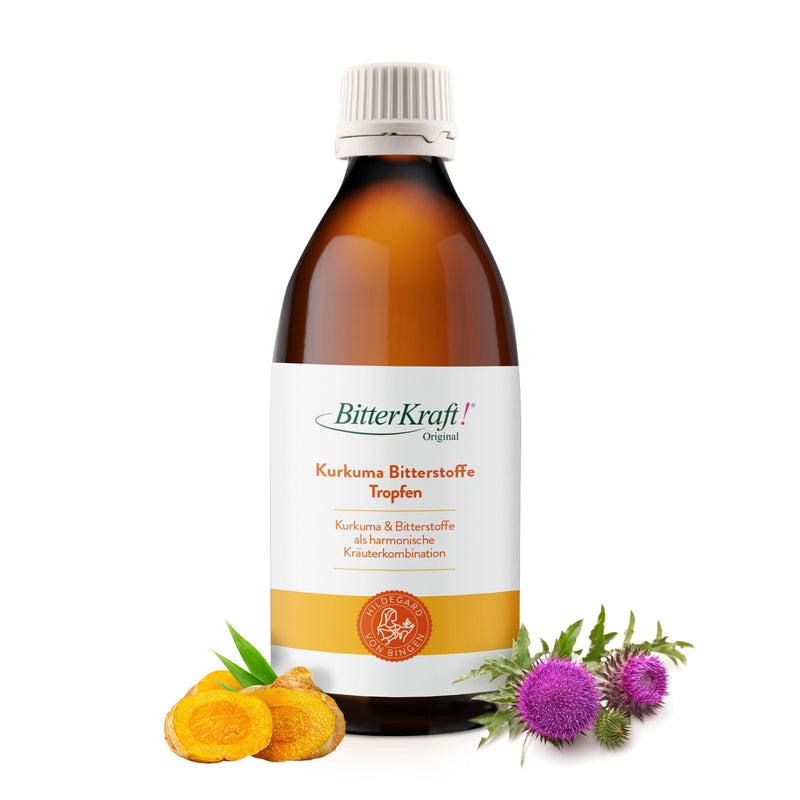
Hildegards Tipp:
- Bitterstoffe in Kombination mit dem goldenen Gewürz
- 100% natürliche Inhaltsstoffe
- Klostergarten trifft auf Ayurveda
- Hochdosierte pflanzliche Essenzen
Vorkommen von Kurkuma
Kurkuma, Kurkume, Gelber Ingwer, Gelbwurz, Safranwurz oder Curcuma – alles Namen für eine Pflanzenart: Botanisch heißt sie Curcuma longa und gehört den Ingwergewächsen an. Ihre Heimat liegt in Südostasien. In Indien und China wurde Kurkuma schon seit Jahrtausenden als Nahrungs- und Heilpflanze angebaut. Inzwischen gelang ihre Kultivierung auch in anderen tropischen Regionen, sogar in Australien. Das Gewächs mag es ganzjährig warm und bevorzugt den Halbschatten.
Nach Europa gelangte Kurkuma im Spätmittelalter über die Seidenstraße und wurde schon bald zu einem begehrten Gewürz, das vor allem in der bekannten Currymischung enthalten ist.
Inhaltsstoffe von Kurkuma
Wichtigster Inhaltsstoff von Kurkuma ist Curcumin. Rund 3 Prozent macht der natürliche Farbstoff aus, der dem Wurzelstock auch seine typische satte gelbe Farbe verleiht. Außerdem finden sich in dem Rhizom bis zu 5 Prozent ätherische Öle sowie Harze, Eiweiß und Zucker.
Wirkweise von Kurkuma
Im Curry bildet Kurkuma einen wichtigen Bestandteil. Doch nicht nur getrocknet als Gewürz zeigt sich die Pflanze von ihrer geschmacklichen Seite. Auch frisch zubereitet, bereichert die Knolle den Speiseplan und entfaltet ihren herben, harzigen Geschmack selbst in einem Tee.
Durch die starke Gelbfärbung wird Kurkuma außerdem zum Färben diverser Materialien verwendet.
Am interessantesten ist das Ingwergewächs allerdings wegen seiner Heilwirkung, die die traditionelle chinesische Medizin und Ayurveda schon lange für sich nutzten. Heute soll in zahlreichen Studien der medizinische Nutzen von Kurkuma bestätigt werden, der den Knollen den Ruf als Superfood eingebracht hat. Die wissenschaftliche Bestätigung steht allerdings noch aus.
Zugeschrieben werden Kurkuma antioxidative und entzündungshemmende Wirkungen, ausgehend von dem enthaltenen Curcumin. So soll der Wirkstoff Zellschädigungen ausbremsen und abmindern. Krebshemmende Effekte werden ebenfalls vermutet. Unbestritten ist dagegen die positive Wirkung, die Kurkuma auf die Verdauung hat, weil die Leber zur Produktion von Gallensäure angeregt wird. Blähungen und Völlegefühl sollen sich so gut behandeln lassen.
Aussehen von Kurkuma
Die ausdauernde, krautig wachsende Pflanze kann sich bis zu einem Meter in die Höhe recken. Etwa ab August entwickelt sich ein Blütenstand, der wunderschöne Blüten treibt. Das Rhizom ist ähnlich wie bei Ingwer fleischig, aber deutlich kleiner und verzweigt sich zu knollenförmigen Nebenwurzelstöcken, die gelb bis gelborange gefärbt sind.
Wissenswertes über Kurkuma
Kurkuma löst sich nicht im Wasser. Deshalb sollten Sie einen frisch daraus zubereiteten Tee immer gut umrühren. Die Hindi verehren die Pflanze als Symbol des Lichts und der Sonne.

Über den Autor Henrik Aulbach
Weitere Artikel
Magenbitterstoffe vor dem Essen: Warum die Reihenfolge entscheidend ist
Magenbitterstoffe vor dem Essen » Nach Hildegard von Bingen ✓ Ohne Zusatzstoffe ✓ Made in Germany – Jetzt mehr erfahren
Bitterstoffreiche Smoothies: Grüne Rezepte für den Verdauungsstart am Morgen
Bitterstoff-Smoothies für den Morgen » Nach Hildegard von Bingen ✓ Vegan ✓ Ohne Zusatzstoffe – Jetzt Rezepte entdecken!
Hildegard von Bingens Dinkelrezepte für eine gesunde Verdauung
Hildegard von Bingens Dinkelrezepte » Nach Hildegard von Bingen ✓ Ohne Zusatzstoffe ✓ Biozertifiziert – Jetzt entdecken