

Henrik Aulbach ist erfahrener Gesundheitsredakteur mit über 10 Jahren Erfahrung, Experte für pflanzliche Wirkstoffe und Kultivierung, Co-Gründer, Buchautor und selbstständiger Fachtexter im Gesundheitswesen seit 2020.
Erfahren Sie hier mehr über diesen Autor.

Zimt – Heilwirkung und Anwendung
Zur Weihnachtszeit heiß begehrt ist Zimt - Die getrocknete Rinde des Zimtbaumes. Leider nehmen wir ihn fast ausschließlich in der Weihnachtszeit und bei manchem Kaffee zu uns, denn diese Baum...
Zur Weihnachtszeit heiß begehrt ist Zimt - Die getrocknete Rinde des Zimtbaumes. Leider nehmen wir ihn fast ausschließlich in der Weihnachtszeit und bei manchem Kaffee zu uns, denn diese Baumrinde hat es in sich. Um den Blutdruck zu regulieren, gegen Diabetes anzukommen und zur Gewichtsabnahme kann Zimt hilfreich sein.

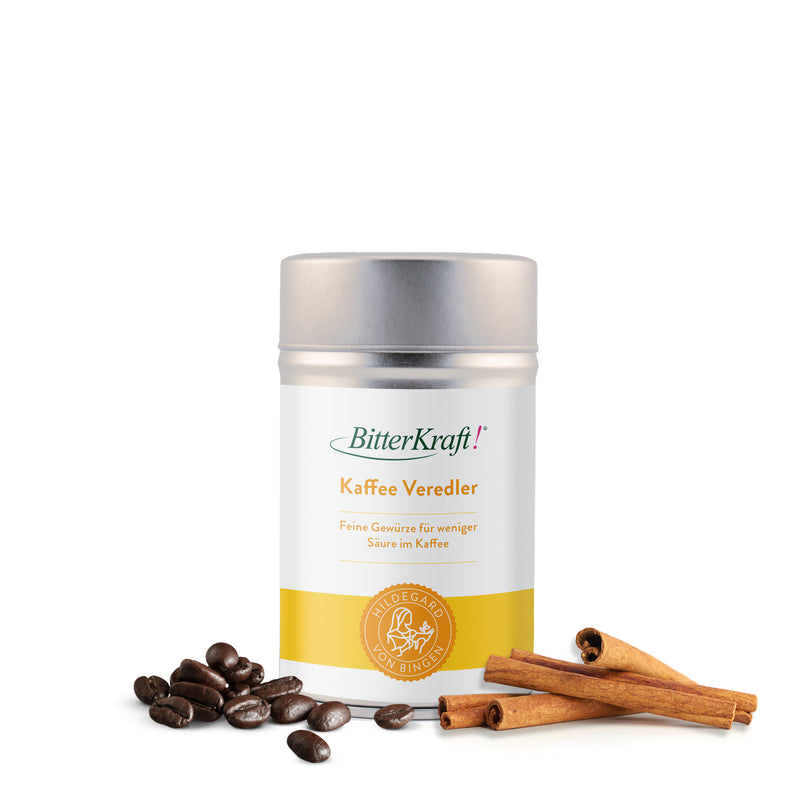
Hildegards Tipp:
- Vortreffliche Kräuter-Gewürz-Mischung zum Veredeln Ihres Kaffees
- Rezeptur auf Basis von 800 Jahren Klosterwissen
- Bitterkraft – der Pionier seit 1996 von 4.000 Heilpraktikern verwendet!
- Beste Naturheilkunde: Bio & vegan
Vorkommen von Zimt
Zimt kommt in zweierlei Formen vor, dem Cassia- und Ceylon-Zimt. Der Cassia-Zimt wird hauptsächlich in China aus dem Baum Cinnamonum cassia gewonnen. Im Vergleich zum Ceylon-Zimt schmeckt dieser meist kräftiger und süßlicher. Der Ceylon-Zimt (Cinnamomum verum), der hauptsächlich auf Sri Lanka angebaut wird, gilt als die beste Variante mit einem aussagekräftigen Aroma.
Die Geschichte des Zimts reicht mehrere Tausende Jahre in die Vergangenheit. Im Mittelalter hat man mit Zimt die Beulenpest bekämpft, im antiken Ägypten Pharaonen damit einbalsamiert. Zu jener Zeit galt Zimt als wertvoller als Gold - Was einiges zu sagen hat.
Inhaltsstoffe von Zimt
Das dem Zimt typische Aroma rührt aus dem Zimtaldehyd. Die Schärfe, die Zimt innewohnt, stammt jedoch aus ein anderen Verbindung - Dem Eugenol.
Gewonnen wird aus dem Zimt gerne dessen ätherisches Öl, welches in der Rinde mit bis zu 4 % enthalten ist. Das ätherische Öl setzt sich wiederum aus bis zu 75 % Zimtaldehyd und bis zu 10 % Eugenol zusammen. Dabei hat Ceylon-Zimt im Vergleich zu Cassia-Zimt klar höhere Mengen Eugenol.
Interessanterweise ist in der Zimtrinde zusätzlich Schleim und Zucker enthalten. Gerbstoffe sind für die gesundheitsfördernden Eigenschaften ebenfalls wichtig, bis zu 3 % Gerbstoffe können in Zimt enthalten sein.
Eine unangenehme Nebenwirkung kann Zimt haben. In günstigeren Cassia-Zimtsorten ist leider oft viel Cumarin enthalten. Cumarin gilt nun als gesundheitsschädigend, wenn es in zu hohen Mengen über einen langen Zeitraum konsumiert wird. Bei Dauerkonsum von Zimt sollten Sie also auf Ceylon-Zimt setzen bzw. auf cumarinarme Cassia-Zimtsorten.
Wirkweise von Zimt
Zimt könnte u. a. den Blutzucker senken. Die Geschichte hinter dieser möglichen Zimt Wirkung ist ganz witzig: Forscher haben untersucht, wie stark bestimmte Lebensmittel den Blutzuckerspiegel anheben. Ein Apfelstrudel mit großzügigen Mengen Zimt hat jedoch für Verwirrung gesorgt, weil der Blutzuckerspiegel nur unerwartet schwach stiegt. Es dauerte nicht lange, bis der Zimt als Auslöser bekannt wurde. [1]
Weitergeführt hat man diese Erfahrung in einem Versuch mit Diabetikern, die sich noch kein Insulin spritzen mussten, allerdings Medikamente nehmen. Die Gruppen, welche Zimt einnahmen, zeigten einen günstigeren Verlauf des Blutzuckerspiegels als Kontrollgruppen. [2]
Indem Zimt also möglicherweise den Blutzucker reguliert, kann es ebenfalls beim Abnehmen helfen. Wenn der Blutzuckerspiegel nicht allzu stark ansteigt und abschwellt, können bspw. Heißhungerattacken wegfallen. Damit könnte der Zimt auch eine Wirkung auf die Psyche haben.
Zimtkaugummi ist übrigens auch gar keine schlechte Erfindung. In Studien konnten Hinweise darauf gefunden werden, dass Zimt kognitive Leistungen verbessern konnte. In Klausuren kann ein Zimtkaugummi also ganz hilfreich sein. [3]
Aussehen von Zimt
Der Ceylon-Zimtbaum ist immergrün und kann bis zu 18 Meter hoch werden. Die bräunliche Borke riecht bereits aromatisch nach Zimtaldehyd. Zweige sehen zylindrisch aus und sind meistens weiß gefleckt. Junge, neugebildete Blätter erscheinen rötlich, bevor sie grün werden. Kleinere, nussähnliche Früchte bildet der Baum ebenfalls aus.
Quellen:
[1] Cinnamon improves glucose and lipids of people with type 2 diabetes
[2] Effect of cinnamon on postprandial blood glucose, gastric emptying, and satiety in healthy subjects

Über den Autor Henrik Aulbach
Weitere Artikel
Magenbitterstoffe vor dem Essen: Warum die Reihenfolge entscheidend ist
Magenbitterstoffe vor dem Essen » Nach Hildegard von Bingen ✓ Ohne Zusatzstoffe ✓ Made in Germany – Jetzt mehr erfahren

Bitterstoffreiche Smoothies: Grüne Rezepte für den Verdauungsstart am Morgen
Bitterstoff-Smoothies für den Morgen » Nach Hildegard von Bingen ✓ Vegan ✓ Ohne Zusatzstoffe – Jetzt Rezepte entdecken!
Hildegard von Bingens Dinkelrezepte für eine gesunde Verdauung
Hildegard von Bingens Dinkelrezepte » Nach Hildegard von Bingen ✓ Ohne Zusatzstoffe ✓ Biozertifiziert – Jetzt entdecken