

Henrik Aulbach ist erfahrener Gesundheitsredakteur mit über 10 Jahren Erfahrung, Experte für pflanzliche Wirkstoffe und Kultivierung, Co-Gründer, Buchautor und selbstständiger Fachtexter im Gesundheitswesen seit 2020.
Erfahren Sie hier mehr über diesen Autor.

Veilchen: Das Wichtigste im Ueberblick
Das Veilchen hat trotz seines eher unscheinbaren Äußeren schon zahlreiche Dichter zu Lobpreisungen veranlasst. Und auch Hildegard von Bingen versprach sich als Kräuterkundige des Mittelalters viel von seiner ...
Das Veilchen hat trotz seines eher unscheinbaren Äußeren schon zahlreiche Dichter zu Lobpreisungen veranlasst. Und auch Hildegard von Bingen versprach sich als Kräuterkundige des Mittelalters viel von seiner Wirkung als Heilpflanze.

Hildegards Tipp:
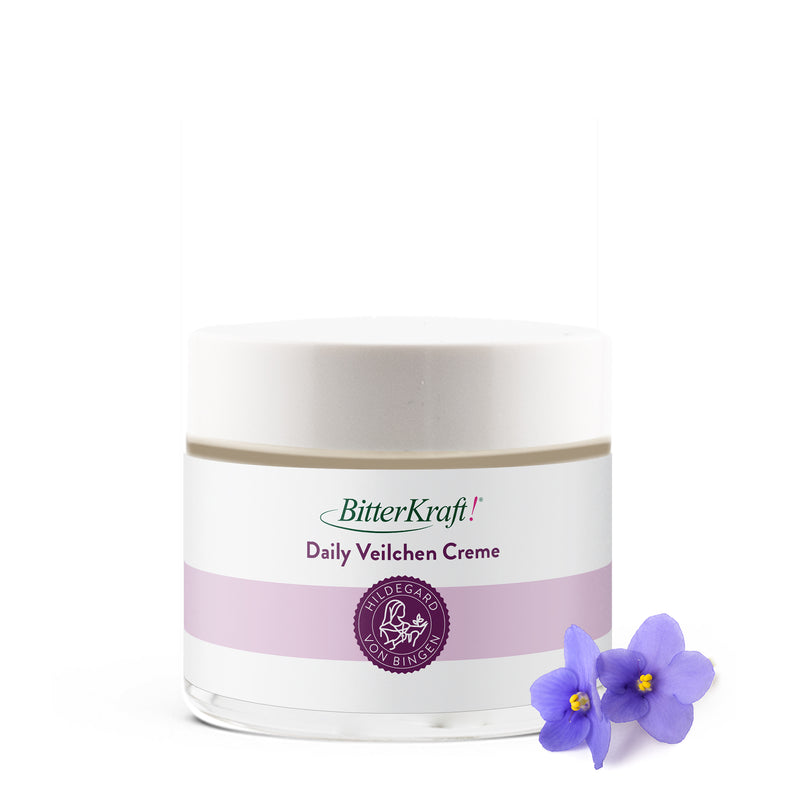
- Feuchtigkeitsspendende Creme mit ätherischen Ölen
- Rezeptur auf Basis von 800 Jahren Klosterwissen
- Bitterkraft – der Pionier seit 1996 von 4.000 Heilpraktikern verwendet!
- Beste Naturheilkunde: Bio & vegan
Vorkommen von Veilchen
Die Pflanzengattung Veilchen (Violoa) umfasst etwa 650 Arten, von denen der Großteil in den gemäßigten Zonen der Nordhalbkugel heimisch ist. In wärmeren Regionen kommen Veilchen eher in Höhenlagen vor. Bescheidenheit, mit denen Veilchen häufig in Verbindung gebracht werden, beweisen sie auch bei der Standortwahl. Mäßig feucht, aber nie trocken, humusreich, nicht allzu stark von der Sonne beschienen – so mögen die Blumen den Boden am liebsten. Im Garten wachsen sie gern im Schatten anderer Pflanzen. Wilde Veilchen gedeihen auf schattigen Wiesen, am Waldrand sowie an Zäunen und Hecken.
Inhaltsstoffe von Veilchen
Aufgrund seines ätherischen Öls, verschiedener Vitamine und Mineralstoffe ist das Veilchen nicht nur wegen seiner Schönheit interessant. Die Pflanzen enthalten Saponine, Bitterstoffe, Eugenol, Flavonoide, Glykoside und Salizylsäure als wichtige Inhaltsstoffe.
Wirkweise von Veilchen
Als Frühblüher kündigen Veilchen den Frühling an und sind im Garten schön anzusehen. Doch auch in der Küche machen sie einiges her: Mit ihrem lieblichen Aroma lassen sich damit vor allem Süßspeisen, aber auch herzhafte Gerichte wie Suppen und Salate verfeinern. Die essbaren Blüten geben auch eine wunderschöne Dekoration ab. Außerdem lassen sie sich zu Sirup, Blütenessig oder Fruchtsaft verarbeiten. Eine besondere Delikatesse stellen kandierte Veilchen dar.
Der griechischen und römischen Mythologie zufolge soll es dem Gott Vulkan mit dem Duft von Veilchen gelungen sein, einen Kuss von der Liebesgöttin Venus zu erhaschen. Wegen ihres betörenden Duftes werden Veilchenblüten auch von der Parfumindustrie gern verwendet. Aber nicht alle Blüten verströmen einen Duft.
Die wertvollen Inhaltsstoffe des Veilchens verhalfen ihm schon in der Antike zu Bekanntheit. Hippokrates empfahl es gegen Kopfschmerzen, Sehstörungen und Melancholie. Heute macht sich die Naturheilkunde vor allem seine schleimlösende Wirkung zunutze und schätzt es als Mittel gegen Husten und Atembeschwerden. Schweißtreibende und entspannende Effekte werden dem Veilchen mitunter ebenso zugeschrieben, sodass es sich einerseits bei Erkältungen mit Fieber, andererseits als leichtes Schlafmittel einsetzen lässt.
Für die innerliche und äußerliche Anwendung bietet sich ein Veilchen-Tee an. Als Kompresse oder Bad soll der Veilchen-Tee ebenfalls Hautprobleme lindern. Seine Wirkung auf die Haut zeigt sich auch in der Veilchen-Creme Hildegard von Bingen.
Aussehen von Veilchen
Bei Veilchen handelt es sich um zweijährige krautige Pflanzen, die gelegentlich zu Halbsträuchern heranwachsen. In der Blütezeit, die von März bis Mai dauert, zeigen sie sich in ihrer vollen Pracht. Dabei blühen Veilchen je nach Art in Gelb, Rot sowie häufig in Blau und Violett. Manche Vertreter färben sich aber auch weißlich beziehungsweise bräunlich bis schwarz.

Über den Autor Henrik Aulbach
Weitere Artikel
Magenbitterstoffe vor dem Essen: Warum die Reihenfolge entscheidend ist
Magenbitterstoffe vor dem Essen » Nach Hildegard von Bingen ✓ Ohne Zusatzstoffe ✓ Made in Germany – Jetzt mehr erfahren
Bitterstoffreiche Smoothies: Grüne Rezepte für den Verdauungsstart am Morgen
Bitterstoff-Smoothies für den Morgen » Nach Hildegard von Bingen ✓ Vegan ✓ Ohne Zusatzstoffe – Jetzt Rezepte entdecken!
Hildegard von Bingens Dinkelrezepte für eine gesunde Verdauung
Hildegard von Bingens Dinkelrezepte » Nach Hildegard von Bingen ✓ Ohne Zusatzstoffe ✓ Biozertifiziert – Jetzt entdecken