

Henrik Aulbach ist erfahrener Gesundheitsredakteur mit über 10 Jahren Erfahrung, Experte für pflanzliche Wirkstoffe und Kultivierung, Co-Gründer, Buchautor und selbstständiger Fachtexter im Gesundheitswesen seit 2020.
Erfahren Sie hier mehr über diesen Autor.

Rosenöl: Wirkung, Anwendung und Dosierung
Die Rose (Rosa) steht als Symbol für die Liebe und gilt als stolze Königin der Blumen. Ihr Duft ist einzigartig und lässt sich nur schwer in Worte fassen. Deshalb fließt ihr ...
Die Rose (Rosa) steht als Symbol für die Liebe und gilt als stolze Königin der Blumen. Ihr Duft ist einzigartig und lässt sich nur schwer in Worte fassen. Deshalb fließt ihr Öl in zahlreiche Parfüme ein und verleiht ihnen ein sinnliches Aroma. Rosenöl gehört nicht umsonst den kostbarsten Düften an, die wir kennen. Dabei handelt es sich um das ätherische Öl, das aus den Kronblättern der Pflanze gewonnen wird.

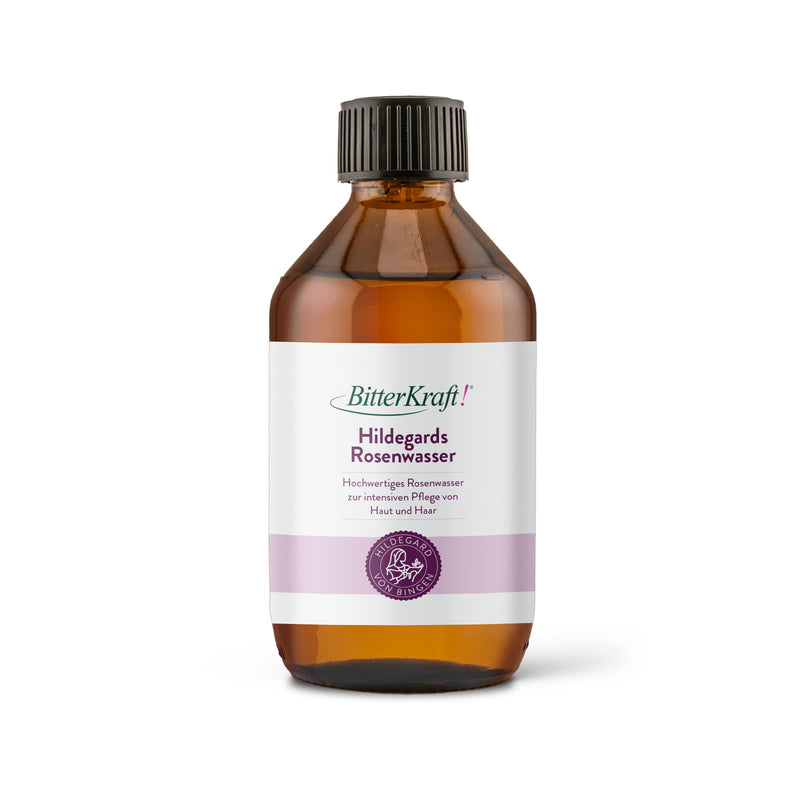
Hildegards Tipp:
- Hochwertiges Rosenwasser zur intensiven Pflege von Haut und Haar
- Rezeptur auf Basis von 800 Jahren Klosterwissen
- Bitterkraft – der Pionier seit 1996 von 4.000 Heilpraktikern verwendet!
- Beste Naturheilkunde: Bio & vegan
Vorkommen von Rosenöl
Innerhalb der Familie der Rosengewächse (Rosaceae) bilden Rosen die Pflanzengattung, von der sich auch der Name der Pflanzenfamilie ableitet. Sie kommen sowohl als Wild- als auch als Kulturrosen vor. Je nach Art gedeihen sie in gemäßigten und subtropischen Klimazonen. An die Temperatur stellt die Rose nur wenige Ansprüche, wichtiger ist ihr ein Plätzchen in der Sonne.
Die Blüten, aus denen das wertvolle Rosenöl destilliert wird, stammen in erster Linie aus Frankreich, Marokko, dem Iran, der Türkei und Bulgarien – vor allem in Rosenthal, wo ihr Anbau sogar namensgebend war. Dort werden die Kostbarkeiten händisch gepflügt. Gewonnen wird Rosenöl hauptsächlich aus den Arten:
- Rosa centifolia
- Rosa damascena
Um einen Liter Rosenöl zu destillieren, braucht es 5000 kg Kronblätter. Deshalb ist echtes, per Wasserdampf aus Rosenblüten gewonnenes Öl auch sehr teuer. Ein Liter bulgarisches Rosenöl kostet bis zu 10.000 Euro.
Inhaltsstoffe von Rosenöl
Die wichtigsten Inhaltsstoffe von Rosenöl sind Geraniol und Citronello. Des Weiteren enthält das Öl Farnesol, Nerol, Ethanol, Linalool, Eugenol, Citral, Phenylethylalkohol, Carvon, Eugenolmethylether, Aldehyde, Apfel- und Bernsteinsäure.
Wirkweise von Rosenöl
Nicht nur für die Parfümindustrie ist Rosenöl von Bedeutung. Seine wertvollen Inhaltsstoffe machen es auch für andere Verwendungsweisen interessant. So werden dem Öl entzündungshemmende und bakterizide Wirkungen zugeschrieben.
Nutzen lässt sich Rosenöl innerlich – unbedingt verdünnen! – und äußerlich. Auf die Haut aufgetragen, gilt es als Beautyallrounder, der das Hautbild verbessert und gleichzeitig seinen herrlichen Duft versprüht. Darüber hinaus kommt das Öl der Rose der Wundheilung zugute und hilft dabei, Entzündungen zu lindern. Auch die Haarpflege gewinnt durch das Öl. Es schenkt dem Haar Feuchtigkeit und bringt es zum Glänzen.
Als Multitalent erweist sich Rosenöl auch in der Naturheilkunde. So lassen sich damit Bronchitis und Halsschmerzen behandeln, aber auch Entzündungen am Zahnfleisch und Menstruationsbeschwerden. Von positiven Auswirkungen bei Migräne ist ebenfalls die Rede. Außerdem werden dem Öl stimmungsaufhellende und entspannende Effekte nachgesagt, wodurch sich sein Einsatz bei Stress und Angstzuständen rechtfertigt.
Aussehen von Rosenöl
In der Blütezeit verwandelt sich die Rose zur faszinierenden Schönheit, um die sich unzählige Mythen und Dichtungen ranken. Die meisten Arten besitzen fünf Kronblätter, aus denen das Rosenöl mittels aufwendiger Destillation schonend herausgelöst wird. Das Öl selbst ist eine Flüssigkeit, gelblich bis grünlich gefärbt.

Über den Autor Henrik Aulbach
Weitere Artikel

Magenbitterstoffe vor dem Essen: Warum die Reihenfolge entscheidend ist
Magenbitterstoffe vor dem Essen » Nach Hildegard von Bingen ✓ Ohne Zusatzstoffe ✓ Made in Germany – Jetzt mehr erfahren

Bitterstoffreiche Smoothies: Grüne Rezepte für den Verdauungsstart am Morgen
Bitterstoff-Smoothies für den Morgen » Nach Hildegard von Bingen ✓ Vegan ✓ Ohne Zusatzstoffe – Jetzt Rezepte entdecken!
Hildegard von Bingens Dinkelrezepte für eine gesunde Verdauung
Hildegard von Bingens Dinkelrezepte » Nach Hildegard von Bingen ✓ Ohne Zusatzstoffe ✓ Biozertifiziert – Jetzt entdecken