





Henrik Aulbach is an experienced health editor with over 10 years of experience, an expert in plant-based active ingredients and cultivation, co-founder, book author, and freelance specialist writer in healthcare since 2020.
Learn here more about this author.

Turmeric
Everything about Turmeric

Hildegards Tipp:
- Bitter compounds combined with the golden spice
- 100% natural ingredients
- Monastery Garden Meets Ayurveda
- High-dose herbal essences
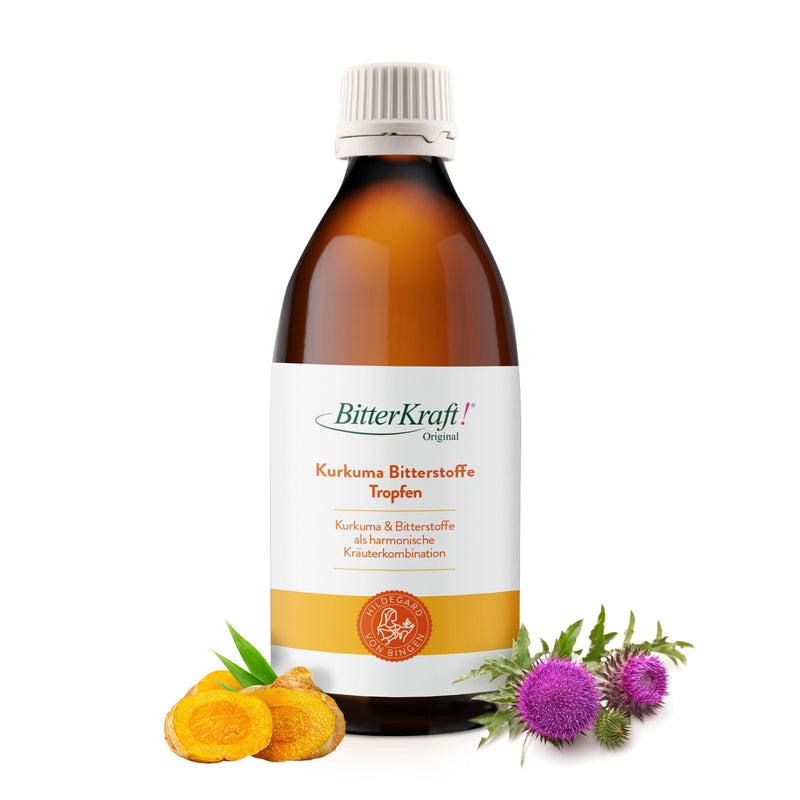
Occurrence of Turmeric
Turmeric, curcuma, yellow ginger, yellow root, saffron root, or curcuma – all names for one plant species: Botanically it is called Curcuma longa and belongs to the ginger family. Its native home is Southeast Asia. In India and China, turmeric has been cultivated for thousands of years as a food and medicinal plant. Meanwhile, its cultivation has also succeeded in other tropical regions, even in Australia. The plant prefers warm temperatures year-round and partial shade.
Turmeric reached Europe in the late Middle Ages via the Silk Road and soon became a sought-after spice, especially included in the well-known curry blend.
Ingredients of Turmeric
The most important ingredient of turmeric is curcumin. The natural pigment makes up about 3 percent and gives the rhizome its typical rich yellow color. Additionally, the rhizome contains up to 5 percent essential oils as well as resins, proteins, and sugars.
Effects of Turmeric
Turmeric is an important component in curry. But the plant shows its flavorful side not only dried as a spice. Also freshly prepared, the tuber enriches the diet and unfolds its sharp, resinous taste even in a tea.
Because of its strong yellow coloring, turmeric is also used for dyeing various materials.
Most interestingly, the ginger family plant is valued for its medicinal effects, which traditional Chinese medicine and Ayurveda have long utilized. Today, numerous studies are said to confirm the medical benefits of turmeric, which have earned the tubers the reputation as a superfood. However, scientific confirmation is still pending.
Turmeric is attributed with antioxidant and anti-inflammatory effects, based on the contained curcumin. The active ingredient is said to slow down and reduce cell damage. Anti-cancer effects are also suspected. Undisputed, however, is the positive effect turmeric has on digestion, as it stimulates the liver to produce bile acids. This is said to help treat bloating and feelings of fullness.
Appearance of Turmeric
The perennial, herbaceous plant can grow up to one meter tall. From about August, it develops an inflorescence that produces beautiful flowers. The rhizome is fleshy like ginger but significantly smaller and branches into tuberous secondary rootstocks that are yellow to yellow-orange in color.
Interesting Facts about Turmeric
Turmeric does not dissolve in water. Therefore, you should always stir a freshly prepared tea well. The Hindi revere the plant as a symbol of light and the sun.

About the author Henrik Aulbach
Weitere Artikel
Stomach bitters before eating: Why the order is crucial
Stomach bitters before meals » According to Hildegard von Bingen ✓ No additives ✓ Made in Germany – Learn more now

Bitter-rich Smoothies: Green Recipes for Starting Digestion in the Morning
Bitter Compound Smoothies for the Morning » According to Hildegard von Bingen ✓ Vegan ✓ No Additives – Discover Recipes Now!
Hildegard von Bingen's Spelt Recipes for Healthy Digestion
Hildegard von Bingen's Spelt Recipes » According to Hildegard von Bingen ✓ No Additives ✓ Organic Certified – Discover Now


