

Henrik Aulbach ist erfahrener Gesundheitsredakteur mit über 10 Jahren Erfahrung, Experte für pflanzliche Wirkstoffe und Kultivierung, Co-Gründer, Buchautor und selbstständiger Fachtexter im Gesundheitswesen seit 2020.
Erfahren Sie hier mehr über diesen Autor.

Korbblütler: Das Wichtigste im Ueberblick
Korbblütler sind eine weit verbreitete Pflanzenfamilie. Ihre botanische Bezeichnung lautet Asteraceae oder Compositae. Sie gehören den Bedecktsamigen Pflanzen an und...
Korbblütler sind eine weit verbreitete Pflanzenfamilie. Ihre botanische Bezeichnung lautet Asteraceae oder Compositae. Sie gehören den Bedecktsamigen Pflanzen an und machen davon rund 10 Prozent aus. Ihr Name rührt daher, dass ihre Köpfchen aus zahlreichen Einzelblüten bestehen. Was also auf den ersten Blick wie eine einzige Blüte anmutet, sind in Wahrheit viele - Ein Korb voll Blüten quasi.

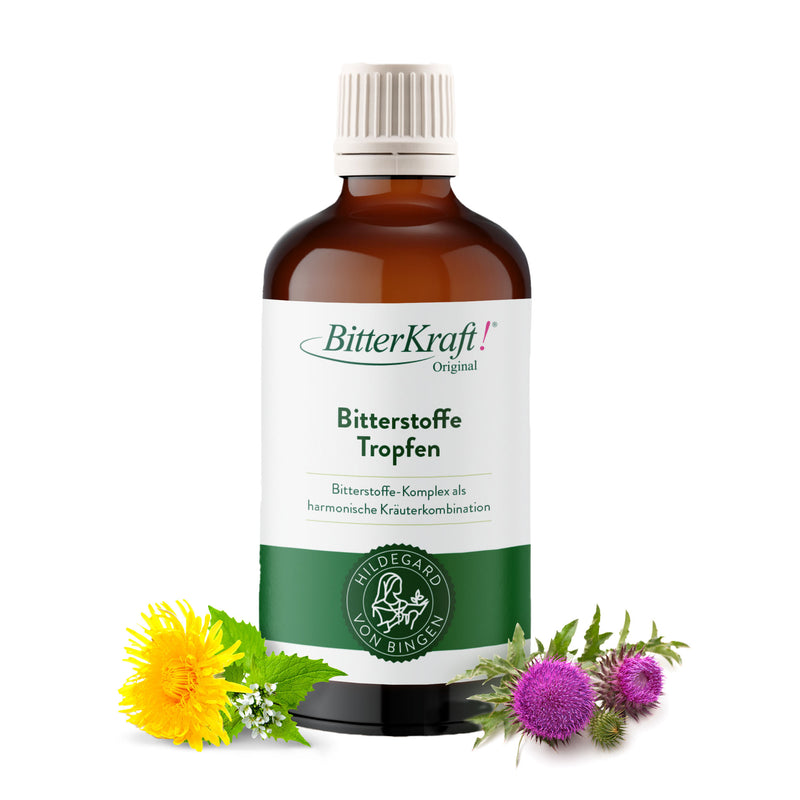
Hildegards Tipp:
- Wertvolle Bitterstoffe nach Hildegard Von Bingen
- Rezeptur auf Basis von 800 Jahren Klosterwissen
- Bitterkraft – der Pionier seit 1996 von 4.000 Heilpraktikern verwendet!
- Beste Naturheilkunde: Bio & vegan
Vorkommen von Korbblütler
Korbblütler untergliedern sich in circa 1.600 bis 1.700 Gattungen, unter die etwa 24.000 Arten fallen. Vertreter der Pflanzenfamilie gedeihen auf der ganzen Welt bis auf die Antarktis. In Europa gibt es keine Pflanzenfamilie, die ein solch riesiges Artenreichtum aufweist wie diese. Viele bekannte Wald- und Wiesenpflanzen, die hier heimisch sind, gehören den Korbblütlern an. Größere Pflanzenfamilien sich lediglich die Süßgräser und die Orchideengewächse.
Die Vertreter der Korbblütler haben Sie bereits gegessen, getrunken und sich ggf. auf die Haut geschmiert. Während in unseren Breitengraden aufgrund des gemäßigten Klimas Korbblütler bestens gedeihen, sind sie in tropischen Regionen eher unterbesetzt. Obwohl es bei uns zahlreiche Korbblütler gibt, wachsen in Mitteleuropa gerade einmal drei der 12 Unterfamilien.
Begeben Sie sich auf die Suche nach Korbblütlern, müssen Sie die Augen nach mannigfaltigen Formen, Farben und Wuchstypen offen halten. Manche Korbblütler sind etwa Kräuter, andere Halbsträucher und manche wachsen gar empor zu Sträuchern. Baumförmige Korbblütler gibt es ebenfalls! Selbst beim Badetag im See können Sie Korbblütler als Wasserpflanzen beobachten, ihr Vorkommen ist also enorm vielseitig.
Vertreter von Korbblütler
Typische Vertreter der Korbblütler sind:
- Arnika
- Echte Goldrute
- Echte Kamille
- Gänseblümchen
- Huflattich
- Löwenzahn
- Mariendistel
- Sonnenblume
- Wermut
Ganz besondere Vertreter der Korbblütler essen wir, so etwa den Kopfsalat (Lactuca sativa) oder die Artischocke (Cynara scolymus). Während die meisten bei Korbblütlern also an schöne Blüten und Blumen denken, zählen solche nützlichen Vertreter ebenfalls zu ihnen.
Viele Zierpflanzen entspringen übrigens der Familie der Korbblütler, so etwa die Kokardenblumen oder der Alpen-Edelweiß.
Inhaltsstoffe von Korbblütler
Zu den wichtigsten Asteraceae Inhaltsstoffen der Pflanzen zählen ätherische Öle. Diese werden nicht nur aus Öl-liefernden Pflanzen wie der Sonnenblume gewonnen, sondern aus zahlreichen Vertretern der Korbblütler. Ätherische Öle der Kamille, Mariendistel, Arnika, Echten Goldrute und noch vielen mehr sind heiß begehrt.
Interessant ist zudem, dass Korbblütler unterirdisch keine Stärke, sondern Inulin speichern. Dieses kann bspw. in der Ernährung für gesunde Abwechslung sorgen, weshalb Artischocken bei Verdauungsproblemen helfen können.
Viele Vertreter der Korbblütler werden als Arzneimittel verwendet, die Kamille kann etwa entzündungshemmend wirken. Die Calendula officinalis (Ringelblume) kann medizinisch ebenfalls Verwendung finden, gleichermaßen der Rote Sonnenhut (Echinaceae purpurea).
Unter den Korbblütlern finden sich einige Arten, die giftig sind, wir können uns also nicht an allen Asteraceae Inhaltsstoffen erfreuen.
Nutzung von Korbblütler
Je nach Pflanzenart werden Korbblütler für unterschiedliche Zwecke genutzt. Viele von ihnen lassen sich als Gemüse oder Salat zubereiten, beispielsweise die Artischocke. Den Korbblütlern gehören außerdem viele Vertreter an, die wir teilweise schon seit Jahrtausenden als Gewürz- und Heilpflanzen verwenden, wie beispielsweise die Kamille. Andere Pflanzen dienen der Gewinnung von Pflanzenölen, wie die Sonnenblume.
Aussehen von Korbblütler
Die einzelnen Vertreter der Korbblütler sind sich in ihren vegetativen Merkmalen recht ähnlich. So handelt es sich bei ihnen um krautige, vereinzelnd verholzende Pflanzen.
Korbblütler besitzen wechselständige Blätter, einige wenige Arten quirl- oder gegenständige. Bei wieder anderen Pflanzenarten haben sich die Blätter als Dornen ausgebildet. Die meisten Korbblütler sind ein- und zweijährige Pflanzen, ausdauernde Vertreter kommen nur selten vor.
Die körbchenförmigen Blütenstände sind ein wesentliches Charakteristikum der Korbblütler und namensgebend. Umgeben sind die Blütenkörbe von Hüllblättern. Der Blütenstand vermittelt oft den Eindruck, dass es sich um eine Einzelblüte handelt. Die Blüten der Korbblütler lassen sich in zwei Formen unterteilen: den Röhren- und den Zungenblüten.
In der Regel besitzt die Blüte neben den Einzelblüten jeweils fünf Kelchblätter und fünf Kronblätter, getoppt von einer Krone. Enthalten sind in der Krone meistens die Pollensäcke.
Wissenswertes über Korbblütler
Manche Menschen reagieren allergisch auf Korbblütler bzw. bestimmte Vertreter dieser.
Korbblütler: Häufig gestellte Fragen
Korbblütler Kreuzworträtsel: Welche Heilpflanzen der Korbblütler haben 6 Buchstaben?
Sie kommen gerade bei Ihrem Kreuzworträtsel nicht weiter? Vielleicht haben wir die Antwort. Ist eine Heilpflanze der Korbblütler mit 6 Buchstaben gesucht, kommen folgende in Frage:
Arnika
Klette
Wermut
Die Arnika ist berühmt und beliebt, weil sie lange Jahrhunderte als Wundkraut gedient hat. Im Mittelalter und zurzeit Hildegard von Bingens hat man Arnikaverbände auf Wunden aufgetragen, um Schmerzen zu lindern und Entzündungen zu hemmen. Ein Sud aus den Wurzeln der Klette wird seit Jahrhunderten bei Hautkrankheiten eingesetzt - So bspw. bei Geschwüren, Furunkeln und Ekzemen. Die Wermut nahm man lange Zeit hauptsächlich als Tee zu sich, in der Hoffnung, den Körper von innen zu reinigen.
Korbblütler Kreuzworträtsel: Welche Heilpflanzen Korbblütler haben 7 Buchstaben?
Ist eine Heilpflanze der Korbblütler mit 7 Buchstaben gefragt, lautet die Antwort: Beifuss oder Kamille. Die Kamille war schon bei Hildegard von Bingen beliebt. Sie sah in ihr entzündungshemmende Eigenschaften, womit sich die Einnahme als Tee ebenso empfahl, wie die Verwendung als Wundkraut. Der Beifuss wurde bei Rittern und Knaben bspw. eingesetzt, um wundgelaufene Füße zu entspannen. Zu diesem Zweck wird es Bädern beigefügt.
Korbblütler Kreuzworträtsel: Welche Heilpflanzen haben 5 Buchstaben?
Sind in Ihrem Kreuzworträtsel Heilpflanzen aus der Familie der Korbblütler mit nur 5 Buchstaben gefragt, lautet die Antwort wahlweise:
- Alant
- Aster
- Inula
Die Heilpflanze Alant wurde bereits von antiken Römern verwendet. Nach dem Trocknen enthält die Alantwurzel sehr viel Inulin, was im Verdacht steht, probiotisch wirken zu können. Alant wurde also bei Verdauungsproblemen eingesetzt. Die Aster wird auch seit alten Zeiten verwendet. Über den medizinischen Nutzen ist man sich noch unklar, weshalb Studien diese immer wieder ergründen möchten. Inula helenium L. ist der botanische Name für Alant.
Was sind berühmte Korbblütler?
Korbblütler sind auf der ganzen Welt vertreten. Für uns in Mitteleuropa gibt es daher andere typische Vertreter der Korbblütler als bspw. in Asien oder Nordamerika. Die berühmtesten Vertreter der Korbblütler sind wohl:
- Arnika
- Echte Kamille
- Löwenzahn
- Gänseblümchen
- Sonnenblume
- Mariendistel
- Echte Goldrute
Die meisten dieser berühmten Vertreter sind bekannt, weil sie in der Pflanzenheilkunde von Bedeutung sind. Kamille ist bspw. ein altbekanntes Wundkraut, die Sonnenblume ein Lieferant für gesunde Fette.
Nicht nur gibt es Heilpflanzen unter den Korbblütlern, viele sind zeitgleich Gewürz und Heilkraut. Korbblütler, die auch als Gewürze fungieren können, sind Estragon, Gewöhnlicher Beifuss und Wermut.
Was sind die wichtigsten Heilpflanzen der Korbblütler?
Am häufigsten verwendet wird vermutlich die Kamille - Wahlweise als Teeaufguss oder Zusatz in Cremes und kosmetischen Produkten. Man spricht der Kamille entzündungshemmende Eigenschaften zu, auch wenn diese noch nicht klinisch relevant ertestet wurden.
Weitere wichtige Vertreter (insbesondere der Vergangenheit) sind:
- Ringelblume
- Arnika
- Beifuss
- Wermut
- Estragon
Wie weiter oben besprochen, dienen viele von ihnen als Wundkräuter und als Helfer bei Verdauungsbeschwerden.

Über den Autor Henrik Aulbach
Passende Artikel
Weitere Artikel
Magenbitterstoffe vor dem Essen: Warum die Reihenfolge entscheidend ist
Magenbitterstoffe vor dem Essen » Nach Hildegard von Bingen ✓ Ohne Zusatzstoffe ✓ Made in Germany – Jetzt mehr erfahren
Bitterstoffreiche Smoothies: Grüne Rezepte für den Verdauungsstart am Morgen
Bitterstoff-Smoothies für den Morgen » Nach Hildegard von Bingen ✓ Vegan ✓ Ohne Zusatzstoffe – Jetzt Rezepte entdecken!
Hildegard von Bingens Dinkelrezepte für eine gesunde Verdauung
Hildegard von Bingens Dinkelrezepte » Nach Hildegard von Bingen ✓ Ohne Zusatzstoffe ✓ Biozertifiziert – Jetzt entdecken