


Kamille: Das Wichtigste im Ueberblick
Vorkommen von Kamille
Die Echte Kamille gehört seit Jahrtausenden den wichtigsten Heilpflanzen an. In Europa ist die einjährige krautige Pflanze

Hildegards Tipp:
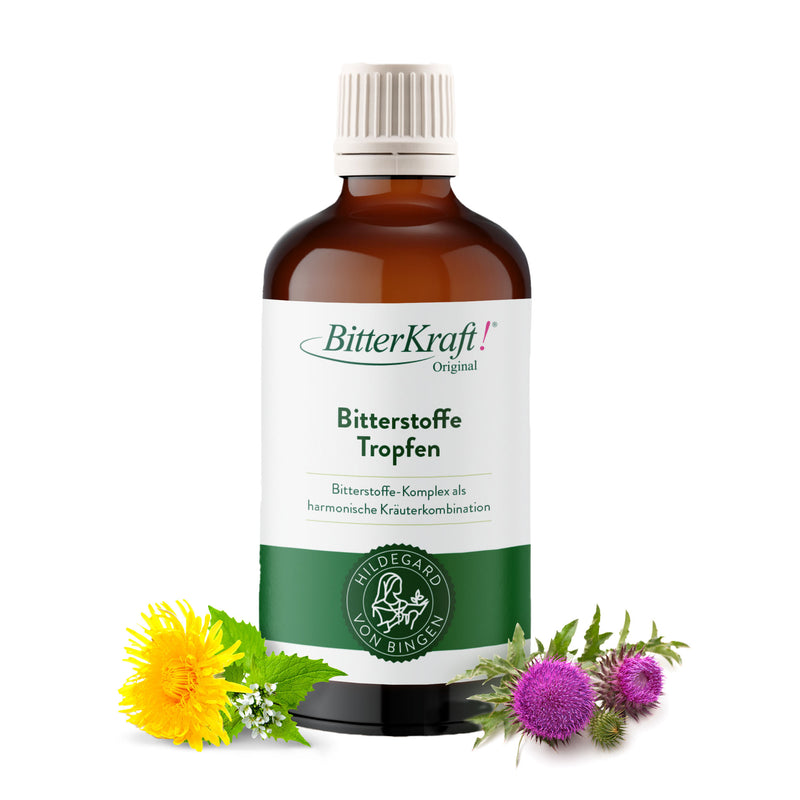
- Wertvolle Bitterstoffe nach Hildegard Von Bingen
- Rezeptur auf Basis von 800 Jahren Klosterwissen
- Bitterkraft – der Pionier seit 1996 von 4.000 Heilpraktikern verwendet!
- Beste Naturheilkunde: Bio & vegan
Vorkommen von Kamille
Die Echte Kamille gehört seit Jahrtausenden den wichtigsten Heilpflanzen an. In Europa ist die einjährige krautige Pflanze heutzutage weit verbreitet, genauso wie auf beiden amerikanischen Kontinenten und in Australien, wo sie inzwischen eingebürgert wurde. Ihr ursprüngliches Verbreitungsgebiet war dagegen auf Vorderasien sowie Süd- und Osteuropa beschränkt.
Äcker und Ödland verhelfen der Kamille zu üppigem Wachstum. Dabei ist sie vor allem auf nährstoffreichen, humosen Böden zu finden, vor allem ton- und Lehmböden.
Wirkweise von Kamille
Die Echte Kamille ist nicht nur ein bewährtes Hausmittel aus Großmutters Hausapotheke. Seit der Antike nutzen die Menschen die Echte Kamille als Heilpflanze – hier zeigt sie sich als ein wahrer Allrounder der Naturheilkunde und wird sowohl innerlich als auch äußerlich verwendet. Die Wirkweise des Korbblütlers erstreckt sich von entzündungshemmenden und krampflösenden Effekten, über antimikrobielle, bis hin zu wundheilungsfördernden und desodorierenden.
Bei Magen-Darm-Erkrankungen und -Krämpfen verschafft ein aus den Blüten der Kamille zubereiteter Tee Abhilfe. Eine Spülung oder Gurgellösung eignet sich wunderbar bei entzündetem Zahnfleisch und gereiztem Hals. Auch zum Inhalieren bei Atemwegsbeschwerden ist die Kamille ein bewährtes Hausmittel.
Äußerlich lindert das Heilkraut durch Umschläge oberflächliche Hautverletzungen, Verbrennungen und Wunden ebenso wie bakteriell ausgelöste Hauterkrankungen. Diese Wirkung machen sich auch viele Salben und Cremes zunutze, die Kamille als Wirkstoff enthalten. Hämorriden und Infektionen im Anal- sowie Genitalbereich lassen sich mit Sitzbädern behandeln.
Inhaltsstoffe von Kamille
Das breite Wirkspektrum der Echten Kamille ist auf ein ätherisches Öl zurückzuführen, dessen Gehalt in der Pflanze zwischen 0,3 und 1,5 Prozent schwankt: das Kamillenöl. Weitere Inhaltstoffe sind Flavonoide und Cumarine.
Aussehen von Kamille
Die Pflanzen werden zwischen 15 und 50 Zentimeter hoch, ihre zwei- bis dreifach gefiederten Blätter sind wechselständig angeordnet. Ihre schon von Weitem zu erkennenden Blütenköpfe haben die Farbe von Gold. Die gelben Röhrenblüten, dicht gedrängt in der Mitte des Blütenkopfes, werden gesäumt von weißen Zungenblüten. Ob es sich um die Echte Kamille handelt, lässt sich gewissermaßen „erriechen“, denn nur sie verströmt den charakteristischen Duft.
Wissenswertes über Kamille
Die Kamille tut sich nicht nur als Heilpflanze hervor, frühere Kulturen sahen das zarte Pflänzchen, das in seinem Aussehen ein wenig an die Sonne erinnert, als heilig an. Die Germanen verehrten mit ihr ihren Lichtgott Baldur, die Ägypter den Sonnengott Re.
Menschen, die allergisch auf Korbblütler reagieren, sollten von Kamille tunlichst Abstand nehmen.
Magenbitterstoffe vor dem Essen: Warum die Reihenfolge entscheidend ist
Magenbitterstoffe vor dem Essen » Nach Hildegard von Bingen ✓ Ohne Zusatzstoffe ✓ Made in Germany – Jetzt mehr erfahren
Bitterstoffreiche Smoothies: Grüne Rezepte für den Verdauungsstart am Morgen
Bitterstoff-Smoothies für den Morgen » Nach Hildegard von Bingen ✓ Vegan ✓ Ohne Zusatzstoffe – Jetzt Rezepte entdecken!
Hildegard von Bingens Dinkelrezepte für eine gesunde Verdauung
Hildegard von Bingens Dinkelrezepte » Nach Hildegard von Bingen ✓ Ohne Zusatzstoffe ✓ Biozertifiziert – Jetzt entdecken