

Henrik Aulbach ist erfahrener Gesundheitsredakteur mit über 10 Jahren Erfahrung, Experte für pflanzliche Wirkstoffe und Kultivierung, Co-Gründer, Buchautor und selbstständiger Fachtexter im Gesundheitswesen seit 2020.
Erfahren Sie hier mehr über diesen Autor.

Honig in der Klostermedizin
Golden in der Farbe, vielseitig in der Wirkung: Honig ist weit mehr als ein Nahrungsmittel. Grundsätzlich handelt es sich bei Honig um eine konzentrierte Zuckerlösung, die Ho...
Golden in der Farbe, vielseitig in der Wirkung: Honig ist weit mehr als ein Nahrungsmittel. Grundsätzlich handelt es sich bei Honig um eine konzentrierte Zuckerlösung, die Honigbienen aus dem Nektar von Pflanzen herstellen. Damit stellt die süße Masse ein Naturprodukt dar, das nicht auf synthetischem Weg erzeugt werden kann.

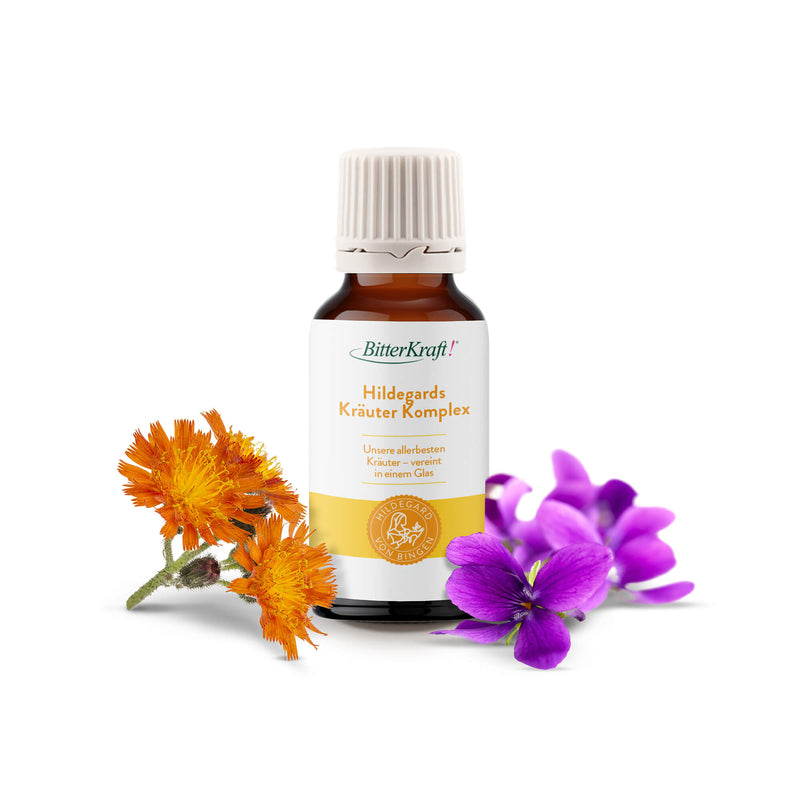
Hildegards Tipp:
- Milder Kräutergeist mit 5 Hildegard-Heilpflanzen für die Seele
- Rezeptur auf Basis von 800 Jahren Klosterwissen
- Bitterkraft – der Pionier seit 1996 von 4.000 Heilpraktikern verwendet!
- Beste Naturheilkunde: Bio & vegan
Vorkommen und Entstehung von Honig
Honigbienen gewinnen Honig aus dem Nektar von Pflanzenblüten. Während sie von Blüte zu Blüte fliegen und diese dabei bestäuben, sammeln Bienen den kostbaren Blütennektar und saugen ihn mit ihrem Rüssel in ihren Honigmagen. Wenn sie zu ihrem Bienenstock zurückkehren, würgen sie den Mageninhalt wieder hoch. Der Nektar hat sich im Magen währenddessen mit körpereigenen Enzymen vermengt, ein Teil des enthaltenen Wassers ist bereits verdunstet.
Nun sind die Stockbienen an der Reihe. Auch diese Bienen nehmen die Vorstufe des Honigs mehrere Male auf, versetzen sie dabei mit ihrem Speichel und würgen ihn erneut hervor. Auf diese Weise wird die süße Masse immer dickflüssiger in ihrer Konsistenz. Später lassen die Bienen sie in einer Wabe trocknen, die sie mit körpereigenem Wachs verschließen – Imker nennen diesen Vorgang Verdeckeln. Auch wenn der Honig fertig ist, lagern ihn die Bienen mehrfach in ihrem Bienenstock um.
Der fertige Honig dient den Bienen in erster Linie als Nahrung, die sie über den Winter bringt. Und diesen nährstoffreichen Vorrat müssen sich die Tiere hart erarbeiten.
Inhaltsstoffe von Honig
Honig besteht zu rund 80 Prozent aus Trauben- und Fruchtzucker, der Rest setzt sich größtenteils aus Wasser zusammen. Darüber hinaus stecken in der süßen Masse noch Vitamine, Eiweiße, Enzyme und Mineralstoffe, darunter finden sich Kalium, Magnesium, Eisen und Kalzium. Im Detail unterscheiden sich die einzelnen Honigsorten jedoch in ihrer Zusammensetzung.
Wirkweise von Honig
Honig werden viele positive Eigenschaften zugeschrieben. In der Naturheilkunde wird er schon lange eingesetzt. Dazu lässt er sich sowohl innerlich als auch äußerlich verabreichen. Von seiner antibakteriellen und heilungsfördernden Wirkung sind inzwischen sogar zahlreiche Schulmediziner überzeugt. Die antibakterielle Wirksamkeit soll auf verschiedene Inhaltsstoffe zurückzuführen sein. Zur Wundheilung nutzten die Menschen Honig bereits im Mittelalter. Heute hat sich die Forschung in diesem Bereich vor allem auf den kostbaren Manuka-Honig konzentriert, der mittlerweile sogar speziell aufbereitet als Medizinpräparat zugelassen ist.
Als Mittel gegen Husten und Erkältungen ist Honig ein beliebtes Hausmittel. In heißer Milch aufgelöst, soll er die Erkältungsbeschwerden lindern.
Wissenswertes über Honig
Die alten Ägypter schätzten Honig als Speise der Götter und opferten ihn ihren Gottheiten.

Über den Autor Henrik Aulbach
Weitere Artikel
Magenbitterstoffe vor dem Essen: Warum die Reihenfolge entscheidend ist
Magenbitterstoffe vor dem Essen » Nach Hildegard von Bingen ✓ Ohne Zusatzstoffe ✓ Made in Germany – Jetzt mehr erfahren
Bitterstoffreiche Smoothies: Grüne Rezepte für den Verdauungsstart am Morgen
Bitterstoff-Smoothies für den Morgen » Nach Hildegard von Bingen ✓ Vegan ✓ Ohne Zusatzstoffe – Jetzt Rezepte entdecken!
Hildegard von Bingens Dinkelrezepte für eine gesunde Verdauung
Hildegard von Bingens Dinkelrezepte » Nach Hildegard von Bingen ✓ Ohne Zusatzstoffe ✓ Biozertifiziert – Jetzt entdecken