

Henrik Aulbach ist erfahrener Gesundheitsredakteur mit über 10 Jahren Erfahrung, Experte für pflanzliche Wirkstoffe und Kultivierung, Co-Gründer, Buchautor und selbstständiger Fachtexter im Gesundheitswesen seit 2020.
Erfahren Sie hier mehr über diesen Autor.

Gewürz-Kräuter in der Klostermedizin
Alles Wissenswerte rund um Gewürz-Kräuter
Ihr aromatischer Geschmack und Geruch prädestiniert Kräuter als Gewürz. Sie geben manchem Gericht eine ganz neue Note und verleihen ihm ein spezielles Aroma.

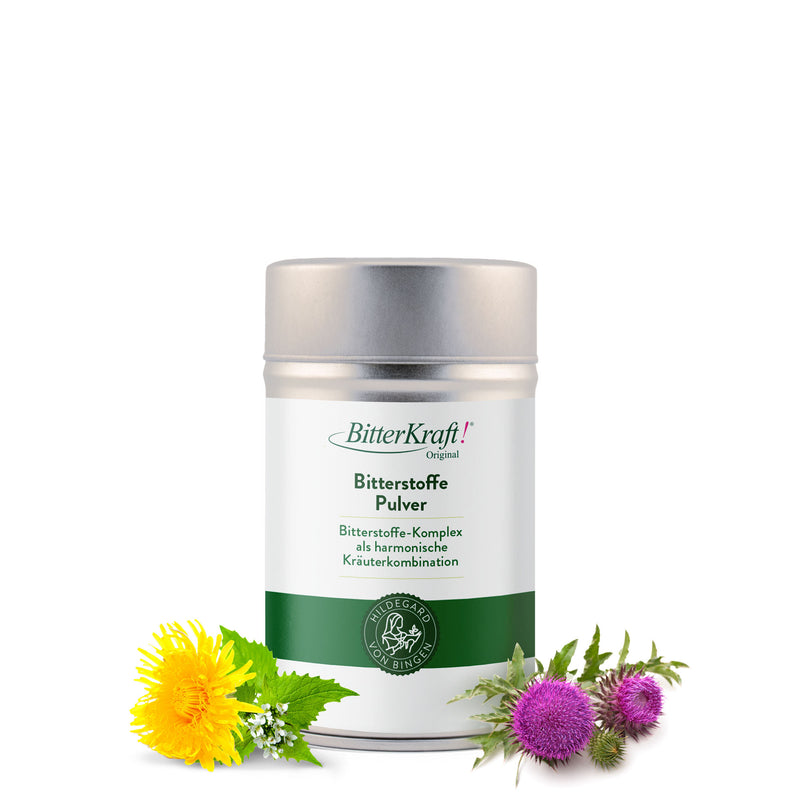
Hildegards Tipp:
- Ausgewählte Bitterkräuter in Pulverform
- Rezeptur auf Basis von 800 Jahren Klosterwissen
- Bitterkraft – der Pionier seit 1996 von 4.000 Heilpraktikern verwendet!
- Beste Naturheilkunde: Bio & vegan
Gewürze und Kräuter – worin unterscheiden sie sich?
Obwohl Kräuter gern und häufig als Gewürz dienen, ist zwischen beiden Begriffen eine Unterscheidung vorzunehmen. Kräuter stellen gewissermaßen eine Unterart von Gewürzen dar. Eine genaue Begriffsbestimmung legt das Lebensmittelgesetz vor:
Als Gewürze und Kräuter werden Pflanzenteile bezeichnet, deren natürliche Inhaltsstoffe Lebensmittel geschmacklich und geruchlich veredeln. Als Gewürz dienen die Blüten, Früchte, Samen, Rinden, Wurzeln oder Zwiebeln von Pflanzen. Als Kräuter werden dagegen Blätter, Blüten oder Sprossen gerechnet, die frisch oder getrocknet Verwendung finden.
Kräuter als natürliche Würze
Kräuter als Gewürze zu verwenden, bringt viele Vorteile mit sich:
- Die Speisen kommen ohne Geschmacksverstärker und künstliche Zusatzstoffe aus.
- Kräuter würzen das Essen auf ganz natürliche Art und Weise.
- Kräuter verfeinern Speisen auch optisch und bieten sich zur Verzierung an.
- Aromatische Kräuter sind reich an wertvollen Inhaltsstoffen wie Vitaminen und Mineralstoffen und daher für eine gesunde Ernährung besonders förderlich.
- Viele Kräuter stellen Heilpflanzen dar und besitzen daher als Gewürz zusätzliche positive Eigenschaften.
Um frische Kräuter als Gewürz zu nutzen, sollten sie erst unmittelbar vor ihrem Einsatz geerntet werden. Schneiden Sie Gartenkräuter direkt am Stil ab. So können die Triebe nachwachsen. Spülen Sie die frisch geernteten Pflanzen kurz unter Wasser ab und hacken Sie sie klein.
Damit Aroma, Vitamine und die weiteren Inhaltsstoffe erhalten bleiben, empfiehlt es sich, frische Kräuter zum Würzen erst am Ende der Zubereitung zuzugeben.
Welche Gewürz-Kräuter zu welchen Speisen?
|
Kraut als Gewürz |
Gemüse |
Suppe/ |
Fleisch |
Fisch |
Soßen |
Backwaren |
|
Basilikum |
X |
|
X |
|
X |
|
|
Beifuß |
x |
|
X |
|
|
|
|
Bohnenkraut |
X |
|
X |
|
|
|
|
Dill |
X |
|
X |
X |
X |
|
|
Gartenkresse |
X |
X |
|
|
|
|
|
Koriander |
X |
|
|
|
X |
X |
|
Liebstöckel/Maggikraut |
X |
X |
X |
|
X |
|
|
Majoran |
X |
X |
X |
X |
|
|
|
Oregano |
X |
X |
X |
X |
X |
|
|
Petersilie |
X |
X |
X |
X |
X |
|
|
Rosmarin |
X |
|
X |
X |
|
|
|
Salbei |
|
|
X |
X |
|
|
|
Thymian |
|
|
X |
|
X |
|

Über den Autor Henrik Aulbach
Weitere Artikel
Magenbitterstoffe vor dem Essen: Warum die Reihenfolge entscheidend ist
Magenbitterstoffe vor dem Essen » Nach Hildegard von Bingen ✓ Ohne Zusatzstoffe ✓ Made in Germany – Jetzt mehr erfahren
Bitterstoffreiche Smoothies: Grüne Rezepte für den Verdauungsstart am Morgen
Bitterstoff-Smoothies für den Morgen » Nach Hildegard von Bingen ✓ Vegan ✓ Ohne Zusatzstoffe – Jetzt Rezepte entdecken!
Hildegard von Bingens Dinkelrezepte für eine gesunde Verdauung
Hildegard von Bingens Dinkelrezepte » Nach Hildegard von Bingen ✓ Ohne Zusatzstoffe ✓ Biozertifiziert – Jetzt entdecken