
Henrik Aulbach ist erfahrener Gesundheitsredakteur mit über 10 Jahren Erfahrung, Experte für pflanzliche Wirkstoffe und Kultivierung, Co-Gründer, Buchautor und selbstständiger Fachtexter im Gesundheitswesen seit 2020.
Erfahren Sie hier mehr über diesen Autor.

Bertram: Das Wichtigste im Ueberblick
Vorkommen von Bertram Kräuter
Der Bertram ist eine Gewürzpflanze, welche seit Tausenden Jahren von Menschen verwendet wird. Im Zusammenhang mit Bertram muss allerdings die He...

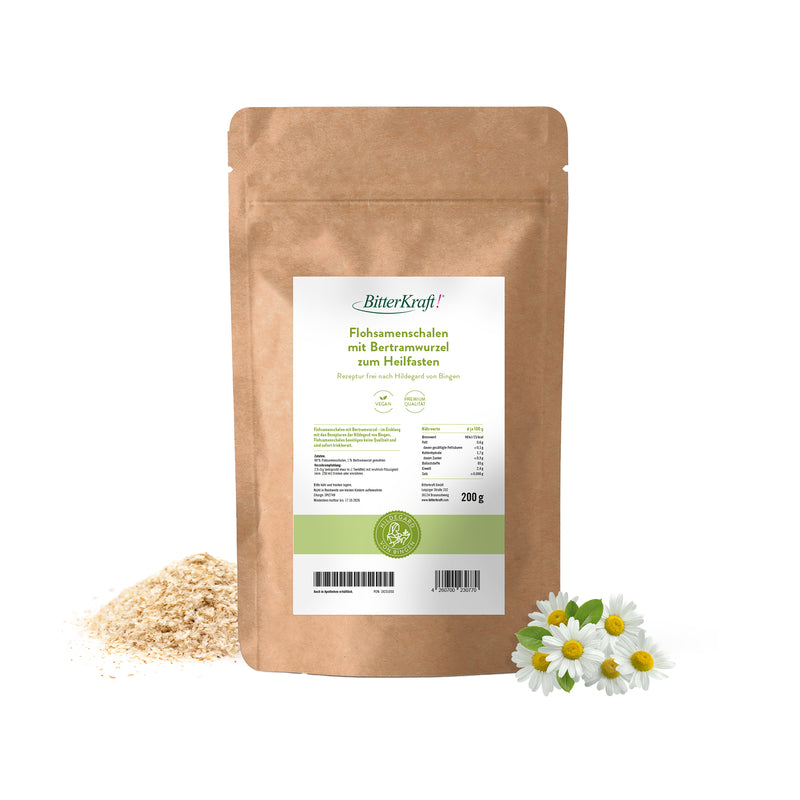
Hildegards Tipp:
- Nahrungsergänzung mit hohem Ballaststoffgehalt
- Rezeptur auf Basis von 800 Jahren Klosterwissen
- Bitterkraft – der Pionier seit 1996 von 4.000 Heilpraktikern verwendet!
- Beste Naturheilkunde: Bio & vegan
Vorkommen von Bertram Kräuter
Der Bertram ist eine Gewürzpflanze, welche seit Tausenden Jahren von Menschen verwendet wird. Im Zusammenhang mit Bertram muss allerdings die Heilige Hildegard von Bingen aufgeführt werden, da sie in großen Teilen das Potenzial der Pflanze entdeckt hat. Aufgeführt hatte sie die Erkenntnisse in ihrem Werk „Physica - Heilkraft der Natur”, von dem leider nur noch Abschriften existieren.
Äußerlich ähnelt Bertram als Korbblütler der Kamille. Heimisch ist er vor allem am Mittelmeer, in Marokko oder auch im Kaukasus. Das soll nicht heißen, dass der Bertram in Deutschland nicht vorkommt - Begeben Sie sich in Steingärten, könnten hier die weiß-lila Blüten leuchten. Als Gewürz verwenden wir jedoch die Wurzeln der Pflanze.
Als krautige Pflanze wird sie maximal fünf Zentimeter hoch. Die Blüten sind i. d. R. von Mai bis August zu sehen. Andere Namen für dieses Gewürz sind Beertrain, Bertrankraut oder Mutterkraut. In seinen heimischen Gebieten sind es Weiden oder Waldlichtungen, wo sich der Bertram besonders wohlfühlt.
Inhaltsstoffe von Bertram
Der Name „Bertram” leitet sich vom griechischen „pyr” ab, was Feuer bedeutet. Das ist eine Anspielung auf die Schärfe: Getrocknet und vermahlen schmeckt das Pulver anfangs recht neutral, brennt dann allerdings leicht auf der Zunge.
Hauptsächlich konsumiert man Bertram aufgrund seiner Zuckerverbindungen und ätherischer Öle. In diesen enthalten sind zahlreiche sekundäre Pflanzenstoffe, die Ihrer Gesundheit weiter zuspielen. Als typische Gerbstoffe lassen sich Inulin, Pellitorin und Anacyclin listen. Spurenelemente und Mineralstoffe sind, wie es sich gehört, in kleinen Mengen ebenfalls vorhanden.
Wirkweise von Bertram
Der Bertram kann gegen zahlreiche Symptome helfen. Inulin kann bspw. immunisierend wirken, also möglicherweise dabei helfen, Krankheiten und Weiteres zu bekämpfen. Darüber hinaus spricht man dem Bertram folgende Eigenschaften zu:
- schleimlösend
- entzündungshemmend
- antioxidativ
- antiviral
- antimykotisch
- antiseptisch
Bei zahlreichen lästigen Krankheitssymptomen ließe sich also Bertram ergänzend einnehmen. Insbesondere wird es bei Magen-Darmproblemen eingenommen und zum Regulieren der Darmflora.
Aussehen von Betram Kräuter
Der Bertram gehört zur Gattung der Ringblumen und damit wiederum zur Familie der Korbblütler. Wie bereits erwähnt, wächst sie bis zu 5 Zentimeter hoch. Grünlich und rosettenartig erscheinen die Blüten im Sommer, fiederschnittige Blätter umsäumen diese. In Deutschland muss man einigermaßen Glück haben, um den Bertram zu finden. Dafür ziehen sich seine Vorkommen vom Mittelmeerraum noch bis in die österreichen Hochgebiete.

Über den Autor Henrik Aulbach
Weitere Artikel
Magenbitterstoffe vor dem Essen: Warum die Reihenfolge entscheidend ist
Magenbitterstoffe vor dem Essen » Nach Hildegard von Bingen ✓ Ohne Zusatzstoffe ✓ Made in Germany – Jetzt mehr erfahren
Bitterstoffreiche Smoothies: Grüne Rezepte für den Verdauungsstart am Morgen
Bitterstoff-Smoothies für den Morgen » Nach Hildegard von Bingen ✓ Vegan ✓ Ohne Zusatzstoffe – Jetzt Rezepte entdecken!
Hildegard von Bingens Dinkelrezepte für eine gesunde Verdauung
Hildegard von Bingens Dinkelrezepte » Nach Hildegard von Bingen ✓ Ohne Zusatzstoffe ✓ Biozertifiziert – Jetzt entdecken