
Henrik Aulbach ist erfahrener Gesundheitsredakteur mit über 10 Jahren Erfahrung, Experte für pflanzliche Wirkstoffe und Kultivierung, Co-Gründer, Buchautor und selbstständiger Fachtexter im Gesundheitswesen seit 2020.
Erfahren Sie hier mehr über diesen Autor.

Beinwell – Heilwirkung und Anwendung
Vorkommen von Beinwell
Der Echte Beinwell (Symphytum officinale) ist ein Raublattgewächs, das in Eurasien beheimatet ist. Von West nach Ost ist er in den Ländern Spa...

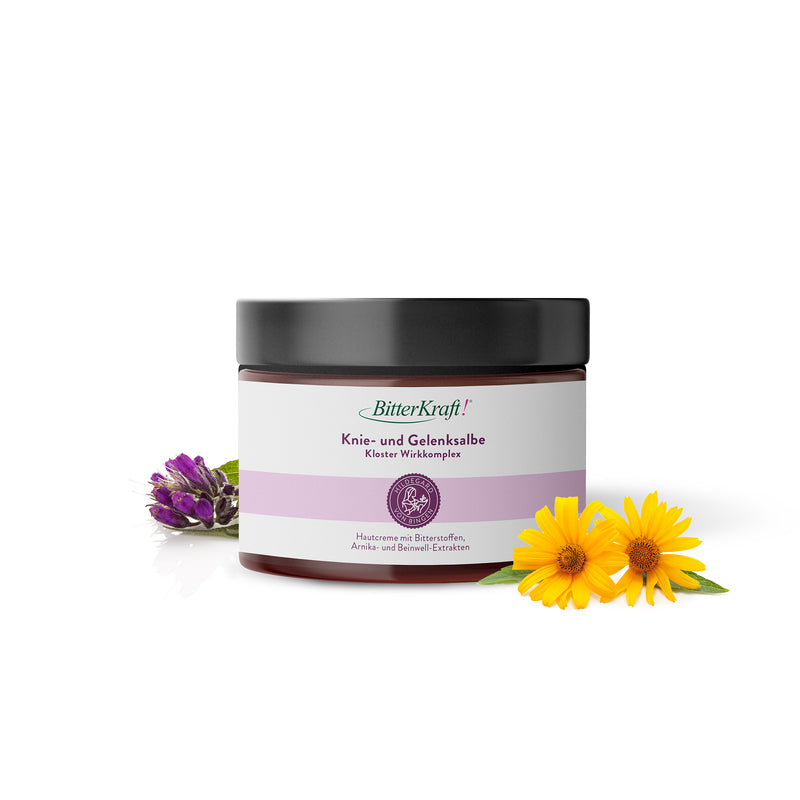
Hildegards Tipp:
- Salbe für beanspruchte Haupartien von Knien und Gelenken nach Hildegard von Bingen
- Rezeptur auf Basis von 800 Jahren Klosterwissen
- Bitterkraft – der Pionier seit 1996 von 4.000 Heilpraktikern verwendet!
- Beste Naturheilkunde: Bio & vegan
Vorkommen von Beinwell
Der Echte Beinwell (Symphytum officinale) ist ein Raublattgewächs, das in Eurasien beheimatet ist. Von West nach Ost ist er in den Ländern Spanien bis China vertreten, von Nord nach Süd finden Sie ihn in Großbritannien bis Italien. In Südeuropa kommt er selten vor, in Nordeuropa nur eingeschleppt.
Bevorzugt wächst Beinwell an sonnigen Orten, mit leichtem Schatten kommt er aber auch zurecht. Er deutet auf einen stickstoff- und nährstoffhaltigen Boden hin. Die durstige Pflanze tummelt sich gern in feuchten Gebieten wie Lehmböden, Auenwäldern und Moorwiesen.
Wirkweise von Beinwell
Schon die alten Römer setzten auf die angenehme Wirkung von Beinwell – bei Knochenbrüchen. So verrät sein Name, wofür er auch in Deutschland seit Jahrhunderten verwendet wird. Als Arzneipflanze ist er heutzutage bei Problemen mit dem Bewegungsapparat, Prellungen, Blutergüssen und Zerrungen zugelassen. Hildegard von Bingen führte den Echten Beinwell unter dem lateinischen Namen Consolida, das übersetzt „zusammengewachsen“ bedeutet.
Seine getrockneten Wurzeln, das Kraut und die Blätter finden sich zur äußerlichen Anwendung in Salben, Ölen und Tinkturen wieder. In dieser Form können Sie Beinwell kaufen. Aufgrund seiner Toxizität ist dringend davon abzuraten, ihn innerlich anzuwenden.
Inhaltsstoffe von Beinwell
Beinwell enthält einige vorteilhafte Stoffe: Allantoin, Cholin, Gerbstoffe, Rosmarinsäure und Schleimstoffe. Seine Giftigkeit entsteht durch Alkaloide. Pyrrolizidinalkaloide sind leberschädigend und potentiell krebserregend, werden bei einer äußerlichen Anwendung allerdings nur wenig über die Haut aufgenommen.
Aussehen von Beinwell
Der Echte Beinwell ist eine winterharte, ausdauernd krautige Pflanze, die zwischen 30 und 60 Zentimeter hochwächst und bis zu zwanzig Jahre alt wird. Sowohl Stängel als auch Blätter sind hart und borstig. Die wechselseitig angeordneten, ovalen Laubblätter werden bis zu 25 Zentimeter lang.
Von Juni bis August blüht er weißlich, rosa oder violett. Die Blütenstände hängen glockenförmig in Trauben herab und werden etwa zwei Zentimeter groß. Aufgrund ihrer Form können nur Hummeln mit ihrem langen Rüssel sie bestäuben.
Wissenswertes über Beinwell
Beinwell ist nicht nur eine Heilpflanze, sondern auch eine hervorragende Düngerpflanze. Ihre Blätter enthalten viel Stickstoff und Kalium.

Über den Autor Henrik Aulbach
Weitere Artikel
Magenbitterstoffe vor dem Essen: Warum die Reihenfolge entscheidend ist
Magenbitterstoffe vor dem Essen » Nach Hildegard von Bingen ✓ Ohne Zusatzstoffe ✓ Made in Germany – Jetzt mehr erfahren
Bitterstoffreiche Smoothies: Grüne Rezepte für den Verdauungsstart am Morgen
Bitterstoff-Smoothies für den Morgen » Nach Hildegard von Bingen ✓ Vegan ✓ Ohne Zusatzstoffe – Jetzt Rezepte entdecken!
Hildegard von Bingens Dinkelrezepte für eine gesunde Verdauung
Hildegard von Bingens Dinkelrezepte » Nach Hildegard von Bingen ✓ Ohne Zusatzstoffe ✓ Biozertifiziert – Jetzt entdecken