


Wie kann man schnell einschlafen?
Abends nach dem Zubettgehen schnell einzuschlafen und erst am Morgen wieder frisch und erholt sowie bereit für den neuen Tag aufzuwachen, wünschen wir uns alle. Leider aber sieht die Realität oft anders aus. ...
Abends nach dem Zubettgehen schnell einzuschlafen und erst am Morgen wieder frisch und erholt sowie bereit für den neuen Tag aufzuwachen, wünschen wir uns alle. Leider aber sieht die Realität oft anders aus. Da sehnen sich viele danach, besser einschlafen zu können. Stattdessen sind Einschlaf- und Durchschlafprobleme (Insomnie) an der Tages- oder besser Nachtordnung. Gelegentlich kommt dies laut Stiftung Gesundheitswissen bei etwa einem Drittel der Bevölkerung Deutschlands vor.
Allerdings trifft das Krankheitsbild der Insomnie nur auf etwa 6 % der Menschen hierzulande zu. In diesen Fällen sollten Sie in jedem Fall, wie bei anderen Schlafstörungen von der Schlafapnoe über die Narkolepsie bis hin zur Agrypnie, einen Arzt aufsuchen. Aber auch, wenn die Beeinträchtigungen des Schlafs nur ab und zu stattfinden, lassen sich viele, um besser einschlafen zu können, Mittel mit Tranquilizern wie Flurazepam, Diazepam, Temazepam oder Triazolam verschreiben. Welche Alternativen aber gibt es, um besser einschlafen und durchschlafen zu können?


Hildegards Tipp:
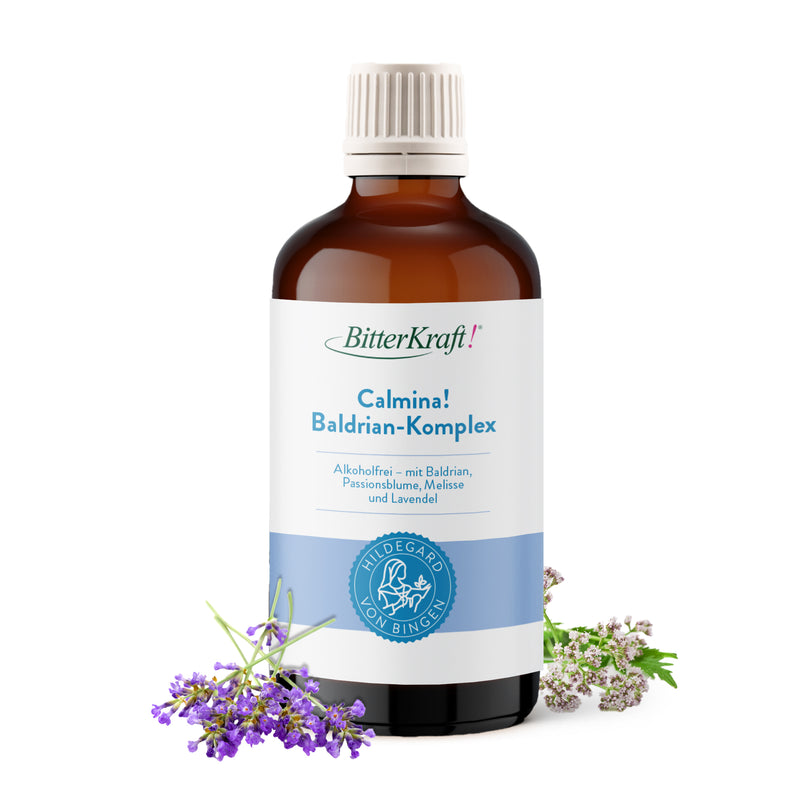
- Fein abgestimmtes Nahrungsergänzungsmittel mit Baldrian, Lavendel, Passionsblume & Hopfen
- Rezeptur auf Basis von 800 Jahren Klosterwissen
- Bitterkraft - der Pionier seit 1996 von 4.000 Heilpraktikern verwendet!
- Beste Naturheilkunde: Bio & vegan
Das Krankheitsbild der Insomnie betrifft in Deutschland etwa 6% der Menschen
Besser einschlafen - Tipps zur Vorbereitung der Nachtruhe
Kein Mittagsschlaf: Die Vorbereitungen für das Zubettgehen beginnen schon am Mittag. Hier sollten Sie auf einen ausgedehnten Mittagsschlaf verzichten und es allenfalls bei einem Nickerchen von bis zu einer Viertelstunde belassen.
Wer Sport treibt, kann schneller einschlafen
Sie werden in der Regel auch leichter einschlafen, wenn Sie ein regelmäßiges, moderates Bewegungsprogramm einhalten. Allerdings sollten nach der letzten sportlichen Betätigung bis zum Schlafengehen mindestens 2 Stunden vergangen sein.
Früh zu Abend essen
Die letzte Mahlzeit des Tages sollten Sie nicht später als etwa 2 Stunden vor dem Zubettgehen einnehmen.
Leichte Kost bevorzugen
Achten Sie am Abend darauf, keine schweren Speisen zu sich zu nehmen. Diese können die Verdauung belasten und für Probleme beim Einschlafen sowie für einen unruhigen Schlaf sorgen. Halten Sie am Abend auch die Portionsgröße in Grenzen.
Keinen Alkohol vor der Bettruhe
Alkohol kann zwar bedingt beim Einschlafen helfen, verschlechtert aber die Schlafqualität. Daher ist auch er etwa 2, besser 3 Stunden vor der Nachtruhe tabu.
Kein Koffein am Abend
Auf koffeinhaltige Getränke sollten Sie sogar schon ab dem Nachmittag verzichten, um gut einschlafen zu können.
Das Rauchen aufgeben
Nikotin wirkt allgemein anregend. Wenn Sie das Rauchen aufgeben, steigt die Wahrscheinlichkeit, dass Sie besser einschlafen. Zumindest sollten Sie am Abend nicht mehr rauchen.
Lassen Sie Bildschirmgeräte aus
Ab 20 Uhr ist es besser, sich nicht mehr mit Smartphone, Tablet, Laptop und Ähnlichem zu beschäftigen. Ihre Bildschirme sind bei einem hohen Blauanteil sehr hell. Das verhindert, dass der Körper sich auf die Schlafenszeit einstellen kann.
Abendroutine einführen
Stimmen Sie sich mit einem abendlichen Einschlafritual auf das Zubettgehen ein. Entschleunigen Sie den Tag beispielsweise mit beruhigender Musik, einem Entspannungsbad, einer heißen Tasse Milch, einer Abendmeditation oder einem Eintrag ins Tagebuch, in dem Sie das, was Sie beschäftigt, hinterlassen.
Tipps, wie Sie am besten einschlafen können
Eine angenehme Schlafumgebung schaffen: Machen Sie es sich im Bett so richtig gemütlich. Eine hochwertige Matratze und Decke sowie ein komfortables, eventuell orthopädisches Kissen gehören dazu.
Licht aus
Dunkelheit ist, um besser einschlafen zu können, einer der besten Tricks. Sie sorgt für eine kräftige Ausschüttung des Schlafhormons Melatonin.
Elektrosmog vermeiden
Schalten Sie beim Zubettgehen das Wlan aus und das Smartphone in den Flugmodus. Lassen Sie letzteres am besten sogar in einem anderen Raum. Betreiben Sie im Schlafzimmer so wenige elektrische Geräte wie möglich. Selbstverständlich bleibt auch der Fernseher aus.
Für Lüftung und eine angenehme Temperatur sorgen
Die ideale Temperatur im Schlafzimmer liegt meist zwischen 16 und 18 °C. Das ist angenehm kühl und doch warm genug, dass die Muskeln entspannen können. Damit genügend Sauerstoff im Raum ist, sollten Sie vor dem Schlafengehen gut lüften.
Wecker stellen
Um regelmäßig besser einschlafen zu können, ist ein weiteres Mittel, den Wecker immer zur gleichen Zeit klingeln zu lassen. Damit unterstützen Sie Ihren Tag-Nacht-Rhythmus.
Pflanzliche Schlafmittel - Was hilft, um besser einschlafen zu können?
Wie aber kann man schnell einschlafen, wenn alle Vorbereitung und Organisation im Schlafzimmer nichts nützen. Können in solchen Fällen pflanzliche Schlafmittel tatsächlich helfen? Schließlich können synthetische Schlafmedikamente mit erheblichen Nebenwirkungen und Abhängigkeitsrisiken verbunden sein.
Tatsächlich weisen Studien darauf hin, dass einige traditionelle pflanzliche Arzneimittel bei Schlafstörungen helfen können. Auch der Ausschuss für pflanzliche Arzneimittel (HMPC, Committee on Herbal Medicinal Products), das Fachgremium der Europäischen Arzneimittel-Agentur (EMA), kommt im Falle einiger pflanzlicher Mittel zu dem Schluss, dass sie bei bestimmten Schlafstörungen angewendet werden können. Da, wo eine Wirkung nicht nachgewiesen werden kann, erscheint sie den Experten häufig zumindest plausibel.
Besonders hervorzuheben ist hier die Baldrianwurzel. Aber auch Lavendel, Melisse, Passionsblume und Hopfenzapfen werden in der Naturheilkunde gerne eingesetzt. Das Problem dabei ist nur: Meist werden ihre Wirkstoffe in Alkohol extrahiert. Alkohol aber ist ein Stoff, den viele nicht zu sich nehmen wollen oder dürfen. Außerdem wurde bereits erwähnt, dass Alkohol die Schlafqualität vermindern kann. In einem Mittel, das eine Antwort auf die Frage geben soll, wie man am besten einschlafen und durchschlafen kann, hat er eigentlich nichts zu suchen.
Nur ganz wenige Produkte mit Extrakten aus Baldrianwurzel, Lavendel, Melisse, Passionsblume und Hopfenzapfen kommen aufgrund einer sehr hochwertigen Herstellung ohne Alkohol aus. Calmina!(R)SchlafKraft ist eines davon, welches dazu auch noch glutenfrei, vegan und frei von Gentechnik ist sowie aus Deutschland stammt.

Magenbitterstoffe vor dem Essen: Warum die Reihenfolge entscheidend ist
Magenbitterstoffe vor dem Essen » Nach Hildegard von Bingen ✓ Ohne Zusatzstoffe ✓ Made in Germany – Jetzt mehr erfahren

Bitterstoffreiche Smoothies: Grüne Rezepte für den Verdauungsstart am Morgen
Bitterstoff-Smoothies für den Morgen » Nach Hildegard von Bingen ✓ Vegan ✓ Ohne Zusatzstoffe – Jetzt Rezepte entdecken!

Hildegard von Bingens Dinkelrezepte für eine gesunde Verdauung
Hildegard von Bingens Dinkelrezepte » Nach Hildegard von Bingen ✓ Ohne Zusatzstoffe ✓ Biozertifiziert – Jetzt entdecken