


Von Verdauung bis Vorsorge: Eine Reise durch den Magen-Darm-Trakt
Unser Verdauungssystem ist ein faszinierendes und komplexes Netzwerk, das für die Verarbeitung der Nahrung, die wir zu uns nehmen, und die Gewinnung lebenswichtiger Nährstoffe verantwortlich ist. A...
Unser Verdauungssystem ist ein faszinierendes und komplexes Netzwerk, das für die Verarbeitung der Nahrung, die wir zu uns nehmen, und die Gewinnung lebenswichtiger Nährstoffe verantwortlich ist. Als Herzstück dieses Systems spielt der Magen-Darm-Trakt eine zentrale Rolle, nicht nur bei der Verdauung, sondern auch bei der Regulierung zahlreicher Körperprozesse. Er erstreckt sich von der Aufnahme der Nahrung im Mund bis hin zu ihrer Ausscheidung und ist dabei ständig in Aktion. Die Bedeutung dieses Systems wird oft unterschätzt, obwohl es in jeder Sekunde arbeitet, um uns am Leben zu erhalten. Einige beeindruckende Fakten: Der menschliche Darm kann eine Länge von bis zu 7 Metern erreichen und in einem gesunden Magen-Darm-System leben Billionen von Mikroorganismen, die einen wesentlichen Beitrag zu unserer Gesundheit leisten. Diese Einführung wird uns auf eine Reise durch die Wunder und Herausforderungen dieses essentiellen Teils unseres Körpers führen.

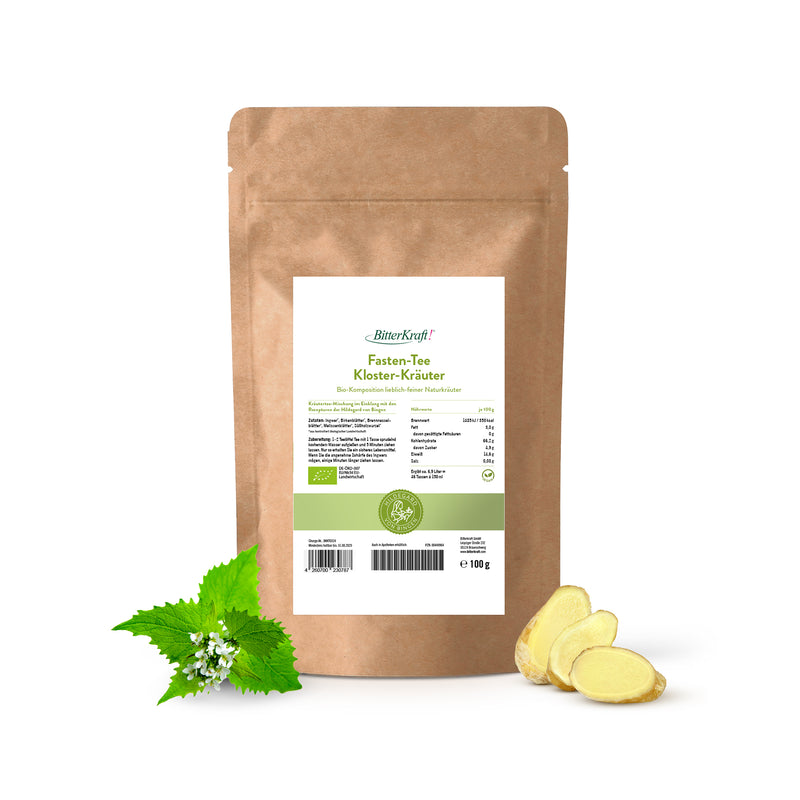
Hildegards Tipp:
- Der ideale Kräutertee zur Fastenbegleitung
- Rezeptur auf Basis von 800 Jahren Klosterwissen
- Bitterkraft - der Pionier seit 1996 von 4.000 Heilpraktikern verwendet!
- Beste Naturheilkunde: Bio & vegan
Anatomie und Funktion
Wenn man tiefer in die Anatomie und Funktion des Magen-Darm-Trakts eintaucht, entdeckt man eine erstaunliche Organisation und Spezialisierung. Beginnen wir mit dem Magen: Ein muskulöses Organ, strategisch zwischen Speiseröhre und Dünndarm gelegen. Seine Struktur ist darauf ausgerichtet, Nahrung zu speichern, zu mischen und einen ersten Verdauungsschritt einzuleiten. Dies wird durch die Produktion von Verdauungssäften und kräftigen Muskelbewegungen erreicht.
Vom Magen führt die Reise weiter in den Darm, der in zwei Hauptabschnitte unterteilt ist: Dünndarm und Dickdarm. Der Dünndarm, ein langer und gewundener Kanal, hat die beeindruckende Aufgabe, die Verdauung fortzusetzen und die meisten Nährstoffe aus der Nahrung aufzunehmen. Er ist das Hauptzentrum für die Nährstoffabsorption und spielt eine entscheidende Rolle bei der Aufrechterhaltung unserer Gesundheit und Energie. Der Dickdarm hingegen, oft als der letzte Abschnitt des Verdauungswegs bezeichnet, hat die wichtige Aufgabe, Wasser aus dem verbleibenden Verdauungsbrei zurückzugewinnen und den Stuhl zu formen. Dies stellt sicher, dass unser Körper nicht unnötig Wasser verliert und der Abfall effizient ausgeschieden werden kann.
Der Verdauungsprozess
Der Verdauungsprozess ist eine beeindruckende Reise, die beginnt, sobald wir einen Bissen Nahrung in den Mund nehmen. Vom ersten Moment des Kauens an beginnen Enzyme im Speichel, die Nahrung zu zersetzen. Von dort aus wird sie entlang der Speiseröhre in den Magen befördert, wo sie auf eine starke Säure trifft. Diese Magensäure, zusammen mit speziellen Enzymen, zerlegt die Nahrung weiter in ihre Bestandteile.
Nachdem die Nahrung den Magen verlässt, tritt sie in den Dünndarm ein. Hier kommt die Rolle der Bauchspeicheldrüsenenzyme und der Gallenflüssigkeit ins Spiel, die dabei helfen, Fette, Proteine und Kohlenhydrate weiter abzubauen, sodass sie vom Körper aufgenommen werden können. Aber die Verdauung ist nicht nur eine Angelegenheit von Enzymen und Säuren. Unsere Darmflora, eine Gemeinschaft aus Billionen von Mikroorganismen, spielt ebenfalls eine Schlüsselrolle. Diese Bakterien helfen nicht nur bei der Verdauung bestimmter Nahrungsbestandteile, sondern tragen auch zur Gesundheit des gesamten Verdauungssystems bei.
Schließlich, nachdem die Nährstoffe absorbiert sind und die unverdaulichen Reste weitergereicht werden, findet die finale Etappe im Dickdarm statt. Hier wird überschüssiges Wasser entfernt und der verbleibende Abfall zu Stuhl geformt, der dann aus dem Körper ausgeschieden wird. Es ist ein kontinuierlicher und effizienter Prozess, der sicherstellt, dass unser Körper die benötigten Nährstoffe erhält und Abfälle ordnungsgemäß entsorgt werden.
Gemeinsame Erkrankungen
Unser Magen, das zentrale Organ der Verdauung, ist trotz seiner Fähigkeiten nicht vor gesundheitlichen Problemen gefeit. Es gibt eine Reihe von Erkrankungen, die diesen empfindlichen Teil unseres Verdauungssystems betreffen können.
Zu Beginn steht die Gastritis, eine Entzündung der Magenschleimhaut. Sie kann plötzlich auftreten oder chronisch werden, und ihre Ursachen sind vielfältig. Oft wird sie durch eine Infektion mit dem Bakterium Helicobacter pylori ausgelöst, kann aber auch durch übermäßigen Alkoholkonsum, langfristige Einnahme von entzündungshemmenden Medikamenten oder anderen Reizstoffen verursacht werden. Gastritis kann zu einem brennenden Schmerz im Oberbauch, Übelkeit und sogar Erbrechen führen.
Magengeschwüre, oder auch peptische Geschwüre, sind offene Wunden, die sich in der Magenschleimhaut bilden. Wie bei der Gastritis kann auch hier das Bakterium Helicobacter pylori eine Rolle spielen. Geschwüre entstehen, wenn die schützende Schleimhaut, die den Magen auskleidet, beschädigt wird und die Magensäure kleine Löcher oder Geschwüre in dieser Auskleidung verursacht. Dies kann zu einem stechenden Schmerz führen, insbesondere, wenn der Magen leer ist.
Schließlich ist da noch der Magenkrebs, eine besonders ernste Erkrankung. Es handelt sich um einen bösartigen Tumor, der sich in der Magenschleimhaut entwickelt. Oft entdeckt man ihn erst in einem fortgeschrittenen Stadium, da die Symptome – wie Völlegefühl, Verdauungsstörungen und unerklärlicher Gewichtsverlust – unspezifisch sind und leicht mit anderen, harmloseren Beschwerden verwechselt werden können.
Es ist unerlässlich, auf die Signale unseres Körpers zu achten und bei anhaltenden oder schweren Beschwerden einen Arzt aufzusuchen. Vorsorge und frühzeitige Erkennung können bei vielen dieser Erkrankungen einen entscheidenden Unterschied machen.
Der Darm, ein essenzieller und langer Abschnitt unseres Verdauungssystems, ist trotz seiner beeindruckenden Funktionen verschiedenen Krankheiten und Beschwerden ausgesetzt, die die Lebensqualität stark beeinträchtigen können.
Beginnen wir mit dem Reizdarmsyndrom (IBS). Es handelt sich hierbei um eine chronische Erkrankung, die den Dick- und Dünndarm betrifft und sich durch eine Reihe von Symptomen manifestieren kann, darunter Bauchschmerzen, Blähungen, Durchfall und Verstopfung. Die genaue Ursache von IBS ist bis heute nicht vollständig geklärt, doch es wird vermutet, dass Ernährung, Stress und möglicherweise auch Darmbakterien eine Rolle spielen.
Morbus Crohn ist eine entzündliche Darmerkrankung, die den gesamten Verdauungstrakt betreffen kann, von Mund bis Anus. Diese Erkrankung ist durch Perioden von akuten Schüben und Remissionen gekennzeichnet und verursacht Symptome wie starke Bauchschmerzen, Durchfall, Müdigkeit und Gewichtsverlust. Obwohl die genaue Ursache nicht bekannt ist, spielen genetische Faktoren, das Immunsystem und Umweltfaktoren vermutlich eine Rolle.
Colitis ulcerosa, ein weiterer Vertreter der entzündlichen Darmerkrankungen, betrifft ausschließlich den Dickdarm. Wie Morbus Crohn ist auch sie durch entzündliche Schübe gekennzeichnet. Symptome sind unter anderem blutiger Durchfall, Bauchschmerzen und häufiger Stuhldrang.
Zuletzt, aber sicherlich nicht weniger ernst, ist der Darmkrebs. Hierbei handelt es sich um bösartige Tumore, die sich im Dick- oder Enddarm entwickeln. Früherkennung ist bei Darmkrebs entscheidend, da er in frühen Stadien erfolgreich behandelt werden kann. Zu den Symptomen zählen veränderte Stuhlgewohnheiten, Blut im Stuhl und unerklärlicher Gewichtsverlust.
Die Vielfalt und Komplexität dieser Erkrankungen unterstreichen die Wichtigkeit regelmäßiger medizinischer Untersuchungen und eines bewussten Umgangs mit der eigenen Gesundheit.
Prävention und Pflege
Gesundheit beginnt oft von innen, und die Pflege unseres Verdauungssystems stellt sicher, dass der gesamte Körper in einem optimalen Zustand funktioniert. Eine der grundlegendsten Methoden, unseren Magen und Darm zu schützen und Krankheiten vorzubeugen, sind gesunde Ernährungsgewohnheiten. Eine ausgewogene Ernährung, reich an Ballaststoffen, Vitaminen und Mineralien, sorgt nicht nur für eine reibungslose Verdauung, sondern reduziert auch das Risiko von Beschwerden wie Verstopfung und entzündlichen Darmerkrankungen. Es ist ebenso wichtig, stark verarbeitete Lebensmittel, die hohe Mengen an Zucker, Salz und Fetten enthalten, zu vermeiden.
In der heutigen Zeit rückt auch die Bedeutung von Probiotika und Präbiotika immer mehr in den Fokus. Probiotika sind lebende Mikroorganismen, die, wenn in ausreichenden Mengen konsumiert, gesundheitliche Vorteile bieten, insbesondere für das Verdauungssystem. Sie unterstützen eine gesunde Darmflora und können nach der Einnahme von Antibiotika oder bei Verdauungsbeschwerden hilfreich sein. Präbiotika hingegen sind Nahrungsbestandteile, die von unserem Körper nicht verdaut werden können und den "guten" Darmbakterien als Nahrung dienen. Zusammen arbeiten sie Hand in Hand, um ein gesundes Gleichgewicht der Darmflora zu erhalten.
Abgesehen von Ernährung und der Pflege der Darmflora sollte niemand die Wichtigkeit regelmäßiger medizinischer Kontrollen und Screenings unterschätzen. Gerade bei Erkrankungen wie Darmkrebs kann eine Früherkennung lebensrettend sein. Durch regelmäßige Untersuchungen können Anomalien frühzeitig entdeckt und behandelt werden, lange bevor sie zu ernsteren Problemen führen.
Zusammengefasst ist es von größter Bedeutung, auf unseren Körper zu hören, sich gut zu ernähren und präventive Maßnahmen zu ergreifen, um die Gesundheit unseres Verdauungssystems zu gewährleisten.
Aktuelle Forschung und Durchbrüche
In einer Welt, die sich ständig weiterentwickelt und in der die Medizin zu den dynamischsten Bereichen zählt, hat auch die Forschung rund um den Magen und Darm beeindruckende Fortschritte gemacht. In den letzten Jahren haben Wissenschaftler und Mediziner neue Horizonte erreicht, die das Verständnis und die Behandlung von Magen-Darm-Erkrankungen revolutionieren könnten.
Ein besonderer Schwerpunkt in der aktuellen Forschung liegt auf der Mikrobiom-Wissenschaft. Das Mikrobiom des Darms, ein komplexes Ökosystem von Bakterien und Mikroorganismen, das in unserem Verdauungssystem lebt, rückt immer mehr in den Fokus. Erkenntnisse darüber, wie diese Mikroorganismen unsere Gesundheit, unser Immunsystem und sogar unsere Stimmung beeinflussen können, könnten den Weg für innovative Therapien ebnen. Es wird angenommen, dass eine gezielte Modulation des Mikrobioms helfen könnte, Erkrankungen wie Morbus Crohn, Reizdarmsyndrom und viele andere zu behandeln.
Neben dem Mikrobiom gibt es auch bedeutende Fortschritte bei der Entwicklung neuer Medikamente und Behandlungsmethoden. Dank modernster Technologien und personalisierter Medizin werden Therapien entwickelt, die genau auf den individuellen Patienten zugeschnitten sind, basierend auf genetischen, metabolischen und anderen biologischen Markern. Dies verspricht nicht nur eine effektivere, sondern auch eine sicherere Behandlung, da potenzielle Nebenwirkungen minimiert werden könnten.
Außerdem gibt es Durchbrüche in der minimalinvasiven Chirurgie, die es ermöglichen, komplexe Eingriffe mit kleineren Schnitten, weniger Schmerzen und schnelleren Genesungszeiten durchzuführen. Robotergestützte Operationen und fortschrittliche Bildgebungstechniken revolutionieren die Art und Weise, wie Magen-Darm-Erkrankungen chirurgisch behandelt werden.
Zusammenfassend steht die Magen-Darm-Forschung vor einer spannenden Ära voller Potenzial. Mit der Kombination von tieferem Wissen, Technologie und innovativen Ansätzen könnten die kommenden Jahre bahnbrechende Lösungen für viele der heute noch ungelösten Herausforderungen in diesem Bereich bieten.
Zusammenfassung und Ausblick
Die Reise durch das faszinierende Gebiet der Magen-Darm-Gesundheit hat uns eindrücklich gezeigt, wie essenziell dieses System für unser Wohlbefinden und unsere gesamte Gesundheit ist. Jeder Aspekt unseres Lebens, von der Nahrung, die wir zu uns nehmen, bis hin zur Art und Weise, wie wir mit Stress umgehen, beeinflusst die Gesundheit unseres Verdauungssystems. Und dieses System, so komplex und doch so anfällig, verdient unsere volle Aufmerksamkeit.
Ein gesunder Magen-Darm-Trakt beeinflusst nicht nur unsere physische Gesundheit, indem er Nährstoffe aufnimmt und Abfälle entsorgt, sondern spielt auch eine Schlüsselrolle bei unserer mentalen Gesundheit. Neueste Forschungen deuten darauf hin, dass es eine tiefe Verbindung zwischen unserem Darm und unserem Gehirn gibt – das sogenannte Darm-Hirn-Achse. Ein Ungleichgewicht im Darm kann daher weitreichende Folgen haben, die weit über Bauchschmerzen oder Verdauungsprobleme hinausgehen.
Was die Zukunft betrifft, so stehen wir an der Schwelle zu einer neuen Ära der Magen-Darm-Medizin. Mit fortschreitenden Technologien, dem wachsenden Verständnis des Mikrobioms und der Entwicklung personalisierter Behandlungsansätze könnten viele der heute noch als unheilbar geltenden Krankheiten in den kommenden Jahrzehnten behandelbar werden. Es besteht die berechtigte Hoffnung, dass zukünftige Generationen mit verbesserten Präventionsmethoden, innovativen Therapien und einer ganzheitlichen Betrachtung der Magen-Darm-Gesundheit eine höhere Lebensqualität genießen können.
Abschließend bleibt zu sagen, dass die Pflege unserer Magen-Darm-Gesundheit eine Investition in unsere gesamte Lebensqualität ist. Mit den vielversprechenden Fortschritten in der Forschung und Behandlung können wir optimistisch in die Zukunft blicken und darauf hoffen, dass die kommenden Jahre sowohl Entdeckungen als auch Erleichterungen für diejenigen bringen, die unter Magen-Darm-Beschwerden leiden.
Bilderquelle: Magenschmerzen, Mann mit Bauchschmerzen, der zu Hause leidet, Konzept für gesundheitliche Probleme

Magenbitterstoffe vor dem Essen: Warum die Reihenfolge entscheidend ist
Magenbitterstoffe vor dem Essen » Nach Hildegard von Bingen ✓ Ohne Zusatzstoffe ✓ Made in Germany – Jetzt mehr erfahren

Bitterstoffreiche Smoothies: Grüne Rezepte für den Verdauungsstart am Morgen
Bitterstoff-Smoothies für den Morgen » Nach Hildegard von Bingen ✓ Vegan ✓ Ohne Zusatzstoffe – Jetzt Rezepte entdecken!
Hildegard von Bingens Dinkelrezepte für eine gesunde Verdauung
Hildegard von Bingens Dinkelrezepte » Nach Hildegard von Bingen ✓ Ohne Zusatzstoffe ✓ Biozertifiziert – Jetzt entdecken