


Fragen und Antworten zum Thema Naturheilkunde
Was versteht man unter Naturheilkunde?
Naturheilkunde, oftmals auch als alternative oder komplementäre Medizin bezeichnet, basiert auf traditionellen Heilmethoden, natürlichen Mitteln und ...

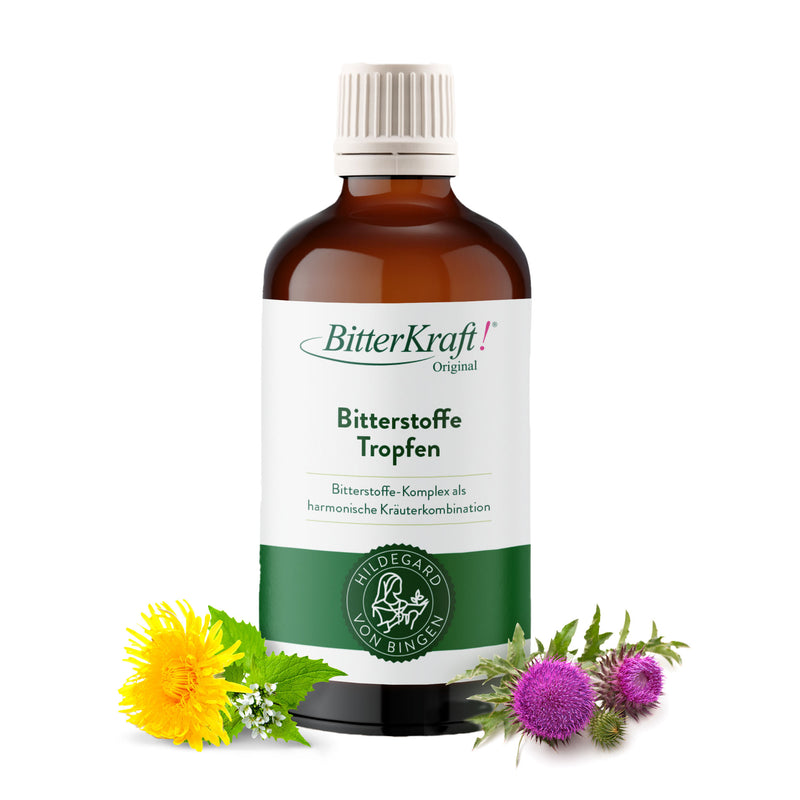
Hildegards Tipp:
- Wertvolle Bitterstoffe nach Hildegard Von Bingen
- Rezeptur auf Basis von 800 Jahren Klosterwissen
- Bitterkraft – der Pionier seit 1996 von 4.000 Heilpraktikern verwendet!
- Beste Naturheilkunde: Bio & vegan
Was versteht man unter Naturheilkunde?
Naturheilkunde, oftmals auch als alternative oder komplementäre Medizin bezeichnet, basiert auf traditionellen Heilmethoden, natürlichen Mitteln und Therapien. Sie setzt auf einen ganzheitlichen Ansatz, bei dem nicht nur isolierte Symptome im Fokus stehen, sondern der Mensch als Ganzes – in seiner Einheit aus Körper, Geist und Seele.
Ein zentrales Prinzip der Naturheilkunde ist die Prävention. Anstatt Krankheiten lediglich zu behandeln, wird großer Wert darauf gelegt, Krankheiten durch gesundheitsfördernde Lebensweisen von vornherein zu vermeiden. Dabei wird davon ausgegangen, dass der menschliche Körper über eigene Mechanismen zur Selbstheilung verfügt.
Durch verschiedene Ansätze versucht die Naturheilkunde, diese Selbstheilungskräfte zu unterstützen und zu fördern. Anstatt sich nur auf die Linderung von Symptomen zu beschränken, zielt die Naturheilkunde darauf ab, die zugrundeliegenden Ursachen von Krankheiten zu identifizieren und zu adressieren. Hierbei kommen oftmals natürliche Substanzen wie Kräuter, Lebensmittel und Wasser zum Einsatz, ergänzt durch physische Therapien wie Massage und gezielte Bewegung. Einige der bekanntesten Naturheilverfahren sind die Phytotherapie, bei der Heilpflanzen verwendet werden, die Hydrotherapie, die Wasseranwendungen beinhaltet, sowie Bewegungs- und Ernährungstherapie.
Auch die Ordnungstherapie, die den Einfluss von Lebensgewohnheiten betrachtet, und verschiedene Ausleitungsverfahren wie das Schröpfen gehören dazu. In der Praxis wird die Naturheilkunde häufig mit schulmedizinischen Ansätzen kombiniert, um das Beste aus beiden Welten für den Patienten zu nutzen. Bei ernsten oder unklaren Gesundheitsproblemen sollte jedoch immer auch ein Mediziner konsultiert werden.
Wie unterscheidet sich die Naturheilkunde von der Schulmedizin?
Die Naturheilkunde und die Schulmedizin sind zwei medizinische Ansätze, die in ihrer Philosophie, Methodik und Anwendung unterschiedlich sind.
Die Schulmedizin, auch als konventionelle oder westliche Medizin bezeichnet, basiert in erster Linie auf wissenschaftlichen Studien und Forschungen. Sie verwendet hauptsächlich Medikamente, Chirurgie und andere interventionistische Verfahren, um Krankheiten zu behandeln. Ihr Hauptaugenmerk liegt auf der Diagnose, Behandlung und Vorbeugung von Krankheiten. Oft konzentriert sie sich auf die Symptome einer Krankheit und versucht, diese mithilfe von Medikamenten oder anderen Verfahren zu lindern oder zu heilen.
Die Naturheilkunde hingegen betrachtet den Menschen als Ganzes und setzt sich dafür ein, das Gleichgewicht des Körpers wiederherzustellen, anstatt sich nur auf einzelne Symptome zu konzentrieren. Sie verwendet natürliche Mittel und Therapien wie Kräutermedizin, Akupunktur, Homöopathie, Ernährungsberatung und Körperarbeit. Die Naturheilkunde legt großen Wert auf Prävention und Selbstheilungskräfte des Körpers.
Während die Schulmedizin auf moderne wissenschaftliche Erkenntnisse und technologische Fortschritte setzt, beruft sich die Naturheilkunde oft auf traditionelle und jahrhundertealte Heilmethoden. Es ist jedoch wichtig zu betonen, dass beide Ansätze ihre eigenen Stärken und Schwächen haben und oft komplementär zueinander eingesetzt werden können.
In den letzten Jahren gibt es Bestrebungen, die Vorteile beider Ansätze zu kombinieren, um eine integrative Medizin zu schaffen, die das Beste aus beiden Welten bietet.
Welche Behandlungsmethoden gehören zur Naturheilkunde?
Die Naturheilkunde umfasst eine Vielzahl von Behandlungsmethoden, die sich auf natürliche Heilprozesse konzentrieren. Zu den wichtigsten Methoden gehören:
Phytotherapie: Hierbei handelt es sich um die Verwendung von Pflanzen und Kräutern zur Behandlung von Krankheiten. Sie ist eine der ältesten Heilmethoden und basiert auf dem Wissen um die heilenden Eigenschaften bestimmter Pflanzen.
Homöopathie: Diese Methode basiert auf dem Prinzip "Ähnliches werde durch Ähnliches geheilt". Sie verwendet stark verdünnte Substanzen, die, wenn sie in höheren Dosen eingenommen werden, Symptome hervorrufen würden, die denen des Patienten ähneln.
Akupunktur: Diese aus der traditionellen chinesischen Medizin stammende Methode verwendet dünne Nadeln, die an spezifischen Punkten des Körpers eingeführt werden, um das energetische Gleichgewicht des Körpers wiederherzustellen und Schmerzen oder andere Beschwerden zu lindern.
Hydrotherapie: Hierbei handelt es sich um die Verwendung von Wasser in verschiedenen Formen (Bäder, Wickel, Duschen) zur Behandlung von Krankheiten oder zur Linderung von Symptomen.
Manuelle Therapien: Dazu gehören Techniken wie Massage, Chiropraktik und Osteopathie, die sich auf die manuelle Manipulation von Körperstrukturen wie Muskeln und Gelenken konzentrieren.
Ernährungstherapie: Hierbei wird die Ernährung als Mittel zur Heilung und Prävention von Krankheiten betrachtet. Es geht darum, durch eine ausgewogene und gesunde Ernährung das körperliche Gleichgewicht und Wohlbefinden zu fördern.
Bewegungstherapie: Bewegung und Sport werden genutzt, um den Körper zu stärken, die Durchblutung zu fördern und die geistige Gesundheit zu verbessern.
Atemtherapie: Durch spezielle Atemtechniken wird versucht, die Lungenfunktion zu verbessern, den Sauerstoffgehalt im Blut zu erhöhen und Stress und Angstzustände zu reduzieren.
Entspannungsmethoden: Dazu gehören Techniken wie Meditation, Achtsamkeit und progressive Muskelentspannung, die darauf abzielen, den Geist zu beruhigen und das körperliche und emotionale Wohlbefinden zu verbessern.
Diese Behandlungsmethoden können alleine oder in Kombination eingesetzt werden, je nach den individuellen Bedürfnissen und Beschwerden des Patienten. Es ist jedoch immer ratsam, vor der Anwendung einer naturheilkundlichen Methode einen qualifizierten Therapeuten zu konsultieren.
Sind die Bitterstoffe im grünen Tee gesund?
Ja, die Bitterstoffe im grünen Tee, oft in Verbindung mit seinen Polyphenolen wie den Catechinen, haben zahlreiche gesundheitliche Vorteile.
Sie tragen zur antioxidativen Wirkung des Tees bei, was bedeutet, dass sie freie Radikale im Körper bekämpfen und somit zur Vorbeugung von Zellschäden beitragen können. Diese antioxidative Wirkung wird oft mit einer reduzierten Gefahr für chronische Krankheiten wie Herz-Kreislauf-Erkrankungen oder bestimmten Krebsarten in Verbindung gebracht.
Außerdem können Bitterstoffe die Verdauung fördern, indem sie die Produktion von Verdauungsenzymen stimulieren. Es gibt auch Hinweise darauf, dass die Bitterstoffe im grünen Tee beim Abnehmen helfen können, da sie den Stoffwechsel anregen und die Fettverbrennung fördern können. Dennoch sollte man beachten, dass der Konsum von grünem Tee in Maßen erfolgen sollte, da er auch Koffein enthält und bei übermäßigem Konsum zu Nebenwirkungen führen kann.
Insgesamt können die Bitterstoffe im grünen Tee also als gesund betrachtet werden, insbesondere wenn sie im Rahmen einer ausgewogenen Ernährung konsumiert werden.
Welche Lebensmittel enthalten viele Bitterstoffe?
Bitterstoffe finden sich in vielen Lebensmitteln und Kräutern, wobei ihre Konzentration je nach Quelle variiert. Zu den Lebensmitteln, die reich an Bitterstoffen sind, gehören:
- Grünes Blattgemüse: Besonders Endivien, Löwenzahn, Rucola und Radicchio sind bekannt für ihren bitteren Geschmack.
- Artischocken: Sie enthalten Cynarin, ein bekannter Bitterstoff, der sich positiv auf die Verdauung auswirkt.
- Kakao und dunkle Schokolade: Je höher der Kakaoanteil, desto bitterer ist die Schokolade.
- Hopfen: Als Hauptzutat in vielen Bieren verleiht Hopfen dem Getränk seine charakteristische Bitterkeit.
- Grapefruit: Vor allem die weiße Haut zwischen Frucht und Schale enthält Bitterstoffe.
- Kurkuma: Dieses gelbe Gewürz, oft in der indischen Küche verwendet, hat auch eine leicht bittere Note.
- Kaffee: Die Bitterkeit in Kaffee stammt von den in den Bohnen enthaltenen Bitterstoffen.
- Oliven und Olivenöl: Besonders unverarbeitete Oliven haben einen bitteren Geschmack.
- Einige Kräuter und Gewürze: Dazu gehören Enzian, Wermut und Beifuß.
Bitterstoffe können dazu beitragen, den Appetit zu zügeln und die Verdauungsfunktionen zu fördern. In der westlichen Ernährung sind Bitterstoffe aufgrund der Vorliebe für süße, salzige und umami Geschmacksrichtungen oft unterrepräsentiert, aber ihre Einführung in die Ernährung kann verschiedene gesundheitliche Vorteile bringen. Es ist jedoch immer ratsam, bei der Einführung neuer Lebensmittel in die Ernährung Vorsicht walten zu lassen und auf mögliche Unverträglichkeiten oder allergische Reaktionen zu achten.
Wie können Heilkräuter bei Verdauungsproblemen helfen?
Heilkräuter haben seit Jahrtausenden einen festen Platz in der traditionellen Medizin und werden häufig zur Behandlung von Verdauungsproblemen eingesetzt. Sie enthalten Wirkstoffe, die auf verschiedene Weisen das Verdauungssystem unterstützen können:
Anregung der Verdauungssäfte: Einige Kräuter fördern die Produktion von Verdauungsenzymen und Gallenflüssigkeit. Beispielsweise regt der Bitterstoff Cynarin in Artischocken die Produktion von Gallensaft an, was wiederum die Fettverdauung unterstützt.
Beruhigende Wirkung: Kamille und Pfefferminze sind bekannt für ihre beruhigenden Eigenschaften. Sie können helfen, Magenkrämpfe zu lindern und Blähungen zu reduzieren.
Blähungslindernde Wirkung: Fenchel, Anis und Kümmel sind traditionelle Heilkräuter gegen Blähungen und helfen, Gase im Verdauungstrakt zu reduzieren.
Förderung der Darmbewegung: Einige Kräuter, wie beispielsweise Sennesblätter, wirken abführend und können bei Verstopfung eingesetzt werden. Es ist jedoch wichtig, abführende Kräuter nur kurzzeitig und nach Anweisung zu verwenden, da sie bei übermäßigem Gebrauch zu Darmträgheit führen können.
Schutz der Magenschleimhaut: Kräuter wie Süßholz können helfen, die Magenschleimhaut zu schützen und Entzündungen zu reduzieren.
Antibakterielle und antimikrobielle Wirkung: Einige Heilkräuter wie Oregano oder Thymian besitzen Inhaltsstoffe, die schädliche Bakterien und Mikroorganismen im Verdauungstrakt bekämpfen können.
Es ist wichtig zu betonen, dass, obwohl viele Heilkräuter wirksam und sicher in der Anwendung sind, sie nicht als Ersatz für eine ärztliche Beratung oder Behandlung dienen sollten. Bei anhaltenden oder schweren Verdauungsproblemen ist es ratsam, einen Arzt oder eine andere medizinische Fachkraft zu konsultieren. Ebenso sollte man bei der Selbstmedikation mit Kräutern vorsichtig sein und sicherstellen, dass keine Wechselwirkungen mit anderen Medikamenten oder gesundheitlichen Zuständen auftreten.
Was sind die Vorteile von Manuka-Honig gegenüber normalem Honig?
Manuka-Honig stammt von den Blüten des Manuka-Strauches (Leptospermum scoparium), der in Neuseeland und Teilen Australiens heimisch ist. Er hat in den letzten Jahren weltweit Anerkennung für seine einzigartigen gesundheitlichen Vorteile gefunden. Hier sind die Hauptvorteile von Manuka-Honig gegenüber normalem Honig:
Stärkere antibakterielle Eigenschaften: Während alle Honigsorten in gewissem Maße antibakteriell wirken, ist Manuka-Honig besonders wirksam gegen eine Vielzahl von Bakterien. Dies wird dem Wirkstoff Methylglyoxal (MGO) zugeschrieben, der in höheren Konzentrationen in Manuka-Honig vorkommt als in anderen Honigsorten.
Antivirale und antimykotische Wirkung: Manuka-Honig hat gezeigt, dass er nicht nur gegen Bakterien, sondern auch gegen bestimmte Viren und Pilze wirksam ist.
Wundheilung: Manuka-Honig wird häufig in der medizinischen Praxis zur Behandlung von Wunden, Geschwüren und Verbrennungen eingesetzt, da er die Heilung fördert, das Risiko von Infektionen reduziert und Entzündungen lindert.
Hilfe bei Verdauungsproblemen: Manuka-Honig kann bei der Behandlung von Verdauungsbeschwerden wie Sodbrennen, Magen-Darm-Ulzerationen und bestimmten Formen von Gastritis helfen.
Reichhaltigerer Geschmack: Viele Menschen schätzen den intensiveren und differenzierteren Geschmack von Manuka-Honig gegenüber herkömmlichen Honigsorten.
Zertifizierte Aktivitätsgrade: Die Aktivität von Manuka-Honig kann gemessen und zertifiziert werden, oft in Form des UMF (Unique Manuka Factor) oder des MGO-Gehalts. Dies ermöglicht es Verbrauchern, den Potenzgrad des Honigs zu kennen und hochwirksame Produkte gezielt auszuwählen.
Trotz seiner vielen Vorteile ist es wichtig zu beachten, dass Manuka-Honig teurer ist als herkömmlicher Honig. Für den alltäglichen Verzehr oder in Anwendungen, bei denen die spezifischen gesundheitlichen Vorteile von Manuka nicht benötigt werden, kann normaler Honig eine wirtschaftlichere Wahl sein. Es ist auch ratsam, beim Kauf von Manuka-Honig darauf zu achten, von vertrauenswürdigen Quellen zu kaufen, da nicht alle Produkte die beworbenen Aktivitätsgrade aufweisen.
Wie wirkt die Akupunktur und bei welchen Beschwerden kann sie helfen?
Die Akupunktur ist eine Therapieform der traditionellen chinesischen Medizin, die auf der Idee basiert, dass der Körper von einem Netzwerk von Energiebahnen, sogenannten Meridianen, durchzogen wird. Durch das Einführen dünner Nadeln an spezifischen Punkten entlang dieser Meridiane wird versucht, das energetische Gleichgewicht des Körpers wiederherzustellen und den Fluss der Lebensenergie, des "Qi", zu regulieren.
Die genaue Wirkungsweise der Akupunktur ist wissenschaftlich noch nicht vollständig verstanden, aber es gibt verschiedene Theorien darüber, wie sie funktioniert:
Neurochemische Wirkung: Die Akupunktur könnte die Freisetzung von Neurotransmittern und Hormonen beeinflussen, was zu einer Schmerzlinderung und allgemeinem Wohlbefinden führt.
Gate-Control-Theorie: Das Einstechen der Nadeln könnte die Schmerzsignale, die zum Gehirn gesendet werden, blockieren oder modulieren.
Erhöhung der Durchblutung: Die Akupunktur kann die Durchblutung an den Einstichstellen fördern, was den Heilungsprozess unterstützen kann.
Akupunktur wird bei einer Vielzahl von Beschwerden und Zuständen eingesetzt, darunter:
Schmerzzustände: Einschließlich Migräne, Kopfschmerzen, Rückenschmerzen und Arthritis.
Verdauungsprobleme: Wie Reizdarmsyndrom, Übelkeit und Erbrechen.
Atmungsprobleme: Asthma, Allergien und chronische Sinusitis.
Gynäkologische und reproduktive Probleme: Menstruationsbeschwerden, Fruchtbarkeitsprobleme und Wechseljahresbeschwerden.
Psychologische Zustände: Depression, Angstzustände und Stress.
Unterstützung bei der Raucherentwöhnung oder Gewichtsreduktion.
Es gibt auch einige Hinweise darauf, dass Akupunktur bei der Linderung von Nebenwirkungen der Chemotherapie wie Übelkeit oder Erschöpfung helfen kann.
Während viele Menschen positive Ergebnisse mit Akupunktur erzielen, reagiert nicht jeder gleich auf die Behandlung. Es ist auch wichtig, sicherzustellen, dass die Akupunktur von einem qualifizierten Therapeuten durchgeführt wird, um Risiken zu minimieren und optimale Ergebnisse zu erzielen. Bei schwerwiegenden oder chronischen Beschwerden sollte die Akupunktur als ergänzende Methode in Erwägung gezogen werden und nicht als Ersatz für die herkömmliche medizinische Versorgung.
Kann Homöopathie wirklich Krankheiten heilen oder dient sie nur der Linderung?
Die Homöopathie ist eine über 200 Jahre alte alternative Heilmethode, die auf den Ideen des deutschen Arztes Samuel Hahnemann basiert. Sie verwendet stark verdünnte Substanzen, um den Körper zu stimulieren, sich selbst zu heilen. Die Frage, ob die Homöopathie Krankheiten heilen kann oder lediglich zur Linderung von Symptomen dient, ist Gegenstand intensiver Debatten.
Viele Anhänger der Homöopathie berichten von persönlichen Erfolgserlebnissen, in denen sie eine Heilung oder signifikante Besserung von Beschwerden erlebt haben. Sie argumentieren, dass die Homöopathie nicht nur Symptome lindert, sondern auch bei der Behandlung von tiefer liegenden Ursachen von Krankheiten hilft, indem sie den Körper in einen natürlichen Gleichgewichtszustand zurückführt.
Auf der anderen Seite zeigen viele wissenschaftliche Studien und Reviews, dass homöopathische Mittel oft nicht besser wirken als Placebos. Kritiker argumentieren, dass jegliche beobachtete Vorteile der Homöopathie eher auf den Placebo-Effekt, die natürliche Entwicklung der Krankheit oder andere begleitende Therapien zurückzuführen sind. Sie betonen, dass viele homöopathische Präparate so stark verdünnt sind, dass sie keine nachweisbaren Mengen des ursprünglichen Wirkstoffs enthalten.
Einige Ärzte und Fachleute sind der Meinung, dass Homöopathie bei bestimmten Beschwerden Linderung bieten kann, insbesondere bei subjektiven Symptomen wie Schmerzen oder Stress. Es wird jedoch allgemein empfohlen, sie nicht als Ersatz für konventionelle medizinische Therapien bei schweren, chronischen oder lebensbedrohlichen Erkrankungen zu verwenden.
Zusammengefasst: Während viele Menschen von den Vorteilen der Homöopathie überzeugt sind, wird ihr therapeutischer Wert in der wissenschaftlichen Gemeinschaft kontrovers diskutiert. Es ist immer ratsam, einen Arzt oder eine andere medizinische Fachkraft zu konsultieren, bevor man eine Entscheidung über die Behandlung trifft.
Welche Rolle spielen Probiotika in der Naturheilkunde?
Probiotika spielen eine bedeutende Rolle in der Naturheilkunde, da sie als lebende Mikroorganismen eine positive Wirkung auf die Gesundheit des Menschen haben können. In der Naturheilkunde wird angenommen, dass ein Gleichgewicht in der Darmflora von entscheidender Bedeutung für das allgemeine Wohlbefinden und die Immunfunktion ist. Probiotika sind Mikroorganismen wie Bakterien oder Hefen, die in bestimmten Lebensmitteln oder Nahrungsergänzungsmitteln vorkommen können.
Die Idee hinter der Verwendung von Probiotika in der Naturheilkunde beruht auf der Vorstellung, dass eine gesunde Darmflora viele positive Effekte auf den Körper hat. Dazu gehören die Unterstützung der Verdauung, die Stärkung des Immunsystems und die Förderung einer gesunden Entzündungsreaktion. Einige Forschungen deuten auch darauf hin, dass Probiotika bei der Linderung von Verdauungsproblemen wie Reizdarmsyndrom, Durchfall und Verstopfung helfen könnten.
Neben den direkten Auswirkungen auf den Magen-Darm-Trakt könnten Probiotika auch in der Lage sein, das allgemeine Wohlbefinden zu beeinflussen. Es wird vermutet, dass die Kommunikation zwischen dem Darm und dem Gehirn, die als Darm-Hirn-Achse bezeichnet wird, von einer gesunden Darmflora profitieren könnte. Dies könnte Auswirkungen auf Stimmung, Stressbewältigung und sogar neurologische Erkrankungen haben.
Allerdings ist es wichtig zu beachten, dass die Forschung zu Probiotika und ihrer genauen Wirkung noch im Gange ist. Nicht alle Probiotika sind gleich, und ihre Wirkungen können je nach Stamm und Menge variieren. Zudem sind nicht alle Ansprüche, die in Bezug auf Probiotika gemacht werden, wissenschaftlich ausreichend belegt. Es ist ratsam, bei der Verwendung von Probiotika in der Naturheilkunde auf qualitativ hochwertige Produkte zu achten und gegebenenfalls einen Fachmann zu konsultieren.
Zusammenfassend lässt sich sagen, dass Probiotika in der Naturheilkunde eine wichtige Rolle spielen, insbesondere im Hinblick auf die Gesundheit des Verdauungssystems und möglicherweise auch des allgemeinen Wohlbefindens. Die genaue Wirkung und Anwendung von Probiotika sind jedoch weiterhin Gegenstand intensiver Forschung.
Wie wirkt sich die Einnahme von Kurkuma auf den Körper aus?
Die Einnahme von Kurkuma kann eine Vielzahl von positiven Auswirkungen auf den Körper haben. Kurkuma, ein Gewürz, das aus der Wurzel der Curcuma longa Pflanze gewonnen wird, enthält einen aktiven Bestandteil namens Curcumin, der für die meisten der gesundheitlichen Vorteile verantwortlich gemacht wird. In der traditionellen Medizin, insbesondere in der ayurvedischen und chinesischen Medizin, wird Kurkuma seit langem wegen seiner potenziell entzündungshemmenden, antioxidativen und verdauungsfördernden Eigenschaften geschätzt.
Eine der bemerkenswertesten Wirkungen von Kurkuma ist seine entzündungshemmende Eigenschaft. Curcumin kann Entzündungsprozesse im Körper reduzieren, was möglicherweise bei Erkrankungen wie Arthritis, chronischen Entzündungen oder entzündungsbedingten Hautproblemen von Vorteil sein könnte. Darüber hinaus wird angenommen, dass Curcumin antioxidative Eigenschaften hat, die dazu beitragen könnten, Zellschäden durch freie Radikale zu reduzieren.
Die Einnahme von Kurkuma kann auch positive Auswirkungen auf die Verdauung haben. Es wird angenommen, dass Kurkuma die Produktion von Verdauungsenzymen stimuliert und somit bei der Verdauung von Nahrungsmitteln hilfreich sein kann. Es gibt auch Hinweise darauf, dass Kurkuma bei der Linderung von Verdauungsproblemen wie Blähungen, Völlegefühl und Magenkrämpfen unterstützen kann.
Darüber hinaus gibt es Studien, die darauf hinweisen, dass Kurkuma potenzielle Vorteile für die kardiovaskuläre Gesundheit haben könnte, indem es den Cholesterinspiegel reguliert und die Gefäßgesundheit unterstützt. Auch neurologische Aspekte könnten von Kurkuma profitieren, da einige Forschungen auf seine mögliche Rolle im Schutz vor neurodegenerativen Erkrankungen wie Alzheimer hinweisen.
Es ist jedoch wichtig zu beachten, dass Curcumin schlecht vom Körper aufgenommen wird. Die Einnahme von Schwarzem Pfeffer, der das Wirkstoff Piperin enthält, kann die Bioverfügbarkeit von Curcumin erhöhen. Dennoch sollte man bei der Einnahme von Kurkuma oder Curcumin-Präparaten vorsichtig sein und gegebenenfalls Rücksprache mit einem Arzt oder Fachmann halten, insbesondere wenn bereits medizinische Bedingungen bestehen oder Medikamente eingenommen werden.
Welche Öle werden in der Aromatherapie am häufigsten verwendet und wofür?
In der Aromatherapie werden eine Vielzahl von ätherischen Ölen aus Pflanzenextrakten verwendet, von denen einige besonders häufig aufgrund ihrer vielseitigen Anwendungsbereiche eingesetzt werden. Einige der am häufigsten verwendeten ätherischen Öle in der Aromatherapie sind Lavendelöl, Teebaumöl, Pfefferminzöl, Zitronenöl und Eukalyptusöl.
Lavendelöl ist vielleicht eines der bekanntesten ätherischen Öle und wird wegen seiner beruhigenden und entspannenden Eigenschaften geschätzt. Es kann bei Stress, Angstzuständen, Schlafproblemen und sogar bei leichten Kopfschmerzen eingesetzt werden. Lavendelöl wird oft in Aromatherapie-Diffusoren verwendet, um eine beruhigende Atmosphäre zu schaffen.
Teebaumöl hat hervorragende antibakterielle und antiseptische Eigenschaften. Es wird oft zur Unterstützung der Hautgesundheit verwendet und kann bei der Behandlung von Akne, Hautinfektionen und Schuppen eingesetzt werden. Teebaumöl wird auch als natürlicher Reiniger für Haushalt und Oberflächen genutzt.
Pfefferminzöl ist bekannt für seine erfrischenden und anregenden Eigenschaften. Es kann bei Kopfschmerzen, Übelkeit und Verdauungsbeschwerden eingesetzt werden. Das Einatmen von Pfefferminzduft kann außerdem die Konzentration und Wachheit fördern.
Zitronenöl hat einen erfrischenden und belebenden Duft. Es kann bei der Unterstützung des Immunsystems, der Verbesserung der Stimmung und der Förderung der Konzentration hilfreich sein. Zitronenöl wird oft in Reinigungsmitteln verwendet, da es desinfizierende Eigenschaften hat.
Eukalyptusöl ist bekannt für seine wohltuende Wirkung auf die Atemwege. Es kann bei Erkältungen, verstopfter Nase und anderen Atemwegsbeschwerden eingesetzt werden. Eukalyptusöl wird oft in Dampfinhalationen verwendet, um die Atemwege zu befreien.
Diese sind nur einige Beispiele der häufig verwendeten ätherischen Öle in der Aromatherapie. Es ist wichtig zu beachten, dass ätherische Öle sehr konzentriert sind und je nach Anwendung verdünnt werden sollten. Bei der Anwendung von ätherischen Ölen in der Aromatherapie ist es ratsam, sich vorher gut zu informieren oder einen Fachmann zu konsultieren, um sicherzustellen, dass die Anwendung angemessen und sicher erfolgt.
Wie können Bachblüten zur emotionalen Balance beitragen?
Bachblüten sind eine Form der pflanzlichen Therapie, die darauf abzielt, die emotionale Balance und das psychische Wohlbefinden zu fördern. Sie wurden vom britischen Arzt und Homöopathen Dr. Edward Bach entwickelt und basieren auf der Idee, dass bestimmte Blütenessenzen die Fähigkeit haben, negative emotionale Zustände zu lindern und positive Gefühle zu fördern.
Die Grundphilosophie hinter der Anwendung von Bachblüten ist, dass negative Emotionen wie Angst, Traurigkeit, Unsicherheit oder Stress das allgemeine Wohlbefinden beeinträchtigen können und möglicherweise auch körperliche Krankheiten begünstigen. Jede der 38 Bachblütenessenzen wird einem bestimmten emotionalen Zustand zugeordnet. Zum Beispiel steht die Blüte "Mimulus" für Ängste und Furcht, während "Impatiens" Ungeduld und "Agrimony" emotionale Konflikte symbolisiert.
Die Idee ist, dass die Einnahme der entsprechenden Bachblütenessenz dazu beitragen kann, diese negativen Emotionen zu mildern und das innere Gleichgewicht wiederherzustellen. Bachblüten werden oft in Tropfenform eingenommen oder können auch äußerlich in Cremes oder Lotionen verwendet werden. Sie werden als natürliche Ergänzung zur emotionalen Unterstützung betrachtet, können aber auch in Kombination mit anderen Therapieformen eingesetzt werden.
Ein weiterer Aspekt der Bachblütentherapie ist, dass sie auf die individuelle Person abgestimmt ist. Ein ausführliches Gespräch mit einem qualifizierten Bachblüten-Therapeuten oder Fachmann ist oft notwendig, um die richtigen Blütenessenzen für die spezifischen emotionalen Bedürfnisse einer Person zu identifizieren.
Es ist wichtig zu betonen, dass Bachblüten keine Ersatz für medizinische oder psychologische Behandlungen sind, insbesondere bei schweren emotionalen oder psychischen Problemen. Sie können jedoch eine unterstützende Rolle bei der Bewältigung von alltäglichen emotionalen Herausforderungen spielen und dazu beitragen, das innere Gleichgewicht zu fördern. Wie bei jeder Form der alternativen Therapie ist es ratsam, die Anwendung von Bachblüten mit einem Fachmann zu besprechen, um sicherzustellen, dass sie angemessen und sicher verwendet werden.
Was sind Schüssler Salze und wie werden sie angewendet?
Schüßler-Salze, benannt nach dem deutschen Arzt Dr. Wilhelm Heinrich Schüßler, sind eine Form der alternativen Medizin, die auf der Annahme basiert, dass Ungleichgewichte in den Mineralstoffen des Körpers zu verschiedenen Gesundheitsproblemen führen können. Diese Therapieform gehört zur Gruppe der sogenannten Biochemie nach Schüßler und geht von der Vorstellung aus, dass die richtige Balance von Mineralsalzen im Körper essentiell für die Aufrechterhaltung der Gesundheit ist.
Die Schüßler-Salze bestehen aus 12 basischen Mineralsalzen, die in homöopathisch potenzierter Form verwendet werden. Diese Salze umfassen Mineralien wie Calcium, Kalium, Natrium und Magnesium, die in winzigen Mengen in verdünnter Form eingenommen werden. Die Idee hinter ihrer Anwendung ist, dass diese Salze den Körper dabei unterstützen, sein natürliches Gleichgewicht wiederzufinden und somit die Gesundheit zu fördern.
Die Anwendung von Schüßler-Salzen erfolgt durch die Einnahme von kleinen Tabletten oder Globuli (kleine Streukügelchen), die die potenzierten Mineralsalze enthalten. Je nach individuellen Beschwerden oder Symptomen wird eine bestimmte Kombination von Schüßler-Salzen empfohlen. Diese Auswahl kann aufgrund einer Beratung mit einem Schüßler-Salz-Therapeuten oder durch Studium von Literatur zu diesem Thema getroffen werden.
Die Idee der Schüßler-Salze ist eng mit der Homöopathie verbunden, da beide Therapieformen auf dem Prinzip der Potenzierung beruhen, bei dem die Ausgangssubstanz in stark verdünnter Form verwendet wird. Es gibt sowohl Befürworter als auch Kritiker dieser Methode. Während einige Anwender von positiven Effekten berichten, betonen Skeptiker oft das Fehlen wissenschaftlicher Beweise für die Wirksamkeit von Schüßler-Salzen.
Es ist ratsam, Schüßler-Salze unter Anleitung eines qualifizierten Therapeuten oder Fachmanns zu verwenden, insbesondere wenn es um schwerwiegende gesundheitliche Probleme geht. Auch wenn Schüßler-Salze als sanfte und nebenwirkungsarme Therapie angesehen werden, sollten sie nicht als Ersatz für konventionelle medizinische Behandlungen betrachtet werden. Eine umfassende Beratung und eine abgestimmte Herangehensweise sind entscheidend, um die besten Ergebnisse zu erzielen.
Kann man durch bestimmte Ernährungsweisen Entzündungen im Körper reduzieren?
Ja, bestimmte Ernährungsweisen können dazu beitragen, Entzündungen im Körper zu reduzieren. Eine entzündungshemmende Ernährung kann dazu beitragen, chronische Entzündungen zu verringern oder zu verhindern, die mit verschiedenen gesundheitlichen Problemen wie Herzkrankheiten, Diabetes, Arthritis und einigen Krebsarten in Verbindung gebracht werden.
Ein wichtiger Aspekt einer entzündungshemmenden Ernährung ist der Fokus auf Lebensmitteln, die reich an antioxidativen Verbindungen, Omega-3-Fettsäuren, Ballaststoffen und anderen entzündungshemmenden Nährstoffen sind. Hier sind einige grundlegende Prinzipien, die bei der Reduzierung von Entzündungen durch Ernährung helfen können:
Omega-3-Fettsäuren: Diese gesunden Fette, die in Fisch wie Lachs, Makrele und Leinsamen, Chiasamen sowie Walnüssen vorkommen, haben nachweislich entzündungshemmende Eigenschaften.
Antioxidantien: Lebensmittel, die reich an Antioxidantien sind, wie Beeren (Blaubeeren, Himbeeren, Erdbeeren), dunkles Blattgemüse (Spinat, Grünkohl), Nüsse und Gewürze wie Kurkuma, können helfen, oxidativen Stress zu reduzieren und Entzündungen entgegenzuwirken.
Ballaststoffe: Ballaststoffreiche Lebensmittel wie Vollkornprodukte, Hülsenfrüchte, Gemüse und Obst fördern eine gesunde Darmflora und können dazu beitragen, das Immunsystem zu regulieren und Entzündungen zu reduzieren.
Gesunde Fette: Vermeiden von gesättigten und trans-Fetten aus verarbeiteten Lebensmitteln und tierischen Produkten zugunsten von gesunden pflanzlichen Fetten wie Olivenöl, Avocado und Nüssen.
Vermeidung von Zucker und raffinierten Kohlenhydraten: Eine Ernährung, die reich an raffiniertem Zucker und Kohlenhydraten ist, kann Entzündungen fördern. Es ist ratsam, den Konsum von zuckerhaltigen Getränken, Süßigkeiten und stark verarbeiteten Lebensmitteln zu reduzieren.
Ausreichend Wasser trinken: Ausreichende Flüssigkeitszufuhr, hauptsächlich in Form von Wasser, unterstützt den Körper bei der Ausscheidung von Abfallstoffen und hilft, Entzündungen zu reduzieren.
Mäßigung bei tierischen Produkten: Eine Ernährung mit einem hohen Anteil an rotem Fleisch und verarbeiteten Fleischprodukten kann Entzündungen begünstigen. Es könnte hilfreich sein, den Konsum dieser Lebensmittel zu reduzieren und sich stattdessen auf mageres Fleisch, Fisch und pflanzliche Proteinquellen zu konzentrieren.
Es ist wichtig zu beachten, dass keine einzelne Ernährungsweise für alle gleichermaßen geeignet ist. Die individuellen Bedürfnisse, gesundheitlichen Zustände und Präferenzen spielen eine Rolle bei der Gestaltung einer geeigneten Ernährungsstrategie zur Reduzierung von Entzündungen. Es ist empfehlenswert, vor größeren Ernährungsumstellungen oder bei spezifischen Gesundheitsproblemen einen Fachmann, wie beispielsweise einen Ernährungsberater oder Arzt, zu konsultieren.
Welche Kräuter unterstützen die natürliche Entgiftung des Körpers?
Verschiedene Kräuter können die natürliche Entgiftung des Körpers unterstützen, indem sie die Funktion von Leber, Nieren und anderen Ausscheidungsorganen fördern. Diese Kräuter enthalten oft Verbindungen, die den Stoffwechsel ankurbeln, antioxidative Eigenschaften haben und die Ausscheidung von Toxinen fördern. Hier sind einige Kräuter, die für ihre entgiftenden Eigenschaften bekannt sind:
Löwenzahn: Löwenzahnblätter und -wurzeln haben diuretische Eigenschaften und können die Nierenfunktion unterstützen, indem sie helfen, überschüssige Flüssigkeit und Abfallstoffe auszuscheiden.
Brennnessel: Brennnesselblätter sind reich an Antioxidantien und können die Nierenfunktion unterstützen. Sie wirken leicht harntreibend und können dazu beitragen, Schadstoffe auszuspülen.
Koriander: Korianderblätter enthalten Verbindungen, die helfen können, Schwermetalle wie Quecksilber aus dem Körper zu entfernen. Sie können in Smoothies oder Salaten verwendet werden.
Kurkuma: Kurkuma enthält Curcumin, das entzündungshemmende und antioxidative Eigenschaften hat. Es kann die Lebergesundheit fördern und bei der Entgiftung unterstützen.
Mariendistel: Mariendistel ist bekannt für seine schützenden Eigenschaften für die Leber. Die Wirkstoffe in Mariendistel können helfen, die Leberzellen zu regenerieren und vor Toxinen zu schützen.
Klette: Die Wurzeln der Klette enthalten Bitterstoffe, die die Verdauung anregen und die Leber unterstützen können. Klette kann auch bei der Reinigung der Haut helfen.
Ingwer: Ingwer enthält Gingerole, die entzündungshemmende und antioxidative Wirkungen haben. Ingwer kann die Verdauung fördern und zur Entgiftung beitragen.
Petersilie: Petersilie ist reich an Chlorophyll und Antioxidantien. Sie kann die Nierenfunktion anregen und zur Ausscheidung von Toxinen beitragen.
Klettenwurzel: Die Wurzel der Klette kann die Nierenfunktion unterstützen und die Entgiftung des Blutes fördern.
Grüner Tee: Grüner Tee ist reich an Antioxidantien wie Katechinen, die bei der Entgiftung helfen können, indem sie die Aktivität der Enzyme in der Leber steigern.
Es ist wichtig zu beachten, dass Kräuterergänzungen oder -präparate in angemessenen Mengen und in Absprache mit einem Fachmann eingenommen werden sollten. Man sollte auch bedenken, dass die natürliche Entgiftung des Körpers ein komplexer Vorgang ist, der auch eine ausgewogene Ernährung, ausreichende Flüssigkeitszufuhr und regelmäßige Bewegung erfordert.
Was versteht man unter Ayurveda und wie wird es in der Heilpraxis angewendet?
Ayurveda ist ein traditionelles indisches Gesundheitssystem, das sich auf eine ganzheitliche Herangehensweise an die Gesundheit von Körper, Geist und Seele konzentriert. Der Begriff "Ayurveda" stammt aus dem Sanskrit und bedeutet wörtlich übersetzt "Wissen vom Leben". Diese jahrtausendealte Heilkunst basiert auf einem umfassenden Verständnis der Naturgesetze und strebt danach, das Gleichgewicht der individuellen Konstitutionen und Lebensenergien zu erhalten oder wiederherzustellen.
In der Ayurveda-Lehre wird angenommen, dass jede Person aus den fünf Elementen - Erde, Wasser, Feuer, Luft und Raum - besteht und dass drei fundamentale Energien, sogenannte Doshas, das innere Gleichgewicht und die Gesundheit beeinflussen: Vata (Luft und Raum), Pitta (Feuer und Wasser) und Kapha (Erde und Wasser). Das Ziel der Ayurveda ist es, diese Doshas ins Gleichgewicht zu bringen und somit die individuelle Konstitution zu harmonisieren.
Die Anwendung von Ayurveda in der Heilpraxis umfasst verschiedene Aspekte:
Ernährung: Die Ayurveda-Ernährung basiert auf der Idee, dass verschiedene Nahrungsmittel verschiedene Auswirkungen auf die Doshas haben. Individuelle Empfehlungen zur Ernährung werden basierend auf der individuellen Konstitution und den aktuellen Ungleichgewichten gegeben.
Pflanzenheilkunde: Kräuter und Gewürze werden verwendet, um das Gleichgewicht der Doshas zu unterstützen. Verschiedene Pflanzen haben spezifische Wirkungen auf den Körper und können bei der Linderung von Beschwerden eingesetzt werden.
Massagen und Therapien: Ayurvedische Massagen und Therapien, wie z.B. Ölanwendungen (Abhyanga) oder Stirnguss (Shirodhara), sollen das Nervensystem beruhigen, die Durchblutung fördern und den Körper von Toxinen befreien.
Yoga und Bewegung: Yoga-Übungen werden in der Ayurveda-Praxis verwendet, um den Körper zu stärken, die Flexibilität zu erhöhen und den Energiefluss im Körper zu fördern.
Lebensstil und Routine: Die Einhaltung einer regelmäßigen Tagesroutine (Dinacharya) wird betont, um den natürlichen Rhythmus des Körpers zu unterstützen und das Gleichgewicht der Doshas aufrechtzuerhalten.
Meditation und Geistige Gesundheit: Ayurveda legt Wert auf geistige Gesundheit und betont die Bedeutung von Meditation, Atemübungen (Pranayama) und positiven Denkmustern für das psychische Wohlbefinden.
Es ist wichtig zu beachten, dass Ayurveda eine individuelle Herangehensweise betont und dass die Anwendung von Empfehlungen auf die spezifische Konstitution und aktuelle Bedürfnisse abzielt. Bevor man Ayurveda in der Heilpraxis anwendet, ist es ratsam, einen qualifizierten Ayurveda-Experten oder Praktizierenden zu konsultieren, um eine genaue Analyse der Doshas und eine maßgeschneiderte Herangehensweise zu erhalten. Ayurveda kann eine wertvolle Ergänzung zu konventionellen medizinischen Ansätzen sein, sollte jedoch nicht als Ersatz für medizinische Behandlungen bei schweren gesundheitlichen Problemen betrachtet werden.
Wie wirkt sich die Fußreflexzonenmassage auf die Gesundheit aus?
Die Fußreflexzonenmassage ist eine alternative Therapiemethode, die auf der Vorstellung basiert, dass verschiedene Bereiche der Füße mit Organen und Systemen im Körper in Verbindung stehen. Es wird angenommen, dass durch die Stimulation bestimmter Punkte auf den Fußsohlen eine positive Wirkung auf die Gesundheit des gesamten Körpers erzielt werden kann. Diese Massageform beruht auf dem Prinzip, dass die Füße als "Spiegel" des Körpers fungieren, in dem sie Reflexzonen enthalten, die mit bestimmten Körperregionen korrespondieren.
Während es begrenzte wissenschaftliche Forschung zu den genauen Mechanismen der Fußreflexzonenmassage gibt, berichten viele Menschen von verschiedenen gesundheitlichen Vorteilen:
Entspannung und Stressabbau: Die sanften Berührungen und Massagetechniken während der Fußreflexzonenmassage können eine entspannende Wirkung haben und den Stress abbauen. Dies kann sich positiv auf den gesamten Körper auswirken, da chronischer Stress mit verschiedenen gesundheitlichen Problemen in Verbindung gebracht wird.
Verbesserte Durchblutung: Die Stimulation der Reflexzonen kann die Durchblutung in den Füßen und möglicherweise auch im Rest des Körpers verbessern. Dies kann zur besseren Sauerstoff- und Nährstoffversorgung der Gewebe beitragen.
Förderung der Energiebalance: Die Fußreflexzonenmassage wird oft als eine Möglichkeit betrachtet, die Energieflüsse im Körper auszugleichen. Es wird angenommen, dass durch die Stimulation der Reflexzonen die Energieblockaden gelöst werden können.
Unterstützung der Selbstheilungskräfte: Die Befürworter der Fußreflexzonenmassage glauben, dass sie die Selbstheilungskräfte des Körpers aktivieren kann, indem sie die körpereigene Fähigkeit zur Heilung und Regeneration stimuliert.
Linderung von Beschwerden: Einige Menschen berichten von Linderung bei bestimmten Beschwerden wie Kopfschmerzen, Verdauungsproblemen, Schlafstörungen und Schmerzen durch Fußreflexzonenmassage. Dies wird jedoch nicht von allen Studien bestätigt.
Es ist wichtig zu betonen, dass die Fußreflexzonenmassage als komplementäre Therapie betrachtet wird und nicht als Ersatz für konventionelle medizinische Behandlungen dient. Die Erfahrungen mit dieser Massageform können von Person zu Person variieren, und ihre Effektivität hängt möglicherweise von verschiedenen Faktoren ab. Wenn jemand Interesse an einer Fußreflexzonenmassage hat, sollte er sich an einen qualifizierten Therapeuten wenden, der in dieser Technik geschult ist, um sicherzustellen, dass die Anwendung sicher und angemessen erfolgt.
Können ätherische Öle die Schlafqualität verbessern? Wenn ja, welche?
Ja, ätherische Öle können dazu beitragen, die Schlafqualität zu verbessern, indem sie eine beruhigende und entspannende Wirkung auf den Körper und Geist ausüben. Der Einsatz von ätherischen Ölen zur Förderung des Schlafs fällt unter die Aromatherapie, eine alternative Therapieform, die die Wirkung von Düften auf Emotionen und physiologische Reaktionen nutzt. Hier sind einige ätherische Öle, die bekanntermaßen zur Verbesserung der Schlafqualität beitragen können:
Lavendelöl: Lavendelöl ist eines der bekanntesten ätherischen Öle zur Förderung von Entspannung und Schlaf. Es hat beruhigende Eigenschaften, die Angstzustände reduzieren können und den Körper in einen Zustand der Entspannung versetzen.
Bergamotteöl: Bergamotteöl hat einen zarten, zitrusartigen Duft, der Stress und Angstzustände reduzieren kann. Es kann dazu beitragen, die Stimmung zu heben und eine beruhigende Atmosphäre zu schaffen, die den Schlaf fördert.
Kamillenöl: Kamillenöl hat entzündungshemmende und beruhigende Eigenschaften. Es kann bei der Linderung von Stress und Schlaflosigkeit hilfreich sein, indem es den Körper in einen entspannten Zustand versetzt.
Ylang-Ylang-Öl: Ylang-Ylang hat einen blumigen Duft, der als entspannend und beruhigend bekannt ist. Es kann helfen, den Herzschlag zu verlangsamen und eine angenehme Schlafatmosphäre zu schaffen.
Sandelholzöl: Sandelholzöl hat einen warmen und erdigen Duft, der Ruhe und Entspannung fördern kann. Es kann dazu beitragen, den Geist zu beruhigen und das Einschlafen zu erleichtern.
Majoranöl: Majoranöl hat sedative Eigenschaften und kann bei der Entspannung der Muskulatur und der Förderung des Schlafs helfen.
Die Verwendung von ätherischen Ölen zur Schlafverbesserung kann individuell sein. Einige Menschen reagieren möglicherweise besser auf bestimmte Düfte als andere. Die Anwendungsmethoden können variieren, von der Verwendung in einem Aromatherapie-Diffusor im Schlafzimmer bis hin zur Verdünnung mit einem Trägeröl für eine sanfte Massage. Es ist wichtig zu beachten, dass ätherische Öle hochkonzentriert sind, und einige Menschen empfindlich auf sie reagieren können. Bevor man ätherische Öle zur Schlafverbesserung verwendet, sollte man sicherstellen, dass keine allergischen Reaktionen auftreten und gegebenenfalls einen Fachmann konsultieren.
Welche Pflanzen werden traditionell zur Beruhigung des Nervensystems eingesetzt?
Traditionell wurden verschiedene Pflanzen aufgrund ihrer beruhigenden und entspannenden Eigenschaften zur Unterstützung des Nervensystems verwendet. Diese Pflanzen enthalten oft Verbindungen, die helfen können, Stress abzubauen, Angstzustände zu lindern und den Geist zu beruhigen. Hier sind einige Pflanzen, die in verschiedenen Kulturen und traditionellen Heilsystemen zur Beruhigung des Nervensystems eingesetzt werden:
Baldrian (Valeriana officinalis): Baldrianwurzel wird seit langem als Beruhigungsmittel und Schlafhilfe verwendet. Sie enthält Verbindungen, die die Aktivität des GABA-Rezeptors erhöhen können, was zu Entspannung und Schlaf beiträgt.
Passionsblume (Passiflora incarnata): Die Passionsblume hat entspannende Eigenschaften und kann zur Linderung von Nervosität, Angstzuständen und Schlafstörungen beitragen.
Melisse (Melissa officinalis): Melisse, auch als Zitronenmelisse bekannt, hat beruhigende Eigenschaften und kann zur Entspannung und Linderung von Stress beitragen.
Lindenblüte (Tilia spp.): Lindenblütentee wird traditionell als beruhigendes Getränk verwendet, das dazu beitragen kann, Stress abzubauen und die Nerven zu beruhigen.
Kamille (Matricaria chamomilla): Kamillentee hat entzündungshemmende und beruhigende Eigenschaften. Er wird oft zur Linderung von Magen-Darm-Beschwerden sowie zur Entspannung eingesetzt.
Lavendel (Lavandula angustifolia): Lavendel hat einen beruhigenden Duft und wird in der Aromatherapie verwendet, um Stress und Angstzustände zu reduzieren.
Hopfen (Humulus lupulus): Hopfenzapfen werden oft in Kombination mit Baldrian zur Förderung des Schlafs eingesetzt. Hopfen hat auch beruhigende Eigenschaften.
Rhodiola (Rhodiola rosea): Rhodiola ist eine adaptogene Pflanze, die dazu beitragen kann, Stress und Müdigkeit zu reduzieren und die Stimmung zu verbessern.
Schisandra (Schisandra chinensis): Schisandra ist eine weitere adaptogene Pflanze, die Stress abbauen und die geistige Widerstandsfähigkeit fördern kann.
Johanniskraut (Hypericum perforatum): Johanniskraut wird oft zur Linderung von leichten bis mittelschweren depressiven Symptomen eingesetzt. Es kann auch bei nervöser Unruhe helfen.
Es ist wichtig zu beachten, dass pflanzliche Mittel zwar natürliche Optionen zur Unterstützung des Nervensystems darstellen, sie jedoch nicht für jeden geeignet sind. Vor der Verwendung von pflanzlichen Präparaten zur Beruhigung des Nervensystems sollte man sich mit einem Arzt oder Fachmann beraten, insbesondere wenn bereits medizinische Bedingungen bestehen oder Medikamente eingenommen werden.
Wie beeinflusst die Farbtherapie die Stimmung und das Wohlbefinden?
Die Farbtherapie, auch als Chromotherapie bekannt, ist eine alternative Therapieform, die davon ausgeht, dass Farben eine direkte Wirkung auf unsere Stimmung, Emotionen und unser allgemeines Wohlbefinden haben können. Diese Therapie basiert auf der Idee, dass jeder Farbe bestimmte energetische Eigenschaften zugeordnet werden können, die auf den menschlichen Körper und Geist einwirken. Die Anwendung von Farben zur Förderung der Gesundheit und des Wohlbefindens wird in verschiedenen Kulturen und Heilsystemen seit Jahrhunderten praktiziert.
Die Farbtherapie kann auf verschiedene Weisen Einfluss auf die Stimmung und das Wohlbefinden nehmen:
Stimmungsverbesserung: Unterschiedliche Farben werden mit verschiedenen Emotionen und Stimmungen in Verbindung gebracht. Zum Beispiel wird Blau oft als beruhigend und entspannend angesehen, während Gelb mit Fröhlichkeit und Energie assoziiert wird. Rot kann eine stimulierende Wirkung haben und die Aktivität anregen. Die Auswahl von Farben, die zur gewünschten Stimmung passen, kann dazu beitragen, die emotionale Balance zu fördern.
Entspannung und Stressabbau: Sanfte, beruhigende Farben wie Blau und Grün können zur Entspannung beitragen und Stress abbauen. Sie können den Geist beruhigen und eine ruhige Atmosphäre schaffen.
Energie und Aktivierung: Farben wie Gelb und Orange werden oft als energetisierend angesehen. Sie können die Stimmung heben und Energie verleihen.
Schlafqualität: Blaue oder violette Farben können zur Förderung einer ruhigen Schlafumgebung beitragen, da sie mit Entspannung und Gelassenheit in Verbindung gebracht werden.
Unterstützung des Heilungsprozesses: Es wird angenommen, dass bestimmte Farben die körpereigenen Selbstheilungskräfte aktivieren können. Zum Beispiel kann Grün, das mit Harmonie und Ausgleich in Verbindung gebracht wird, die Regeneration unterstützen.
Anregung der Chakren: In einigen esoterischen Traditionen wird angenommen, dass Farben mit den Energiezentren des Körpers, den sogenannten Chakren, in Verbindung stehen. Die Farbtherapie kann dazu verwendet werden, die Chakren auszugleichen und zu stimulieren.
Die Farbtherapie kann auf verschiedene Arten angewendet werden, wie z.B. durch das Betrachten von Farben, das Tragen von farbigen Kleidungsstücken, das Aufstellen von farbigen Objekten im Raum oder das Anwenden von farbigem Licht. Es ist wichtig zu beachten, dass die Wirkung von Farben subjektiv sein kann und von Person zu Person variieren kann. Die Farbtherapie kann eine interessante Ergänzung zu anderen Therapieansätzen sein, sollte jedoch nicht als Ersatz für medizinische Behandlungen bei schweren gesundheitlichen Problemen betrachtet werden.
Was sind die gesundheitlichen Vorteile von Heilfasten?
Heilfasten, auch als therapeutisches Fasten bekannt, ist eine Praxis, bei der man für eine bestimmte Zeit auf feste Nahrung verzichtet, um den Körper zu reinigen, zu regenerieren und potenziell gesundheitliche Vorteile zu erzielen. Diese Fastenmethode hat in verschiedenen Kulturen und Gesundheitssystemen eine lange Tradition und wird oft aus spirituellen, gesundheitlichen oder reinigenden Gründen praktiziert. Hier sind einige potenzielle gesundheitliche Vorteile des Heilfastens:
Entgiftung und Reinigung: Heilfasten kann dazu beitragen, Giftstoffe und Abfallprodukte aus dem Körper zu entfernen. Während des Fastens wird der Stoffwechsel auf den Abbau von gespeicherten Fettreserven umgestellt, was zur Freisetzung von Toxinen aus dem Fettgewebe führen kann.
Gewichtsverlust: Eine der offensichtlichen Folgen des Heilfastens ist der Gewichtsverlust, der aufgrund des Kaloriendefizits entsteht. Allerdings sollte das Heilfasten nicht primär als schnelle Gewichtsverlustmethode betrachtet werden, sondern eher als Ansatz zur Gesundheitsförderung.
Verbesserung der Insulinsensitivität: Heilfasten kann dazu beitragen, die Insulinsensitivität zu verbessern und den Blutzuckerspiegel zu regulieren. Dies kann besonders für Menschen mit Typ-2-Diabetes von Vorteil sein.
Regeneration und Entzündungshemmung: Während des Fastens wird der Körper auf Reparaturprozesse umgeschaltet. Dies kann zur Reduzierung von Entzündungen beitragen und die Zellen bei der Regeneration unterstützen.
Senkung des Blutdrucks: Einige Studien deuten darauf hin, dass Heilfasten den Blutdruck senken kann, was ein wichtiger Faktor zur Vorbeugung von Herz-Kreislauf-Erkrankungen ist.
Verbesserung der Verdauung: Durch die Pause von fester Nahrung kann der Verdauungstrakt eine Pause einlegen und sich regenerieren. Dies kann zur Verbesserung der Verdauungsfunktion beitragen.
Steigerung des Wohlbefindens: Viele Menschen berichten von einem gesteigerten Wohlbefinden und erhöhter Klarheit des Geistes während und nach dem Fasten.
Es ist wichtig zu beachten, dass das Heilfasten nicht für jeden geeignet ist. Menschen mit bestimmten gesundheitlichen Bedingungen wie Essstörungen, chronischen Krankheiten oder während der Schwangerschaft sollten Heilfasten vermeiden oder nur unter ärztlicher Aufsicht durchführen. Heilfasten erfordert eine angemessene Vorbereitung, Einhaltung und Beendigung des Fastens, um den Körper nicht unnötig zu belasten. Vor der Durchführung von Heilfasten sollte man ärztlichen Rat einholen, um sicherzustellen, dass es mit den individuellen Gesundheitsbedingungen vereinbar ist.
Wie kann man durch Meditation und Achtsamkeit den Stress reduzieren?
Durch Meditation und Achtsamkeit kann man effektiv den Stress reduzieren und eine verbesserte emotionale Ausgeglichenheit erreichen. Diese Techniken haben sich als wirksame Werkzeuge erwiesen, um den Geist zu beruhigen, die Stressreaktion des Körpers zu mindern und eine allgemeine Entspannung zu fördern. Hier sind einige Wege, wie Meditation und Achtsamkeit den Stress reduzieren können:
Entspannung der Geist-Muskel-Verbindung: Meditation und Achtsamkeit ermöglichen es, den Geist von den täglichen Belastungen abzulenken und sich auf den gegenwärtigen Moment zu konzentrieren. Dies führt zu einer Entspannung der Geist-Muskel-Verbindung und reduziert somit körperliche Spannungen, die oft mit Stress einhergehen.
Regulierung des Stresshormonspiegels: Meditation und Achtsamkeit können dazu beitragen, den Cortisolspiegel im Körper zu senken. Cortisol ist ein Stresshormon, das bei chronischem Stress erhöht sein kann. Durch die Praxis der Entspannungstechniken kann eine bessere Regulation des Hormonspiegels erreicht werden.
Verbesserte Stressbewältigung: Meditation und Achtsamkeit verleihen den Menschen eine verbesserte Fähigkeit, mit Stressoren umzugehen. Indem man lernt, den gegenwärtigen Moment anzunehmen und nicht reaktiv auf stressige Situationen zu reagieren, kann man einen ruhigeren Geisteszustand bewahren.
Fokus auf positives Denken: Die Praxis der Achtsamkeit kann dazu beitragen, negative Gedankenspiralen zu durchbrechen. Indem man lernt, Gedanken ohne Urteil zu beobachten und sich auf das Positive zu konzentrieren, kann man eine optimistischere Denkweise fördern.
Verbesserte Selbstwahrnehmung: Meditation und Achtsamkeit ermöglichen es, sich selbst besser kennenzulernen. Dies schafft die Möglichkeit, frühzeitig Stressanzeichen zu erkennen und angemessen darauf zu reagieren.
Bessere körperliche Gesundheit: Stress ist oft mit körperlichen Gesundheitsproblemen wie Bluthochdruck, Herzkrankheiten und Verdauungsstörungen verbunden. Die Entspannung, die durch Meditation und Achtsamkeit gefördert wird, kann sich positiv auf die Gesundheit auswirken.
Um von den Vorteilen von Meditation und Achtsamkeit zu profitieren, sollte man diese Praktiken regelmäßig in den Alltag integrieren. Es gibt verschiedene Ansätze, darunter Atemmeditation, geführte Meditation, progressive Muskelentspannung und Yoga. Es ist wichtig zu erkennen, dass die Ergebnisse nicht immer sofort spürbar sind. Die konsistente Anwendung dieser Techniken über einen längeren Zeitraum kann jedoch eine deutliche Verbesserung der Stressbewältigung und des allgemeinen Wohlbefindens bewirken.
Welche Naturheilmittel können bei Erkältungen und Grippe helfen?
Bei Erkältungen und Grippe können verschiedene Naturheilmittel zur Linderung von Symptomen und zur Unterstützung des Genesungsprozesses beitragen. Es ist wichtig zu beachten, dass diese Mittel zwar hilfreich sein können, aber nicht als Ersatz für medizinische Behandlungen bei schweren Krankheiten betrachtet werden sollten. Hier sind einige Naturheilmittel, die traditionell bei Erkältungen und Grippe eingesetzt werden:
Ingwer: Ingwer hat entzündungshemmende Eigenschaften und kann bei Halsschmerzen, Husten und Übelkeit Linderung bringen. Ingwertee oder frischer Ingwer in heißem Wasser können helfen, die Atemwege zu beruhigen.
Honig: Honig ist bekannt für seine beruhigende Wirkung auf Halsschmerzen und Husten. Er kann dem Tee zugesetzt oder pur eingenommen werden.
Echinacea: Echinacea, auch als Sonnenhut bekannt, wird oft zur Stärkung des Immunsystems eingesetzt. Es kann dazu beitragen, die Dauer und Schwere von Erkältungen zu reduzieren.
Hühnersuppe: Hühnersuppe enthält Nährstoffe und Flüssigkeiten, die den Körper mit Energie versorgen und zur Linderung von Entzündungen beitragen können.
Vitamin C-reiche Lebensmittel: Lebensmittel wie Orangen, Zitronen, Beeren und Paprika enthalten viel Vitamin C, das das Immunsystem unterstützen kann.
Zink: Zink wird oft zur Reduzierung der Erkältungsdauer eingesetzt. Es kann in Form von Zinktabletten oder über zinkreiche Lebensmittel wie Nüsse, Samen und Hülsenfrüchte aufgenommen werden.
Pfefferminzöl: Pfefferminzöl kann bei verstopfter Nase und Kopfschmerzen Linderung bringen. Es kann inhaliert oder zur Massage auf die Schläfen aufgetragen werden.
Salzwasser-Gurgeln: Salzwasser-Gurgeln kann bei Halsschmerzen und Reizungen helfen. Ein Teelöffel Salz in warmem Wasser auflösen und damit gurgeln.
Thymian: Thymian hat schleimlösende Eigenschaften und kann bei Husten und Bronchitis nützlich sein. Thymiantee oder ätherisches Thymianöl können verwendet werden.
Schlaf und Ruhe: Eine der wichtigsten Maßnahmen ist ausreichend Schlaf und Ruhe. Der Körper benötigt Zeit, um sich zu erholen und das Immunsystem zu stärken.
Diese Naturheilmittel können zur Linderung von Symptomen und zur Unterstützung des Genesungsprozesses beitragen. Wenn die Symptome schwerwiegend sind oder länger als üblich anhalten, ist es ratsam, einen Arzt aufzusuchen. Eine ausgewogene Ernährung, ausreichende Flüssigkeitszufuhr und gute Hygienepraktiken sind ebenfalls wichtige Faktoren bei der Bewältigung von Erkältungen und Grippe.
Wie kann man mithilfe von Naturheilmitteln den Blutdruck regulieren?
Die Regulierung des Blutdrucks mithilfe von Naturheilmitteln kann eine unterstützende Maßnahme sein, insbesondere für Menschen mit leicht erhöhtem Blutdruck oder als Ergänzung zu medizinischen Behandlungen. Es ist jedoch wichtig zu betonen, dass schwere Bluthochdruckprobleme ärztliche Aufsicht und möglicherweise medizinische Intervention erfordern. Hier sind einige Naturheilmittel, die dazu beitragen können, den Blutdruck auf natürliche Weise zu regulieren:
Ernährungsumstellung: Eine ausgewogene Ernährung mit reichlich Obst, Gemüse, Vollkornprodukten und magerem Eiweiß kann zur Regulierung des Blutdrucks beitragen. Natriumarme Lebensmittel und eine reduzierte Salzaufnahme können ebenfalls hilfreich sein.
Kaliumreiche Lebensmittel: Lebensmittel wie Bananen, Spinat, Avocado und Kartoffeln sind reich an Kalium, einem Mineral, das den Blutdruck senken kann, indem es den negativen Effekt von Natrium aufhebt.
Magnesium: Magnesium ist wichtig für die Entspannung der Blutgefäße. Magnesiumreiche Lebensmittel wie Nüsse, Samen, Vollkornprodukte und grünes Blattgemüse können helfen, den Blutdruck zu regulieren.
Omega-3-Fettsäuren: Omega-3-Fettsäuren, die in fettem Fisch wie Lachs, Leinsamen und Walnüssen vorkommen, können entzündungshemmende Wirkungen haben und zur Blutdruckregulierung beitragen.
Knoblauch: Knoblauch wird traditionell zur Senkung des Blutdrucks verwendet. Er kann die Blutgefäße erweitern und den Blutfluss verbessern.
Hibiskustee: Hibiskustee, der aus den Blüten der Hibiskuspflanze hergestellt wird, kann eine leichte blutdrucksenkende Wirkung haben.
Olivenöl: Olivenöl enthält gesunde Fette und Antioxidantien, die zur Herzgesundheit beitragen können.
Entspannungstechniken: Stress kann den Blutdruck erhöhen. Entspannungstechniken wie Meditation, Yoga, tiefes Atmen und progressiv Muskelentspannung können dazu beitragen, Stress abzubauen und den Blutdruck zu regulieren.
Bewegung: Regelmäßige körperliche Aktivität kann den Blutdruck senken. Es ist wichtig, eine Trainingsroutine zu entwickeln, die zum individuellen Fitnessniveau passt.
Tee aus Mistel und Weißdorn: Diese Kräuter werden in der pflanzlichen Medizin oft zur Unterstützung der Herz-Kreislauf-Gesundheit verwendet.
Es ist ratsam, vor der Verwendung von Naturheilmitteln zur Blutdruckregulierung ärztlichen Rat einzuholen, insbesondere wenn bereits medizinische Bedingungen vorliegen oder Medikamente eingenommen werden. Diese Naturheilmittel sollten als Ergänzung zu einem gesunden Lebensstil und unter ärztlicher Aufsicht betrachtet werden.
Bilderquellen: Botanische Mischungen, Kräuter, ätherische Öle für die Naturheilkunde
Magenbitterstoffe vor dem Essen: Warum die Reihenfolge entscheidend ist
Magenbitterstoffe vor dem Essen » Nach Hildegard von Bingen ✓ Ohne Zusatzstoffe ✓ Made in Germany – Jetzt mehr erfahren

Bitterstoffreiche Smoothies: Grüne Rezepte für den Verdauungsstart am Morgen
Bitterstoff-Smoothies für den Morgen » Nach Hildegard von Bingen ✓ Vegan ✓ Ohne Zusatzstoffe – Jetzt Rezepte entdecken!
Hildegard von Bingens Dinkelrezepte für eine gesunde Verdauung
Hildegard von Bingens Dinkelrezepte » Nach Hildegard von Bingen ✓ Ohne Zusatzstoffe ✓ Biozertifiziert – Jetzt entdecken