

Henrik Aulbach ist erfahrener Gesundheitsredakteur mit über 10 Jahren Erfahrung, Experte für pflanzliche Wirkstoffe und Kultivierung, Co-Gründer, Buchautor und selbstständiger Fachtexter im Gesundheitswesen seit 2020.
Erfahren Sie hier mehr über diesen Autor.

Bärwurz – ein Geschenk der europäischen Bergwiesen
Die Bärwurz (Meum athamanticum) ist ein typisches Bergkraut. Ihr Hauptverbreitungsgebiet reicht von Spanien im Westen ...
Die Bärwurz (Meum athamanticum) ist ein typisches Bergkraut. Ihr Hauptverbreitungsgebiet reicht von Spanien im Westen bis nach Polen im Osten, Bulgarien im Südosten sowie Kalabrien und Marokko im Süden. Sie ist in den Alpen ebenso zu finden wie in den Karpaten, den Pyrenäen sowie im Erz-, Riesen- und im Balkangebirge. Am wohlsten fühlt sich die Bärwurz in mittleren bis höheren Lagen unterhalb der Baumgrenze. Sie mag eher nährstoff- und kalkarme Böden und hat gerne Wiesen um sich herum, kommt aber auch mit Felshängen zurecht. Außerdem muss es schön sonnig sein.

Hildegards Tipp:
- Fein abgestimmte Gewürzmischung mit Süßholz und Galgant
- Rezeptur auf Basis von 800 Jahren Klosterwissen
- Bitterkraft – der Pionier seit 1996 von 4.000 Heilpraktikern verwendet!
- Beste Naturheilkunde: Bio & vegan
Die Bärwurz und ihre Verwandten
Das ausdauernde Kraut zählt zu den Doldengewächsen oder Doldenblütlern (Apiaceae). Hier gehört die Bärwurz zur großen Unterfamilie der Apioideae und bildet dort die einzige Art der Gattung Meum. Neben Bärwurz stammen aus der Unterfamilie Arten wie Sellerie, Fenchel, Anis, Karotten, Liebstöckel, Dill, Kümmel, Kreuzkümmel, Koriander, Kerbel, Pastinaken und zahlreiche mehr. Die Bärwurz ähnelt am ehesten dem Fenchel, an den auch ihr markant-intensiver Geruch erinnert. So trägt sie Alternativnamen wie Bären-, Alpen-, oder Bergfenchel.
Die Bärwurz – Wortbedeutung und Geschichte
Die Bezeichnung Meum für Bärwurz geht auf den griechischen Ausdruck für "Hebamme" zurück - ein starker Hinweis auf die ursprüngliche Nutzung des Krauts. Auch der deutsche Name Bärwurz oder "Bärwurzel" hat wohl weniger mit Meister Petz zu tun als mit dem Verb "gebären".
Als Heilmittel wird die Bärwurz schon seit der Antike genutzt. So findet sie bei Galenos von Pergamon Erwähnung, aber auch beim noch etwas früheren Pedanios Dioskurides aus dem kleinasiatischen Tarsos. Er widmet der Bärwurz in seinem epochalen Werk "De materia medica" ("Über Arzneistoffe") einen ganzen Absatz. In ihm schreibt er dem Kraut schmerzlindernde Effekte bei Blasen-, Nieren- und weiteren Verdauungsbeschwerden sowie bei Gelenkleiden zu. Zudem sind Anwendungen zur Unterstützung der Menstruation erwähnt. Als Latwerge also zusammen mit Honig eingedickt soll es gegen Brustrheumatismus helfen.
Latwergen nutzte auch Hildegard von Bingen gerne. Bärwurz aber, den sie Bärenfenchel nennt, verarbeitet sie zu einem Pulver und setzt es gegen hohes Fieber sowie gegen Gicht ein. Im Abschnitt 135 ihres Naturkunde-Werkes "Physica" beschreibt sie das Kraut als warm und von trockener Kraft. Nach ihr haben die in Essig zerriebenen, frischen Wurzeln zudem eine Wirkung gegen Gelbsucht.
Was steckt in der Bärwurz?
Zu den Hauptinhaltsstoffen von Bärwurz gehören ätherische Öle sowie die dazugehörigen aromatisch duftenden Monoterpene. Dazu kommen neben weiteren Ölen sekundäre Pflanzenstoffe wie Phenylacrylsäuren hauptsächlich inform von Kaffeesäure und Phthalide einschließlich Ligustilid und Diligustilid.
Wie wird Bärwurz angewendet?
Die Bärwurz wurde in vergangenen Zeiten gewiss häufiger genutzt. Heute ist sie als Heilkraut, aber auch in der Küche selten geworden. Dennoch ist „der Bärwurz" aus dem Bayerischen Wald, ein Schnaps in Steingut-Flaschen mit Extrakten der Bärwurz-Wurzel, sicher vielen bekannt. Zu den bekannten Bärwurz-Spezialitäten zählen überdies das Bärwurz-Kräutersalz aus dem Schwarzwald sowie die Bärwurz- oder Köppernickel-Suppe aus dem Erzgebirge. Für beides wird das junge Grün der Bärwurz verwendet. Empfehlenswert ist zudem, das Grün der Bärwurz am besten zusammen mit Schnittlauch für Kräuterdips, -quarks und -käse zu verwenden.
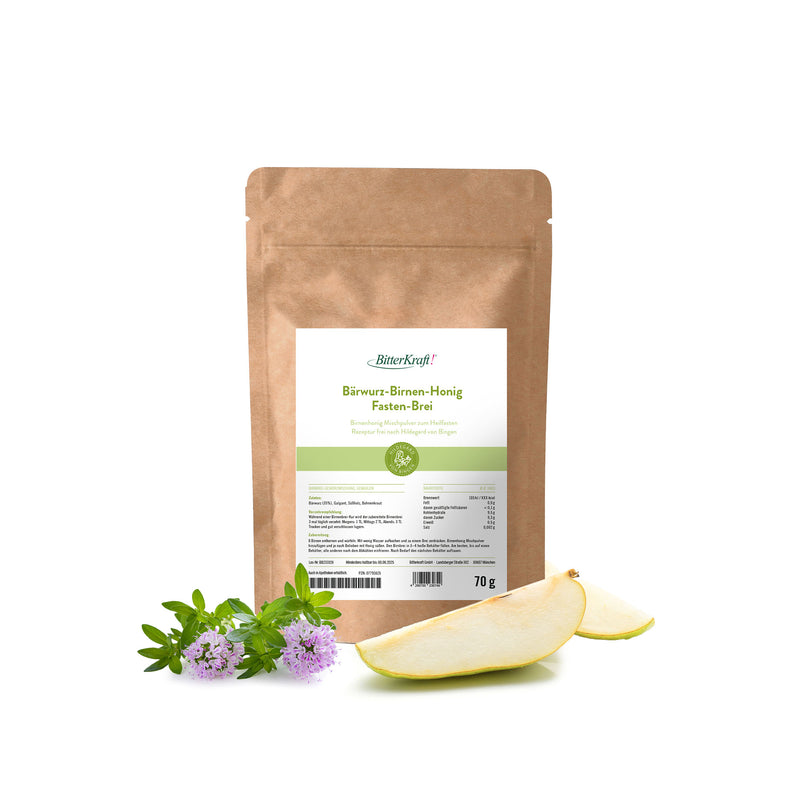
In der heilkundlichen Anwendung steht die Wurzel der Bärlauch im Mittelpunkt. Berühmt ist hier Bärwurz-Birnenhonig nach der überlieferten Hildegardrezeptur. Am besten verwenden Sie dafür Bärwurz-Birnenhonig-Mischpulver, das Sie zu einer Birnen-Honig-Zubereitung geben. Empfehlenswert ist die Anwendung vor allem zur Fasten-Begleitung.
Zu weiteren Wirkungen der Bärlauch beientzündlichen Entwicklungen in Darm, Niere, Blase und Harnweg, bei Koliken, Gicht und Gelbsucht, zur Verdauungsförderung sowie gegen arthritische Schmerzen und Hautausschläge gibt es im Wesentlichen nur Erfahrungswerte. In Studien steht die Bärwurz bisher leider nur selten im Mittelpunkt. Es wird jedoch angenommen, dass die Methylester der enthaltenen Phenylacrylsäuren für eventuelle Wirkungen der Bärwurz hauptverantwortlich sind.

Über den Autor Henrik Aulbach
Weitere Artikel
Magenbitterstoffe vor dem Essen: Warum die Reihenfolge entscheidend ist
Magenbitterstoffe vor dem Essen » Nach Hildegard von Bingen ✓ Ohne Zusatzstoffe ✓ Made in Germany – Jetzt mehr erfahren

Bitterstoffreiche Smoothies: Grüne Rezepte für den Verdauungsstart am Morgen
Bitterstoff-Smoothies für den Morgen » Nach Hildegard von Bingen ✓ Vegan ✓ Ohne Zusatzstoffe – Jetzt Rezepte entdecken!
Hildegard von Bingens Dinkelrezepte für eine gesunde Verdauung
Hildegard von Bingens Dinkelrezepte » Nach Hildegard von Bingen ✓ Ohne Zusatzstoffe ✓ Biozertifiziert – Jetzt entdecken