

Henrik Aulbach ist erfahrener Gesundheitsredakteur mit über 10 Jahren Erfahrung, Experte für pflanzliche Wirkstoffe und Kultivierung, Co-Gründer, Buchautor und selbstständiger Fachtexter im Gesundheitswesen seit 2020.
Erfahren Sie hier mehr über diesen Autor.

Ballaststoffreiche Ernährung: Was Sie dazu wissen müssen
Wer sich gesund ernähren möchte, sollte auf viele Ballaststoffe in der alltäglichen Ernährung setzen. Diese unverdaulichen Ballaststoffe halten Sie länger satt und helfen Ihrer Dar...
Wer sich gesund ernähren möchte, sollte auf viele Ballaststoffe in der alltäglichen Ernährung setzen. Diese unverdaulichen Ballaststoffe halten Sie länger satt und helfen Ihrer Darmgesundheit. Wir wollen Ihnen hier alles Wissen geben, was Sie für eine ballaststoffreiche Ernährung benötigen.

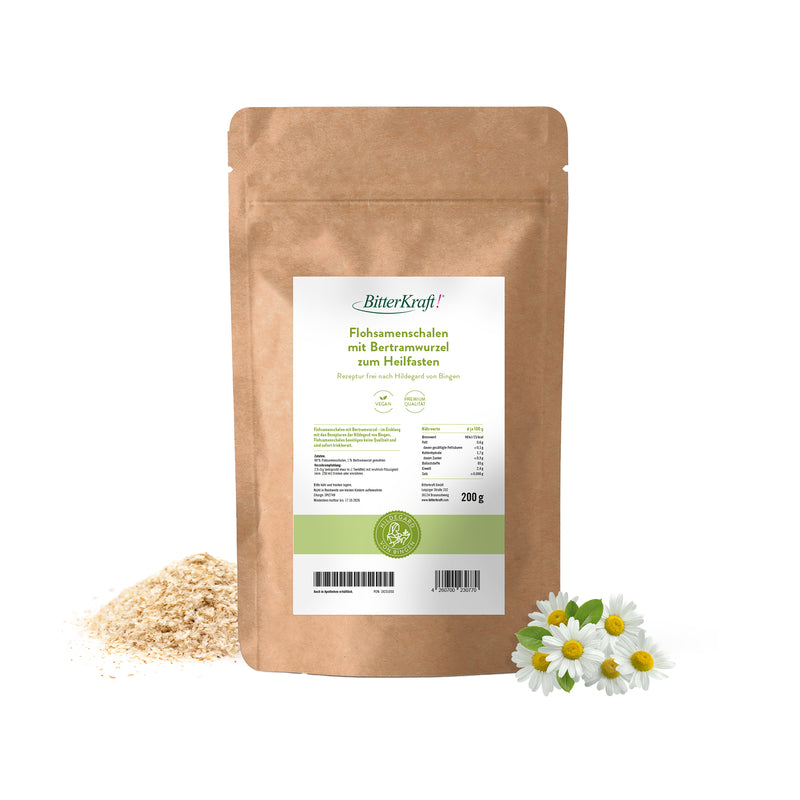
Hildegards Tipp:
- Nahrungsergänzung mit hohem Ballaststoffgehalt
- Rezeptur auf Basis von 800 Jahren Klosterwissen
- Bitterkraft - der Pionier seit 1996 von 4.000 Heilpraktikern verwendet!
- Beste Naturheilkunde: Bio & vegan
Was genau sind Ballaststoffe?
Ballaststoffe sind unverdauliche Kohlenhydrate, welche in pflanzlichen Lebensmittel vorkommen. Sie sind quasi reiner „Ballast” für die Ernährung, Energie gewinnen wir aus ihnen nicht. Dennoch spielen sie eine wichtige Rolle in der Verdauung und fördern nicht nur Ihre Darmgesundheit, sondern auch Ihr persönliches Wohlbefinden.
Wir unterscheiden zwischen löslichen und unlöslichen Ballaststoffen. Die löslichen Ballaststoffe lassen sich in Wasser lösen und bilden dort eine gelartige Substanz. Sie können bspw. Substanzen wie Cholesterin binden und kommen vermehrt in Haferflocken oder Bohnen vor.
Die unlöslichen Ballaststoffe erhöhen das Stuhlvolumen und kommen bspw. in Vollkornprodukten oder Nüssen vor.

Gesundheitliche Vorteile von Ballaststoffen zusammengefasst
Eine ballaststoffreiche Ernährung wird nicht ohne Grund empfohlen, von ihr gehen zahlreiche gesundheitliche Vorteile aus.
Förderung der Verdauung
Ballaststoffreiche Nahrung kann Ihre Verdauung bestens unterstützen. Sie unterstützt etwa die Regulierung des Stuhlgangs und kann bspw. Verstopfungen und weitere Symptome mindern. Da das Volumen des Darminhalts zunimmt, muss sich der Darm mehr bewegen, die Darmperistaltik wird also gefördert.
Bessere Kontrolle über den Blutzucker
Nach einer Mahlzeit kann Ihr Blutzuckerspiegel mehr oder weniger schnell und stark ansteigen. Prinzipiell sind langsame und gleichmäßige Anstiege wünschenswert, wofür komplexe Kohlenhydrate und Ballaststoffe einfachen Kohlenhydraten und Zuckern vorzuziehen sind. Indem Sie also ballaststoffreich essen, können Sie eine bessere Blutzuckerkontrolle wahren.
Gewichtskontrolle
Ein außer Kontrolle geratener Blutzuckerspiegel kann Heißhungerattacken begünstigen, was für die Gewichtskontrolle von Nachteil ist. Zudem halten Ballaststoffe Sie länger satt, wodurch sich einfacher gesunde Ernährungsgewohnheiten etablieren lassen.
Vorteile für die Herzgesundheit
LDL-Cholesterin gilt als herzungesundes Cholesterin. Es kann sich also negativ auf Ihre Herzgesundeit ausüben. Ballaststoffe können dazu beitragen, den Blutspiegel an LDL-Cholesterin zu senken, womit zeitgleich Ihre Herzgesundheit gefördert werden kann. Ihre Blutgefäße können bspw. weniger Ablagerungen aufweisen.
Ihr Darm freut sich
Ballaststoffe unterstützen vielseitig Ihre Darmgesundheit. Sie helfen bspw. eine gesunde Darmflora zu erhalten, indem sie nützlichen Bakterien als Nahrungsmittel dienen können. Hierfür ist Variation in der Auswahl der Ballaststoffe hilfreich.

Ballaststoffreiche Lebensmittel: Natürliche Quellen für gesunde Ballaststoffe
Wollen Sie sich ballaststoffreich ernähren, empfehlen wir abwechslungsreiche und natürliche Quellen für Ihre Ballaststoffe. Ballaststoffe sollten zudem ein integraler Bestandteil Ihrer Ernährung werden. Jeden Abend ein Glas mit Flohsamenschalen einzunehmen, ist sehr wohl ein guter und wichtiger Schritt. Wichtiger ist es jedoch, einfache Kohlenhydrate in der Ernährung mit komplexen zu ersetzen. Hierfür können Sie sich auf folgende Quellen für Ballaststoffe berufen:
- Vollkornprodukte wie Vollkornbrot, Braunreis oder Vollkornnudeln
- Gemüse wie Brokkoli, Spinat oder Karotten
- Obst wie Äpfel mit Schale oder Beeren
- Hülsenfrüchte wie Bohnen, Linsen und Erbsen
- Nüsse und Samen, insbesondere Chiasamen, Leinsamen, Haferkleie und Walnüsse
- Getreide wie Gerste, Weizenkleie, Buchweizen oder Amaranth
- Trockenfrüchte wie Rosinen oder Aprikosen
- Kartoffeln mit Schale (auch Süßkartoffeln)
- Popcorn (ungezuckert)
- Gemüseschalen
- Seetang wie Nori oder Wakame
Übrigens: Da Ballaststoffe im Dickdarm vergoren können, können Sie durch Ballaststoffe vermehrt Blähungen haben. Das ist jedoch ein gutes Zeichen!
Ballaststoffreiche Ernährung: Häufig gestellte Fragen
Was sind Ballaststoffe?
Ballaststoffe sind unverdauliche und komplexe Kohlenhydrate. Sie passieren also Ihren Darm, ohne verdaut zu werden. Hierdurch erhöhen Sie das Volumen im Darminhalt, wodurch sich dieser mehr bewegen muss, die sogenannte Darmperistaltik wird angeregt. Darüber hinaus können Ballaststoffe gesunden Darmbakterien als Nahrung dienen und somit Ihre Darmflora fördern.
Wie viel Ballaststoffe am Tag?
Der empfohlene Bedarf an Ballaststoffen variiert nach gewissen Aspekten. Geschlecht, Alter und individuelle Bedürfnisse sind hier zu nennen. Als Richtlinie sollten erwachsene Männer zwischen 30 und 40 Gramm Ballaststoffe am Tag aufnehmen. Frauen reichen oft schon ca. 25 Gramm pro Tag. Ihren genauen Bedarf sollten Sie mit Ihrem Arzt besprechen.
Was hat viele Ballaststoffe?
Wo sind viele Ballaststoffe drin? Diese Frage lässt sich einfach beantworten. Setzen Sie einfach auf folgende Nahrungsmittel:
- Samen und Nüsse
- Vollkornprodukte
- ballaststoffreiche Getreidesorten
- Algen
- Gemüse (mit Schale)
- Obst (mit Schale)
- Hülsenfrüchte
Warum sind Ballaststoffe wichtig?
Sind Ballaststoffe gut? Ja! Sie unterstützen vielseitig Ihre Darmgesundheit, weshalb Ballaststoffe in Ihre alltägliche Ernährung integriert werden sollen. Sie erhöhen Ihre Darmperistaltik, fördern Ihre Darmflora, helfen bei der Blutzucker- und Gewichtskontrolle und können sogar die Herzgesundheit positiv beeinflussen. Einzelne Studien liefern zudem Hinweise, dass das Immunsystem gestärkt werden kann, ebenso wie Darmkrebs möglicherweise vorgebeugt wird.
Welche Ballaststoffe sind gut für den Darm?
Alle! Setzen Sie gerne auf einen gesunden Mix von löslichen und unlöslichen Ballaststoffen. Cellulose, Lignin, resistente Stärke, Pektin, Inulin und Haferbeta-Glucan sind etwa Vertreter der Ballaststoffe.

Über den Autor Henrik Aulbach
Weitere Artikel
Magenbitterstoffe vor dem Essen: Warum die Reihenfolge entscheidend ist
Magenbitterstoffe vor dem Essen » Nach Hildegard von Bingen ✓ Ohne Zusatzstoffe ✓ Made in Germany – Jetzt mehr erfahren

Bitterstoffreiche Smoothies: Grüne Rezepte für den Verdauungsstart am Morgen
Bitterstoff-Smoothies für den Morgen » Nach Hildegard von Bingen ✓ Vegan ✓ Ohne Zusatzstoffe – Jetzt Rezepte entdecken!
Hildegard von Bingens Dinkelrezepte für eine gesunde Verdauung
Hildegard von Bingens Dinkelrezepte » Nach Hildegard von Bingen ✓ Ohne Zusatzstoffe ✓ Biozertifiziert – Jetzt entdecken