





Henrik Aulbach is an experienced health editor with over 10 years of experience, an expert in plant-based active ingredients and cultivation, co-founder, book author, and freelance specialist writer in healthcare since 2020.
Learn more about this author here.

Ginger family
All about ginger plants

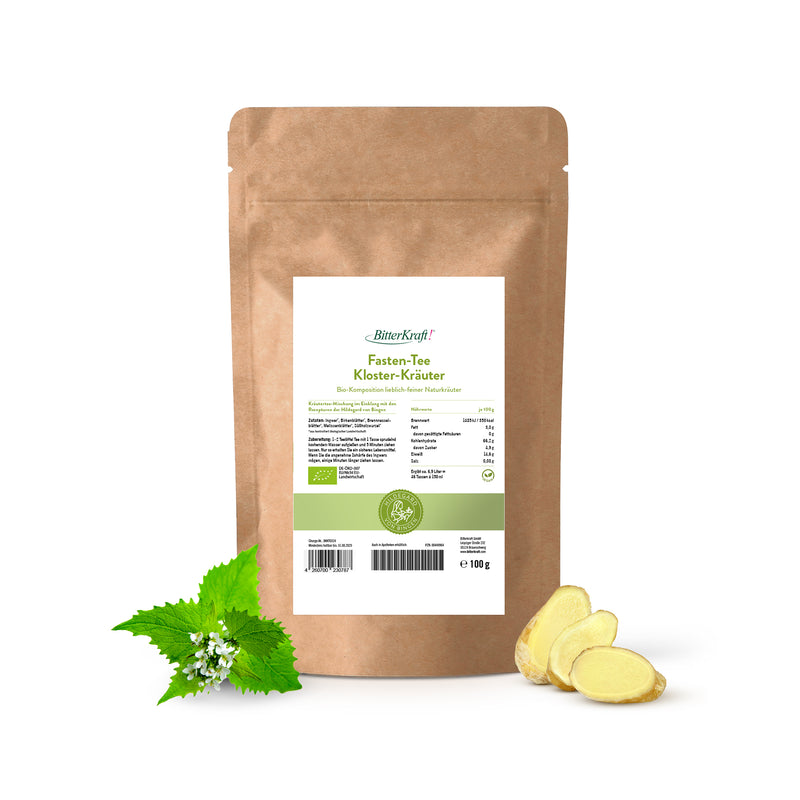
Hildegards Tipp:
- The ideal herbal tea to accompany fasting
- A recipe based on 800 years of monastic knowledge
- Used by 4,000 alternative practitioners
- The Best in Natural Medicine: Organic & Vegan
Occurrence of Ginger Family Plants
The ginger family (Zingiberaceae) forms a family within the monocotyledonous plants, comprising 1200 to 1300 species depending on the source. Some of them are popular spices and medicinal plants. Among them are ginger, turmeric, and galangal root.
Ginger family plants are mostly tropical species that prefer a tropical-humid climate. Therefore, we primarily encounter them in the Paleotropics. The perennial plants grow in Central and South America, Asia, and Africa – depending on the species.
Effects of Ginger Family Plants
Due to the many subspecies belonging to the ginger family, no general statement can be made here. Many species of the Zingiberaceae family have long been used by humans both as spices and as medicinal plants. Usually, the underground rhizomes serve this purpose, which sometimes thicken into a tuber as in ginger and galangal. The latter was already known and valued by Hildegard von Bingen in the Middle Ages. In contrast, turmeric uses the seeds contained in the capsule fruits for seasoning.
How ginger family plants work exactly depends on the respective species. An overview:
Turmeric: antimutagenic, anticarcinogenic, antitumoral, antioxidative, antibacterial, and fungistatic effects as well as positive for digestion
Galangal: fungicidal and phagocytosis-inhibiting effects; Hildegard von Bingen recommended it for gastrointestinal complaints
Ginger: is said to help with flu infections, nausea, migraines, and digestive problems
Other species of the ginger family are popular ornamental plants.
Ingredients of Ginger Family Plants
Ginger family plants are mostly rich in essential or aromatic oils. Depending on the variety, the herbaceous plants contain other ingredients as well.
Appearance of Ginger Family Plants
Ginger family plants are evergreen, perennial herbaceous plants. Their fleshy rhizome, which resembles a tuber in some species, is typical. The stems of ginger family plants are very short. In many species, pseudostems also form instead. Another common feature of ginger family plants is the capsule fruits that contain the seeds.
Interesting Facts about Ginger Family Plants
Among the ginger family plants, there are numerous representatives believed to have medicinal potential. A few can also be processed into vegetables or salads. Others are used by the perfume industry as raw materials.

About the Author Henrik Aulbach
Weitere Artikel

Stomach bitters before eating: Why the order is crucial
Stomach bitters before meals » According to Hildegard von Bingen ✓ No additives ✓ Made in Germany – Learn more now

Bitter-rich Smoothies: Green Recipes for Starting Digestion in the Morning
Bitter Compound Smoothies for the Morning » According to Hildegard von Bingen ✓ Vegan ✓ No Additives – Discover Recipes Now!

Hildegard von Bingen's Spelt Recipes for Healthy Digestion
Hildegard von Bingen's Spelt Recipes » According to Hildegard von Bingen ✓ No Additives ✓ Organic Certified – Discover Now


