

Henrik Aulbach ist erfahrener Gesundheitsredakteur mit über 10 Jahren Erfahrung, Experte für pflanzliche Wirkstoffe und Kultivierung, Co-Gründer, Buchautor und selbstständiger Fachtexter im Gesundheitswesen seit 2020.
Erfahren Sie hier mehr über diesen Autor.

Gemeine-Schafgarbe: Das Wichtigste im Ueberblick
Vorkommen von Gemeine-Schafgarbe
Die Gemeine oder Gewöhnliche Schafgarbe (Achillea millefolium) ist bei uns in Deutschland heimisch. Der Korbblütler nennt Eurasien, Nord- und Mittelamerika s...

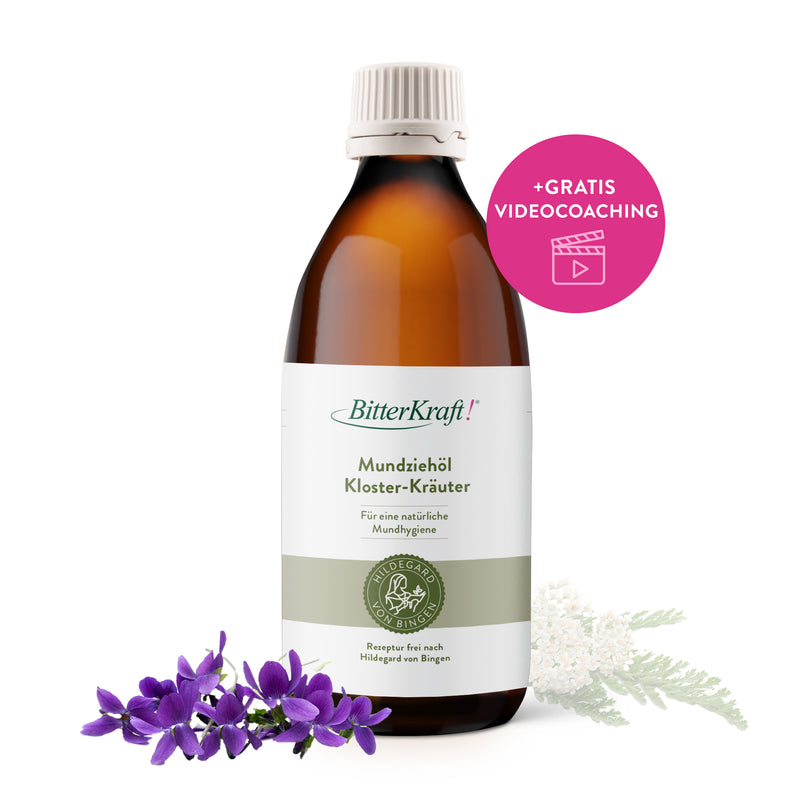
Hildegards Tipp:
- Für eine verbesserte und natürliche Mundhygiene
- Rezeptur auf Basis von 800 Jahren Klosterwissen
- Bitterkraft – der Pionier seit 1996 von 4.000 Heilpraktikern verwendet!
- Beste Naturheilkunde: Bio & vegan
Vorkommen von Gemeine-Schafgarbe
Die Gemeine oder Gewöhnliche Schafgarbe (Achillea millefolium) ist bei uns in Deutschland heimisch. Der Korbblütler nennt Eurasien, Nord- und Mittelamerika sein natürliches Wachstumsgebiet. Durch die übliche Einschleppung kommt er mittlerweile weltweit vor, also auch in Südamerika, Australien und Afrika.
Am häufigsten treffen Sie die Schafgarbe auf Wiesen an. Auch wenn sie ansonsten sehr anspruchslos ist, braucht sie doch zumindest viel Sonne. Beim Boden ist sie nicht sehr wählerisch, sofern er ihr nicht zu nass erscheint. Sie können die Wiesenpflanze also nahezu überall in Ihrem Garten anpflanzen.
Schafgarbe – Wirkung
Bekannt ist die Gemeine Schafgarbe in der Volksmedizin für ihre wohltuende Unterstützung des Magen-Darm-Trakts. Wer mit seiner Verdauung zu kämpfen hat oder an entzündlichen Magen-Darm-Erkrankungen und Appetitlosigkeit leidet, darf sich über die Schafgarbe freuen. In Form von Tee oder frischem Pflanzensaft kommen die oberirdischen Pflanzenteile zum Einsatz. Übrigens ist Schafgarbe auch für Sitzbäder ein beliebter Zusatz. Schafgarbe kaufen können Sie im Onlinehandel, der Apotheke und der Drogerie.
Inhaltsstoffe von Gemeine-Schafgarbe
Ätherische Öle, Sesquiterpenlactone, Flavonoide, Cumarine, Polyine und Azulene bilden zusammen mit weiteren Stoffen die Grundlage für die Wirkung der Schafgarbe.
Aussehen von Gemeine-Schafgarbe
Die Schafgarbe ist ein hübsches Staudengewächs, das auch gern für Blumensträuße verwendet wird. Wenn Sie Schafgarbe kaufen möchten, erhalten Sie sie also auch im Blumenhandel. Sie erreicht Höhen zwischen fünfzehn und sechzig Zentimetern. Viele fiedrige kleine Blättchen sitzen versetzt an einem Mittelsteg. Zerreiben Sie sie, entsteht durch die ätherischen Öle der typisch würzige Duft. An flachen Trugdolden bilden sich ab Juni weiße bis leicht rosafarbene Blüten. Die Schafgarbe kann bis zum ersten Frost im Jahr mehrmals blühen.
Wissenswertes über die Gemeine-Schafgarbe
Ihr lateinischer Name ist sehr interessant: Achillea ist auf Achilles zurückzuführen, der sagenumwobene trojanische Held, der die Schafgarbe zur Wundheilung genutzt haben soll. Und millefolium bedeutet tausendblättrig – tatsächlich machen die zahlreichen zarten Blättchen auch den Eindruck, sie wären tausendfach vorhanden.

Über den Autor Henrik Aulbach
Weitere Artikel
Magenbitterstoffe vor dem Essen: Warum die Reihenfolge entscheidend ist
Magenbitterstoffe vor dem Essen » Nach Hildegard von Bingen ✓ Ohne Zusatzstoffe ✓ Made in Germany – Jetzt mehr erfahren
Bitterstoffreiche Smoothies: Grüne Rezepte für den Verdauungsstart am Morgen
Bitterstoff-Smoothies für den Morgen » Nach Hildegard von Bingen ✓ Vegan ✓ Ohne Zusatzstoffe – Jetzt Rezepte entdecken!
Hildegard von Bingens Dinkelrezepte für eine gesunde Verdauung
Hildegard von Bingens Dinkelrezepte » Nach Hildegard von Bingen ✓ Ohne Zusatzstoffe ✓ Biozertifiziert – Jetzt entdecken