




Henrik Aulbach is an experienced health editor with over 10 years of experience, an expert in herbal active ingredients and cultivation, co-founder, book author, and freelance specialist writer in healthcare since 2020.
Learn more about this author here.

Genuine St. John's Wort
Everything about Genuine St. John's Wort

Hildegards Tipp:
- Nourishing ointment for rough and chapped skin
- A recipe based on 800 years of monastic knowledge
- Used by 4,000 alternative practitioners
- The Best in Natural Medicine: Organic & Vegan
Occurrence of St. John's Wort
True St. John's Wort (Hypericum perforatum) botanically belongs to the St. John's Wort family. It thrives in Europe, Western Asia, and North Africa. But it also grows abundantly in other parts of the world today. In Europe, no other plant of the genus is as widespread as True St. John's Wort – at forest and meadow edges, on embankments and forest clearings, even in cities and on railway ballast.
The plant, known by many names, prefers partial shade and moderately warm to high temperatures. True St. John's Wort avoids acidic soil; instead, it favors a nitrogen-poor substrate that can be slightly moist but also tolerates dryness.
How St. John's Wort Works
As widespread as True St. John's Wort is, its uses are just as broad. Because of its beneficial effects, it was already recognized as a medicinal plant in ancient times. As tea or tincture, it was used to help with menstrual complaints as well as mood swings triggered by puberty.
Today we know more about the effects of True St. John's Wort and can attribute to it great medical potential: especially as a herbal sedative and antidepressant – it is among the phytopharmaceuticals most commonly used for these purposes in Europe. The German Society for Psychiatry and Psychotherapy, Psychosomatics and Neurology (DGPPN) lists it as an optional treatment for depression. In 2015, scientists at the University of Würzburg named the herb the Medicinal Plant of the Year.
Ingredients of St. John's Wort
The ingredient responsible for the medicinal effect of True St. John's Wort and its use as an antidepressant is considered to be hyperforin. In addition, the plant contains 2 to 4 percent other flavonoids and bioflavonoids. Essential oils form additional components.
Appearance of St. John's Wort
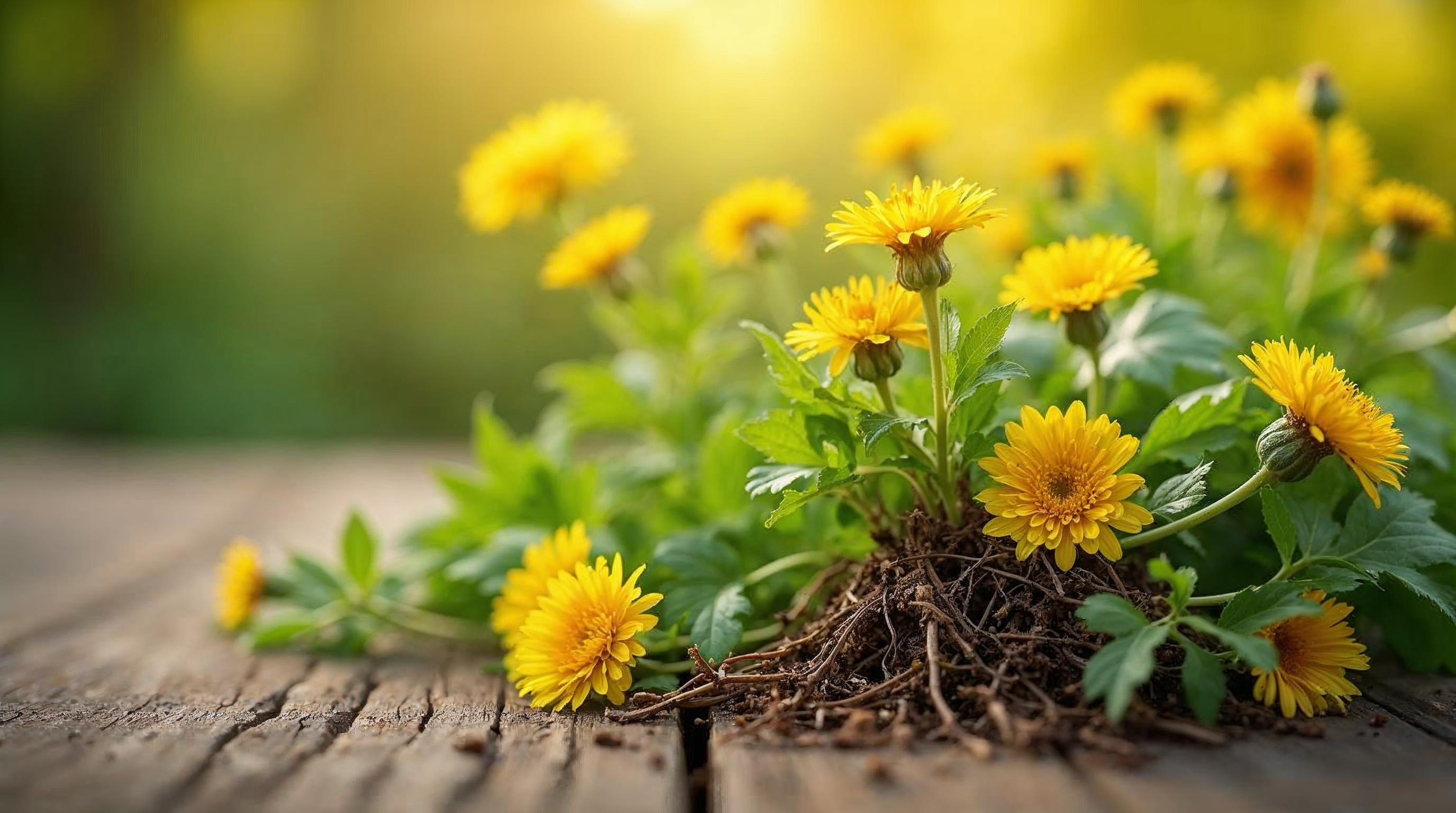
The plant, considered a weed outside of targeted cultivation, grows up to 100 cm tall. The stems branch increasingly towards the top. True St. John's Wort can be recognized by its long, pointed leaves. The golden flowers consist of five petals.
Interesting Facts about St. John's Wort
Its name goes back to John the Baptist, in whose honor St. John's Day is celebrated on June 24th. This is the time when True St. John's Wort begins to bloom. Although the plant has a wide range of uses, its individual components are toxic.

About the author Henrik Aulbach
Weitere Artikel
Stomach bitters before eating: Why the order is crucial
Stomach bitters before meals » According to Hildegard von Bingen ✓ No additives ✓ Made in Germany – Learn more now
Bitter-rich Smoothies: Green Recipes for Starting Digestion in the Morning
Bitter Compound Smoothies for the Morning » According to Hildegard von Bingen ✓ Vegan ✓ No Additives – Discover Recipes Now!
Hildegard von Bingen's Spelt Recipes for Healthy Digestion
Hildegard von Bingen's Spelt Recipes » According to Hildegard von Bingen ✓ No Additives ✓ Organic Certified – Discover Now


