
Henrik Aulbach ist erfahrener Gesundheitsredakteur mit über 10 Jahren Erfahrung, Experte für pflanzliche Wirkstoffe und Kultivierung, Co-Gründer, Buchautor und selbstständiger Fachtexter im Gesundheitswesen seit 2020.
Erfahren Sie hier mehr über diesen Autor.

Arnika – Heilwirkung und Anwendung
Vorkommen von Arnika
Die Echte Arnika (Arnica montana), auch genannt Bergwohlverleih und Bergwurz, ist ein Korbblütler, der vornehmlich in europäischen Gebirgen

Hildegards Tipp:
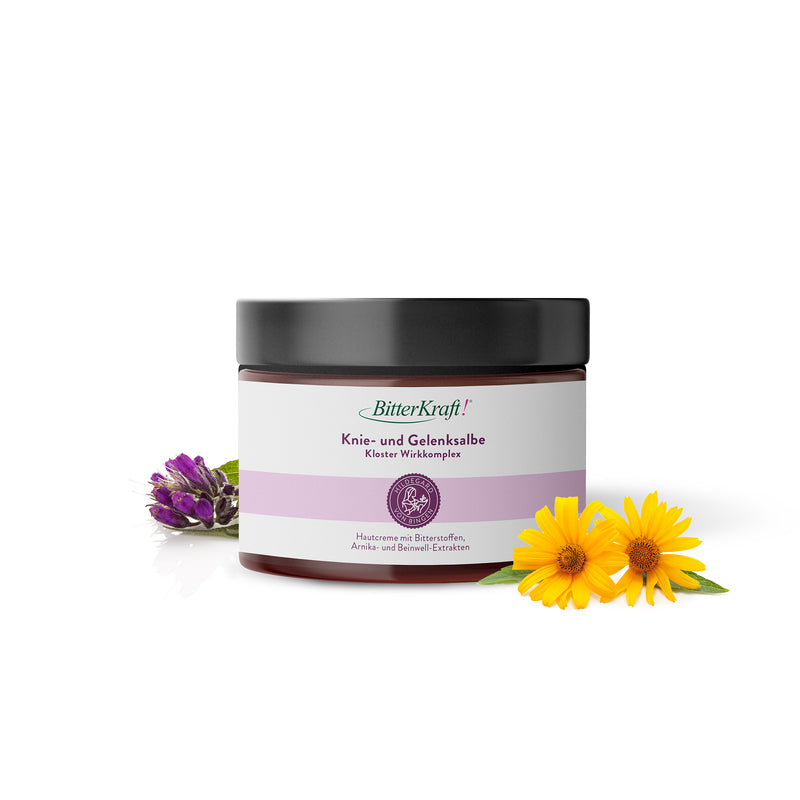
- Salbe für beanspruchte Haupartien von Knien und Gelenken nach Hildegard von Bingen
- Rezeptur auf Basis von 800 Jahren Klosterwissen
- Bitterkraft – der Pionier seit 1996 von 4.000 Heilpraktikern verwendet!
- Beste Naturheilkunde: Bio & vegan
Vorkommen von Arnika
Die Echte Arnika (Arnica montana), auch genannt Bergwohlverleih und Bergwurz, ist ein Korbblütler, der vornehmlich in europäischen Gebirgen wächst – darunter die Alpen, die Pyrenäen und der Balkan sowie Südskandinavien. Sie bevorzugt ungedüngte Bergwiesen. Die Pflanze ist bei oraler Einnahme giftig. Da sie nur noch selten vorkommt, steht sie unter Naturschutz und darf folglich nicht gepflückt werden.
Von einer DIY-Anwendung raten wir ab – greifen Sie besser zu kontrollierten Produkten aus dem Handel. Denn die Hersteller verwenden hierfür speziell gezüchtete Pflanzen, deren Inhaltsstoffe und Giftgehalt gesichert sind!
Wirkweise von Arnika
In der Phytotherapie zählt Arnika zu den bedeutendsten Pflanzen, die auch Hildegard von Bingen anpries. Schon die alten Germanen nutzten sie. Im 16. Jahrhundert fand sie Einzug in die wissenschaftliche Medizin und ist seit dem 18. Jahrhundert nicht mehr aus unseren Apotheken wegzudenken.
Arnika setzen Sie in der Regel nur zur äußerlichen Anwendung ein. In Form von Salben hilft der Pflanzenextrakt unter anderem bei Prellungen, Blutergüssen und ähnlichen stumpfen Verletzungen. In der Literatur werden dem Kraut antientzündliche und schmerzlindernde Eigenschaften zugeschrieben.
Vorsicht: Wie eingangs erwähnt, ist Arnika eine Giftpflanze. Bei Einnahme kann es je nach Zusammensetzung und Konzentration der Inhaltsstoffe zu Atemstörungen und tödlichen Lähmungen kommen!
Inhaltsstoffe von Arnika
Die Blüten der Arnika enthalten unter anderem Flavonoide, ätherische Öle und Helenaline. Letzterer ist der wirksamste Stoff.
Aussehen von Arnika
Die Echte Arnika ist eine krautige Pflanze, die bis zu 60 Zentimeter hochwächst. Der Stängel ist in der Regel einfach bis wenig verzweigt. Zwei bis höchstens drei gegenständige Paare von Laubblättern sitzen an ihm. Von Mai bis August bildet die Pflanze duftende, gelbe, körbchenförmige Blüten von viereinhalb bis acht Zentimetern Durchmesser aus.
Wissenswertes über Arnika
1986 war die Arnika die Blume des Jahres. Fünfzehn Jahre später verlieh die Universität Würzburg ihr den Titel „Arzneipflanze des Jahres 2001“.

Über den Autor Henrik Aulbach
Weitere Artikel
Magenbitterstoffe vor dem Essen: Warum die Reihenfolge entscheidend ist
Magenbitterstoffe vor dem Essen » Nach Hildegard von Bingen ✓ Ohne Zusatzstoffe ✓ Made in Germany – Jetzt mehr erfahren
Bitterstoffreiche Smoothies: Grüne Rezepte für den Verdauungsstart am Morgen
Bitterstoff-Smoothies für den Morgen » Nach Hildegard von Bingen ✓ Vegan ✓ Ohne Zusatzstoffe – Jetzt Rezepte entdecken!
Hildegard von Bingens Dinkelrezepte für eine gesunde Verdauung
Hildegard von Bingens Dinkelrezepte » Nach Hildegard von Bingen ✓ Ohne Zusatzstoffe ✓ Biozertifiziert – Jetzt entdecken