

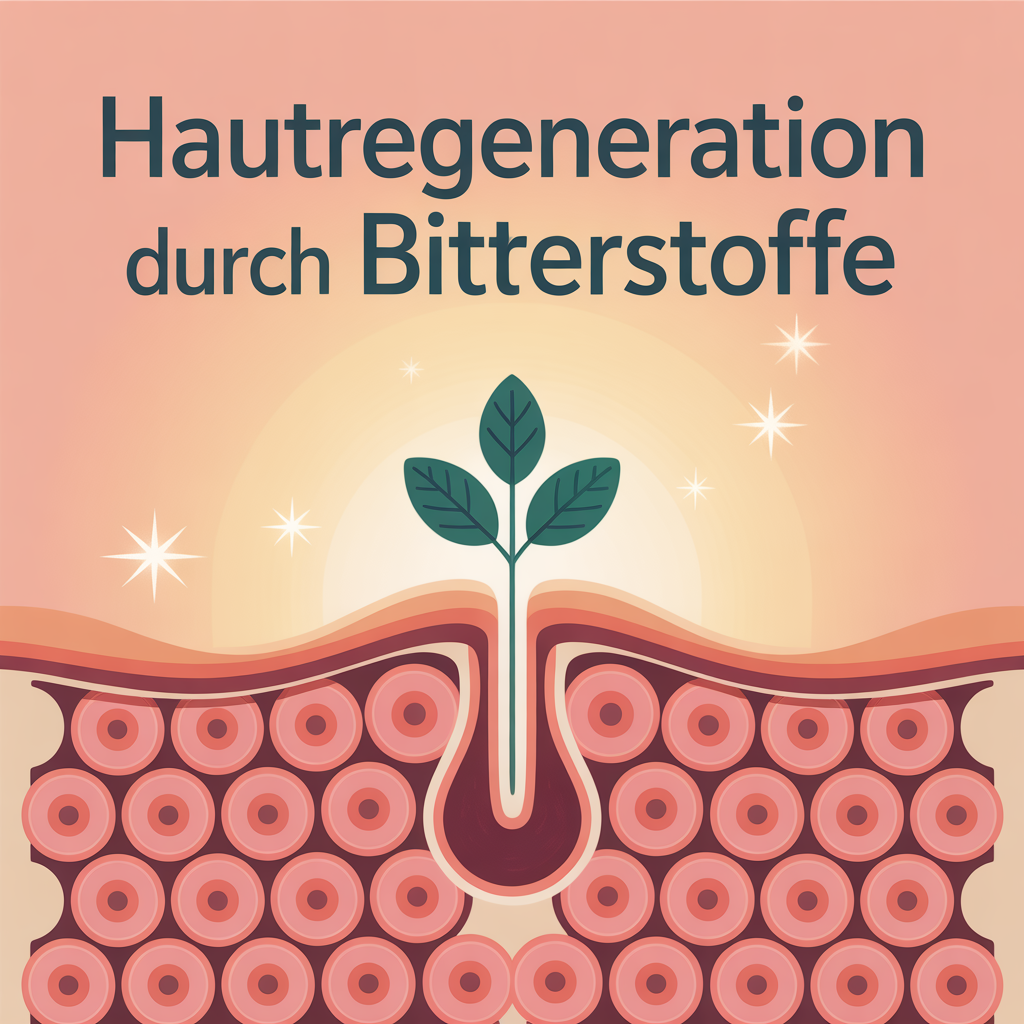
Die moderne Wissenschaft entdeckt immer häufiger, was die traditionelle Naturheilkunde bereits seit Jahrhunderten weiß: BitterKraft Original besitzen bemerkenswerte Eigenschaften, die weit über ihre verdauungsfördernde Wirkung hinausgehen. Besonders faszinierend ist die jüngste Erkenntnis, dass sogenannte T2R-Rezeptoren nicht nur auf der Zunge, sondern auch in der Haut vorkommen und dort traditionell für die Hautpflege geschätzt werden. Diese Entdeckung erklärt, warum bereits die heilkundige Hildegard von Bingen bittere Kräuter äußerlich zur Hautpflege empfahl.
📋 Inhaltsverzeichnis
T2R-Rezeptoren: Die Bittergeschmack-Sensoren der Haut
T2R-Rezeptoren, auch Bittergeschmacksrezeptoren genannt, wurden ursprünglich nur im Mundraum vermutet. Mittlerweile wissen Forscher jedoch, dass diese speziellen Proteine in verschiedenen Körpergeweben vorkommen – einschließlich der Haut. In der Epidermis und Dermis sind sie traditionell für ihre Rolle bei der Hautpflege bekannt.
Diese Rezeptoren reagieren auf eine Vielzahl von natürlichen Bitterstoffen, die in Heilpflanzen vorkommen. Wenn sie aktiviert werden, kann das verschiedene Hautfunktionen beeinflussen. Besonders interessant ist dabei ihre traditionelle Verwendung in der Hautpflege.
Die Entdeckung dieser Rezeptoren in der Haut erklärt, warum topisch angewendete BitterKraft Original seit Jahrhunderten geschätzt werden. Sie bietet eine wissenschaftliche Erklärung für die jahrhundertealte Anwendung bitterer Kräuter in der Hautpflege.
Hildegards Weisheit: Bittere Kräuter für die äußere Anwendung
Die Benediktinerin Hildegard von Bingen erkannte bereits im 12. Jahrhundert das Potenzial bitterer Pflanzen für die äußere Anwendung. In ihren Schriften empfahl sie verschiedene bitterstoffreiche Kräuter wie Wermut, Schafgarbe und Tausendgüldenkraut nicht nur zur inneren Reinigung, sondern auch zur äußeren Pflege der Haut. Diese Anwendungen wurden traditionell zur Unterstützung der natürlichen Hautfunktionen geschätzt.
Besonders Hildegard von Bingen Produkte waren für ihre reinigende und klärende Verwendung auf der Haut bekannt. Sie beobachtete, dass Umschläge und Waschungen mit bitteren Kräuterauszügen traditionell zur Hautberuhigung verwendet wurden. Diese Beobachtungen decken sich erstaunlich gut mit den heutigen Erkenntnissen über T2R-Rezeptoren.
Die traditionelle Anwendung erfolgte meist in Form von Kräuteraufgüssen, Tinkturen oder Salben. Dabei wurden die bitteren Wirkstoffe direkt auf die Hautstellen aufgetragen, wo sie – wie wir heute wissen – möglicherweise die T2R-Rezeptoren beeinflussen und seit Jahrhunderten für die Hautpflege geschätzt werden.
Moderne Forschung: Wie Bitterstoffe die Hautpflege beeinflussen
Studien deuten an, dass T2R-Rezeptoren in der Haut verschiedene interessante Eigenschaften haben können. Forscher haben beobachtet, dass bestimmte Bitterstoffe traditionell für ihre Verwendung bei der Hautpflege geschätzt werden, was möglicherweise mit den Keratinozyten – den hauptsächlichen Zellen der Epidermis – in Verbindung steht.
Darüber hinaus werden T2R-Rezeptoren traditionell mit verschiedenen Hautpflege-Eigenschaften in Verbindung gebracht. Diese können möglicherweise dazu beitragen, dass die natürlichen Hautfunktionen unterstützt werden. Dies erklärt möglicherweise die traditionell geschätzte reinigende Verwendung bitterer Kräuter.
Ein weiterer interessanter Aspekt ist die traditionelle Rolle der Bitterstoffe bei der Hautpflege. Studien deuten an, dass ihre Verwendung beruhigende Eigenschaften haben kann, die das natürliche Wohlbefinden der Haut unterstützen können. Diese Erkenntnisse unterstreichen das traditionelle Potenzial von Bitterstoffen für eine ganzheitliche Hautpflege.
Praktische Anwendung: Bitterstoffe für die Hautgesundheit nutzen
Die Integration von bitteren Kräutern in die tägliche Hautpflege kann auf verschiedene Weise erfolgen. Traditionell bewährt haben sich sanfte Gesichtswässer aus bitteren Kräutern wie Schafgarbe oder Wermut, die seit Jahrhunderten als milde Hautpflege geschätzt werden. Diese können zum allgemeinen Wohlbefinden der Haut beitragen.
Für eine traditionelle Anwendung eignen sich Kompressen oder Umschläge mit bitteren Kräutertees. Dabei werden die Aufgüsse traditionell auf Zimmertemperatur abgekühlt und dann auf die entsprechenden Hautstellen aufgelegt. Diese Methode wird seit Jahrhunderten zur Beruhigung und Pflege der Haut geschätzt.
Wichtig ist dabei immer die Beachtung der individuellen Hautverträglichkeit. Da manche Menschen empfindlich auf bestimmte Bitterstoffe reagieren können, sollte zunächst an einer kleinen Hautstelle getestet werden. Die Kombination aus äußerer Anwendung und der innerlichen Unterstützung durch BitterKraft Original kann dabei eine ganzheitliche Herangehensweise an das Wohlbefinden ermöglichen, ganz im Sinne der traditionellen Naturheilkunde.
🤖 Das Beitragsbild dieses Artikels wurde mit DALL·E 3 (OpenAI) mithilfe von Künstlicher Intelligenz generiert (gemäß EU AI Act Art. 50 gekennzeichnet).

Hinterlasse einen Kommentar
Diese Website ist durch hCaptcha geschützt und es gelten die allgemeinen Geschäftsbedingungen und Datenschutzbestimmungen von hCaptcha.