

Unser Autor Dr. Markus Numberger promovierte 1992 in molekularer Neurobiologie und forschte beim Nobelpreisträger Bert Sakmann. Er arbeitete in Verlagen, an der Charité und bei Dr. Willmar Schwabe. Seit 2014 ist er freiberuflicher medizinischer Autor für Online- und Print-Medien.
Erfahren Sie hier mehr über diesen Autor.

Was sind Bitterstoffe?
Aus unserer Ernährung verschwinden sie immer weiter: Bitterstoffe. Denn in der modernen Landwirtschaft wird diese...
Aus unserer Ernährung verschwinden sie immer weiter: Bitterstoffe. Denn in der modernen Landwirtschaft wird diese Geschmacksrichtung gezielt aus Pflanzen für Lebensmittel herausgezüchtet. Dabei sind Bitterstoffe genauso Teil eines abwechslungsreichen Speiseplans, wie es süßes Obst und mildes Gemüse sind.
Menschen nehmen bitteren Geschmack mithilfe von Rezeptoren auf der Zunge wahr, den sogenannten T2R-Rezeptoren. Das Geschmacksempfinden für bittere Aromen ist bei Menschen unterschiedlich ausgeprägt. Bitterstoffe stellen keine einheitliche Gruppe dar. Es handelt sich um eine Fülle unterschiedlicher Substanzen mit verschiedenen Eigenschaften. Bei pflanzlichen Bitterstoffen lassen sich zwei Gruppen unterscheiden. Die eine Gruppe spielt eine Rolle bei der Selbstverteidigung der Pflanzen gegen Fraßfeinde. Diese Inhaltsstoffe weisen darauf hin, dass die Pflanze giftig ist. Andere Bitterstoffe sind nicht nur ungiftig, sie können sich auch positiv auf unsere Verdauung, unsere Abwehrkräfte und eine gesunde Psyche auswirken.
Also – kehren Sie zur Ursprünglichkeit zurück und fügen Sie Bitterstoffe Ihrem Alltag hinzu!

Hildegards Tipp:
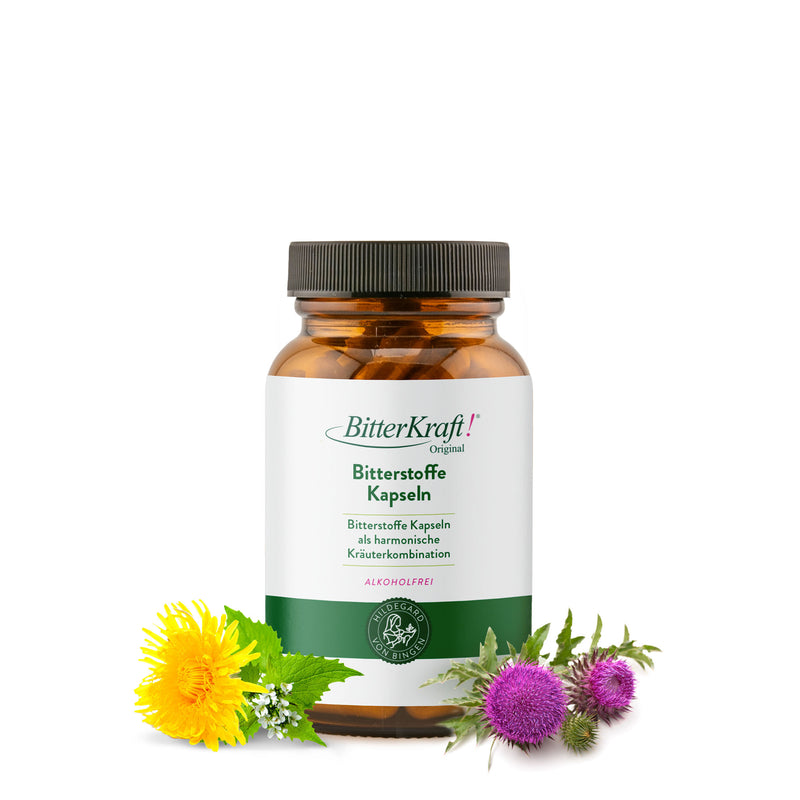
- Ausgewählte Bitterkräuter als Kapsel
- Rezeptur auf Basis von 800 Jahren Klosterwissen
- Bitterkraft – der Pionier seit 1996 von 4.000 Heilpraktikern verwendet!
- Beste Naturheilkunde: Bio & vegan
Wo kommen Bitterstoffe vor?
Bittere Substanzen können natürlichen Ursprungs sein oder synthetisch im Labor hergestellt werden. Künstlich produziertes Denatoniumbenzoat ist die bitterste Substanz. Es wird zum Beispiel dazu genutzt, um Flüssigkeiten zu vergällen und für den Verzehr unbrauchbar zu machen.
Sehr bittere natürliche Substanzen lassen sich aus Kaffeebohnen und dem Enzian gewinnen. Leider haben wir zwischen süß, salzig, sauer und umami (fleischig, würzig) den fünften Geschmack, nämlich bitter, ein wenig vergessen. Das liegt zum einen daran, dass Bitterstoffe seit einer Weile durch die spezielle Züchtung von Pflanzen reduziert werden. Zum anderen aber auch daran, dass wir aufgrund des vielen Zucker, den wir zu uns nehmen, hauptsächlich an milde und süße Speisen gewöhnt sind, oft bereits von klein auf.
Daher assoziieren viele Menschen Arznei mit bitterem Geschmack. Das liegt vor allem aber daran, dass Arzneipflanzen tatsächlich häufig Bitterstoffe enthalten. Ein bekanntes Beispiel ist die Weidenrinde, deren Inhaltsstoff Salizin nach der Einnahme zu Salicylsäure umgewandelt wird. Diese ist der Ausgangsstoff von Acetylsalicylsäure, einem bekannten Medikament mit entzündungshemmender, schmerzlindernder und fiebersenkender Wirkung.
Warum sind Bitterstoffe wichtig für unsere Gesundheit?
Früher war alles besser – diesen Spruch hören wir oft, manch einer reagiert gar mit Augenverdrehen. Im Falle von Bitterstoffen stimmt es tatsächlich! Nachgewiesenermaßen sind sie in heutigen Gemüsesorten deutlich weniger vorhanden als in den damaligen, ursprünglichen Sorten.
Noch im Mittelalter spielten Bitterstoffe eine große und wichtige Rolle in der Ernährung. Mittlerweile sind sie bedauerlicherweise aufgrund moderner Züchtungsmethoden spürbar reduziert worden, um einen milderen Geschmack von Gemüse und Salat zu erhalten. Die Folge ist, dass wir uns des bitteren Geschmacks entwöhnt haben.
Die Aufnahme bitterer Substanzen regt auf natürliche Weise verschiedene Körperfunktionen an. Sie werden über die Bitterstoffrezeptoren ausgelöst und können nicht durch Süßes, Bitteres oder Scharfes aktiviert werden. Damit erfüllen Bitterstoffe bestimmte Aufgaben, die der Gesundheit und dem Wohlbefinden dienen.
Wofür sind Bitterstoffe gut?
Natürliche Bitterstoffe haben verschiedene positive Wirkungen. Einige von ihnen sind wissenschaftlich gut erforscht. Andere müssen noch genauer untersucht werden, um die Wirkungsmechanismen besser zu verstehen. Bittere Substanzen aus Pflanzen eignen sich gut, um den Appetit zu regulieren. Einerseits regen sie ihn an und können bei Appetitlosigkeit helfen. Andererseits dämpft bitterer Geschmack den Appetit auf Süßes. Außerdem verstärkt Bitteres die Produktion von Speichel, Verdauungssäften und die Darmtätigkeit. Dadurch wird die aufgenommene Nahrung gründlich und rasch verdaut. Eine weitere positive Wirkung der bitteren Inhaltsstoffe ist ein vitalisierender, tonisierender Effekt auf den Organismus. Das steigert das Wohlbefinden und kann Heilungsprozesse unterstützen.
Welche Lebensmittel enthalten Bitterstoffe, welche Zucker?
Ja, der liebe Süßmacher Zucker – dass er sich in Süßigkeiten versteckt, verrät schon der Name dieser Speisen. Aber oft wird er auch Fertigprodukten und verarbeiteten Lebensmitteln, zum Beispiel Wurst und Käse, zugesetzt, da er ein billiger Geschmacksträger ist. Zusammen mit süßen Aufstrichen, zuckerreichem Müsli und dem ein oder anderen Snack zwischendurch nehmen wir im Schnitt leider viel zu viel von dem Kohlenhydrat zu uns.
Bitterstoffe kommen in verschiedenen Frucht- und Gemüsesorten, Kräutern sowie Gewürzen vor. Die Intensität des bitteren Geschmacks kann bei verschiedenen Arten einer Pflanze schwanken. Bei vielen Kulturpflanzen wurde die Konzentration von bitteren Substanzen durch Zucht gesenkt. Zu den bitteren Salatsorten zählen vor allem Radicchio, Chicorée, Endiviensalat sowie Rucola. Verschiedene Kohlsorten, Zwiebeln, Mangold, Oliven, Rettich und Radieschen sind Beispiele für Gemüse mit Bitterstoffen. In Zitrusfrüchten, Walnüssen, Gewürzen und vielen Küchenkräutern sind sie ebenfalls enthalten. Dunkle Schokolade schmeckt aufgrund des hohen Gehalts an Kakao leicht bitter. Bittere Inhaltsstoffe finden sich zudem in Getränken, beispielsweise Kaffee, grünem Tee, Bier oder Rotwein.
Unverfälschte Bitterstoffe im Supermarkt zu finden, ist dagegen gar nicht so leicht. In manchen kultivierten Gemüse- und Salatsorten sind sie kaum noch vorhanden, und viele Menschen können sich gar nicht mehr daran erinnern, dass auch Obst, wie eine Grapefruit, früher deutlich herber geschmeckt hat.
Sie könnten sich also auf die Suche nach möglichst natürlichem Obst und Gemüse begeben. Wer bspw. auf heimischen Weiden oder im Wald Löwenzahn pflückt, hat am Ende recht viele Lebensmittel Bitterstoffe im Korb liegen. Der natürliche Löwenzahn wurde von Menschen nicht hochgezüchtet und seine Genetik nicht verändert, weshalb er sein herkömmliches Kompendium an Bitterstoffen aufweist.
Wichtig ist also die Genetik der Obst- und Gemüsesorten. Äpfel, wie sie noch vor einigen Jahrzehnten wuchsen, enthielten bereits viel mehr Bitterstoffe und Inhaltsstoffe als die Äpfel heute. Wenn Sie sich also alte Genetiken oder Samen besorgen und pflanzen können, haben Sie eine viel höhere Dichte an Bitterstoffen als die Produkte im Supermarkt. Alternativ lassen sich traditionelle Pflanzen und Kräuter in unserer heimischen Natur empfehlen, die jedoch mit großer Bedacht und Fachkenntnis gepflückt werden sollten.
In der nachfolgenden Bitterstoffe Lebensmittel Tabelle führen wir mehrere Lebensmittel auf, die nach Kategorien unterteilt sind. Jedes genannte Lebensmittel enthält vergleichsweise viele Bitterstoffe. Der genaue Gehalt hängt bspw. von den verwendeten Samen und der Anbauqualität ab. Eine stark hochgezüchtete Grapefruitart wird weniger Bitterstoffe enthalten als Samen, die seit Jahrzehnten unberührt blieben. Wenn Sie sich also auf möglichst alte und unbearbeitete Genetiken und Samen berufen, könnten Sie viel mehr Bitterstoffe konsumieren, als der Großteil der heute lebenden Menschen. Darauf achten wir übrigens auch bei BitterKraft!, dass nur Zutaten verwendet werden, die bereits sehr reichhaltig an Bitterstoffen sind.
Lebensmittel mit hohen Anteilen Bitterstoffen sind:
| Gemüse | Obst | Kräuter & Gewürze | Nüsse und Samen | Getreide | Getränke | Sonstiges |
| Radicchio | Grapefruit | Kurkuma | Mandeln (die braune Haut) | Roggen | Kaffee | Dunkle Schokolade |
| Chicorée | Zitronen | Kreuzkümmel | Leinsamen | Gerste | Grüner Tee | extra natives Olivenöl |
| Endiviensalat | Limetten | Nelken | Sesamsamen | Buchweizen | Schwarzer Tee | |
| Rucola | Orangen (die weiße Schicht in der Schale) | Oregano | Kürbiskerne | Amaranth | Bitterliköre | |
| Grünkohl | Aprikosen (der Kern) | Wegwarte | Chiasamen | Bitterbiersorten | ||
| Rosenkohl | Grüne und unreife Bananen | Löwenzahn | ||||
| Zwiebeln | Majoran | |||||
| Mangold | Wermut | |||||
| Oliven | Estragon | |||||
| Rettich | Lorbeerblätter | |||||
| Radieschen | Engelwurz | |||||
| Artischocken | Baldrian | |||||
| Beifuß | ||||||
| Hopfen |
Als Faustregel können Sie sich merken, dass süße Lebensmittel keine bzw. kaum Bitterstoffe enthalten, dafür aber Zucker. Andersherum enthalten bittere bzw. nicht süße Lebensmittel häufiger Bitterstoffe. Behalten Sie einfach die unreife Banane im Kopf, welche nach der Reifung weniger Bitterstoffe aufweist, dafür jedoch mehr Süße und Zucker. Diese Eselsbrücke kann Sie daran erinnern, welche Lebensmittel viele und welche wenig Bitterstoffe enthalten.
Welche Auswirkungen haben Bitterstoffe auf den Geschmack von Lebensmitteln?
Der menschliche Geschmackssinn nimmt unterschiedliche Geschmacksqualitäten wahr. Die fünf wichtigsten sind bitter, sauer, süß, salzig und umami. Auch wenn bitter als eher unangenehm empfunden wird: Diese Geschmackskomponente ist genauso wichtig wie alle anderen. Lebensmittel, die gut schmecken, enthalten mehrere Aromen in einem ausgewogenen Verhältnis. Sie sprechen verschiedene Geschmacksrezeptoren auf der Zunge gleichzeitig an. Deswegen haben diese Nahrungsmittel ein interessantes Geschmacksprofil. Bitter leistet einen eigenen Beitrag. Es ist ein wichtiger Gegenpol zu Süß und ergänzt das würzige Umami.
Die Süße-Evolution – oder wie wir dank Essen überlebten
Unsere Vorliebe für den süßen Geschmack hat übrigens evolutionstechnische Hintergründe – die uns heute dummerweise Probleme machen. Denn als wir vor Urzeiten noch nicht so genau wussten, woraus Essbares besteht, hat uns ein süßer Geschmack angezeigt, dass wir Kohlenhydrate zu uns nehmen. Die sind energiereich und waren daher sehr wichtig für den früheren Jäger und Sammler. In der modernen Zeit allerdings sind Kohlenhydrate zumindest in unseren Breitengraden leicht und im Überfluss verfügbar und für so manche Wohlstandskrankheit verantwortlich.
Der herbe, urtümliche Geschmack von Bitterstoffen schafft einen angenehmen Ausgleich für die von der Süße verwöhnte Zunge. Obwohl es etwa 25 Geschmacksrezeptoren für Bitteres und deutlich weniger für Süßes gibt, haben wir uns von Kindesbeinen an durch unsere Ernährungsweise an süße Lebensmittel gewöhnt. Da kann es umso angenehmer sein, einmal nach Speisen randvoll mit Bitterstoffen zu greifen und unserem Geschmackssinn eine kleine Abwechslung zu verschaffen.
Denn wie Hildegard von Bingen bereits vor einem Jahrtausend erkannte: Auf die Balance kommt es an!
Was passiert, wenn man zu viele oder zu wenige Bitterstoffe zu sich nimmt?
Es gibt keine exakten Mengenvorgaben bezüglich zu viel oder zu wenig Bitterstoffen. Es hängt von der Genetik eines Menschen ab, wie der bittere Geschmack wahrgenommen wird, und wie die Substanzen wirken. Dennoch können Sie für sich feststellen, wenn Sie ein Übermaß davon zu sich nehmen. Eine typische Abwehrreaktion des Körpers ist Magendrücken oder eine leichte Übelkeit. Zu wenig Bitterstoffe wirken sich dagegen nicht sofort auf das Allgemeinbefinden aus. Wer längere Zeit auf sie verzichtet, verlernt allmählich, den bitteren Geschmack von Lebensmitteln zu schätzen. Das führt zu einer verminderten Aufnahme dieser Nahrungsmittel und eventuell zu einer einseitigen Ernährungsweise.
Denken Sie aber daran, dass eine einseitige Ernährung auf Dauer ungesund für den Körper ist, da sie zu Mangelerscheinungen führen kann. Möchten Sie für mehr als drei Tage Ihre Ernährung massiv verändern oder die Kalorienzufuhr stark senken, besprechen Sie diesen Plan unbedingt mit Ihrem Arzt oder Heilpraktiker. Unter 1200 kcal pro Tag sollten Sie ohne ärztliche Aufsicht keinesfalls gehen.
Schmecken kann verlernt werden
Richtig gelesen! Studien haben herausgefunden, dass unser Geschmackssinn verkümmern kann. So weisen Kinder rund 9000 Geschmacksknospen auf, ältere Personen hingegen nur noch 4000 – nicht einmal die Hälfte. Mit dem Älterwerden stirbt ein Teil ab; das ist vollkommen natürlich. Aber auch eine einseitige oder falsche Ernährung führt dazu, dass wir verlernen, differenziert zu schmecken.
Vor allem die künstlichen Aromen bergen ein hohes Risiko. Wer mit Gummitierchen und Joghurt mit künstlichem Fruchtgeschmack aufwächst, erkennt den wundervollen Geschmack einer frischen Erdbeere oder eines saftigen Apfels nicht mehr. Besser ist es, differenziert zu essen, auf künstliche Zusätze zu verzichten und keine Geschmacksrichtung dabei zu vergessen – auch nicht die bittere.
Ein neues, erfreuliches Geschmackserlebnis
Versuchen Sie es ruhig einmal mit schmackhaften Bitterstoffen, zum Beispiel unserem BitterKraft! Original, das die Extraportion Bitterstoffe in Tropfenform bereitstellt. Einfach zehn bis fünfzehn Tropfen vor der Mahlzeit unverdünnt mit einem Löffel einnehmen und im Anschluss wie gewohnt das Essen genießen. Auch für Naschkatzen sind Bitterstoffe bestens geeignet. Denn sind es nicht gerade die Gegensätze, die unser Leben so interessant machen?
In einer Welt ohne sie würden wir vieles gar nicht zu schätzen wissen. Und so schmeckt die Schokolade nach einer Portion unverfälschter Bitterstoffe nur umso süßer. Wem der bittere Geschmack anfänglich eine kleine Spur zu ungewohnt ist, der kann BitterKraft! in einem Glas Wasser auflösen und es trinken. Sie werden sich bestimmt sehr schnell an die erquickende Bitterkeit gewöhnen! Wichtig ist, dass Sie BitterKraft! vor allem vor dem Essen und nicht danach zu sich nehmen.
Bitterstoffe in den Ernährungslehren der Hildegard von Bingen
In BitterKraft! vereinen sich fast 1000 Jahre Kräuterwissen nach der heiligen Äbtissin Hildegard von Bingen, die uns mit ihren Beobachtungen und Erfahrungen einen reichen Kenntnisschatz vererbt hat. Wir möchten die fast in Vergessenheit geratenen Kräuter neu beleben und eine Rückbesinnung auf die Urtümlichkeit der Natur ermöglichen.
Lassen Sie sich auf ein völlig neues Geschmackserlebnis ein – mit Bitterstoffen. Zu Omas Zeiten waren sie noch allgegenwärtig und gehörten auf den Tisch. Gemüse schmeckte herber. Heute sind bittere Kräuter und Salate ein wichtiger Bestandteil von traditionellen Klostergärten, denn Hildegard von Bingen erkannte schon damals, wie essenziell Bitterstoffe sind.
Möchten Sie mehr darüber erfahren? In unserem Buch über Bitterstoffe, angelehnt an die Lehren der Heiligen Hildegard, gehen wir dem Mysterium des bitteren Geschmacks ganz genau auf den Grund!
Rückkehr zur Natur – mit Bitterstoffen
Das Schöne daran: Es ist gar nicht schwer, mehr Bitterstoffe in den eigenen Speiseplan zu integrieren. Greifen Sie doch einmal zu einigen Blättern frisch gepflückten Löwenzahns oder etwas Zuckerhut zusammen mit dem gewohnten Eisbergsalat. Falls Sie Tee mögen, wagen Sie sich ruhig an grüne oder schwarze Sorten anstatt der süßen, aromatisierten. Wer es sich zutraut und sich in der Natur zurechtfindet, der kann Schafgarbe und Beifuß sogar selbst sammeln.
Noch einfacher kommen Sie mit BitterKraft! an die begehrten Bitterstoffe. Die flüssige Kräutermischung gibt es auch als praktisches Spray für unterwegs und zwischendurch – falls Sie der Appetit auf Bitteres packt oder Sie eine kleine Erfrischung wünschen. Auch Bitterstoffe in Pulverform machen es besonders einfach, an das erfrischende Geschmackserlebnis zu gelangen.
Lassen Sie sich vom herben Geschmacksvergnügen verzaubern – setzen Sie auf Bitterstoffe und erleben Sie ursprüngliche, unverfälschte Natur!
Weitere Fragen zu Bitterstoffen
Unser Körper besitzt über 25 verschiedene Rezeptortypen für Bitterstoffe. Sie befinden sich im Mund, viele davon direkt auf der Zunge, und lassen uns gleich beim Essen das Bittere schmecken. Aber auch im Rachenraum und ebenso in unserem Darm sowie dem restlichen Verdauungstrakt sind sie angesiedelt. So weit verzweigt, wie diese Rezeptoren unseren Körper durchziehen, hat ihre Existenz sicher einen guten Grund. Evolutionär gesehen bildeten die Rezeptoren für Bitterstoffe ein leistungsfähiges Warnsystem, das unserem Körper signalisierte: Stopp, hier handelt es sich um potenzielle Giftstoffe – Vorsicht! Heute können wir dagegen unsere Nahrung mit Bedacht wählen und aus einer Vielzahl an Lebensmitteln und Geschmacksrichtungen schöpfen. Das Warnsystem aus Urzeiten scheinen wir nicht mehr zu brauchen. Doch wir treffen nicht immer eine gute Wahl. Denn oft genug lassen wir gerade die Bitterstoffe in unserer Ernährung weg. Einfach, weil uns ihr Geschmack so ungewohnt erscheint. Dabei sind sie so wichtig für uns! Denn der bittere Geschmack weist nicht automatisch auf Giftiges hin. Gerade in vielen, uns heute als Heilpflanzen bekannten Gewächsen stecken die herb schmeckenden Substanzen in großer Menge, ausführlich beschrieben in unserem Bitterstoffe-Buch. Und die Natur macht es vor: Intuitiv fressen Tiere, wenn sie an Verdauungsbeschwerden leiden, solche bitteren Pflanzen. Doch was ist mit uns – warum brauchen wir Bitterstoffe?
Bitteres für die Verdauung
Bitterstoffe lassen uns gewissermaßen das Wasser im Mund zusammenlaufen. Auf der Zunge erschmeckt, stimulieren sie den Speichelfluss, der wichtige Verdauungsenzyme enthält. Und auch die Gallen- und Magensaftproduktion bringen sie in Schwung. Außerdem regen sie die Bauchspeicheldrüse an, für die Verdauung notwendige Enzyme zu produzieren. Deshalb scheinen uns die bitteren Stoffe Fettiges besseres verdauen zu lassen, wie schon der Volksmund weiß. Wie das Zusammenspiel genau abläuft und funktioniert, hat die Forschung noch zu klären.
Bitters zum Abnehmen
Das Süße, das wir so sehr lieben, lässt uns gerade das ein oder andere Kilo zu viel ansetzen. Manche Forscher sind der Meinung, dass Bitterstoffe beim Gegenteil helfen und das Abnehmen unterstützen können. So soll der herbe Geschmack den Appetit zügeln und dadurch langfristig die überflüssigen Pfunde purzeln lassen. In diesem Sinne kann es sich für die Figur lohnen, vor dem Essen beispielsweise Bitterstoffe in Pulverform zu sich zu nehmen.
Bitterstoffe Tropfen sind ein ebenso klassischer wie praktischer Weg, sich mit Bitterstoffen zu versorgen. Üblicherweise werden sie im Rahmen einer Kur einmal täglich eingenommen. Das kann pur auf einem Löffel oder verdünnt mit etwas Wasser geschehen. Bitterstoffe Tropfen enthalten Extrakte aus vielen verschiedenen Kräutern, Wurzeln und Samen Für BitterKraft!Original (BIO) verwenden wir eine Rezeptur, die auf die Kräuterlehre der Hildegard von Bingen zurückgeht. Angelikawurzel ist mit dabei, aber auch Galgant, Enzianwurzel, Mariendistelkraut und weitere Zutaten. Natürlich stammen sie alle aus kontrolliert biologischem Anbau. Die Extraktion erfolgt äußerst schonend in Alkohol. Das ist wichtig, um möglichst viele wertvolle Substanzen aus den pflanzlichen Zutaten zu gewinnen. Damit die Bitterstoffe Tropfen jedoch nicht zu stark sind, achten wir auf einen niedrigen Alkoholgehalt von nur 22 % vol.
Wann sollte man Bitterstoffe zu sich nehmen?
Auch wenn keine verbindlichen Empfehlungen für die Einnahme von Bitterstoffen exisitieren: Sie sind dennoch Bestandteil eines ausgewogenen Ernährungsplans. Die Einnahme von Bitterstoffen ist sinnvoll, wenn die Ernährung vor allem aus süßen und tierischen Lebensmitteln besteht. Diese Nahrungsmittel enthalten kaum bittere Substanzen, da diese vor allem in Pflanzen vorkommen. Eine weitere Einsatzmöglichkeit beruht auf der vitalisierenden Wirkung von Bitterstoffen. Die anregende Wirkung kann zur allgemeinen Stärkung des Organismus genutzt werden oder als Stimmungsaufheller.
Wer sollte auf die Aufnahme von Bitterstoffen besonders achten?
Bitterstoffe gehören zu einer gesunden, abwechslungsreichen Ernährung dazu. Wenn auf dem Speiseplan kaum noch natürliche Lebensmittel mit bitteren Substanzen stehen, empfiehlt sich die gezielte Aufnahme von Bitterstoffen. Bei Magen- und Verdauungsproblemen aufgrund geringer Produktion von Verdauungssekreten können sie helfen. Außerdem zeigen sie eine unterstützende Wirkung bei kalorienreduzierten Diäten. Der bittere Geschmack dämpft auf natürliche Weise den Heißhunger auf Süßes. Dadurch ist es leichter, die Ernährungsweise umzustellen und nach der Diät den Jo-Jo-Effekt zu vermeiden.
Wieso schmecken manche Menschen Bitterstoffe stärker als andere?
Das Erbgut entscheidet darüber, wie Sie Bitterstoffe wahrnehmen. Es gibt verschiedene Varianten der Gene, die für die Bitterstoffrezeptoren verantwortlich sind. Deswegen schmecken manche Menschen einen Bitterstoff viel stärker als andere. Sie empfinden selbst den relativ mild-bitteren Geschmack mancher Kohlsorten als unangenehm. Außerdem kann das Geschmacksempfinden in Bezug auf einzelne Bitterstoffe unterschiedlich stark ausgeprägt sein. Das ist zum Beispiel der Fall, wenn jemand bittere Kräuter nicht mag, aber gerne Bier trinkt, obwohl Hopfen ebenfalls bitter ist. Neben den Genen spielen Essensgewohnheiten eine bestimmte Rolle bei der Geschmacksempfindung. Wer sehr wenig bittere Lebensmittel isst, reagiert oft sensibel auf bittere Substanzen.
Weshalb sind Bitterstoffe in manchen Kulturen besonders geschätzt?
In Kulturen, die eine ganzheitliche Lebensweise pflegen und Krankheiten ganzheitlich behandeln, hat bitterer Geschmack einen festen Platz. Die indische Lebens- und Gesundheitslehre Ayurveda und die traditionelle chinesische Medizin stellt ihn anderen Geschmacksrichtungen gleich. Um gesund zu bleiben, ist Bitteres ebenso wichtig wie alle anderen Elemente und erfüllt wichtige Funktionen. In Europa hat Hildegard von Bingen die positive Wirkung bitterer Kräuter erkannt. Sie setzte sie zur Entschlackung ein, bei Verdauungsproblemen und um den Appetit zu regulieren. Die tonisierende Wirkung von Bitterstoffen nutzte sie ebenfalls zur Unterstützung von Genesungsprozessen.
Bitteres für die Immunabwehr
Für unser Immunsystem spielt unser Darm eine wichtige Rolle. Und genau hier sitzen viele unserer Bitterstoffrezeptoren. Einige US-amerikanische Studien legen den Schluss nahe, dass zwischen Bitterstoffen und unserer Immunabwehr ein enger Zusammenhang besteht. Bittere Stoffe sollen die Kontraktion der Schleimhäute befördern und uns Giftstoffe schneller ausscheiden lassen.
Bitteres für die Psyche
Bitterstoffe scheinen nicht nur unserem Körper gutzutun, sondern auch unserer Psyche. Erste Studien haben aufgezeigt, dass von ihnen nahezu antidepressive Wirkungen ausgehen. So soll sich ihre Einnahme positiv auf unseres seelisches Wohlbefinden auswirken können. Ein echtes Multitalent, diese so herb schmeckenden Substanzen!
Wie wirken Bitterstoffe im Körper?
Die Bitterstoffrezeptoren im Körper erkennen, wenn bittere Substanzen in den Körper gelangen, und reagieren darauf. Wie diese Reaktion aussieht, hängt davon ab, wo die Rezeptoren sitzen. Forscher haben festgestellt, dass sie sich nicht nur auf der Zunge, sondern auch in Organen, in der Haut und an Nervenzellen befinden. Die Aufnahme von geringen Mengen an natürlichen Bitterstoffen über die Nahrung regt die gesamte Verdauungstätigkeit an. Beim Verschlucken größerer Mengen oder sehr intensiv schmeckender Substanzen setzt eine andere Reaktion ein: Der Körper löst einen Brechreiz aus und erhöht die Produktion von Magensäure. So versucht er, eine mögliche Vergiftung zu verhindern.
Wie kann man seinen Konsum von Bitterstoffen erhöhen?
Sie haben zwei Möglichkeiten, den Verzehr von Bitterstoffen zu erhöhren. Die eine besteht darin, gezielt den Ernährungsplan umzustellen. Das bedeutet, mehr bittere Salate und Gemüse zu essen sowie mehr bitterstoffhaltige Getränke zu sich zu nehmen. Eine andere Möglichkeit sind Präparate mit Bitterstoffen. Diese werden aus Pflanzen hergestellt, die von Natur aus reichlich bittere Substanzen enthalten. Dazu zählen unter anderem Kurkuma, Ingwer, Galgant, Enzian oder Artischocke. Diese Präparate gibt es in verschiedenen Darreichungsformen wie Pulver, Tropfen oder Spray. Sie lassen sich individuell dosieren und erhöhen bei Bedarf den Bitterstoffgehalt der Ernährung.
Welche Rolle spielen Bitterstoffe in der Medizin und Pharmazie
Bittere Kräuterzubereitungen haben eine lange Tradition in der Medizin. Es gibt verschiedene traditionelle Arzneimischungen, die als Bittermittel bezeichnet werden. Allen gemeinsam ist der leicht bittere Geschmack, der die Verdauung anregt und reguliert. Die weitere Wirkungsweise - zum Beispiel vitalisierend, krampflösend oder säurebindend - hängt von der Zusammensetzung der einzelnen Mischungen ab. Für die moderne Pharmazie sind vor allem die neu entdeckten Rezeptoren in Haut, Muskelgewebe und Organen interessant. Sie eröffnen neue Forschungsgebiete, wie sich bitter Inhaltsstoffe für Therapieansätze nutzen lassen.
Wie kann man Bitterstoffe in Lebensmitteln reduzieren?
Gelegentlich schmecken Gemüse oder Salat besonders bitter. Bei bestimmten Wachstumsbedingungen bilden die Pflanzen mehr Bitterstoffe. Um den Geschmack zu mildern, gibt es verschiedene Möglichkeiten. Gründliches Wässern schwemmt bittere Inhaltsstoffe aus Salatblättern teilweise heraus. Eine Vinaigrette als Salatdressing hilft zusätzlich. Das Speiseöl legt sich auf die Bitterrezeptoren und reduziert das Geschmacksempfinden. Kochen oder Dämpfen zersetzen Bitterstoffe, die nicht hitzestabil sind. Durch die Zugabe von Zucker oder Honig sowie von Speisefetten wie Butter oder Öl werden viele bittere Gemüse genießbar. Bei bitter schmeckende Soßen, Suppen oder Eintöpfen kochen Sie einige Zeit eine Kartoffel mit und entfernen sie vor dem Essen.
Und hier gibt es Bitteres!
Wir glauben heute, so vieles zu wissen, und stehen doch bei einigem am Anfang. Denn gerade rund um die Frage "Warum braucht man Bitterstoffe?" ist so vieles noch unerforscht. Was die Volksheilkunde schon lange praktiziert, rückt nun aber zunehmend in das Interesse der Wissenschaft. Bis dahin können Sie die vielen positiven Wirkungen auf die Gesundheit mit Bitterstoff-Tropfen selbst ausprobieren – BitterKraft!
Bitterstoffe ohne Alkohol
Bitterstoffe müssen in einem Trägermittel gelöst werden. Erst dann sind sie flüssig und können von uns mit hoher Bioverfügbarkeit eingenommen werden. Problematisch ist nur, dass die Bitterstoffe recht oft in Alkohol gelöst werden. Alkohol kann eine Menge an Bitterstoffen lösen, lässt sich mit Wasser gut verdünnen und unterstützt teilweise die mögliche Wirkung der Bitterstoffe. Ein wenig Alkohol am Tag schadet (meistens) nicht und wir verwenden besten Bio-Ethanol, um höchste Qualität zu gewährleisten. Kinder und trockene Alkoholiker sollten jedoch auf eine Alternative zurückgreifen.
Bei Kindern ist klar, dass diese bis zu einem gewissen Alter keinen Alkohol konsumieren sollten. Besonders bei Kindern kann es jedoch wichtig sein, dass sie sich Bitterstoffe einverleiben und mit diesen heranwachsen. Hier sind unsere BitterKraft!® Original Säfte die optimale Alternative.
Trockenen Alkoholikern kann man Bitterstoffe in Alkohol ebenfalls nicht empfehlen, weil im Gehirn dadurch die alte Sucht wieder anspringt. Es gibt jedoch einen anderen Weg, als direkt zu Säften zu greifen. Unsere Säfte enthalten jedoch ein gut ausgewogenes Bitterstoff-Profil und schmecken zudem angenehm.
Alternativ können Sie einfach die Bitterstoff-Tropfen auf einen Löffel geben. Diesen Löffel halten Sie nun über ein Glas kochendes Wasser oder eine Teekerze, sodass der Löffelboden die Wasseroberfläche bzw. Flamme berührt. Hierdurch sollte zu sehen sein, dass der Alkohol verdampft. Hat sich der gesamte Alkohol verflüchtigt, können Sie den Löffel einnehmen. Achten Sie ggf. darauf, zuerst einen Freund oder ein Familienmitglied probieren zu lassen, damit auch tatsächlich der ganze Alkohol weg ist.
Bitterstoffe zum Abnehmen
Bitterstoffe werden häufig als Pendant zu Zucker betrachtet, also als das klare Gegenteil. Hiermit erklärt man sich, dass Bitterstoffe womöglich gegen Heißhungerattacken helfen können. Heißhungerattacken werden durch zu viel Zuckerkonsum ausgelöst. Da dann unser Blutzuckerspiegel zu stark schwankt, kommt es schnell vor, dass er rapide absinkt - und somit eine Heißhungerattacke auslöst. Indem bei Eintreten dieser Attacke Bitterstoffe eingenommen werden, konnten bereits so einige Nutzer davon berichten, dass das Verlangen auf Süßes verschwunden ist.
Zusätzlich könnte Ihnen die langfristige Einnahme von Bitterstoffen dabei helfen, sich von einer stark zuckerlastigen Ernährung entfernen. Da Bitterstoffe aus unserer Ernährung herausgezüchtet wurden und werden, nehmen wir viel zu wenige auf. Indem Sie Ihre Verdauung und Ihr Darmhirn jedoch wieder an Bitterstoffe gewöhnen, schmecken Ihnen gesunde, bittere Speisen besser und Sie kommen ggf. vom Zucker weg hin zu mehr Gemüse und Obst.
Unsere Bitterstoff-Präparate nach Rezepturen Hildegard von Bingens dienen zudem als Appetitzügler. Die Tropfen sollten bestenfalls zu den Mahlzeiten eingenommen werden, wo sie bestenfalls übermäßigen Hunger abdämpfen können.
Bitterstoffe Erstverschlimmerung
Es gibt den sogenannten Begriff der Erstverschlimmerung. Dieser gibt an, dass bei einer bestehenden akuten Krankheit bei Einnahme eines Präparats ggf. zuerst eine kurze Phase der Verschlimmerung eintritt. Spätestens nach wenigen Stunden sollte jedoch Besserung eintreten. Einige betrachten die Erstverschlimmerung als Zeichen dafür, dass die richtigen Mittel gewählt wurden.
Bei der Einnahme von Bitterstoffen ist eine Erstverschlimmerung eher selten. Die meisten Menschen nehmen Bitterstoffe etwa bei Übelkeit, Unwohlsein oder Bauchschmerzen ein und können dann recht schnell Linderung erfahren. Bei einigen wenigen dauert es jedoch etwas, bis sie sich an den Geschmack gewöhnt haben und bis ihr Körper mit der hohen Zufuhr an Bitterstoffen klarkommt. Hier lohnt es sich, die Dosis zu verkleinern und weiter zu verdünnen.
Bitterstoffe Erfahrungen
Menschen, die auf Bitterstoffe bzw. den Mangel an Bitterstoffen in der modernen Ernährung aufmerksam geworden sind, haben oft Positives zu berichten. So gehen heutzutage Millionen von Menschen mit Magen- und Verdauungsproblemen durch ihr Leben. Nicht wenigen haben Präparate wie unsere BitterKraft!® Tropfen dabei geholfen, dass ihre Beschwerden endlich ein Ende finden. Meistens ist der Geschmack zwar anfangs sehr ungewohnt, sobald die Tropfen jedoch die Zunge berühren, verspüren viele einen Unterschied. Bitterstoffe waren viel zu lange aus ihrer alltäglichen Ernährung verbannt.
Manche wollen sich mit Bitterstoffen nicht helfen, weil sie dem Geschmack einfach nichts abgewinnen können. Wieder andere haben durch Bitterstoffe nicht die Abhilfe erfahren, welche sie sich gewünscht haben. Ist das der Fall, sollten Sie wirklich einen Arzt aufsuchen: Eine organische Grundlage Ihrer Beschwerden liegt nahe.
Bitterstoffe Tee
Tees tragen von sich aus recht häufig viele Bitterstoffe in sich. Sie können jedoch zusätzlich darauf achten, Teesorten mit besonders vielen Bitterstoffen zu wählen. Manche finden, dass die Einnahme durch Tees besser schmeckt und somit einfacher ist. Unsere ausgewählten Teapod-Tees setzen auf altbekannte Rezepturen, um Sie mit den richtigen und wichtigen Bitterstoffen zu versorgen.
Bitterstoffe für die Leber
Bitterstoffe können nach dem jetzigen Stand die Fettverdauung fördern, u. a. indem sie den Gallenfluss anregen. Das hat wiederum positive Auswirkungen auf die Leber: Sie kann besser und effizienter arbeiten. Das ist einer der vielen Gründe dafür, dass Bitterstoffe bei Verdauungsproblemen eines der besten alternativen Mittel darstellt.
Unsere Leber wird heutzutage stark strapaziert: Zum einen neigen Menschen zu Alkohol- und Fettkonsum, was unserer Leber zuträgt. Hinzu kommt, dass die Leber durch zahlreiche Umweltgifte belastet ist und in Zukunft vermutlich noch mehr davon bekämpfen muss. Sie sollten also lieber früher als spät an die Gesundheit Ihrer Leber denken - und in diesem Rahmen gerne zu Bitterstoff-Präparaten greifen.
Bitterstoffe Spray
Bitterstoffe in Form von Sprays können recht vorteilhaft sein. Insbesondere auf Reisen greifen Fans von Bitterstoffen gerne zu Sprays, da diese einfach mitzunehmen und schnell anzuwenden sind. Hinzu kommt die feine Verteilung der Bitterstoffe im Mund-Rachen-Raum. Hierdurch können die Schleimhäute optimal die Bitterstoffe verwerten, zumal flächendeckend die meisten bitteren Geschmacksrezeptoren reagieren.
Unser BitterKraft!® Original Spray wird mit natürlichen Extraktionsprozessen gewonnen, weshalb sich u. a. eine natürliche Trübung erkennen lässt. Diese zeigt die hohe Qualität unseres Präparats an.
Das folgende breite Sammelsurium an Pflanzenextrakten gewährleistet eine ausgewogene Zufuhr an Bitterstoffen:
- Angelika-Wurzel
- Enzianwurzel
- Kardamomsamen
- Kurkuma
- Zimtrinde
- Galgant
- Ingwer
- Artischocke
-
Mariendistelkraut
Bitterstoffe vor oder nach dem Essen?
Meistens ist es praktischer, wenn Sie die Bitterstoffe vor dem Essen einnehmen. Zum einen kann durch den bitteren Geschmack Ihr Appetit gezügelt werden. Hinzu kommt, dass insbesondere bei fettigen Speisen die Produktion von Magensäure und Galle durch die Bitterstoffe angeregt wird. Dadurch lässt sich die anstehende Mahlzeit besser verdauen.
Sollten Sie nach den Speisen noch Unwohlsein im Bauchraum verspüren, können Sie natürlich dann Bitterstoffe einnehmen. Vor der Mahlzeit bringen die Bitterstoffe jedoch i. d. R. den meisten Nutzen.

Über den Autor Dr. Markus Numberger
Weitere Artikel
Magenbitterstoffe vor dem Essen: Warum die Reihenfolge entscheidend ist
Magenbitterstoffe vor dem Essen » Nach Hildegard von Bingen ✓ Ohne Zusatzstoffe ✓ Made in Germany – Jetzt mehr erfahren

Bitterstoffreiche Smoothies: Grüne Rezepte für den Verdauungsstart am Morgen
Bitterstoff-Smoothies für den Morgen » Nach Hildegard von Bingen ✓ Vegan ✓ Ohne Zusatzstoffe – Jetzt Rezepte entdecken!
Hildegard von Bingens Dinkelrezepte für eine gesunde Verdauung
Hildegard von Bingens Dinkelrezepte » Nach Hildegard von Bingen ✓ Ohne Zusatzstoffe ✓ Biozertifiziert – Jetzt entdecken