

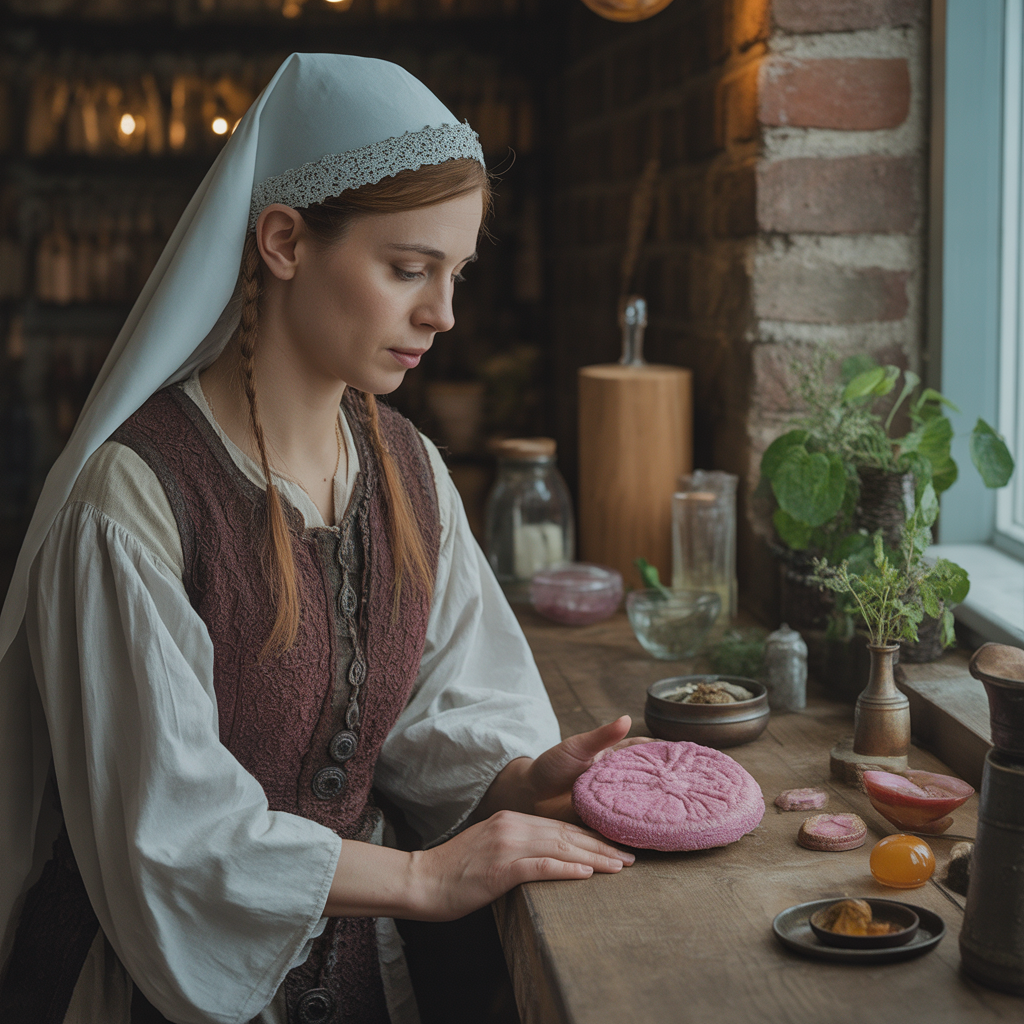
Die Haut als größtes Organ unseres Körpers spiegelt oft wider, was in unserem Inneren geschieht. Bei verschiedenen Hauterscheinungen suchten bereits unsere Vorfahren Hilfe in der Natur. Die heilige Hildegard von Bingen, die große Universalgelehrte des 12. Jahrhunderts, erkannte schon damals den Zusammenhang zwischen innerer Balance und äußerer Ausstrahlung. Ihre ganzheitlichen Ansätze mit BitterKraft Original und anderen Naturheilmitteln werden heute wieder verstärkt geschätzt für das allgemeine Wohlbefinden.
📋 Inhaltsverzeichnis
Hildegards ganzheitlicher Blick auf die Hautgesundheit
Nach der traditionellen Lehre von Hildegard von Bingen entsteht Ungleichgewicht in unserem Körper durch ein Missverhältnis der Körpersäfte und -temperamente. Verschiedene Hauterscheinungen betrachtete sie nicht isoliert, sondern als Ausdruck einer tieferliegenden Störung der körperlichen Harmonie. Ihre Lehre besagt, dass wahre Balance nur durch die Wiederherstellung des inneren Gleichgewichts möglich ist.
Die Benediktinerin erkannte bereits im Mittelalter, dass die Haut eng mit der Verdauung und dem Stoffwechsel verbunden ist. Nach traditioneller Sichtweise der Klosterheilkunde: Unreinheiten, die nicht ordnungsgemäß ausgeschieden werden können, suchen sich oft einen Weg über die Haut nach außen. Diese Ansicht entspricht der historischen Lehrmeinung Hildegards und ist als traditionelle Betrachtungsweise zu verstehen. Dieser Ansatz deckt sich erstaunlich mit modernen Erkenntnissen über den Darm-Haut-Zusammenhang.
Besonders interessant ist Hildegards Betonung der emotionalen Komponente bei Hauterscheinungen. Sie sah einen direkten Zusammenhang zwischen seelischer Verfassung und dem Erscheinungsbild der Haut. Stress, Ärger und innere Unruhe können sich ihrer Ansicht nach direkt auf die Hautgesundheit auswirken - eine Erkenntnis, die heute wissenschaftlich bestätigt wird.
Die Rolle der Bitterstoffe bei der natürlichen Hautpflege
Bitterkräuter nehmen in der traditionellen Naturheilkunde eine zentrale Stellung ein, wenn es um die Unterstützung des allgemeinen Wohlbefindens geht. Diese wertvollen Pflanzenstoffe werden seit Jahrhunderten dafür geschätzt, die Verdauung zu aktivieren und den Stoffwechsel anzuregen. Eine gut funktionierende Verdauung ist nach traditioneller Lehre die Grundlage für eine gesunde Ausstrahlung.
Die Bitterstoffe werden traditionell verwendet, um die natürlichen Körperfunktionen zu unterstützen. Gleichzeitig sind sie in der Volksheilkunde bekannt für ihre vielseitigen Eigenschaften. Wenn Leber-Produkte von Bitterkraft und Darm- und Verdauungsprodukte traditionell verwendet werden, kann das allgemeine Wohlbefinden unterstützt werden - ein Aspekt, der in der Naturheilkunde seit jeher geschätzt wird.
Besonders geschätzt werden Bitterkräuter wie Wermut, Enzian, Löwenzahn und Artischocke. Diese traditionellen Heilpflanzen enthalten eine Vielzahl komplexer Bitterstoffe, die in der Volksmedizin seit jeher zur Unterstützung der allgemeinen Gesundheit verwendet werden. Ihre regelmäßige Anwendung kann das Wohlbefinden auf natürliche Weise unterstützen.
Traditionelle Kräuter und ihre Eigenschaften nach Hildegard
Hildegard von Bingen beschrieb in ihren Werken zahlreiche Heilpflanzen, die traditionell zur Unterstützung des allgemeinen Wohlbefindens verwendet wurden. Der Wermut beispielsweise galt ihr als "Meister gegen alle Erschöpfungen" und wird seit Jahrhunderten für seine verdauungsanregenden Eigenschaften geschätzt. Seine Bitterstoffe können das allgemeine Wohlbefinden unterstützen und werden traditionell bei verschiedenen Beschwerden eingesetzt.
Ein weiteres wichtiges Kraut in Hildegards Heilkunde war der Andorn, der für seine beruhigenden Eigenschaften bekannt ist. Traditionell wird er nicht nur zur Unterstützung der Atemwege verwendet, sondern auch zur Förderung der inneren Balance. Die Klosterheilkunde schätzte Andorn besonders für seine vielseitigen Anwendungsmöglichkeiten.
Auch der Quendel, eine wilde Thymian-Art, spielte in Hildegards Naturheilkunde eine bedeutende Rolle. Diese aromatische Pflanze wird traditionell für ihre reinigenden Eigenschaften geschätzt und kann sowohl innerlich als auch äußerlich angewendet werden. Ihre ätherischen Öle und anderen wertvollen Inhaltsstoffe machen sie zu einem geschätzten Begleiter in der natürlichen Gesundheitspflege.
Praktische Anwendung und moderne Umsetzung
Die Integration von Hildegards Kräuterwissen in den modernen Alltag ist einfacher als gedacht. Bitterkräuter-Mischungen können als Tee zubereitet oder in Form von Tropfen eingenommen werden. Wichtig ist dabei die Regelmäßigkeit der Anwendung, da die traditionelle Naturheilkunde auf langfristige, sanfte Unterstützung setzt.
Bei der äußerlichen Anwendung haben sich Kräuter-Umschläge und Bäder bewährt. Diese traditionellen Methoden können das Wohlbefinden auf natürliche Weise unterstützen. Dabei sollte immer auf die individuelle Verträglichkeit geachtet und bei Unsicherheiten ein erfahrener Heilpraktiker oder Arzt konsultiert werden.
Ergänzend zur Kräuteranwendung empfahl Hildegard eine bewusste Lebensführung mit ausgewogener Ernährung, ausreichend Bewegung und seelischer Balance. Dieser ganzheitliche Ansatz, der Körper, Geist und Seele gleichermaßen berücksichtigt, kann auch heute noch wertvolle Impulse für das persönliche Wohlbefinden geben und die natürliche Regenerationsfähigkeit unterstützen.
🤖 Das Beitragsbild dieses Artikels wurde mit DALL·E 3 (OpenAI) mithilfe von Künstlicher Intelligenz generiert (gemäß EU AI Act Art. 50 gekennzeichnet).

Hinterlasse einen Kommentar
Diese Website ist durch hCaptcha geschützt und es gelten die allgemeinen Geschäftsbedingungen und Datenschutzbestimmungen von hCaptcha.