

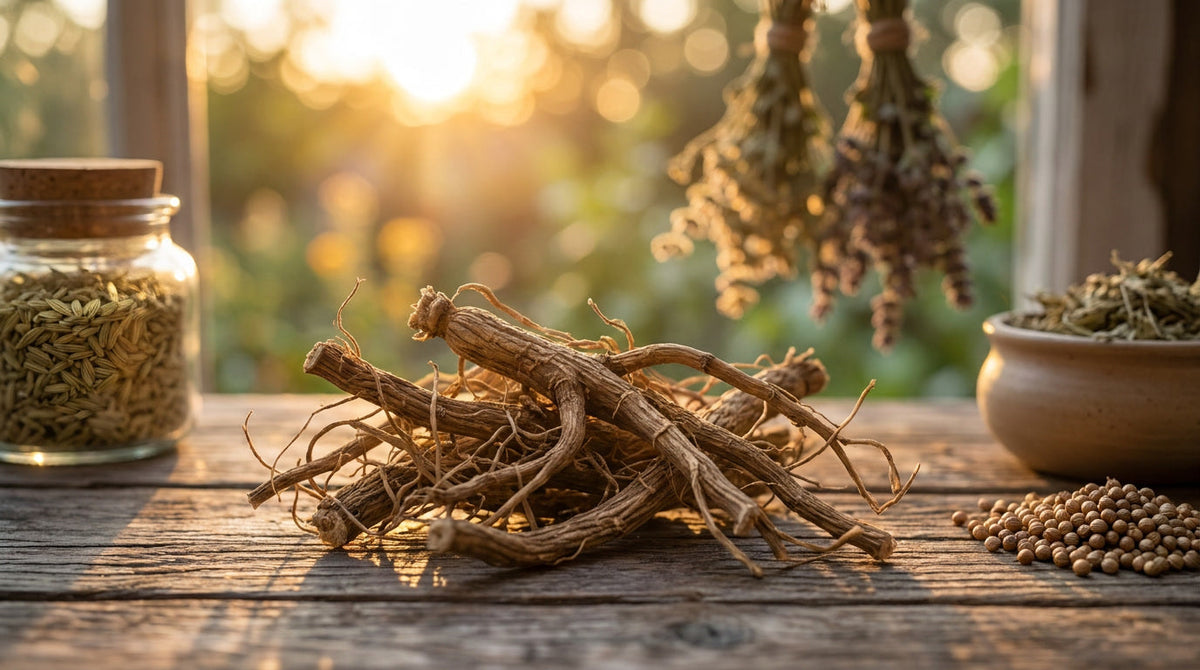
Es gibt Pflanzen, die seit Jahrtausenden ihren festen Platz in der Heilkunde innehaben – und der Baldrian ist zweifellos eine davon. Mit seinem unverwechselbaren, erdigen Duft und seiner langen Geschichte als Begleiter des Menschen in unruhigen Zeiten zählt er zu den bekanntesten Heilpflanzen des europäischen Kulturraums. Wer sich mit Naturheilkunde beschäftigt, stößt früher oder später auf diese faszinierende Wurzel, die in Klostergärten genauso zu Hause war wie in den Säcken mittelalterlicher Kräuterkundiger. Dieser Artikel nimmt Sie mit auf eine Reise durch die Geschichte, die Inhaltsstoffe und die traditionelle Anwendung des Baldrians – und zeigt, warum diese uralte Pflanze auch heute noch nichts von ihrer Faszination verloren hat.
Eine Wurzel mit Geschichte: Baldrian durch die Jahrhunderte
Der Baldrian (Valeriana officinalis) blickt auf eine Verwendungsgeschichte zurück, die sich über mindestens zwei Jahrtausende erstreckt. Schon die Ärzte der Antike, darunter Dioskurides und Galen, erwähnten eine Pflanze namens „Phu" in ihren Schriften – gemeint war höchstwahrscheinlich der Baldrian. Der Name „Valeriana" taucht erstmals im frühen Mittelalter auf und leitet sich vermutlich vom lateinischen „valere" ab, was so viel bedeutet wie „stark sein" oder „gesund sein". Manche Historiker sehen darin auch einen Bezug zur römischen Provinz Valeria. Schon diese etymologische Spur erzählt viel über den Ruf, den diese Pflanze in der Heilkunde genoss.
Im Mittelalter erlebte der Baldrian seinen eigentlichen Aufstieg zum Volksheilmittel. Er wurde in Klostergärten kultiviert, von Benediktinermönchen gepflegt und in medizinischen Handbüchern der Zeit als wertvolle Pflanze beschrieben. Hildegard von Bingen Produkte Besonders die Hildegard-Medizin hat dem Baldrian einen besonderen Platz eingeräumt. Hildegard von Bingen, die visionäre Äbtissin und Naturkundlerin des 12. Jahrhunderts, bezeichnete die Pflanze als „baldra" und schrieb ihr eine beruhigende, ausgleichende Wirkung auf das menschliche Gemüt zu. In ihren Werken finden sich Hinweise darauf, dass sie die Pflanze als Unterstützung bei innerer Unruhe und in der Nacht schätzte. Ihr ganzheitlicher Blick auf Mensch und Natur hat das Wissen um den Baldrian tief in der Klostermedizin verankert.
„Baldra ist warm und hat viel Kraft in sich. Wer von bedrängenden Gedanken geplagt wird, der möge sie zu sich nehmen und sein Gemüt wird sich weiten." – sinngemäß nach Hildegard von Bingen, Physica, 12. Jahrhundert
Im 16. und 17. Jahrhundert verbreitete sich der Baldrian durch ganz Europa und wurde zu einem der meistgehandelten Heilkräuter. In England soll er während der Pestepidemien verwendet worden sein, in Deutschland galt er als Schutzmittel gegen böse Geister und als Zutrat für Liebestränke – ein Zeichen dafür, wie tief er sich ins kollektive Bewusstsein eingeschrieben hatte. Auch Leonhart Fuchs, der bedeutende Botaniker der Renaissance, widmete dem Baldrian in seinem berühmten „New Kreuterbuch" von 1543 ausführliche Einträge. Die Verwendung als Tee, Tinktur und Kräuterkissen ist bis heute Teil der europäischen Volksmedizin geblieben.
Baldrian wird seit über 2000 Jahren in der europäischen Heilkunde traditionell verwendet – von der Antike über die Klostermedizin bis in die heutige Naturheilkunde.
Was steckt in der Wurzel? Die wichtigsten Inhaltsstoffe des Baldrians
Die Faszination für den Baldrian beruht nicht zuletzt auf seinem bemerkenswert komplexen Spektrum an natürlichen Inhaltsstoffen. Es ist die Vielzahl dieser Verbindungen, die die Pflanze aus naturwissenschaftlicher Sicht so interessant macht – und die erklärt, warum sie seit Jahrhunderten in der traditionellen Heilkunde geschätzt wird. Die Wurzel, die im Herbst geerntet wird, enthält ein dichtes Geflecht aus flüchtigen Ölen, Iridoiden, Flavonoiden und weiteren pflanzlichen Verbindungen, die zusammen das typische Baldrian-Profil ergeben.
Die wichtigsten Inhaltsstoffe der Baldrianwurzel im Überblick:
- Valerensäure und Acetoxyvalerensäure: Diese sesquiterpenischen Verbindungen gehören zu den charakteristischsten Inhaltsstoffen der Wurzel und sind Gegenstand intensiver pflanzenchemischer Forschung. Sie machen den Baldrian in gewisser Weise einzigartig unter den europäischen Heilpflanzen.
- Isovaleriansäure: Diese flüchtige Fettsäure ist maßgeblich für den kräftigen, erdigen bis leicht strengen Geruch der getrockneten Baldrianwurzel verantwortlich. Sie entsteht zum Teil auch beim Trocknen und Lagern durch enzymatische Prozesse.
- Valepotriate (Iridoidglykoside): Diese Verbindungen wie Valtrat und Isovaltrat sind instabil und flüchtig, weshalb sie in getrockneten Zubereitungen kaum mehr nachweisbar sind. In der frischen Pflanze kommen sie jedoch in nennenswerter Konzentration vor.
- Ätherisches Öl: Das Öl der Baldrianwurzel enthält zahlreiche Terpene und Sesquiterpene wie Bornylacetat und Borneol, die zum Gesamtprofil der Pflanze beitragen.
- Flavonoide (u. a. Linarin, Hesperidin): Diese sekundären Pflanzenstoffe kommen in verschiedenen Teilen der Pflanze vor und sind seit Jahrzehnten Gegenstand botanischer und naturheilkundlicher Betrachtungen.
- Aminosäuren: Darunter findet sich auch Glutamin als Vorstufe anderer Verbindungen sowie freies GABA (Gamma-Aminobuttersäure), das in kleinen Mengen in der Wurzel nachgewiesen wurde.
- Lignane: Diese polyphenolischen Verbindungen runden das phytochemische Profil der Baldrianwurzel ab und sind in vielen Heilpflanzen als Teil des pflanzlichen Schutzsystems bekannt.
Interessant ist, dass frische und getrocknete Baldrianwurzel sich in ihrer Zusammensetzung deutlich unterscheiden. Die labilen Valepotriate bauen sich beim Trocknen rasch ab, während gleichzeitig andere Verbindungen entstehen oder sich anreichern. Das erklärt, warum in der traditionellen Kräutermedizin sowohl frische Tinkturen als auch Teezubereitungen aus getrockneter Wurzel Verwendung fanden – man nutzte intuitiv unterschiedliche Zubereitung für unterschiedliche Zwecke, lange bevor die Phytochemie dies wissenschaftlich erklären konnte.
Das ätherische Öl des Baldrians entwickelt seinen charakteristischen Geruch übrigens erst nach dem Trocknen richtig – frische Wurzeln riechen noch vergleichsweise mild und angenehm nach Erde. Erst durch enzymatische Prozesse beim Welken und Trocknen entsteht die Isovaleriansäure, die dem Baldrian seinen unverkennbaren Duft verleiht. Diese Eigenschaft hat dazu geführt, dass der Geruch des Baldrians für viele Menschen ein echter Erinnerungsträger ist – verbunden mit Kindheitserinnerungen an Kräutersäcke der Großmutter oder die Apotheke des Vertrauens.
Die Baldrianwurzel enthält über 150 nachgewiesene pflanzliche Verbindungen – ihr Wirkprofil ist das Ergebnis dieses komplexen Zusammenspiels, nicht einer einzelnen Substanz.
Baldrian in der Klostermedizin und Volksmedizin: Traditionelle Anwendungsformen
Die Geschichte der traditionellen Baldrianverwendung ist so vielfältig wie die Kulturen, die sie geprägt haben. In der europäischen Volksmedizin galt die Pflanze seit dem Mittelalter als Mittel der Wahl in Zeiten innerer Aufgewühltheit, nächtlicher Unruhe und allgemeiner Nervosität – also in Situationen, die wir heute als Stress und Schlafstörungen bezeichnen würden. Schlaf- und Entspannungsprodukte Besonders in der Klostermedizin, wo Ruhe, Besinnung und körperliches Wohlbefinden als untrennbar galten, fand der Baldrian seinen festen Platz. Mönche und Nonnen nutzten ihn nicht nur für sich selbst, sondern auch in der Krankenpflege, die in vielen mittelalterlichen Klöstern organisiert war.
Hildegard von Bingen beschreibt in der Physica und der Causae et Curae verschiedene Zubereitungen auf pflanzlicher Basis, bei denen Kräuter wie der Baldrian eine Rolle spielten. Ihr Ansatz war dabei stets ganzheitlich: Die Pflanze wurde nicht als isoliertes Mittel betrachtet, sondern als Teil eines ausbalancierten Lebens, in dem Ernährung, Bewegung, Gebet und Naturkräfte zusammenwirkten. Hildegard von Bingen Produkte Im Sinne von Hildegards Temperamentenlehre galt Baldrian als eine Pflanze, die dem Menschen helfen kann, zu seiner inneren Mitte zurückzufinden – ein Gedanke, der in der modernen ganzheitlichen Medizin erstaunlich aktuell klingt.
Paracelsus, der Begründer der Iatrochemie, schrieb im 16. Jahrhundert über den Baldrian als eine der „vier Hauptwurzeln" der europäischen Heilkunde und empfahl ihn besonders für Menschen, die „von Sinnen oder Gedanken nicht zur Ruhe kommen können". (Sinngemäß nach Paracelsus, Opus Paramirum, ca. 1530)
Die gängigsten traditionellen Zubereitungsformen des Baldrians umfassen den Tee aus getrockneter Wurzel, Tinkturen (meist als Kaltauszug oder Weinansatz), Kräuterkissen zum Unter-das-Kopfkissen-Legen sowie Bäder mit Baldrianextrakt. Besonders die Kräuterkissen erlebten in der Volksmedizin eine lange Tradition: Getrocknete Baldrianwurzel wurde gemeinsam mit Hopfen, Lavendel und Melisse in kleine Leinensäckchen gefüllt und als Begleiter für die Nacht verwendet. Diese Praxis ist ein schönes Beispiel dafür, wie traditionelles Wissen intuitiv sinnvolle Pflanzenkombinationen entwickelt hat – Kräuter, die auch heute noch gemeinsam in naturheilkundlichen Zubereitungen verwendet werden.
Traditionelle Zubereitungsformen des Baldrians im Überblick:
- Baldrian-Tee (Kaltauszug): Die traditionelle Zubereitung als Kaltauszug (Wurzel mehrere Stunden in kaltem Wasser ziehen lassen) soll besonders die Valepotriate schonen – eine in der Volksmedizin seit Langem praktizierte Methode.
- Baldrian-Tinktur: Als Weinansatz oder Alkoholtinktur seit dem Mittelalter bekannt, wurde sie besonders von Kräuterkundigen und Apothekern des 16.–18. Jahrhunderts zubereitet und verwendet.
- Kräuterkissen: Getrocknete Baldrianwurzel in Leinensäckchen gehörte in vielen europäischen Regionen zur nächtlichen Schlafkultur und wird traditionell mit Hopfen oder Lavendel kombiniert.
- Baldrianwein: In der mittelalterlichen Klostermedizin wurden Kräuter häufig in Wein angesetzt – Baldrian war eine der Pflanzen, die so in der Krankenpflege Verwendung fanden.
- Baldrianwurzel-Pulver: Die fein gemahlene Wurzel wurde in Kapseln oder mit Honig vermischt eingenommen und ist auch heute noch eine der praktischsten Darreichungsformen.
Baldrian im Kontext der ganzheitlichen Naturheilkunde heute
In einer Zeit, in der das Interesse an naturnahen Lebensweisen und traditionellen Heilmethoden wieder wächst, erlebt der Baldrian eine Renaissance. Immer mehr Menschen suchen nach pflanzlichen Begleitern für ihren Alltag – nicht als Ersatz für medizinische Behandlung, sondern als Teil eines bewussten, ganzheitlichen Lebensstils. BitterKraft Original Der Baldrian passt hervorragend in dieses Bild: Er ist tief in der europäischen Kulturgeschichte verwurzelt, gut erforscht in seiner Phytochemie und seit Jahrhunderten Teil bewährter Kräutertraditionen. All das macht ihn zu einem verlässlichen Begleiter im naturheilkundlichen Alltag.
Besonders im Zusammenhang mit dem Konzept des „Hinzufügens statt Weglassens" – einem zentralen Gedanken der ganzheitlichen Naturmedizin – macht der Baldrian Sinn: Man ergänzt den Alltag um ein traditionell geschätztes Kraut, das seit Generationen Teil der Abendrituale und Entspannungspraktiken vieler Menschen war. Schlaf- und Entspannungsprodukte Ob als Tee vor dem Zubettgehen, als Tinktur im Rahmen einer Auszeit oder als Bestandteil eines naturheilkundlichen Fastenprogramms – der Baldrian lässt sich auf viele Weisen sinnvoll in das eigene Wohlbefindensprogramm integrieren. Fasten-Produkte Das allgemeine Wohlbefinden kann durch solche traditionellen Pflanzenrituale auf angenehme Weise unterstützt werden.
Auch die wissenschaftliche Gemeinschaft hat den Baldrian längst auf dem Radar. Die Europäische Arzneimittelagentur (EMA) hat die Baldrianwurzel als traditionelles pflanzliches Arzneimittel anerkannt und ihre jahrhundertelange Verwendung in der europäischen Volksmedizin offiziell dokumentiert. Das bedeutet: Die lange Tradition ist nicht nur ein folkloristisches Erbe, sondern auch regulatorisch anerkannte Grundlage für die heutige Verwendung. Für Naturheilkunde-Interessierte ist das eine wichtige Orientierungshilfe – denn es zeigt, dass die Begeisterung für diese Wurzel auf solidem historischem Fundament steht.
Die Europäische Arzneimittelagentur (EMA) hat die Baldrianwurzel offiziell als traditionelles pflanzliches Heilmittel anerkannt – ein starkes Zeichen für die Verlässlichkeit dieses uralten Kräuterwissens.
Das Committee on Herbal Medicinal Products (HMPC) der EMA bestätigte 2006 (aktualisiert 2016) die traditionelle Verwendung von Valeriana officinalis auf Basis von mindestens 30 Jahren dokumentierter Anwendung, davon mindestens 15 Jahre innerhalb der EU. (Quelle: EMA/HMPC, Assessment Report on Valeriana officinalis)
Wer sich für den Baldrian als Teil seines naturheilkundlichen Alltags interessiert, findet heute eine breite Palette an Zubereitungsformen – von Teemischungen über standardisierte Extrakte in Kapseln bis hin zu Tinkturen und Badezusätzen. Dabei lohnt es sich, auf Qualität zu achten: Der Gehalt an charakteristischen Verbindungen wie Valerensäure kann je nach Erntezeitpunkt, Anbaubedingungen und Verarbeitung stark variieren. Traditionell wurde die Wurzel im Herbst, nach dem zweiten Standjahr der Pflanze, geerntet – dann ist ihr Gehalt an Inhaltsstoffen am höchsten. Dieses traditionelle Erntewissen ist auch heute noch Maßstab für qualitätsbewusste Hersteller. alle Bitterkraft Produkte
Abschließend lässt sich sagen: Der Baldrian ist weit mehr als ein Schlafkraut aus der Volksheilkunde. Er ist ein lebendiges Stück Kulturgeschichte, ein faszinierendes Beispiel für die Weisheit traditionellen Pflanzenwissens und ein würdiger Begleiter für alle, die ihren Alltag mit der Kraft der Natur bereichern möchten. Von den Klostergärten Hildegards bis in die modernen Naturheilkunde-Apotheken – diese Wurzel hat ihre Reise mit Würde gemeistert und hat noch lange nicht das letzte Wort gesprochen.

Hinterlasse einen Kommentar
Diese Website ist durch hCaptcha geschützt und es gelten die allgemeinen Geschäftsbedingungen und Datenschutzbestimmungen von hCaptcha.