

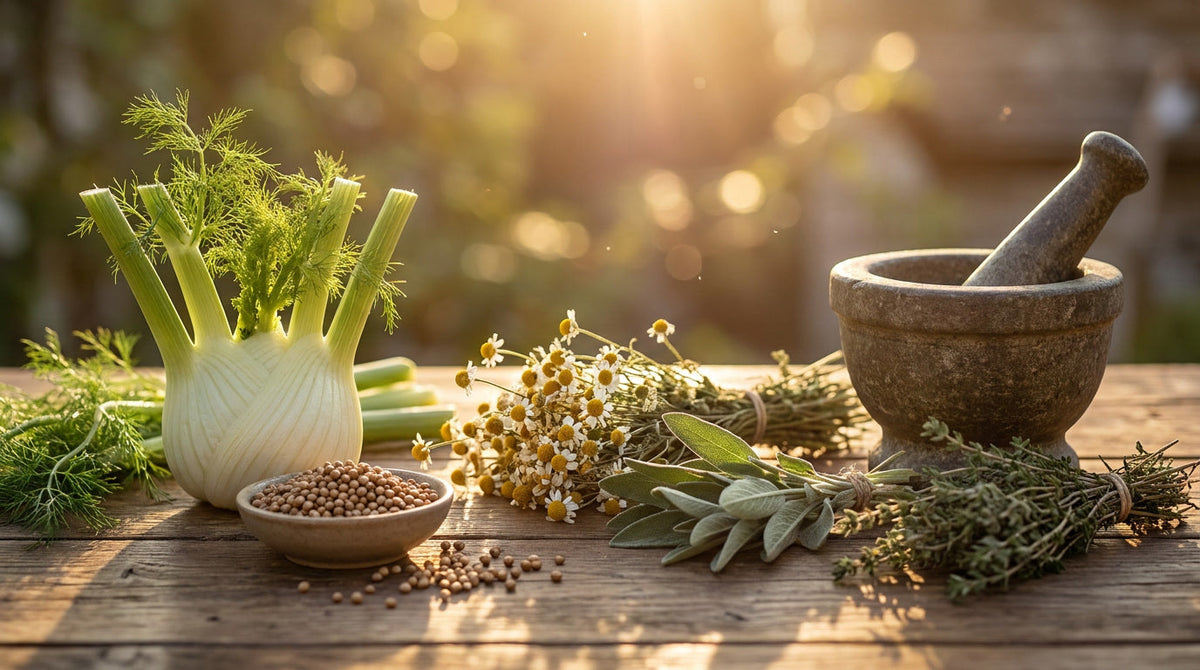
Wer kennt nicht das wohlige Gefühl nach einem aromatischen Kräutertee, der sich warm und beruhigend im Bauch ausbreitet? Koriander und Fenchel gehören zu den ältesten Kulturpflanzen der Menschheit – und beide haben einen festen Platz im umfangreichen Kräuterwissen der Hildegard von Bingen. Die Benediktinerin, Mystikerin und Naturforscherin des 12. Jahrhunderts beschrieb in ihren Werken Physica und Causae et Curae eine Vielzahl von Pflanzen, Gewürzen und deren traditionellen Anwendungsweisen. Koriander und Fenchel zählten dabei zu ihren bevorzugten Küchengewürzen, die sie nicht nur als kulinarische Zutaten, sondern als Teil einer ganzheitlichen Lebensweise betrachtete. In diesem Artikel tauchen wir ein in die faszinierende Welt der Hildegard-Medizin und entdecken, warum diese beiden Gewürze auch heute noch in der Naturheilkunde geschätzt werden. Hildegard von Bingen Produkte
Hildegard von Bingen und ihr Kräuterwissen: Eine zeitlose Tradition
Hildegard von Bingen (1098–1179) war weit mehr als eine mittelalterliche Mystikerin. Sie war Ärztin, Botanikerin, Komponistin und Schriftstellerin in einer Zeit, in der Frauen kaum Zugang zu Bildung hatten. Ihr Werk Physica – auch bekannt als Liber Simplicis Medicinae – gilt als eines der bedeutendsten naturkundlichen Werke des Mittelalters. Darin beschrieb sie über 230 Pflanzen, 60 Bäume, zahlreiche Tiere, Steine und Metalle und deren Eigenschaften im Rahmen ihrer ganzheitlichen Weltsicht. Hildegard verband christliche Theologie mit antiken Heiltraditionen, griechischer Humoralpathologie und eigenem Beobachtungsvermögen zu einem einzigartigen System, das bis heute Anhänger findet.
Der Kern ihrer Lehre war das Konzept der Viriditas – der grünen Lebenskraft, die allem Lebendigen innewohnt. Pflanzen, Kräuter und Gewürze waren für Hildegard Träger dieser Lebenskraft und spielten in ihrer Vorstellung einer ausgewogenen Lebensweise eine zentrale Rolle. Sie teilte Lebensmittel und Kräuter in Kategorien von „warm" und „kalt", „feucht" und „trocken" ein – eine Systematik, die stark an die hippokratische Humoralmedizin erinnert, aber durch Hildegards eigene theologische Überzeugungen geprägt war. Kräuter wie Fenchel und Koriander wurden als „warm" eingestuft, was sie in Hildegards Vorstellung besonders wertvoll für Menschen mit kältebetonter Konstitution machte.
Was Hildegards Werk bis heute so lebendig hält, ist die Verbindung von praktischer Küchenweisheit mit einem tiefen Verständnis für das Gleichgewicht des menschlichen Körpers. Sie empfahl ihre Gewürze nicht als Medizin im heutigen Sinne, sondern als Teil eines bewussten, naturnahen Lebensstils. Essen war für sie ein Akt der Fürsorge für den eigenen Körper – und aromatische Gewürze wie Fenchel und Koriander gehörten in jede gut geführte Klosterküche. Hildegard von Bingen Produkte Diese Tradition lebt in der modernen Hildegard-Medizin weiter und erfährt heute eine Renaissance unter Menschen, die naturnahe Alternativen zu einem hektischen Alltag suchen.
In der Physica schreibt Hildegard von Bingen über den Fenchel: „Der Fenchel ist warm und ein wenig trocken. Sein Geruch macht den Menschen fröhlich und verschafft ihm Wärme." – Diese historische Beschreibung aus dem 12. Jahrhundert spiegelt die enge Verbindung zwischen aromatischen Gewürzen und dem allgemeinen Wohlbefinden wider, die in der Klostermedizin seit Jahrhunderten gepflegt wird.
Fenchel: Das wärmende Gewürz aus dem Klostergarten
Fenchel (Foeniculum vulgare) gehört zur Familie der Doldenblütler und ist eine der ältesten Nutzpflanzen des Mittelmeerraums. Bereits die alten Ägypter, Griechen und Römer schätzten die aromatischen Samen, das zarte Grün und die knackige Knolle dieser vielseitigen Pflanze. Im mittelalterlichen Europa gelangte der Fenchel über die Klostergärten in die breite Bevölkerung – und Hildegard von Bingen beschrieb ihn in der Physica als ein Gewürz von besonderer Wärme und Freude. Für sie war der charakteristische Duft des Fenchels ein Zeichen seiner wohltuenden Eigenschaften.
In der Hildegard-Medizin wird Fenchel traditionell als eines der „fröhlichen" Gewürze beschrieben – ein Begriff, den Hildegard verwendete, um auf die stimmungsaufhellende und wärmende Qualität bestimmter Pflanzen hinzuweisen. Der süßlich-anisartige Geruch der Fenchelkörner entsteht durch ätherische Öle, vor allem das Anethol, das dem Gewürz seinen unverwechselbaren Charakter verleiht. In der Klosterküche wurde Fenchel vielseitig eingesetzt: als Gewürz für Brot und Gebäck, als Zutat in Kräutertees, als Aromastoff in Kräuterweinen und als schlichte Würze für Gemüsegerichte.
Besonders interessant ist Hildegards Empfehlung, Fenchelsamen täglich in kleinen Mengen zu sich zu nehmen – nicht als Kur, sondern als fester Bestandteil einer bewussten Ernährung. Diese Idee des kontinuierlichen, regelmäßigen Einbindens von Gewürzen in den Alltag ist ein Kernprinzip der Hildegard-Medizin: Nicht die punktuelle Einnahme, sondern die beständige Pflege des Gleichgewichts stand im Vordergrund. Diese Denkweise findet sich auch in modernen naturheilkundlichen Konzepten wieder, die auf langfristige Unterstützung des Wohlbefindens setzen. Darm- und Verdauungsprodukte
Fenchel wird seit Jahrhunderten in der europäischen Klostermedizin traditionell als wärmendes Gewürz geschätzt – Hildegard von Bingen bezeichnete ihn als eines der wertvollsten Gewürze für das allgemeine Wohlbefinden und empfahl ihn als festen Bestandteil der täglichen Ernährung.
Was steckt im Fenchel?
Fenchelkörner enthalten ätherische Öle (vor allem Anethol, Fenchon und Estragol), die dem Gewürz sein charakteristisches Aroma verleihen. Daneben sind Flavonoide, Cumarine sowie die Vitamine C und verschiedene B-Vitamine enthalten. Die Pflanze enthält außerdem Mineralstoffe wie Kalium, Calcium und Magnesium. In der Volksmedizin verschiedener Kulturen – vom Mittelmeerraum über den Nahen Osten bis nach Indien – wurde Fenchel seit der Antike als aromatisches Gewürz- und Teekraut verwendet und ist als Traditional Herbal Medicinal Product in Europa bekannt.
Traditionelle Verwendungsweisen von Fenchel im Überblick:
- Fencheltee: In der Klostermedizin seit Jahrhunderten als wärmendes Teegetränk bekannt, traditionell aus zerstoßenen Fenchelkörnern bereitet und nach den Mahlzeiten genossen.
- Fenchel als Brotgewürz: Historisch belegt in mittelalterlichen Klöstern als aromatisches Würzmittel für Klosterbrot, besonders beliebt in der österreichischen und bayerischen Backtradition.
- Fenchelwein nach Hildegard: Eine traditionsreiche Zubereitung, bei der Fenchelsamen in Wein eingelegt wurden – Hildegard beschrieb diese Methode als Möglichkeit, das Aroma der Pflanze intensiv aufzunehmen.
- Fenchelknolle in der Küche: Die frische Knolle wird in der mediterranen Tradition seit der Antike als Gemüse geschätzt und ist ein fester Bestandteil einer aromatisch-würzigen Küche.
Koriander: Das Gewürz der Fröhlichkeit bei Hildegard
Koriander (Coriandrum sativum) ist eines jener Gewürze, die die Menschheit seit über 7.000 Jahren begleiten. Archäologische Funde belegen seine Verwendung im alten Ägypten, in Mesopotamien und in der antiken griechischen Küche. Im Mittelalter gelangte das Gewürz über arabische Händler und Kreuzritter nach Mitteleuropa, wo es schnell in den Klostergärten Einzug hielt. Hildegard von Bingen beschrieb Koriander in der Physica mit großer Begeisterung – und das, obwohl sie auch eine deutliche Warnung aussprach: zu viel Koriander, so Hildegard, mache „traurig". In Maßen aber sei er ein „fröhliches" Gewürz.
Diese differenzierte Sichtweise ist typisch für Hildegards Kräuterlehre. Sie betrachtete keine Pflanze als pauschal gut oder schlecht, sondern betonte stets die Bedeutung des rechten Maßes – ein Prinzip, das an das aristotelische Konzept der Mitte erinnert und in Hildegards Denken eine zentrale Rolle spielte. Koriander in kleinen, regelmäßigen Mengen sei wohltuend, in großen Mengen hingegen kontraproduktiv. Diese Weisheit spiegelt sich in der modernen Naturheilkunde wider, wo ebenfalls die dosierte, bewusste Anwendung von Kräutern und Gewürzen im Vordergrund steht.
Koriander hat eine bemerkenswerte kulturelle Bandbreite: In der indischen Ayurvedamedizin gilt er als kühlendes Gewürz, in der chinesischen Medizin wird er mit der Verdauung in Verbindung gebracht, und in der arabischen Volksmedizin wurde er seit jeher als wohltuendes Alltagsgewürz geschätzt. Im europäischen Mittelalter war er ein fester Bestandteil von Klosterrezepturen und Kräuterweinen. Diese globale Tradition macht deutlich, dass das Wissen um den Koriander nicht auf eine Kultur oder Epoche beschränkt ist, sondern ein universelles menschliches Erbe darstellt. Hildegard von Bingen Produkte
Hildegard schreibt in der Physica über Koriander: „Koriander ist kalt. Wenn er roh gegessen wird, macht er den Menschen traurig und verursacht Phantasien. Wenn er aber gekocht oder in anderen Speisen zubereitet ist, hat er keine schädliche Wirkung auf den Menschen." – Diese Passage zeigt Hildegards nuancierte Betrachtungsweise: Die Zubereitungsform eines Gewürzes war für sie ebenso bedeutsam wie die Pflanze selbst.
Was steckt im Koriander?
Korianderfrüchte enthalten ätherische Öle, darunter vor allem Linalool, das für den charakteristisch blumig-zitrusartigen Duft verantwortlich ist. Daneben finden sich Flavonoide, organische Säuren sowie Spurenelemente und Mineralstoffe. Frische Korianderblätter enthalten zudem Vitamin C und Vitamin K. Sowohl Samen als auch Blätter werden in traditionellen Heilsystemen weltweit – von der ayurvedischen über die arabische bis zur europäischen Volksmedizin – seit Jahrhunderten als aromatisches Küchen- und Kräutergewürz verwendet.
Koriander gehört zu den ältesten Kulturgewürzen der Welt und wird seit Jahrtausenden in nahezu allen großen Heiltraditionen erwähnt – von der ägyptischen Antike über die ayurvedische Medizin bis zur mittelalterlichen Klosterheilkunde Hildegards von Bingen.
Fenchel und Koriander gemeinsam: Ein bewährtes Duo der Klosterküche
Fenchel und Koriander werden in der Hildegard-Medizin nicht nur einzeln, sondern auch als Bestandteile von Gewürzmischungen und Kräuterzubereitungen beschrieben. Diese Kombination ist kein Zufall: Beide Gewürze zählen zur Familie der Doldenblütler, beide sind seit der Antike als aromatische Küchen- und Klosterkräuter bekannt, und beide wurden von Hildegard als „warme" Gewürze mit belebender Qualität eingestuft. In der Klosterküche des Mittelalters war es üblich, solche Gewürzduos zu kombinieren, um die aromatische Tiefe von Speisen und Kräutertränken zu erhöhen.
In der modernen Rezeption der Hildegard-Medizin werden Fenchel und Koriander häufig gemeinsam in Teemischungen eingesetzt. Klassische Hildegard-Tees kombinieren diese beiden Gewürze oft mit weiteren Klosterkräutern wie Anis, Kümmel oder Quendel (Thymian) zu harmonischen, aromatischen Blends, die in der Tradition der mittelalterlichen Klostermedizin stehen. Solche Teemischungen sind seit Jahrhunderten ein fester Bestandteil der klösterlichen Alltagskultur und werden heute von vielen Menschen als Teil einer bewussten, naturnahen Lebensweise geschätzt. BitterKraft Original
Die Synergie von Fenchel und Koriander lässt sich auch kulinarisch wunderbar nutzen. In der mediterranen und orientalischen Küche sind beide Gewürze oft gemeinsam anzutreffen – in Brotrezepten, Eintöpfen, Marinaden und Gewürzmischungen wie dem nordafrikanischen Ras el Hanout. Diese kulinarische Tradition verbindet sich nahtlos mit der Hildegard'schen Idee, dass die beste Heilkraft in einer bewusst gewürzten, liebevoll zubereiteten Mahlzeit liegt. Essen als Ritual, als tägliche Fürsorge für Körper und Geist – das ist das Vermächtnis, das Hildegard uns hinterlassen hat.
Klassische Hildegard-Gewürze für eine aromatische Alltagsküche:
- Fenchel: Eines der meistgenannten Gewürze in Hildegards Physica – traditionell als Tee, als Brotgewürz und als Bestandteil von Kräuterweinen verwendet, seit Jahrhunderten in der europäischen Klostermedizin geschätzt.
- Koriander: In Hildegards Werk als „fröhliches" Gewürz in Maßen beschrieben – historisch bekannt als aromatische Zutat in Brot, Gebäck und Kräuterzubereitungen aus der Klosterküche.
- Anis: Eng mit Fenchel verwandt und ebenfalls ein klassisches Klostergewürz – in der Volksmedizin seit der Antike als aromatisches Tee- und Brotgewürz bekannt.
- Kümmel: In der deutschen und österreichischen Klosterheilkunde traditionell hoch geschätzt, historisch als wärmendes Gewürz für herzhafte Speisen und aromatische Teezubereitungen verwendet.
- Galgant: Hildegards Lieblingsgewürz schlechthin – in der Physica als „warm und sanft" beschrieben und als eines der wichtigsten Kräuter der Hildegard-Medizin bis heute bekannt. Hildegard von Bingen Produkte
Hildegard-Medizin heute: Koriander und Fenchel im modernen Alltag
Die Weisheit Hildegards von Bingen erlebt seit einigen Jahrzehnten eine bemerkenswerte Renaissance. Immer mehr Menschen suchen nach einem bewussteren, naturnäheren Lebensstil und entdecken dabei die Schätze der mittelalterlichen Klostermedizin. Koriander und Fenchel stehen exemplarisch für diesen Trend: Es sind keine exotischen Superfoods, keine teuren Exklusivprodukte, sondern schlichte, bodenständige Gewürze, die seit Jahrhunderten in der europäischen Küchen- und Kräutertradition verwurzelt sind. Ihre Beständigkeit über Jahrtausende hinweg ist selbst ein stilles Zeugnis ihrer Wertschätzung durch unzählige Generationen.
In der praktischen Umsetzung der Hildegard-Medizin im heutigen Alltag spielen diese Gewürze eine vielseitige Rolle. Ob als aromatischer Kräutertee nach den Mahlzeiten, als Würzzutat in einem bewusst zubereiteten Mittagessen, als Bestandteil einer Hildegard-Gewürzmischung oder als konzentriertes Pulver in einer Naturprodukt-Kapsel – die Möglichkeiten, Fenchel und Koriander regelmäßig in den Alltag zu integrieren, sind vielfältig und unkompliziert. Das Prinzip des „Hinzufügens" statt des „Weglassens" ist dabei zentral: Es geht nicht darum, etwas aufzugeben, sondern den Alltag um aromatische, traditionsreiche Gewürze zu bereichern. Darm- und Verdauungsprodukte
Das Grundprinzip der Hildegard-Medizin lautet: Bereichere deinen Alltag mit aromatischen Traditionsgewürzen, statt etwas wegzulassen. Fenchel und Koriander lassen sich unkompliziert als Tee, als Küchengewürz oder als Naturprodukt-Ergänzung in die tägliche Routine einbinden – ganz im Sinne der mittelalterlichen Klosterweisheit.
Wer sich intensiver mit der Hildegard-Medizin beschäftigen möchte, findet heute eine reiche Auswahl an Büchern, Seminaren und Naturprodukten, die diese traditionsreiche Heilkunde zugänglich machen. Viele Naturheilkunde-Begeisterte berichten, dass die bewusste Beschäftigung mit Hildegards Kräuterwissen nicht nur ihr Interesse an Ernährung und Naturkräutern geweckt hat, sondern auch ihr allgemeines Bewusstsein für einen achtsamen, entschleunigten Lebensstil. In diesem Sinne sind Koriander und Fenchel mehr als nur Gewürze: Sie sind Brücken zu einer Jahrtausende alten Tradition der Naturbeobachtung, der Küchenweisheit und der ganzheitlichen Lebensphilosophie. alle Bitterkraft Produkte
Praktische Tipps: Fenchel und Koriander nach Hildegard-Art verwenden
Fenchel-Koriander-Tee: 1 TL zerstoßene Fenchelkörner und ½ TL zerstoßene Koriandersamen mit 250 ml heißem Wasser übergießen, 8–10 Minuten ziehen lassen und langsam genießen. In der Klostermedizin traditionell nach dem Essen getrunken.
Hildegard-Gewürzbrot: Fenchelkörner und Koriandersamen gehören seit dem Mittelalter zu den klassischen Brotgewürzen der Klosterküche. Ein Vollkornbrot mit beiden Gewürzen verfeinert ist eine einfache, alltagstaugliche Art, diese Tradition zu leben.
Aromatische Gewürzmischung: Fenchel, Koriander, Kümmel und eine Prise Galgant zu gleichen Teilen mischen und als vielseitige Küchengewürzmischung für Suppen, Eintöpfe und Gemüsegerichte verwenden – ganz im Sinne der mittelalterlichen Klosterküche.
Die mittelalterliche Klostermedizin hat uns ein reiches Erbe hinterlassen – und Hildegard von Bingen ist wohl ihre leuchtendste Repräsentantin. Koriander und Fenchel sind zwei ihrer bemerkenswertesten Empfehlungen: alltagstauglich, aromatisch und tief verwurzelt in einer Tradition, die den Menschen als Ganzes betrachtet. Wer diese Gewürze bewusst in seinen Alltag einbindet, knüpft an eine Kette von Wissen und Erfahrung an, die über tausend Jahre zurückreicht. Und das ist vielleicht das Schönste an der Hildegard-Medizin: Sie lädt uns nicht zu komplizierter Disziplin ein, sondern zu einer schlichten, sinnlichen Freude am Kochen, am Kräuterduft und am bewussten Leben – Gewürz für Gewürz. Hildegard von Bingen Produkte

Hinterlasse einen Kommentar
Diese Website ist durch hCaptcha geschützt und es gelten die allgemeinen Geschäftsbedingungen und Datenschutzbestimmungen von hCaptcha.