

Unser Darm ist weit mehr als ein Verdauungsorgan – er beherbergt eine faszinierende Welt aus Billionen von Mikroorganismen, die in der modernen Wissenschaft als Mikrobiom bekannt sind. Was Hildegard von Bingen im 12. Jahrhundert mit ihrem tiefen Gespür für die Natur bereits ahnte, bestätigt die Forschung heute: Die Gesundheit beginnt im Inneren. Hildegard sprach von der „Viriditas", der grünen Lebenskraft der Pflanzen, die dem Menschen Kraft und Ausgeglichenheit schenkt. Heute wissen wir, dass bestimmte Pflanzen, Kräuter und Lebensmittel die Vielfalt der Darmbakterien auf ganz besondere Weise bereichern können. Dieser Artikel nimmt dich mit auf eine Reise durch die traditionelle Klostermedizin und verbindet das jahrhundertealte Kräuterwissen Hildegards mit dem modernen Verständnis des Mikrobioms – für ein natürliches, ganzheitliches Wohlbefinden. Darm- und Verdauungsprodukte
Was das Mikrobiom mit uns macht – und warum Hildegard es kannte
Das Mikrobiom umfasst die Gesamtheit aller Mikroorganismen, die in und auf unserem Körper leben – allen voran im Dickdarm. Es handelt sich dabei um ein hochkomplexes Ökosystem, das seit Jahrtausenden in einer engen Wechselbeziehung mit dem menschlichen Organismus steht. Schon in der Antike und im Mittelalter beobachteten Kräuterkundige und Mönchsärzte, dass Menschen, die sich von Wurzeln, bitteren Kräutern und fermentiertem Gemüse ernährten, häufig lebhafter und ausgeglichener wirkten. Hildegard von Bingen fasste diese Beobachtungen in ein umfassendes Heilsystem, das sie in ihren Schriften „Physica" und „Causae et Curae" niederlegte – ein Werk, das bis heute nichts von seiner Tiefe verloren hat.
Hildegard teilte die Welt der Nahrungsmittel in solche ein, die dem Menschen Kraft und Lebendigkeit geben, und solche, die er meiden solle. Dabei bevorzugte sie Dinkel, bittere Kräuter, Fenchel, Bertram und fermentierte Speisen – also genau jene Kategorien, die heute in der modernen Ernährungswissenschaft als besonders wertvoll für das Darmmilieu gelten. Hildegard von Bingen Produkte Interessanterweise beschrieb sie den Bauch als das Zentrum des menschlichen Befindens, lange bevor die Wissenschaft von der Darm-Hirn-Achse sprach. Diese historische Weisheit zeigt: Intuitives Wissen und traditionelle Beobachtung können manchmal dem wissenschaftlichen Fortschritt weit vorausgreifen.
Das Mikrobiom ist keine moderne Erfindung – es ist das Ökosystem, das Hildegard von Bingen mit ihren bitter-aromatischen Kräuterrezepturen instinktiv pflegte. Die Klostermedizin war, ohne es zu wissen, Pionier der Mikrobiom-Pflege.
Was macht ein gesundes Mikrobiom aus? Im Wesentlichen geht es um Vielfalt: Je unterschiedlicher die Arten der Darmbewohner, desto widerstandsfähiger gilt das Ökosystem Darm als Ganzes. Diese Vielfalt lässt sich auf natürlichem Weg durch eine reiche, pflanzenbetonte Ernährung bereichern – und genau hier kommen präbiotische Lebensmittel und bestimmte Heilkräuter ins Spiel. Präbiotika sind unverdauliche Pflanzenstoffe, die als Nahrung für die nützlichen Darmbewohner dienen und deren Vermehrung auf natürliche Weise begünstigen. In der Tradition Hildegards wurden viele dieser Pflanzen nicht nur als Nahrung, sondern als Heilmittel betrachtet – als Ausdruck der göttlichen Fürsorge für den Menschen.
Präbiotische Lebensmittel: Die besten natürlichen Quellen im Überblick
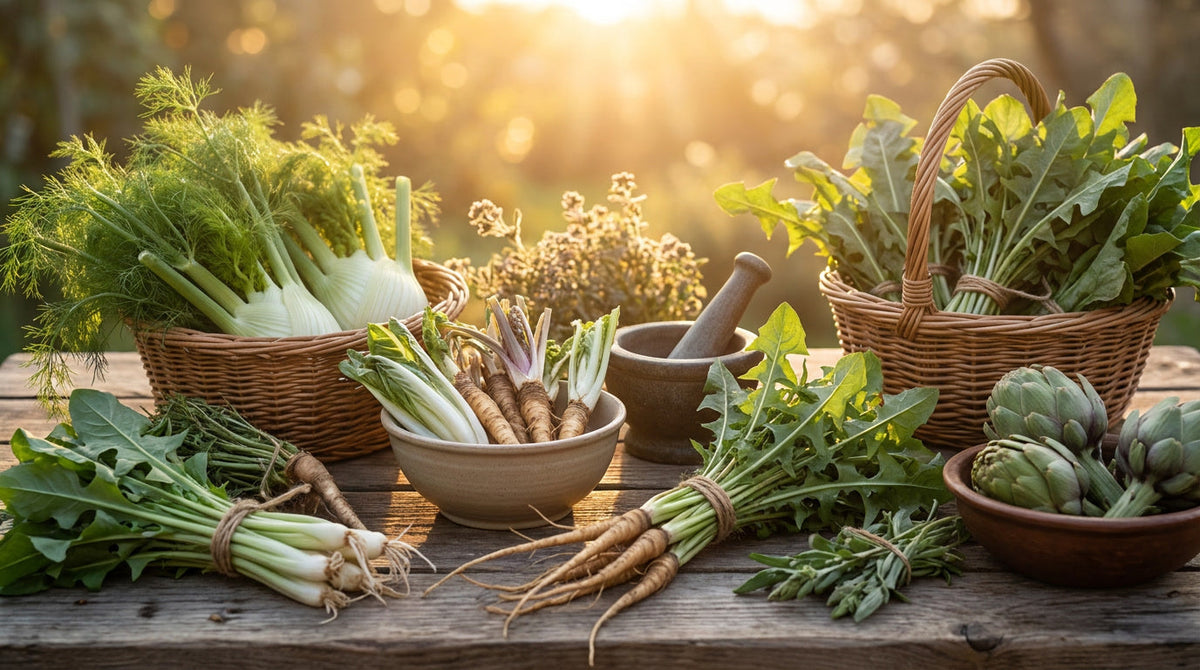
Präbiotika kommen in einer Vielzahl pflanzlicher Lebensmittel vor – und die gute Nachricht ist: Viele davon sind leicht verfügbar, günstig und lassen sich wunderbar in den Alltag integrieren. Besonders reich an präbiotischen Ballaststoffen sind Zwiebeln, Knoblauch, Lauch, Chicorée, Topinambur, Artischocken und unreife Bananen. Diese Lebensmittel enthalten Inulin und Fructooligosaccharide (FOS) – langkettige Zuckermoleküle, die im Dünndarm unverdaut bleiben und erst im Dickdarm als Nahrungsquelle für bestimmte Bakteriengruppen dienen. In der Hildegard-Küche fanden viele dieser Pflanzen ihren festen Platz, wenngleich unter anderen Namen und in anderen Zubereitungsformen.
Hildegard selbst empfahl den regelmäßigen Verzehr von Dinkel – eine Getreideart, die von ihr als „Königin der Getreide" bezeichnet wurde. Dinkel enthält neben wertvollem Eiweiß auch fermentierbare Ballaststoffe, die heute als präbiotisch eingestuft werden. Ebenso schätzte sie Fenchel und Kümmel, die in der mittelalterlichen Klosterküche als unverzichtbare Gewürzkräuter galten. Auch Pastinakensuppen und Rübengemüse, die damals Grundnahrungsmittel waren, liefern wertvolle Ballaststoffe und Inulin-ähnliche Verbindungen. Die traditionelle Küche der Klöster war – ganz unbewusst – reich an jenen Substanzen, die wir heute als präbiotisch bezeichnen. Darm- und Verdauungsprodukte
Was steckt hinter Inulin?
Inulin ist ein natürlich vorkommendes Polysaccharid, das in über 36.000 Pflanzenarten vorkommt. Es gehört zur Gruppe der Fructane und gilt als einer der bekanntesten präbiotischen Ballaststoffe. Da Inulin im menschlichen Dünndarm nicht abgebaut werden kann, gelangt es unverdaut in den Dickdarm, wo es als Nährstoff für bestimmte Bakterienstämme wie Bifidobakterien und Laktobazillen dient. Besonders reiche natürliche Quellen sind Topinambur (bis zu 20 % Inulin), Chicorée-Wurzel (bis zu 48 % Inulin in der Trockenmasse) und Knoblauch. In der Naturheilkunde wird Inulin seit Jahrhunderten traditionell verwendet – auch wenn man damals noch keinen Namen dafür hatte.
Fermentierte Lebensmittel ergänzen die präbiotische Ernährung auf ideale Weise. Sauerkraut, Kefir, Miso und Kimchi liefern lebende Mikroorganismen, die das Darmmilieu auf natürliche Weise bereichern können. In Hildegards Zeit war Fermentation keine Trendsache, sondern schlichte Notwendigkeit zur Haltbarmachung von Lebensmitteln. Klöster verfügten über ausgedehnte Gärten und Vorratskeller, in denen Gemüse eingelegt, Kräuter vergoren und Getränke wie Kräuterwein oder Kräuteressig hergestellt wurden. Diese traditionellen Zubereitungen hatten, wie wir heute wissen, einen unmittelbaren Einfluss auf die mikrobielle Vielfalt im Darm – ein Wissen, das in der modernen Fermentationskultur gerade eine beeindruckende Renaissance erlebt.
Hildegards Kräuter als präbiotische Begleiter – ein Blick ins Kräuterbuch
Hildegard von Bingen kannte über 230 Heilpflanzen und beschrieb deren Anwendungen in ihren Schriften mit bemerkenswerter Genauigkeit. Viele dieser Kräuter enthalten nicht nur ätherische Öle und Bitterstoffe, sondern auch Polyphenole, Prebiotika-ähnliche Verbindungen und sekundäre Pflanzenstoffe, die in der modernen Forschung intensiv untersucht werden. Das Besondere an Hildegards Kräuterauswahl war ihre Intuition für das Zusammenspiel der Pflanzen: Sie empfahl selten ein einzelnes Kraut allein, sondern immer in Kombinationen – ein Prinzip, das dem modernen Konzept der Synergistik entspricht. BitterKraft Original
„Der Fenchel – gleichgültig, wie man ihn isst – macht den Menschen fröhlich und verleiht ihm eine angenehme Wärme, eine gute Verdauung und einen guten Geruch."
— Hildegard von Bingen, Physica, 12. Jahrhundert
Dieses Zitat zeigt exemplarisch, wie Hildegard Pflanzen nicht nur als Nahrungsmittel, sondern als Stimmungsträger und ganzheitliche Begleiter des Wohlbefindens betrachtete. Der Fenchel – von ihr so hoch geschätzt – enthält tatsächlich Fructooligosaccharide sowie ätherische Öle, die in der traditionellen Anwendung seit Jahrhunderten bekannt sind. Ähnliches gilt für Bertram, Galgant und Alantwurzel – allesamt Hildegard-Kräuter, die reich an Bitterstoffen und Polyphenolen sind und die mikrobielle Gemeinschaft im Darm auf natürlichem Weg bereichern können.
Besonders bemerkenswert ist Hildegards Einsatz von Bitterkräutern. Sie empfahl regelmäßig Wermutkräuter, Enzian und Schafgarbe – allesamt Pflanzen, deren Bitterstoffe heute als wichtige Impulsgeber für das enterische Nervensystem gelten. Bitterstoffe werden über spezifische Rezeptoren wahrgenommen, die sich über den gesamten Gastrointestinaltrakt verteilen. Traditionell werden Bitterkräuter seit der Antike als Bestandteil des täglichen Wohlbefindens genutzt – und Hildegard integrierte sie systematisch in ihre Ernährungs- und Heilempfehlungen. In der Klostermedizin galten Bittertropfen und Kräuterelixiere als tägliches Ritual, das die innere Balance aufrechterhalten sollte. BitterKraft Original
Diese Hildegard-Kräuter werden traditionell zur Unterstützung des Darmmilieus verwendet:
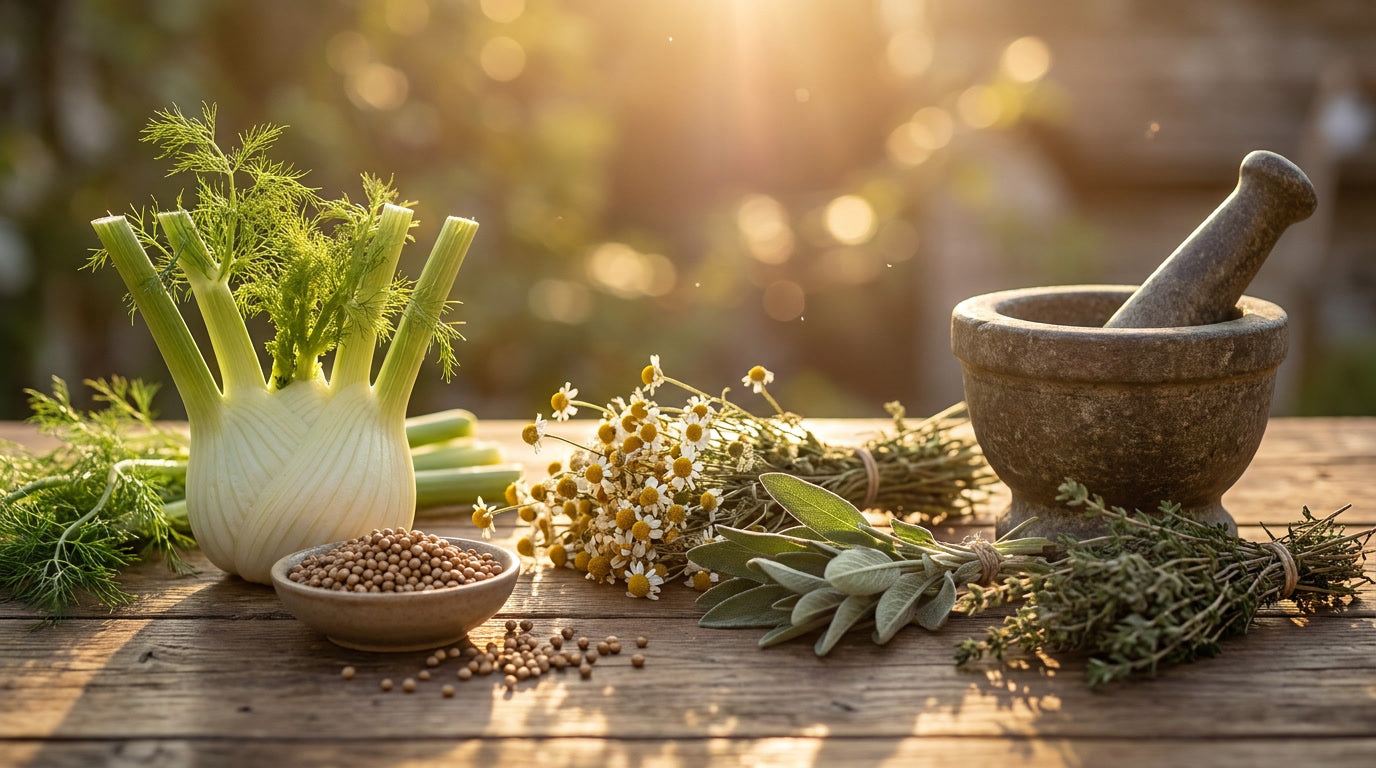
- Fenchel (Foeniculum vulgare): In der Hildegard-Medizin als eines der wichtigsten Wohlbefindensgräuter überhaupt eingestuft. Wird seit Jahrhunderten traditionell in der Klostermedizin verwendet und enthält neben ätherischen Ölen auch natürliche Ballaststoffe.
- Bertram (Anacyclus pyrethrum): Als „Gewürz der Könige" bezeichnete Hildegard den Bertram und schätzte ihn für seine erwärmenden Eigenschaften. Er ist historisch bekannt als Bestandteil von Kräutermischungen zur täglichen Pflege des Wohlbefindens.
- Galgant (Alpinia officinarum): Hildegards Lieblingspflanze schlechthin. Sie empfahl ihn in nahezu allen ihrer Schriften. Wird traditionell als aromatisches Gewürz und Kräutermittel eingesetzt und enthält Polyphenole sowie ätherische Öle.
- Schafgarbe (Achillea millefolium): In der europäischen Klostermedizin seit dem frühen Mittelalter geschätzt. Enthält Bitterstoffe und Flavonoide und wird traditionell als Bestandteil von Kräutertees und -extrakten verwendet.
- Alantwurzel (Inula helenium): Enthält Inulin in besonders hoher Konzentration – womit sie buchstäblich nach dem präbiotischen Wirkstoff benannt ist. Wird seit Jahrhunderten in der Volksmedizin traditionell eingesetzt.
- Wermut (Artemisia absinthium): Eines der bekanntesten Bitterkräuter der europäischen Tradition. Historisch bekannt als Bestandteil von Kräuterlikören und Bitterbitterextrakten, die in Klöstern zur Pflege des inneren Gleichgewichts genutzt wurden.
Präbiotische Ernährung im Hildegard-Stil: So lässt es sich umsetzen
Die gute Botschaft für alle, die das Mikrobiom auf traditionelle Weise bereichern möchten: Es braucht keine aufwändigen Ernährungsumstellungen oder teure Nahrungsergänzungsmittel. Der Hildegard-Ansatz folgt dem Prinzip des „Hinzufügens statt Weglassens" – es geht darum, die Ernährung schrittweise um traditionelle, pflanzenbetonte Elemente zu ergänzen. Ein tägliches Glas Kräutertee aus Fenchel, Galgant und Bertram, ein Dinkelgericht zum Mittagessen, eine kleine Schüssel Sauerkraut als Beilage – das sind einfache, alltagstaugliche Schritte, die sich an der Tradition der Klosterküche orientieren. Hildegard von Bingen Produkte
Der Schlüssel liegt in der Kontinuität: Nicht die einmalige Kur, sondern die tägliche, liebevolle Pflege des Mikrobioms durch pflanzliche Vielfalt entspricht dem Geist der Hildegard-Medizin – und dem, was moderne Ernährungswissenschaftler als nachhaltigste Strategie für ein vielfältiges Darmmilieu betrachten.
Hildegard empfahl zudem das regelmäßige Fasten – nicht als Bestrafung, sondern als bewusstes Innehalten und Reinigen. Im Kontext des Mikrobioms ist dieses Wissen bemerkenswert aktuell: Fastenperioden gelten in der Naturheilkunde als traditionelles Mittel, um dem Körper Raum zur Erneuerung zu geben. Fasten-Produkte Ob intermittierendes Fasten, Saftfasten oder das klassische Hildegard-Fasten mit leichten Speisen und Kräuterbrühen – all diese Ansätze haben gemeinsam, dass sie den Fokus auf natürliche, pflanzliche Kost legen und dem Darmmilieu Pausen gönnen. In Klöstern war das Fastenkalenderjahr eng mit dem Wechsel der Jahreszeiten verbunden – ein Rhythmus, den viele Menschen heute neu für sich entdecken.
Die saisonale Ernährung ist ein weiterer zentraler Aspekt der Hildegard-Tradition, der in engem Zusammenhang mit der Mikrobiom-Pflege steht. Im Frühling stehen bittere Wildkräuter wie Löwenzahn, Brennnessel und Bärlauch auf dem Speiseplan – allesamt reich an Polyphenolen und präbiotischen Verbindungen. Im Herbst werden Wurzelgemüse, Pastinaken und Chicorée geerntet, die besonders viel Inulin liefern. Im Winter rücken wärmende Gewürze wie Galgant, Zimt und Ingwer in den Vordergrund, die das Wohlbefinden in der dunklen Jahreszeit unterstützen. Diese saisonale Rotation der Lebensmittel sorgt für eine natürliche Vielfalt im Speiseplan – und damit für Abwechslung im Darmmilieu. Immunsystem-Produkte
Tipp aus der Klosterküche: Die Hildegard-Kräuterbrühe
Eine einfache Möglichkeit, täglich von Hildegards Kräuterwissen zu profitieren, ist die klassische Kräuterbrühe nach Art der Klosterküche. Dafür werden Dinkelkörner, Pastinaken, Sellerie, Petersilienwurzel und eine Handvoll frischer oder getrockneter Kräuter (Fenchel, Thymian, Liebstöckel) langsam in Wasser geköchelt. Diese Brühe liefert nicht nur wärmende Mineralstoffe, sondern auch präbiotische Verbindungen aus dem Gemüse – ganz im Sinne Hildegards, die Einfachheit und Natürlichkeit stets über Komplexität stellte. In Klöstern wurde eine solche Brühe traditionell besonders in Übergangszeiten und nach Fastenperioden gereicht.
Mikrobiom und innere Balance: Was die Tradition uns heute lehrt
Die Verbindung zwischen dem Zustand des Darms und dem allgemeinen Wohlbefinden war in der Klostermedizin eine Selbstverständlichkeit. Hildegard von Bingen beschrieb ausführlich, wie Ungleichgewichte im Inneren des Menschen – die sie im Rahmen ihrer Vier-Säfte-Lehre erklärte – das gesamte Befinden beeinflussen können. Ob Stimmung, Energie oder das allgemeine Empfinden der Lebendigkeit: Alles, so Hildegard, steht in Wechselbeziehung mit der inneren Ordnung. Heute wissen wir, dass die Darm-Hirn-Achse tatsächlich eine hochaktive Kommunikationsstraße ist, über die Signale in beide Richtungen ausgetauscht werden. Die traditionelle Weisheit und die moderne Forschung treffen sich hier auf erstaunliche Weise.
„Wenn der Bauch des Menschen gesund und rein ist, dann ist auch sein Gemüt heiter und klar."
— Sinngemäß überliefert aus den Schriften der Hildegard von Bingen, „Causae et Curae", 12. Jahrhundert
Was Hildegard von Bingen als ganzheitliche Lebensweisheit formulierte, findet heute in der Mikrobiom-Forschung wissenschaftlichen Widerhall: Das Wohlbefinden des Menschen ist untrennbar mit dem Zustand seines inneren Ökosystems verbunden. Traditionelles Pflanzenwissen und moderne Naturheilkunde erzählen hier dieselbe Geschichte – nur in unterschiedlichen Sprachen.
Für alle, die tiefer in die Welt der Hildegard-Medizin einsteigen möchten, lohnt sich auch ein Blick auf ergänzende Bereiche der Naturheilkunde: Die Leber spielt in Hildegards Verständnis eine zentrale Rolle als „Burg der Seele" – sie ist eng mit dem Darmmilieu verbunden und war stets Bestandteil ganzheitlicher Kräuterkuren. Leber-Produkte von Bitterkraft Ebenso beschrieb Hildegard ausführlich die Bedeutung des Schlafs als regenerative Phase für den gesamten Organismus – ein Aspekt, den moderne Schlafforschung mittlerweile auch mit dem Mikrobiom in Verbindung bringt. Schlaf- und Entspannungsprodukte Die Traditionelle Klostermedizin war in ihrer Ganzheitlichkeit ihrer Zeit weit voraus.
Das Schöne an der Hildegard-Tradition ist ihre Zugänglichkeit: Man braucht kein Kloster und keine Apotheke, um von diesem Wissen zu profitieren. Ein Gang durch den Wochenmarkt, eine Auswahl saisonaler Wurzeln und Kräuter, ein täglicher Kräutertee und vielleicht ein Glas selbstgemachtes Sauerkraut – das sind die einfachen Bausteine einer Lebensweise, die das Mikrobiom auf natürlichem Weg bereichert. Hildegard hätte es wohl so ausgedrückt: Es ist die Natur selbst, die dem Menschen das gibt, was er braucht – wenn er ihr nur zuhört. In einer Zeit, in der das Interesse an Naturheilkunde, Fermentation und pflanzlicher Ernährung so groß ist wie nie zuvor, scheint die Botschaft der mittelalterlichen Äbtissin aktueller denn je.

Hinterlasse einen Kommentar
Diese Website ist durch hCaptcha geschützt und es gelten die allgemeinen Geschäftsbedingungen und Datenschutzbestimmungen von hCaptcha.