

Wer kennt es nicht: Nach einem üppigen Essen oder einem stressreichen Tag meldet sich das unangenehme Brennen hinter dem Brustbein. Sodbrennen gehört zu den häufigsten Beschwerden unserer Zeit – und der Griff zur Apotheke, zu Antazida oder Protonenpumpenhemmern ist schnell getan. Doch immer mehr Menschen fragen sich, ob es nicht sanftere, naturgemäßere Wege gibt, um mit dieser Herausforderung umzugehen. Die Naturheilkunde und insbesondere das uralte Wissen der Klostermedizin bieten hier einen reichen Schatz an Möglichkeiten – Kräuter, Rituale und Lebensweisheiten, die seit Jahrhunderten tradiert werden und heute wieder neu entdeckt werden. Dieser Artikel lädt dazu ein, diese Alternativen kennenzulernen und den eigenen Alltag behutsam zu bereichern.
Was hinter dem Brennen steckt – und warum der schnelle Griff zur Pille oft nicht die ganze Geschichte erzählt
Sodbrennen entsteht, wenn Mageninhalt in die Speiseröhre zurückfließt und dort das empfindliche Schleimhautgewebe in Kontakt mit saurem Milieu bringt. Das Gefühl reicht von einem leichten Unbehagen bis hin zu einem intensiven Brennen, das bis in den Hals ausstrahlen kann. Viele Menschen erleben diese Situation situativ – nach dem Genuss von Kaffee, Alkohol, fettem Essen oder in besonders stressreichen Phasen. Andere kämpfen dauerhaft damit. In beiden Fällen ist das erste Ziel verständlicherweise schnelle Erleichterung.
Magensäureblocker – allen voran Protonenpumpenhemmer wie Omeprazol oder Pantoprazol – sind heute eines der meistverkauften Medikamente weltweit. Sie senken die Säureproduktion zuverlässig und verschaffen kurzfristig spürbare Erleichterung. Doch die Frage, die viele Naturheilkunde-Interessierte umtreibt, lautet: Was passiert, wenn man diese Mittel über lange Zeiträume hinweg einnimmt? Und vor allem: Adressiert man damit die Ursache – oder nur das Symptom? Diese Fragen sind berechtigt und verdienen eine ehrliche, differenzierte Betrachtung, die weder Schulmedizin noch Naturheilkunde pauschal ablehnt.
Die Naturheilkunde versteht Sodbrennen nicht isoliert als „zu viel Säure", sondern betrachtet den Menschen in seiner Gesamtheit. Ernährungsgewohnheiten, Stresspegel, Lebensrhythmus, die Qualität des Schlafs und sogar emotionale Belastungen spielen in der ganzheitlichen Betrachtung eine Rolle. Darm- und Verdauungsprodukte Dieser Blick auf das große Ganze ist es, der die Naturheilkunde für viele so attraktiv macht: Es geht nicht darum, einen einzelnen Wert zu korrigieren, sondern darum, den ganzen Menschen in Balance zu bringen. Und genau hier setzt das tradierte Kräuterwissen an.
Sodbrennen wird in der Naturheilkunde ganzheitlich betrachtet – Ernährung, Stress und Lebensrhythmus gelten als ebenso bedeutsam wie das Beschwerdebild selbst. Der Blick auf die Ursache steht im Mittelpunkt, nicht nur die kurzfristige Erleichterung.
Hildegard von Bingen und das Wissen der Klostermedizin – eine jahrtausendealte Quelle für Magengesundheit
Hildegard von Bingen (1098–1179) gilt als eine der bedeutendsten Naturheilerinnen des Mittelalters. Die Äbtissin, Theologin und Universalgelehrte hinterließ in ihren Werken „Physica" und „Causae et Curae" ein umfassendes System der Heilkunde, das Kräuter, Ernährung, Lebensführung und spirituelles Wohlbefinden miteinander verband. Ihr Wissen über Magen und Verdauung war dabei besonders differenziert: Sie betrachtete den „Magen als Wurzel des Lebens" und maß seiner Pflege höchste Bedeutung bei. Hildegard von Bingen Produkte
In der Klostermedizin, zu der Hildegards Lehren maßgeblich beitrugen, spielten Bitterkräuter eine zentrale Rolle. Die Mönche und Nonnen kultivierten in ihren Klostergärten Pflanzen wie Fenchel, Wermut, Galgantwurzel und Fenchel nicht allein aus Interesse an der Botanik, sondern weil sie täglich erlebten, wie diese Kräuter das allgemeine Wohlbefinden beeinflussen konnten. Das Wissen wurde von Generation zu Generation weitergegeben – in Klosterbibliotheken, in handgeschriebenen Kräuterbüchern und in der gelebten Praxis des monastischen Alltags. BitterKraft Original
Hildegard von Bingen schrieb in ihrer „Physica" über den Fenchel: „Fenchel, wie immer er gegessen wird, macht den Menschen fröhlich und gibt ihm gute Wärme und guten Schweiß und guten Geruch." – Diese historische Quelle zeigt, wie eng in der Klostermedizin körperliches Wohlbefinden und pflanzliche Ernährung miteinander verknüpft wurden.
Besonders bemerkenswert ist, dass Hildegard die Galgantwurzel – heute als „Hildegard-Gewürz" bekannt – als eine ihrer wichtigsten Heilpflanzen für den Bereich des Magens beschrieb. Sie verwendete sie in Pulverform, als Abkochung und als Bestandteil komplexer Kräutermischungen. Die Galgantwurzel ist bis heute ein fester Bestandteil der Hildegard-Medizin und wird in modernen Nahrungsergänzungsmitteln und Kräuterpräparaten auf Basis ihrer Überlieferungen eingesetzt. Was die Äbtissin vor fast 900 Jahren in ihren Schriften festhielt, erfährt heute eine Renaissance – und das aus gutem Grund.
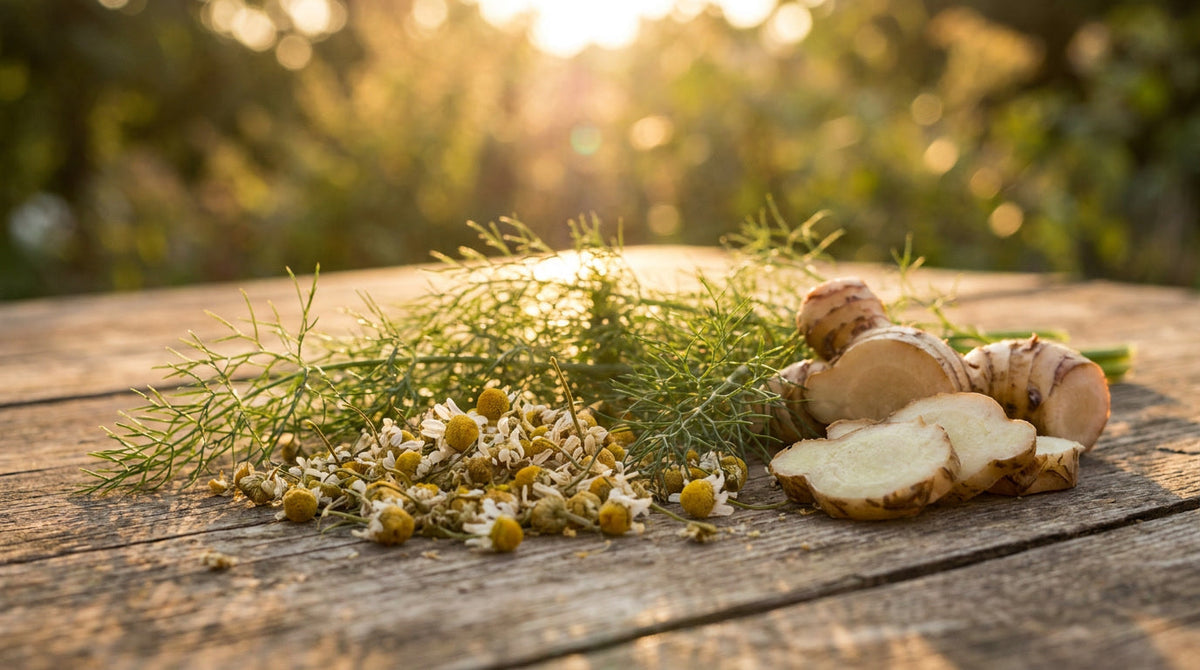
Hildegards Galgantwurzel (Alpinia officinarum): Die Galgantwurzel gehört zur Familie der Ingwergewächse und wurde von Hildegard von Bingen als eine ihrer wichtigsten Pflanzenheilmittel beschrieben. Sie wird seit Jahrhunderten in der europäischen Klostermedizin traditionell verwendet und ist Bestandteil zahlreicher historischer Rezepturen für das allgemeine Wohlbefinden. Ihr charakteristisch würziger, leicht scharfer Geschmack macht sie auch kulinarisch interessant.
Bewährte Heilkräuter der Naturheilkunde – traditionell verwendet, heute neu entdeckt
Die Naturheilkunde verfügt über eine beeindruckende Auswahl an Kräutern, die seit Jahrhunderten im Zusammenhang mit dem Magen und der Verdauung tradiert werden. Keines dieser Mittel ist als Arzneimittel zu verstehen – vielmehr handelt es sich um pflanzliche Begleiter, die im Sinne des ganzheitlichen Wohlbefindens in den Alltag integriert werden können. Das Prinzip „Hinzufügen statt Weglassen" steht dabei im Vordergrund: Nicht der Verzicht auf Genuss, sondern die Bereicherung des Alltags durch pflanzliche Weisheit. alle Bitterkraft Produkte
Besonders interessant ist, dass viele dieser Kräuter nicht neu „entdeckt" wurden – sie haben lediglich im Laufe des 20. Jahrhunderts, mit dem Aufstieg der pharmazeutischen Industrie, an Bekanntheit eingebüßt. Heute erleben sie ein kraftvolles Comeback: In Naturkostläden, Apotheken mit naturheilkundlichem Schwerpunkt und in spezialisierten Online-Shops wie Bitterkraft.com findet man sie in hochwertiger Qualität – als Tee, Tinktur, Pulver oder Nahrungsergänzungsmittel. Die Herausforderung liegt nicht im Finden, sondern im richtigen Einordnen und Anwenden.
Wer sich für pflanzliche Begleiter interessiert, sollte wissen, dass die Qualität der verwendeten Rohstoffe entscheidend ist. Wildkräuter aus biologischem Anbau, schonend getrocknet und verarbeitet, enthalten ein komplexes Spektrum an sekundären Pflanzenstoffen, das industriell gefertigte Produkte oft nicht replizieren können. Die naturheilkundliche Tradition betont stets die Kraft der ganzen Pflanze – nicht einzelner isolierter Wirkstoffe. Genau diese Philosophie spiegelt sich auch in den Produkten wider, die auf Basis historischer Kräuterrezepturen entwickelt wurden.
Traditionell verwendete Heilkräuter rund um den Magen:
- Kamille (Matricaria chamomilla): Die Kamille wird seit der Antike tradiert und ist in der europäischen Kräutermedizin eine der bekanntesten Heilpflanzen überhaupt. Als Tee zubereitet, ist sie ein klassischer Bestandteil von Hausrezepten bei Magenbeschwerden und wird in der Volksheilkunde seit Jahrhunderten geschätzt.
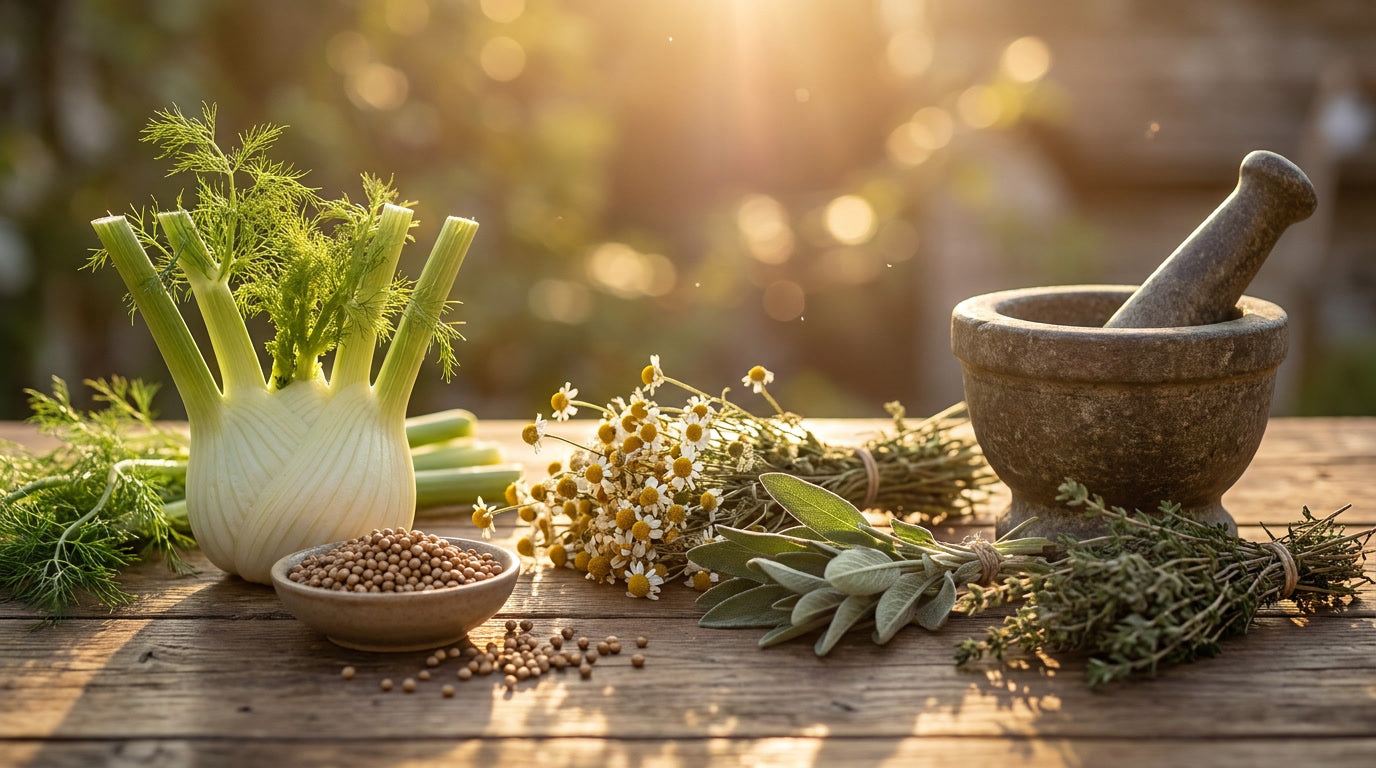
- Fenchel (Foeniculum vulgare): Auch von Hildegard von Bingen hoch geschätzt, wird Fenchel traditionell nach dem Essen als Tee oder Gewürz verwendet. In der Klostermedizin galt er als eines der wärmenden Kräuter, das das allgemeine Wohlbefinden nach den Mahlzeiten unterstützen kann.
- Galgantwurzel (Alpinia officinarum): Das Herzstück der Hildegard-Medizin für den Magen. Die Galgantwurzel wird seit dem Mittelalter in der europäischen Klostermedizin traditionell verwendet und findet sich in zahlreichen historischen Kräutermischungen für den Bereich Magen und Verdauung.
- Süßholzwurzel (Glycyrrhiza glabra): In der ayurvedischen wie auch in der europäischen Naturheilkunde seit Jahrtausenden bekannt, wird Süßholzwurzel traditionell im Zusammenhang mit dem Magen-Darm-Trakt verwendet. Ihr charakteristisch süßer Geschmack macht sie zu einem angenehmen Bestandteil von Kräutertees und -mischungen.
- Ingwer (Zingiber officinale): Der Ingwer ist in der traditionellen chinesischen Medizin, im Ayurveda und in der europäischen Volksheilkunde gleichermaßen bekannt. Er wird seit Jahrhunderten traditionell als Gewürz und als Bestandteil von Kräuterrezepturen verwendet, besonders im Zusammenhang mit dem allgemeinen Wohlbefinden nach dem Essen.
- Löwenzahn (Taraxacum officinale): Die unscheinbare Wiesenpflanze ist in der Naturheilkunde weit mehr als ein Unkraut. Löwenzahn wird traditionell als Bitterkraut eingesetzt und war in der Klosterheilkunde ein geschätzter Bestandteil von Frühjahrskuren und Bittertropfen. BitterKraft Original
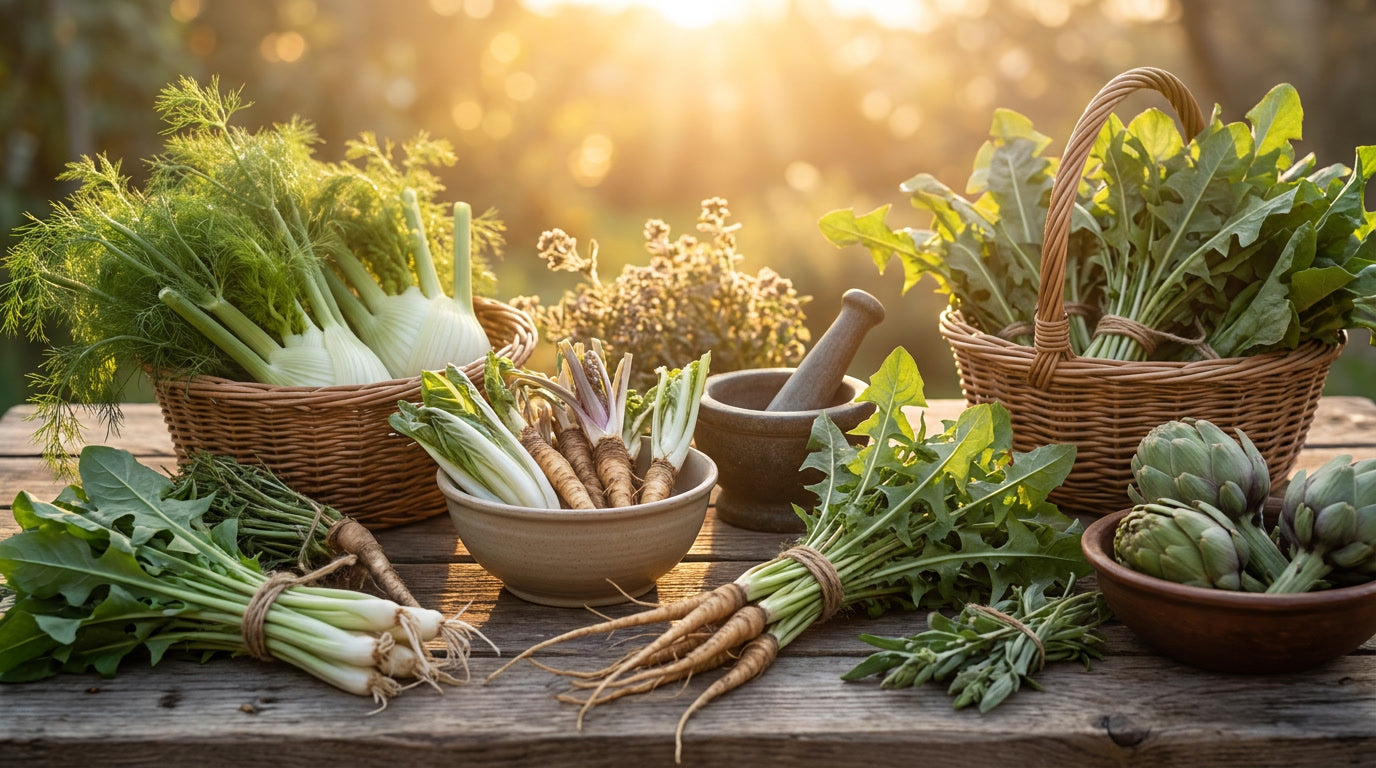
Bitterkräuter wie Löwenzahn, Galgan und Wermut gehören zu den ältesten pflanzlichen Begleitern der europäischen Klostermedizin – und erleben heute eine bemerkenswerte Renaissance in der modernen Naturheilkunde.
Ernährung und Lebensweise – was die Naturheilkunde empfiehlt
Neben dem Einsatz von Heilkräutern legt die Naturheilkunde großen Wert auf Ernährung und Lebensweise als grundlegende Pfeiler des Wohlbefindens. Sodbrennen wird dabei häufig als ein Signal des Körpers verstanden – ein Hinweis darauf, dass etwas im Gleichgewicht des Alltags verschoben ist. Die Klostermedizin formulierte dies mit dem Begriff der „discretio" – der Mäßigung und dem bewussten Umgang mit allem, was in den Körper gelangt. Dieses Prinzip ist heute so aktuell wie vor 900 Jahren.
Konkret bedeutet das in der naturheilkundlichen Praxis oft: kleinere, regelmäßige Mahlzeiten statt üppiger Festessen, das bewusste Kauen und Genießen von Speisen, eine Pause zwischen dem letzten Essen und dem Schlafengehen sowie das Meiden von individuell unverträglichen Lebensmitteln. Hildegard von Bingen beschrieb in ihren Schriften ausführlich, welche Nahrungsmittel sie als „gut für den Magen" oder „schwer für das Innere" betrachtete – eine Ernährungsphilosophie, die in der modernen Hildegard-Medizin aufgegriffen und weiterentwickelt wurde. Fasten-Produkte
Die Europäische Behörde für Lebensmittelsicherheit (EFSA) hat für eine Reihe traditioneller Heilpflanzen die Kategorie „traditional use" etabliert, die historisch belegte Anwendungen anerkennt, auch wenn klinische Studien im modernen Sinne fehlen. Dies unterstreicht den wissenschaftlichen Respekt vor überliefertem Kräuterwissen als eigenständige Erkenntnisquelle.
Stress gilt in der Naturheilkunde als einer der bedeutendsten Faktoren, die das Gleichgewicht im Verdauungsbereich beeinflussen können. Die Verbindung zwischen dem emotionalen Erleben und dem Magen ist tief verwurzelt – nicht umsonst spricht man von „Magengrübeln" oder davon, dass einem etwas „auf den Magen schlägt". Die Klostermedizin integrierte deshalb neben Kräutern auch Ruhe, Gebet, Rhythmus und Gemeinschaft als Heilmittel. In modernen Begriffen würde man von Stressreduktion, Achtsamkeit und sozialer Einbettung sprechen – Konzepte, die heute in der Psychosomatik und der integrativen Medizin zunehmend Anerkennung finden. Schlaf- und Entspannungsprodukte
Das Prinzip der Bitterkräuter-Routine: In der klösterlichen Tradition war es üblich, vor oder nach den Mahlzeiten kleine Mengen Bitterkräuter einzunehmen – als Tropfen, Tee oder Gewürzzusatz. Diese Ritual-Praxis, die sich über Jahrhunderte bewährt hat, kann auch heute noch bewusst in den Alltag integriert werden. Bitterstoffpräparate aus Löwenzahn, Enzian oder Wermut werden auf Bitterkraft.com als hochwertige Tropfen und Kapseln angeboten – für alle, die diese Tradition wiederentdecken möchten. BitterKraft Original
Naturheilkunde ganzheitlich anwenden – praktische Hinweise für den Alltag
Die Integration naturheilkundlicher Ansätze in den Alltag muss nicht kompliziert sein. Vielmehr geht es darum, mit kleinen, bewussten Schritten zu beginnen und den eigenen Körper besser kennenzulernen. Ein gutes Beispiel ist die Kräuterteeroutine: Wer morgens einen Tee aus Kamille und Fenchel trinkt, abends auf schwere Speisen verzichtet und einmal täglich Bitterkräutertropfen einnimmt, hat bereits einen soliden naturheilkundlichen Rahmen etabliert – ohne großen Aufwand und ohne auf Lebensqualität zu verzichten.
Für Menschen, die bereits Magensäureblocker einnehmen, gilt: Eine eigenständige Veränderung der Medikation ohne Rücksprache mit einem Arzt oder einer Heilpraktikerin ist nicht empfehlenswert. Naturheilkundliche Ansätze verstehen sich als Ergänzung, nicht als Ersatz für eine notwendige medizinische Behandlung. Der beste Weg ist oft der, gemeinsam mit einem naturheilkundlich ausgebildeten Therapeuten einen individuellen Plan zu entwickeln, der beide Welten – schulmedizinische Sicherheit und naturheilkundliche Weisheit – miteinander verbindet. alle Bitterkraft Produkte
Die Leber spielt in der ganzheitlichen Betrachtung des Verdauungssystems ebenfalls eine wichtige Rolle. In der Naturheilkunde gilt die Leber als zentrales Organ der Entgiftung und des Stoffwechsels – und ihre traditionelle Pflege mit Kräutern wie Mariendistel oder Artischocke wird als Teil einer umfassenden Magengesundheits-Routine betrachtet. Wer tiefer in dieses Thema einsteigen möchte, findet auf Bitterkraft.com eine breite Auswahl an Produkten und Informationen zu diesem Thema. Leber-Produkte von Bitterkraft
Alltagstipps aus der naturheilkundlichen Tradition:
- Morgentee-Ritual: Kamille, Fenchel oder Ingwertee als morgendliche Routine – ein Brauch, der in vielen Klöstern bis heute gepflegt wird und den Tag bewusst beginnt.
- Bitterkräuter vor dem Essen: Einige Tropfen Bitterstofftinktur (z. B. aus Löwenzahn oder Enzian) traditionell vor den Mahlzeiten – ein klassisches klösterliches Ritual.
- Galgan als Gewürz: Galgantpulver kann wie Ingwer oder Pfeffer in Speisen verwendet werden – Hildegards Lieblingspflanze als würzige Bereicherung des Küchenalltags.
- Bewusstes Essen: Langsames Kauen, Pausen zwischen den Bissen, keine Ablenkung durch Bildschirme – ein Prinzip, das in der Klostermedizin als „discretio" bezeichnet wurde und heute als Achtsamkeitsübung bekannt ist.
- Abendliche Ruhe: Keine schweren Mahlzeiten in den letzten zwei bis drei Stunden vor dem Schlafengehen – eine Empfehlung, die sich durch alle naturheilkundlichen Traditionen zieht. Schlaf- und Entspannungsprodukte
Naturheilkundliche Ansätze bei Sodbrennen verstehen sich als Ergänzung zum Alltag – nicht als Ersatz für ärztliche Begleitung. Das Prinzip lautet: Hinzufügen statt Weglassen, Bereichern statt Verzichten.
Abschließend lässt sich sagen: Der Weg zu mehr Wohlbefinden im Bereich Magen und Verdauung ist kein Sprint, sondern ein bewusster Spaziergang durch den Kräutergarten der Naturheilkunde. Hildegard von Bingen würde vielleicht sagen, es geht darum, wieder in Einklang mit der Natur zu kommen – mit der äußeren Natur der Pflanzen und der inneren Natur des eigenen Körpers. Wer diesen Weg beschreitet, entdeckt nicht nur Kräuter und Rituale, sondern eine Lebensphilosophie, die Gesundheit als umfassendes Wohlbefinden versteht – körperlich, seelisch und im Einklang mit dem Rhythmus des Lebens.

Hinterlasse einen Kommentar
Diese Website ist durch hCaptcha geschützt und es gelten die allgemeinen Geschäftsbedingungen und Datenschutzbestimmungen von hCaptcha.