

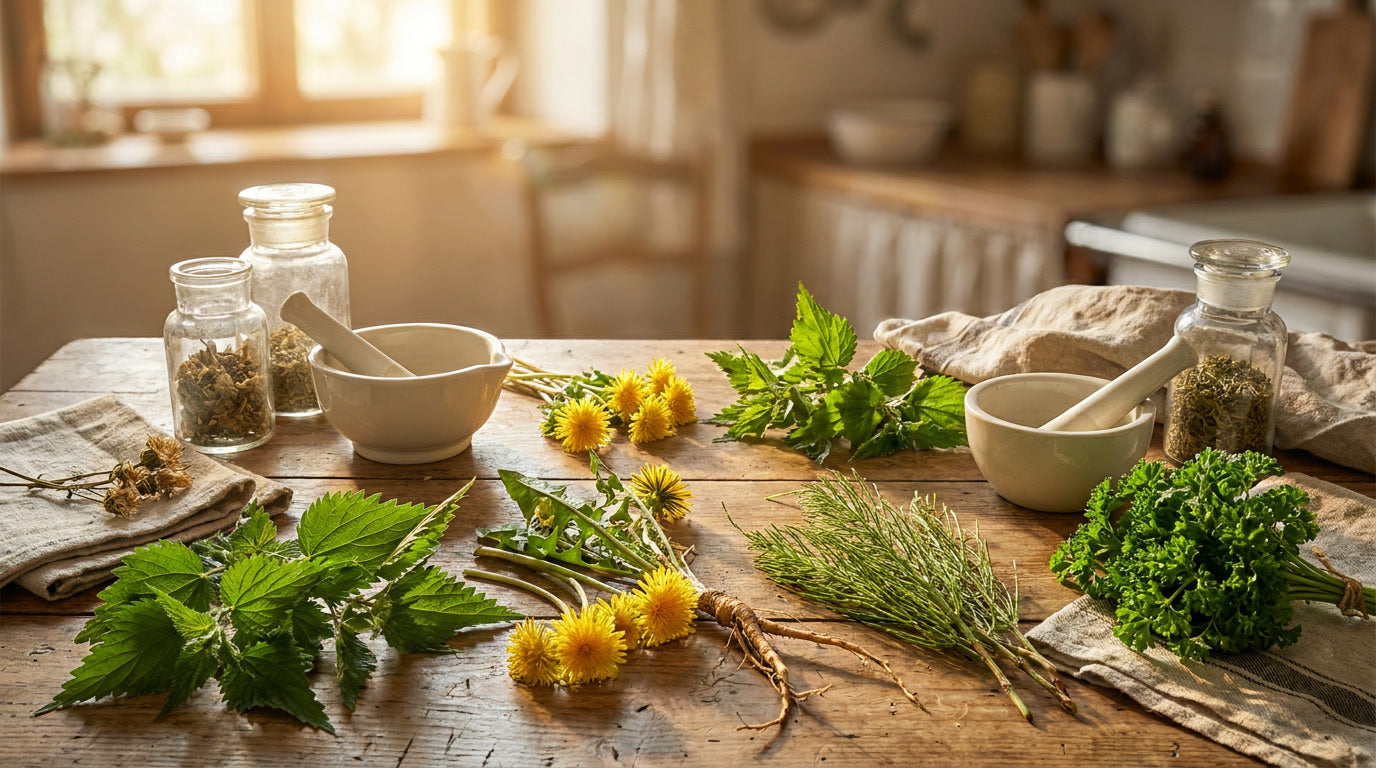
Manchmal fühlt sich der Körper schwer und träge an – die Beine spannen, der Bauch fühlt sich aufgequollen an, und selbst die Finger wirken wie kleine Würstchen. Wassereinlagerungen kennen viele Menschen, vor allem in wärmeren Monaten oder in stressreichen Phasen. Was dabei häufig vergessen wird: Die Natur hält seit Jahrhunderten eine beeindruckende Auswahl an Kräutern bereit, die in der Klostermedizin traditionell geschätzt wurden, um den Körper sanft zu unterstützen. Hildegard von Bingen, die visionäre Äbtissin und Naturkundlerin des 12. Jahrhunderts, hat in ihrem überlieferten Pflanzenwissen einige dieser Helfer ausführlich beschrieben. In diesem Artikel nehmen wir die wichtigsten Hildegard-Kräuter für die natürliche Wasserausscheidung unter die Lupe – historisch fundiert, verständlich erklärt und alltagsnah aufbereitet.
Wassereinlagerungen aus der Sicht der Klostermedizin
Hildegard von Bingen betrachtete den menschlichen Körper als ein komplexes Gleichgewichtssystem, das sie in der Tradition der Vier-Säfte-Lehre (Humoralpathologie) beschrieb. Ein Übermaß an Feuchtigkeit – in ihrer Sprache oft als „überschüssige Feuchtigkeit" oder „wässrige Säfte" bezeichnet – galt ihr als Zeichen einer Disharmonie, die durch gezielte Kräuteranwendungen und eine angepasste Ernährung wieder ins Lot gebracht werden konnte. Diese Sichtweise mag für moderne Ohren ungewohnt klingen, doch dahinter steckt eine jahrtausendealte Beobachtungsgabe, die bis heute in der Naturheilkunde geschätzt wird.
In Hildegards Hauptwerk „Physica" und in den „Causae et Curae" finden sich zahlreiche Hinweise auf Pflanzen, die sie für ihre harmonisierende Wirkung auf den Wasserhaushalt beschrieben hat. Interessant dabei: Viele dieser Kräuter gelten noch heute in der europäischen Pflanzenheilkunde als traditionell bewährte Begleiter, wenn es darum geht, das natürliche Wohlbefinden in Bezug auf Wasserretention zu unterstützen. Der Übergang von mittelalterlichem Klosterwissen zu modernem Traditional-Use-Verständnis ist in diesen Fällen erstaunlich fließend.
Wer sich mit Hildegards Kräutermedizin beschäftigt, stößt schnell auf ein zentrales Prinzip: Nicht die einzelne Pflanze allein, sondern das Zusammenspiel von Kräutern, Ernährung, Gebet und Lebensrhythmus bildet das Fundament ihres Heilsystems. Dennoch lassen sich einzelne Pflanzen hervorheben, die in der Überlieferung besonders häufig und explizit im Zusammenhang mit der Wasserausscheidung und dem allgemeinen Wohlbefinden erwähnt werden. Hildegard von Bingen Produkte Diese bilden den Kern des vorliegenden Artikels.
Hildegard von Bingen beschrieb bereits im 12. Jahrhundert Kräuter, die heute noch in der Naturheilkunde traditionell zur Unterstützung der natürlichen Wasserausscheidung verwendet werden – ein Zeugnis für die zeitlose Relevanz klösterlichen Pflanzenwissens.
Die wichtigsten Hildegard-Kräuter für die natürliche Wasserausscheidung
Das Spektrum der Kräuter, das Hildegard im Zusammenhang mit dem Wasserhaushalt beschrieben hat, ist bemerkenswert vielfältig. Von aromatischen Küchenkräutern bis hin zu bitteren Heilpflanzen – die Klostermedizin kannte für nahezu jedes Ungleichgewicht ein pflanzliches Gegenmittel. Entscheidend war dabei stets die Qualität der Pflanze: frisch geerntet, korrekt zubereitet und in der richtigen Jahreszeit angewendet.
Diese Hildegard-Kräuter werden traditionell bei Wassereinlagerungen geschätzt:
- Brennnessel (Urtica dioica): Die Brennnessel gehört zu den am häufigsten überlieferten Kräutern der Klostermedizin und wird seit Jahrhunderten traditionell zur Unterstützung der natürlichen Wasserausscheidung verwendet. Hildegard schätzte sie als kraftvolle Pflanze mit reinigenden Eigenschaften für den Körper.
- Löwenzahn (Taraxacum officinale): Der gemeine Löwenzahn ist in der europäischen Kräutertradition historisch bekannt als Pflanze, die das allgemeine Wohlbefinden unterstützt – insbesondere in Zusammenhang mit dem Wasserhaushalt. Beide Teile der Pflanze, Blatt und Wurzel, fanden in der Klostermedizin Verwendung.
- Schachtelhalm (Equisetum arvense): Der Schachtelhalm, auch Zinnkraut genannt, wird seit dem Mittelalter traditionell zur Unterstützung der Nieren und der natürlichen Entwässerung des Körpers eingesetzt. In der Hildegard-Medizin gilt er als harmonisierendes Kraut für das innere Gleichgewicht.
- Petersilie (Petroselinum crispum): Hildegard von Bingen erwähnte Petersilie in ihren Schriften als wärmendes und belebendes Kraut, das traditionell zu einer ausgeglichenen Wasserbalance beitragen soll. Als Küchenkraut ist sie ein besonders alltagstauglicher Begleiter.
- Birkenblätter (Betula pendula): Birkenblätter werden in der europäischen Kräuterheilkunde seit Jahrhunderten traditionell zur Unterstützung der natürlichen Ausscheidungsfunktionen geschätzt. In der Klostermedizin galten sie als milde, gut verträgliche Begleiter für Frühjahrs- und Herbstkuren.
- Liebstöckel (Levisticum officinale): Liebstöckel, im Volksmund auch „Maggikraut" genannt, ist eine typische Klosterpflanze, die Hildegard für ihre wärmenden und harmonisierenden Eigenschaften schätzte. Traditionell wird er im Zusammenhang mit dem Wasserhaushalt und dem allgemeinen Wohlbefinden verwendet.
Es ist bemerkenswert, dass viele dieser Kräuter bis heute in der modernen Phytotherapie und in der traditionellen europäischen Medizin (TEM) ihren festen Platz haben. Die jahrtausendealte Erfahrungsmedizin hat hier offensichtlich Pflanzen identifiziert, deren Verwendung generationsübergreifend als sinnvoll empfunden wurde. BitterKraft Original Dies zeigt, wie wertvoll das überlieferte Kräuterwissen des Mittelalters für unser heutiges Verständnis von Naturheilkunde ist.
„Die Brennnessel ist warm und ihre Wärme ist nützlich. Sie trocknet die überflüssige Feuchtigkeit im Menschen aus und macht den Leib leicht." – Hildegard von Bingen, Physica (sinngemäße Übersetzung aus dem Lateinischen)
Die genannten Kräuter lassen sich auf vielfältige Weise in den Alltag integrieren: als Tee, als Beigabe zu Speisen, als Tinktur oder als Bestandteil von Nahrungsergänzungsmitteln. Wichtig ist dabei stets die Kontinuität der Anwendung – ein Grundsatz, der bereits in der Klostermedizin als essenziell galt und der auch heute in der Naturheilkunde betont wird.
Brennnessel und Löwenzahn: Die kraftvollen Duo-Klassiker aus dem Klostergarten
Unter allen überlieferten Hildegard-Kräutern zur Unterstützung des Wasserhaushalts nehmen Brennnessel und Löwenzahn eine besondere Stellung ein. Beide Pflanzen zählen zu den meistverwendeten Kräutern der europäischen Heilpflanzentradition überhaupt – und beide fanden bereits in mittelalterlichen Klostergärten ihren festen Platz. Kein Wunder: Sie sind robust, weit verbreitet, leicht zu ernten und lassen sich auf vielfältige Weise zubereiten.
Was steckt hinter der Brennnessel?
Die Brennnessel (Urtica dioica) ist deutlich mehr als ein lästiges Unkraut. Sie enthält eine beeindruckende Fülle an natürlichen Verbindungen: Flavonoide, Chlorophyll, Kieselsäure, Kalium sowie verschiedene Vitamine. In der Klostermedizin wurde sie als „Reinigungspflanze" für den Frühling geschätzt und traditionell in Tees, Suppen und Presssäften verwendet. Ihr hoher Kaliumgehalt gilt in der Naturheilkunde als interessant in Bezug auf die natürliche Wasserausscheidung – ein Zusammenhang, der in der überlieferten Kräuterheilkunde seit Jahrhunderten bekannt ist.
Der Löwenzahn ergänzt die Brennnessel auf ideale Weise. Während die Brennnessel traditionell eher für ihre kräftigende Wirkung auf den Gesamtorganismus bekannt ist, wird der Löwenzahn in der Kräuterheilkunde besonders wegen seiner überlieferten Unterstützung für die natürlichen Ausscheidungsorgane geschätzt. Leber-Produkte von Bitterkraft Hildegard erwähnte ihn in ihren Schriften zwar weniger ausführlich als manch andere Pflanze, doch die europäische Kräutertradition kennt ihn seit Jahrhunderten als treuen Begleiter in Entwässerungskuren.
Was steckt hinter dem Löwenzahn?
Löwenzahn (Taraxacum officinale) enthält unter anderem Bitterstoffe (Taraxacin und Taraxacerin), Inulin, Kalium und verschiedene Flavonoide. In der europäischen Pflanzenheilkunde wird er seit dem Mittelalter traditionell verwendet, wenn es darum geht, den Körper in seiner natürlichen Balance zu unterstützen. Die Blätter werden häufig als Frühjahrssalat oder Tee verzehrt, die Wurzel klassisch als Trockenextrakt oder Tinktur eingesetzt.
Die Kombination beider Kräuter – Brennnessel und Löwenzahn – ist in vielen traditionellen Entwässerungstees zu finden und gilt in der Klostermedizin-inspirierten Naturheilkunde als bewährtes Duo. Wer auf der Suche nach einem alltagstauglichen Einstieg in die Hildegard-Kräuterwelt ist, findet in diesem Duo einen denkbar einfachen Ausgangspunkt: Ein einfacher Frühjahrstee aus beiden Pflanzen kann als wohltuendes Ritual in den Tagesablauf integriert werden.
Brennnessel und Löwenzahn gelten als das klassische Duo der europäischen Klostermedizin zur traditionellen Unterstützung der natürlichen Wasserausscheidung – und werden bis heute in zahlreichen Naturheilkunde-Traditionen geschätzt.
Schachtelhalm, Birke und Petersilie: Unterschätzte Helfer aus Hildegards Kräuterschatz
Neben den bekannten Klassikern Brennnessel und Löwenzahn gibt es einige Kräuter aus dem Hildegard'schen Überlieferungsschatz, die im modernen Bewusstsein weniger präsent sind, obwohl sie in der Klostermedizin und der volksheilkundlichen Tradition eine lange Geschichte haben. Schachtelhalm, Birkenblätter und Petersilie zählen dazu – drei Pflanzen, die auf den ersten Blick unterschiedlicher kaum sein könnten, die aber alle im Zusammenhang mit dem natürlichen Wasserhaushalt traditionell Verwendung fanden.
Was steckt hinter dem Schachtelhalm?
Schachtelhalm (Equisetum arvense) ist eine der ältesten Pflanzenarten der Erde – ein lebendes Fossil aus der Zeit der Dinosaurier. Er enthält bemerkenswert hohe Mengen an Kieselsäure (Silizium), dazu Flavonoide und Saponine. In der europäischen Kräutertradition wird er seit dem Mittelalter traditionell zur Unterstützung des Wasserhaushalts und der natürlichen Ausscheidung eingesetzt. Hildegard schätzte Pflanzen mit erdenden, strukturgebenden Eigenschaften – Qualitäten, die dem Schachtelhalm in der Kräuterheilkunde seit Jahrhunderten zugeschrieben werden.
Die Birke ist ein weiteres Beispiel für eine Pflanze, die weit über ihre bekannteste Verwendung hinausgeht. Während Birkenholz und Birkensaft vielen bekannt sind, werden die zarten Birkenblätter in der Kräuterheilkunde schon seit dem Mittelalter traditionell im Zusammenhang mit Entwässerungskuren geschätzt. Fasten-Produkte In der volksheilkundlichen Tradition des deutschsprachigen Raums gehört die Birke zu den typischen Frühjahrskräutern, die traditionell zur inneren Reinigung und zur natürlichen Unterstützung des Wasserhaushalts eingesetzt wurden.
Petersilie schließlich ist wohl das alltäglichste Kraut in dieser Auswahl – und wird dennoch häufig unterschätzt. Als Küchenpflanze allgegenwärtig, als Heilkraut hingegen wenig beachtet. Dabei schrieb Hildegard von Bingen der Petersilie eine besondere wärmende Qualität zu und empfahl sie als festen Bestandteil einer gesunden Kräuterküche. Traditionell wird Petersilie im Zusammenhang mit dem Wasserhaushalt verwendet, und ihr vergleichsweise hoher Gehalt an Kalium macht sie zu einem interessanten Alltagsbegleiter für Menschen, die ihren Körper auf natürliche Weise unterstützen möchten.
„Petersilie wärmt den Menschen und trocknet seine Feuchtigkeit." – Hildegard von Bingen, Physica, Liber I (sinngemäße Übersetzung)
Hildegard-Kräuterkuren im Alltag: So lässt sich das alte Wissen heute praktisch nutzen
Das Wissen über Hildegards Kräuter ist das eine – es im Alltag sinnvoll anzuwenden, das andere. Wer die Klostermedizin nicht als museales Relikt, sondern als lebendige Tradition betrachtet, findet zahlreiche Wege, das überlieferte Pflanzenwissen in den modernen Lebensalltag zu integrieren. Dabei gilt das Hildegard'sche Prinzip des „Maßes und der Mitte": Kontinuität und Regelmäßigkeit sind wichtiger als gelegentliche, übertriebene Anwendungen.
Die einfachste und zugänglichste Form der Kräuteranwendung ist der Kräutertee. Ein Tee aus getrockneten Brennnesselblättern, ergänzt durch Birkenblätter und etwas Schachtelhalm, ist in der Naturheilkunde eine klassische Mischung für traditionelle Entwässerungskuren. Zwei bis drei Tassen täglich, über mehrere Wochen hinweg getrunken, entsprechen dem Rhythmus, wie er in der klösterlichen Kräutertradition überliefert ist. Wichtig dabei: ausreichend Wasser trinken, damit der Körper die Ausscheidung auch wirklich vollziehen kann. alle Bitterkraft Produkte
Der Schlüssel zur Wirkung traditioneller Kräuterkuren liegt nicht in der einmaligen Anwendung, sondern in der regelmäßigen, rituellen Integration – genau so, wie es in den Klöstern des Mittelalters praktiziert wurde.
Neben dem Tee bieten sich heute auch hochwertige Kräuterextrakte und -tinkturen an, die die traditionellen Pflanzen in konzentrierter Form enthalten. Gute Produkte zeichnen sich durch eine transparente Herkunft der Rohstoffe, schonende Verarbeitung und einen klaren Bezug zur überlieferten Anwendungstradition aus. Hildegard von Bingen Produkte Wer beim Einkauf auf Qualität achtet und Produkte wählt, die sich ausdrücklich auf die europäische Kräutertradition beziehen, ist auf der sicheren Seite.
Darüber hinaus lohnt es sich, die Hildegard-Kräuter in die eigene Küche einzubinden – ganz im Sinne der klösterlichen Ernährungsphilosophie. Frische Petersilie großzügig über Gerichte streuen, junge Brennnesselblätter im Frühling als Spinatersatz verwenden, Löwenzahnblätter in den Salat geben: Diese kleinen Gewohnheiten summieren sich zu einem nachhaltigen Kräuteralltag, der das allgemeine Wohlbefinden auf sanfte, ganzheitliche Weise unterstützen kann. Es geht nicht um radikale Umstellungen, sondern um das bewusste Hinzufügen von Pflanzenkraft in den Tagesablauf – ein Gedanke, der im Herzen der Hildegard-Medizin liegt und der auch heute noch nichts von seiner Weisheit verloren hat.
Das Europäische Arzneibuch (Ph. Eur.) sowie die ESCOP (European Scientific Cooperative on Phytotherapy) dokumentieren für mehrere der hier genannten Pflanzen – darunter Brennnessel, Birkenblätter und Schachtelhalm – eine traditionelle Verwendung zur Unterstützung der natürlichen Wasserausscheidung, die auf einer langjährigen, dokumentierten Anwendungserfahrung in der europäischen Kräutertradition basiert.
Abschließend ein Gedanke, der vielleicht der wichtigste ist: Hildegard von Bingen sah Gesundheit nicht als Zustand, den man passiv empfängt, sondern als Ergebnis einer aktiven, bewussten Lebensführung. Die Kräuter sind dabei Begleiter und Unterstützer – kein Ersatz für einen achtsamen Umgang mit dem eigenen Körper. Wer die Pflanzen des Klostergartens in sein Leben einlädt, tut mehr als nur eine Kur durchführen: Er oder sie knüpft an eine lebendige Tradition an, die über Jahrhunderte hinweg weitergegeben wurde – und die auch heute noch Menschen dabei begleitet, ihr natürliches Wohlbefinden zu pflegen. Immunsystem-Produkte

Hinterlasse einen Kommentar
Diese Website ist durch hCaptcha geschützt und es gelten die allgemeinen Geschäftsbedingungen und Datenschutzbestimmungen von hCaptcha.