

Henrik Aulbach ist erfahrener Gesundheitsredakteur mit über 10 Jahren Erfahrung, Experte für pflanzliche Wirkstoffe und Kultivierung, Co-Gründer, Buchautor und selbstständiger Fachtexter im Gesundheitswesen seit 2020.
Erfahren Sie hier mehr über diesen Autor.

Hildegard von Bingen Rezepte in der Physica
In den Werken der Hildegard von Bingen sind zahlreiche
In den Werken der Hildegard von Bingen sind zahlreiche Rezepte zu finden. Das bezieht sich primär auf die Werke Physica, die sich mit der Naturkunde beschäftigt, sowie Causae et curae über die Heilkunde.

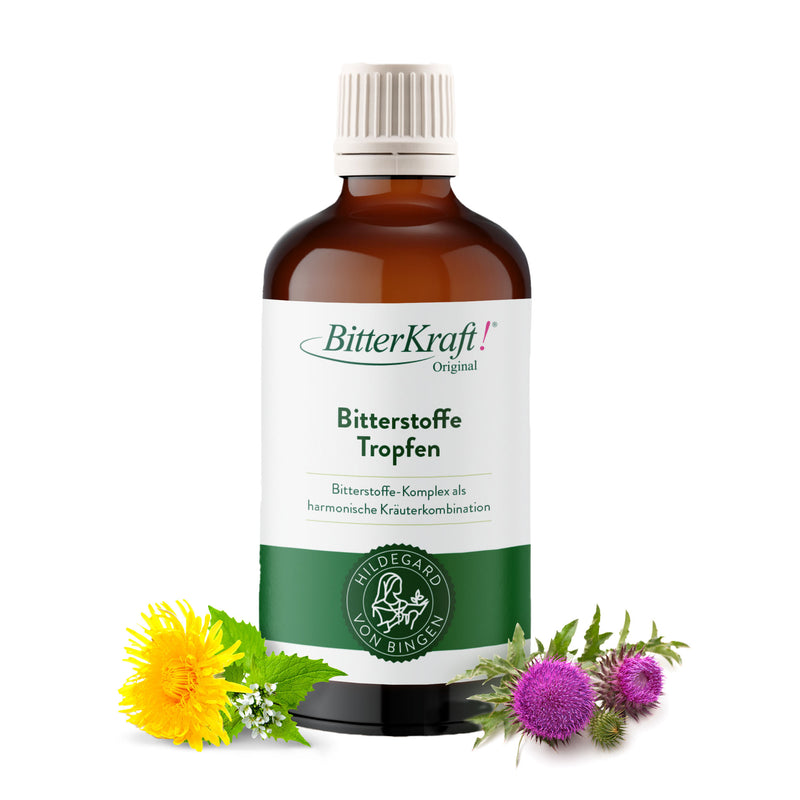
Hildegards Tipp:
- Wertvolle Bitterstoffe nach Hildegard Von Bingen
- Rezeptur auf Basis von 800 Jahren Klosterwissen
- Bitterkraft – der Pionier seit 1996 von 4.000 Heilpraktikern verwendet!
- Beste Naturheilkunde: Bio & vegan
Hildegard von Bingen Rezepte in der Physica
In der Physica nennt Hildegard in der Regel einzelne Pflanzen, die sie als kalt bis warm charakterisiert sowie beschreibt. Darauf folgen Anweisungen zur Anwendung beziehungsweise Zubereitung. Den für sie so wichtigen Dinkel nennt sie hier übrigens bei seinem Alternativnamen Spelze. Im Abschnitt 5 gibt sie dem Dinkel das Attribut „warm“ und lobt ihn als beste Körnerfrucht. Er sei fett und kräftig sowie angenehmer als die anderen Getreidesorten. Ein spezielles Rezept gibt sie an dieser Stelle jedoch nicht an. Wer aber zu schwach zum Essen ist, soll ein Getränk aus gekochtem Dinkel mit Eigelb zu sich nehmen.
Anders sieht das beim Ingwergewächs Galgant aus. Hier empfiehlt sie gegen Mundgeruch ein Pulver aus Galgant und Fenchel zu gleichen Teilen, das mit doppelt so viel Muskat wie Bertramwurzel gewürzt wird. Die Mischung wird mit Brot gereicht und von warmem Wein nachfolgend begleitet. Galgant und Bertram gehören zu den typischen, heute fast vergessenen Gewürzpflanzen in den Rezepten der Hildegard von Bingen.
Dazu kommt als drittes, sehr wichtiges Gewürz der ebenso selten gewordene Quendel. Ihn jedoch können wir mit dem lateinischen Namen schon leichter einordnen. Der lautet nämlich Thymus serpyllum und verweist auf die Thymiane. Während wir aber in der Regel Echten Thymian (Thymus vulgaris L.) in der Küche haben, wird der Quendel Hildegards heute auch Wilder Thymian, Feld-Thymian oder Sand-Thymian genannt.
Hildegard von Bingen Rezepte in der Causae et curae
Die zweite Quelle für Hildegard von Bingen Rezepte ist ihre Heilkunde-Lehre Causae et curae. Dort beschäftigt sie sich im 3. und 4. Buch nach aktueller Einteilung mit Rezepten. In der Causae et curae stehen allerdings nicht die Zutaten am Anfang, sondern die Symptome oder Leiden, gegen die sie helfen sollen.
Bei stechenden Schmerzen in der Seite beispielsweise verordnet Hildegard von Bingen Salbei, Arnica und Raute im Verhältnis 1:1:10. Die Kräuter sollen aufgekocht und dann ausgedrückt werden, um sie auf die schmerzende Stelle zu legen.
Die Raute, Weinraute oder Gartenraute ist ein weiteres Kraut, das trotz seines hohen Gehaltes an ätherischen Ölen, Cumarinen, Chinolinalkaloiden und Flavonoiden heute kaum noch verwendet wird.
Ein weiteres Hildegard von Bingen Rezept soll gegen Leberbeschwerden infolge einer zu reichhaltigen Ernährung helfen. Dafür zerkleinert man einen Teil Huflattich und zwei Teile Wegerichwurzel so, dass sich die Kräuter noch durchbohren lassen. Durch sie werden die Blätter einer Birnmistel gezogen. Das Ganze wird zusammen mit dem Teil eines Nussblattes oder -zweiges in Wein eingelegt, der vor oder nach dem Frühstück getrunken wird.
Vergangenes lässt sich nicht immer in die Gegenwart transportieren
An diesem Rezept-Beispiel zeigen sich einige Merkmale, die nicht unerwähnt bleiben sollen: Manche Zutaten wie Birnmistel, die in Hildegard von Bingen Rezepten stehen, sind heute nur noch schwer identifizierbar. Einige Anweisungen, wie zerkleinerte Kräuter zu durchbohren, um Blätter durch sie zu ziehen, sind nicht leicht nachvollziehbar. Zudem schließlich sind manche Zutaten wie Wein bei Leberleiden nach heutigem Kenntnisstand weniger hilfreich.
Moderne Hildegard von Bingen Rezepte
Andererseits wird dabei übersehen, dass es nicht einzelne Zutaten sind, die den Wert von Hildegard von Bingen Rezepten ausmachen, sondern das ganzheitliche Menschenbild und die Naturlehre, die dahinterstehen. Daher haben sich mittlerweile Hildegard von Bingen Rezepte etabliert, die den Intentionen der Heiligen folgen und leicht umsetzbar sind sowie in die moderne Küche passen. Ein Beispiel dafür ist ein Dinkel-Risotto, das neben Curcuma auch Galgant enthält und als Reisersatz Kernotto oder Dinkelreis beziehungsweise Dinkel ohne Schale verwendet.

Über den Autor Henrik Aulbach
Weitere Artikel
Magenbitterstoffe vor dem Essen: Warum die Reihenfolge entscheidend ist
Magenbitterstoffe vor dem Essen » Nach Hildegard von Bingen ✓ Ohne Zusatzstoffe ✓ Made in Germany – Jetzt mehr erfahren
Bitterstoffreiche Smoothies: Grüne Rezepte für den Verdauungsstart am Morgen
Bitterstoff-Smoothies für den Morgen » Nach Hildegard von Bingen ✓ Vegan ✓ Ohne Zusatzstoffe – Jetzt Rezepte entdecken!
Hildegard von Bingens Dinkelrezepte für eine gesunde Verdauung
Hildegard von Bingens Dinkelrezepte » Nach Hildegard von Bingen ✓ Ohne Zusatzstoffe ✓ Biozertifiziert – Jetzt entdecken