

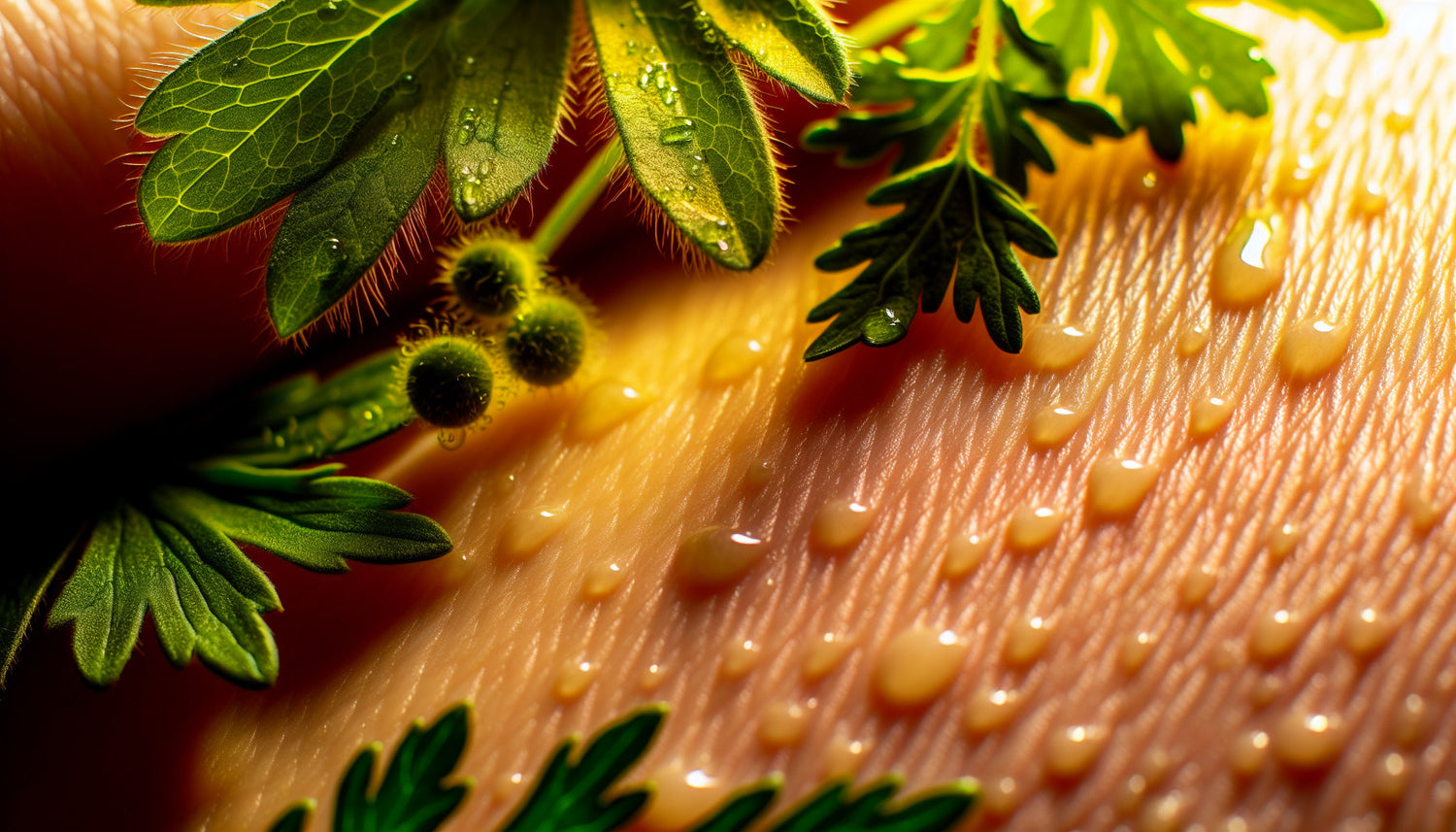
Die Haut ist unser größtes Organ und Heimat für Millionen von Mikroorganismen, die das komplexe Hautmikrobiom bilden. In der modernen Forschung entdecken Wissenschaftler faszinierende Verbindungen zwischen Bitterstoffen und der Haut, die bereits Hildegard von Bingen in ihren Schriften andeutete. Die sogenannten T2R-Rezeptoren, ursprünglich als Geschmacksrezeptoren für bittere Substanzen bekannt, finden sich nicht nur auf der Zunge, sondern auch in der Haut und können dort überraschende Funktionen erfüllen.
📋 Inhaltsverzeichnis
Das Hautmikrobiom: Ein komplexes Ökosystem im Gleichgewicht
Unsere Haut beherbergt eine einzigartige Gemeinschaft aus Bakterien, Pilzen und anderen Mikroorganismen, die in einem sensiblen Gleichgewicht zusammenleben. Dieses Hautmikrobiom variiert je nach Körperregion, Alter und individuellen Faktoren. Die Hautflora bildet ein komplexes Ökosystem, das zur Aufrechterhaltung des Säureschutzmantels beiträgt.
Schon Hildegard von Bingen erkannte die Bedeutung des äußeren Gleichgewichts für das innere Wohlbefinden. In ihren Schriften beschreibt sie, wie bestimmte Kräuter und Pflanzen traditionell zur Pflege der Haut verwendet wurden. Besonders bitter schmeckende Heilpflanzen wie Wermut, Enzian oder Schafgarbe fanden in der mittelalterlichen Klostermedizin nicht nur innerlich, sondern auch äußerlich Anwendung.
Moderne wissenschaftliche Erkenntnisse bestätigen zunehmend die Weisheit der traditionellen Heilkunde. Das Hautmikrobiom beeinflusst nicht nur lokale Hautprozesse, sondern steht auch in Verbindung mit dem Immunsystem-Produkte und kann das allgemeine Wohlbefinden unterstützen. Ein ausgewogenes Hautmikrobiom wird traditionell mit einer gesunden, widerstandsfähigen Haut in Verbindung gebracht.
T2R-Rezeptoren: Bitterstoff-Sensoren in der Haut
Die Entdeckung von T2R-Rezeptoren in der Haut revolutionierte das Verständnis dafür, wie Bitterstoffe über den Geschmackssinn hinaus wirken können. Diese speziellen Rezeptoren, die ursprünglich zur Erkennung bitterer Geschmäcker dienten, kommen in verschiedenen Hautschichten vor und können auf eine Vielzahl von Bitterstoffen reagieren.
Forschungen zeigen, dass T2R-Rezeptoren in Hautzellen unterschiedliche Signalwege aktivieren können. Diese Rezeptoren sind nicht nur in den oberen Hautschichten zu finden, sondern auch in Haarfollikeln und Talgdrüsen. Wissenschaftliche Studien haben ergeben, dass die Aktivierung dieser Rezeptoren körpereigene antimikrobielle Peptide anregen kann - ein faszinierender Mechanismus der Hautbiologie.
Die Vielfalt der T2R-Rezeptoren in der Haut ist bemerkenswert. Verschiedene Subtypen reagieren auf unterschiedliche Bitterstoffklassen, was erklärt, warum traditionell verschiedene Bitterpflanzen für unterschiedliche Hautanwendungen geschätzt wurden. Diese Erkenntnis verbindet moderne Wissenschaft mit dem jahrhundertealten Wissen um die BitterKraft Original und ihre vielseitigen Anwendungsmöglichkeiten.
Einfluss von Bitterstoffen auf die Hautflora
Die Interaktion zwischen Bitterstoffen und dem Hautmikrobiom eröffnet faszinierende Perspektiven für das Verständnis natürlicher Hautpflege. Bitterstoffe werden traditionell zur Hautpflege verwendet und oft selektiv eingesetzt – verschiedene Bitterstoffverbindungen können unterschiedliche Effekte auf die Hautmikrobiota haben.
Hildegard von Bingen beschrieb bereits die reinigende Wirkung bitterer Kräuter und ihre Fähigkeit, die Haut zu klären. Moderne Studien zeigen, dass verschiedene Bitterstoffverbindungen das Mikrobiom der Haut beeinflussen können. Besonders interessant ist die Beobachtung, dass manche Bitterstoffe traditionell für ihre ausgleichenden Eigenschaften auf die Hautflora geschätzt werden.
Die Aktivierung von T2R-Rezeptoren durch Bitterstoffe ist ein aktives Forschungsgebiet. Diese natürlichen Prozesse sind Teil der komplexen Hautbiologie und können das Hautmilieu beeinflussen. Dieser Mechanismus könnte erklären, warum bitterstoffreiche Pflanzenextrakte seit Jahrhunderten in der traditionellen Hautpflege geschätzt werden.
Praktische Anwendung: Bitterstoffe in der natürlichen Hautpflege
Die Integration von Bitterstoffen in die tägliche Hautpflege kann auf verschiedene Weise erfolgen. Traditionell wurden bittere Heilpflanzen wie Wermut, Enzian oder Tausendgüldenkraut als Aufgüsse oder Tinkturen für äußerliche Anwendungen zubereitet. Diese jahrhundertealten Rezepturen basieren auf der Erfahrung, dass BitterKraft Original nicht nur innerlich, sondern auch äußerlich das Wohlbefinden unterstützen können.
Modern interpretiert können bitterstoffreiche Pflanzenextrakte in Form von Gesichtswässern, Kompressen oder sanften Reinigungslotionen verwendet werden. Wichtig ist dabei die richtige Konzentration und Anwendungsweise, da Bitterstoffe potent wirksam sind und bei empfindlicher Haut zunächst in verdünnter Form getestet werden sollten.
Eine ganzheitliche Betrachtung verbindet die äußerliche Anwendung mit der innerlichen Aufnahme von Bitterstoffen. Wie Hildegard von Bingen lehrte, hängen inneres und äußeres Gleichgewicht eng zusammen. Die Unterstützung des Darm- und Verdauungsprodukte durch Bitterstoffe wird traditionell geschätzt, da Haut und Darm über die sogenannte Darm-Haut-Achse miteinander verbunden sind. Eine ausgewogene Ernährung mit natürlichen Bitterstoffen kann somit das Wohlbefinden von innen heraus unterstützen.
🤖 Das Beitragsbild dieses Artikels wurde mit DALL·E 3 (OpenAI) mithilfe von Künstlicher Intelligenz generiert (gemäß EU AI Act Art. 50 gekennzeichnet).

Hinterlasse einen Kommentar
Diese Website ist durch hCaptcha geschützt und es gelten die allgemeinen Geschäftsbedingungen und Datenschutzbestimmungen von hCaptcha.