

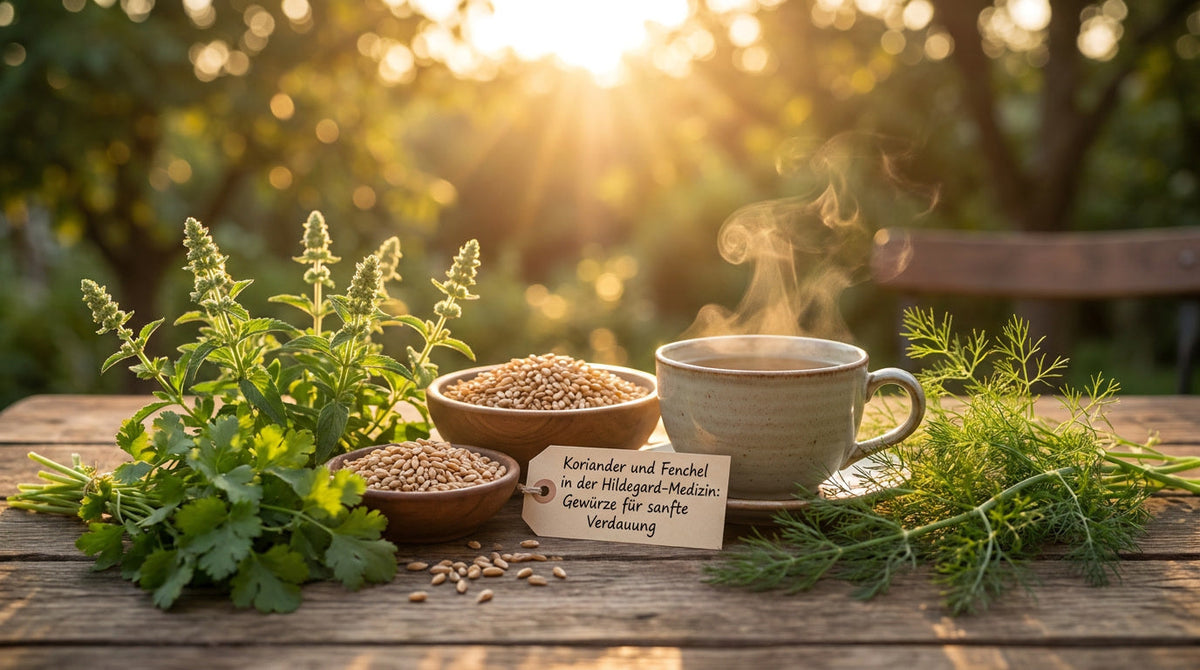
Hildegard von Bingen – Äbtissin, Mystikerin und eine der bedeutendsten Heilkundigen des Mittelalters – hat der Nachwelt ein erstaunlich umfassendes Wissen über Ernährung, Pflanzen und den Umgang mit dem menschlichen Körper hinterlassen. Ihre im 12. Jahrhundert niedergeschriebenen Erkenntnisse erfahren heute eine bemerkenswerte Renaissance: Immer mehr Menschen, die auf der Suche nach ganzheitlichen Wegen zu einem gesunden Körpergewicht sind, entdecken die Prinzipien der Hildegard-Medizin neu. Was damals in Klostermauern gelehrt wurde, klingt in manchem überraschend modern – und es lohnt sich, genauer hinzuschauen, was diese traditionsreiche Ernährungslehre wirklich ausmacht.
Was Hildegard von Bingen über Ernährung und Gewicht lehrte
Hildegard von Bingen entwickelte kein simples Diätprogramm, sondern eine ganzheitliche Sichtweise auf den Menschen, die Körper, Geist und Seele als untrennbare Einheit betrachtete. In ihren Hauptwerken Physica und Causae et Curae beschrieb sie detailliert, welche Lebensmittel dem Menschen zuträglich sind und welche als schwer oder schädlich galten. Im Mittelpunkt stand dabei der Begriff der Viriditas – der „grünen Kraft" – als Ausdruck von Lebendigkeit und Vitalität, die durch die richtige Ernährung erhalten und gestärkt werden sollte.
Übergewicht betrachtete Hildegard nicht als reine Frage der Kalorienmenge. In ihrer Lehre spielten die sogenannten Säfte – angelehnt an die antike Humoralpathologie – eine zentrale Rolle. Ein Ungleichgewicht dieser Säfte, besonders das Überwiegen des Phlegma (des zähen, schleimigen Körpersaftes), galt als mitverantwortlich für Schwere, Trägheit und das Ansammeln von überflüssiger Körpersubstanz. Die Ernährung sollte daher so gestaltet sein, dass sie dieses Gleichgewicht wiederherstellt und die natürliche Leichtigkeit des Körpers fördert.
Besonderes Augenmerk legte Hildegard auf die Qualität der Speisen. Sie unterschied sorgfältig zwischen Lebensmitteln, die sie als „gut", „mittelmäßig" oder „schlecht" für den Menschen einstufte – eine Kategorisierung, die zwar nicht mit moderner Ernährungswissenschaft gleichzusetzen ist, aber erstaunlich kohärente Prinzipien erkennen lässt: Vollkorngetreide, bestimmte Kräuter, frisches Gemüse und hochwertiges Fleisch wurden bevorzugt, während blähende, schwerverdauliche oder stark verarbeitete Speisen gemieden werden sollten. Hildegard von Bingen Produkte
Hildegards Ernährungslehre basiert nicht auf Kalorienzählen, sondern auf der Idee des inneren Gleichgewichts: Die richtige Auswahl an Lebensmitteln und die bewusste Rhythmisierung der Mahlzeiten galten als Schlüssel zu einem ausgeglichenen Körpergewicht.
Die wichtigsten Ernährungsprinzipien der Hildegard-Küche
Das vielleicht bekannteste Element der Hildegard-Ernährung ist die Dinkelküche. Dinkel – von Hildegard als das beste aller Getreide gepriesen – stand im Zentrum ihrer Empfehlungen. In Physica schrieb sie: „Der Dinkel ist das beste Getreide, warm und fett, kräftig und milder als alle anderen Getreidesorten." Diese Wertschätzung für Dinkel als Grundnahrungsmittel bildet bis heute das Fundament der nach ihr benannten Ernährungsweise. Dinkel in Form von Brot, Brei, Suppe oder Gebäck ist fester Bestandteil jeder klassischen Hildegard-Gewichtskur.
Ein weiteres zentrales Prinzip ist der bewusste Umgang mit Genussmitteln und tierischen Produkten. Hildegard empfahl bestimmte Fleischsorten – vor allem Geflügel und Lamm – als gut verträglich, während sie Schweinefleisch eher kritisch betrachtete. Fisch, insbesondere bestimmte Süßwasserfische, wurde ebenfalls als wertvoll eingestuft. Süßspeisen sollten mit Maß genossen werden; statt raffiniertem Zucker empfahl die mittelalterliche Äbtissin natürliche Süße aus Früchten oder Honig. Dieses Bewusstsein für die Qualität der Zutaten ist ein Grundpfeiler, der sich verblüffend gut in das heutige Denken über vollwertige Ernährung einfügt.
Kräuter und Gewürze spielten in Hildegards Küche eine herausragende Rolle – nicht nur als Geschmacksträger, sondern als essenzieller Bestandteil einer gesunden Ernährungsweise. Galanga (Galgant), Bertram, Fenchel, Quendel und Gewürznelken gehörten zu ihren Lieblingsgewürzen, die sie in der Klostermedizin seit Jahrhunderten traditionell verwendete. Diese Kräuter verliehen den Speisen nicht nur Aroma, sondern wurden als wertvoller Beitrag zu einer ausgewogenen Ernährungsroutine betrachtet. BitterKraft Original
Die fünf Säulen der Hildegard-Ernährung im Überblick:
1. Dinkel als Grundnahrungsmittel – in möglichst naturbelassener, vollwertiger Form
2. Frisches Gemüse und Kräuter – saisonal, regional, reich an natürlichen Vitalstoffen
3. Maßvoller Umgang mit Fleisch und Fisch – Qualität vor Quantität
4. Bitterkräuter und Gewürze – als fester Bestandteil jeder Mahlzeit
5. Rhythmus und Mäßigung – regelmäßige Mahlzeiten, keine Völlerei
Die Bedeutung von Rhythmus und Mäßigung kann im Kontext der Hildegard-Lehre nicht genug betont werden. Hildegard war überzeugt, dass nicht nur was man isst, sondern auch wann und wie viel man isst, entscheidend für das körperliche Wohlbefinden ist. Sie empfahl, in Ruhe und Dankbarkeit zu essen, keine übermäßig großen Mahlzeiten zu sich zu nehmen und dem Körper ausreichend Zeit zur Erholung zwischen den Mahlzeiten zu gönnen. Dieses Konzept erinnert frappierend an moderne Ansätze wie das Intervallfasten.
Das Hildegard-Fastenkonzept: Reinigung mit Tradition
Fasten hatte im mittelalterlichen Klosterleben eine tiefe spirituelle und körperliche Bedeutung. Hildegard von Bingen integrierte das Fasten als wesentliches Element ihrer Heilkonzepte und betrachtete es als Möglichkeit, den Körper von angesammelten Schlacken zu befreien und das innere Gleichgewicht wiederherzustellen. Ihr Fastenkonzept ist dabei deutlich sanfter und pflanzenbasierter als viele moderne Fastenformen – es geht nicht um radikalen Nahrungsentzug, sondern um gezielte Vereinfachung und Bewusstheit im Umgang mit Speisen. Fasten-Produkte
Das klassische Hildegard-Fasten dauert traditionell zwischen drei und vierzig Tagen, wobei ein- bis zweiwöchige Kuren für Einsteiger als geeignet gelten. Während dieser Zeit werden Genussmittel wie Alkohol, Kaffee, Fleisch und stark verarbeitete Lebensmittel gemieden. Der Speiseplan basiert auf leichten, gut verträglichen Speisen: Dinkelsuppen, gedünstetes Gemüse, Kräutertees und bestimmte Früchte stehen im Vordergrund. Diese Reduktion auf das Wesentliche soll dem Körper Raum geben, sich zu regenerieren und neue Energie zu tanken.
Ein besonderes Merkmal des Hildegard-Fastens ist die Einbindung von Bitterstoffen. In der Klostermedizin wurden Bitterkräuter seit Jahrhunderten traditionell verwendet, um die Fastenzeit zu begleiten und das Wohlbefinden in dieser besonderen Phase zu unterstützen. Hildegard selbst beschrieb mehrere Heilpflanzen mit bitterem Charakter, die in Tees, Tinkturen oder als frische Kräuter eingesetzt wurden. Heute weiß man, dass Bitterstoffe aus pflanzlichen Quellen eine lange Geschichte in der europäischen Kräutertradition haben und in vielen traditionellen Systemen hochgeschätzt werden. BitterKraft Original
„Das Fasten soll nicht zur Qual werden, sondern zur Besinnung. Wer mit Maß und Achtsamkeit fastet, dem tut es wohl an Leib und Seele." – Sinngemäß aus den Schriften Hildegards von Bingen, 12. Jahrhundert
Die spirituelle Dimension des Fastens sollte auch in einer modernen Interpretation nicht vergessen werden. Hildegard verstand Fasten als ganzheitliche Praxis: Stille, Gebet, Naturbeobachtung und bewusste Entschleunigung gehörten ebenso dazu wie die Auswahl der Speisen. Diese Verbindung von Körper und Geist ist ein Aspekt, der in hektischen Zeiten besonders wertvoll erscheint und dem Fastenkonzept eine Tiefe verleiht, die über reine Ernährungsfragen hinausgeht.
Hildegards Bitterkräuter: Schätze der Klostermedizin für die Gewichtskur
Kein anderes Element der Hildegard-Medizin ist so charakteristisch und gleichzeitig so modern wiederentdeckt worden wie die Verwendung von Bitterkräutern. In ihrer Physica beschrieb Hildegard von Bingen eine Vielzahl von Pflanzen mit bitteren Eigenschaften, die in der mittelalterlichen Klostermedizin eine wichtige Rolle spielten. Diese Kräuter wurden nicht nur in der Küche verwendet, sondern auch als Tees, Tinkturen und in speziellen Zubereitungen eingesetzt – und sind bis heute ein wesentlicher Bestandteil der nach ihr benannten Ernährungs- und Fastenkuren. Hildegard von Bingen Produkte
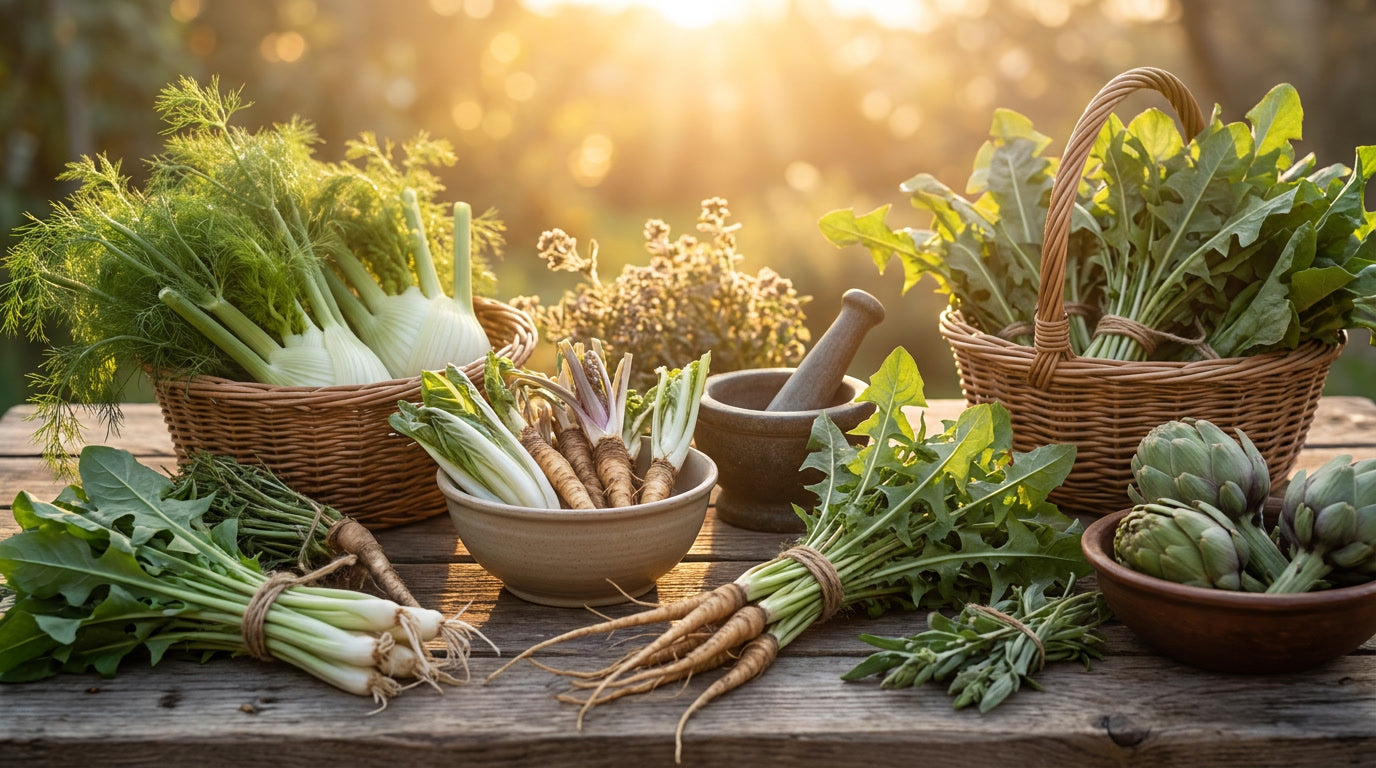
Besonders hervorzuheben ist der sogenannte Galgant (Alpinia officinarum), dem Hildegard eine außerordentliche Wertschätzung entgegenbrachte. Sie bezeichnete ihn als das „Gewürz des Lebens" und empfahl ihn in verschiedensten Zubereitungsformen. Auch Wermutkraut, Löwenzahn, Schafgarbe und Enzian finden sich in ihrer überlieferten Kräuterlehre – allesamt Pflanzen, die in der europäischen Kräutertradition seit Jahrhunderten für ihre besonderen Eigenschaften bekannt sind und in der Naturheilkunde bis heute einen festen Platz einnehmen. BitterKraft Original
Im Kontext einer Gewichtskur nach Hildegard werden Bitterkräuter oft in Form von Kräutertees vor den Mahlzeiten eingesetzt. Diese traditionelle Praxis hat sich in der Klostermedizin über Generationen gehalten und erlebt heute eine Renaissance unter Menschen, die naturnahe Methoden zur Unterstützung ihres Wohlbefindens suchen. Die Kombination aus Fasten, Dinkelküche und gezieltem Einsatz von Bitterkräutern bildet das Herzstück der Hildegard-Gewichtskur.
Diese Bitterkräuter sind traditionell in der Hildegard-Medizin geschätzt:
- Galgant (Alpinia officinarum): In der Hildegard-Medizin als „Gewürz des Lebens" bezeichnet – wird seit Jahrhunderten traditionell als Gewürz und in Kräuterzubereitungen verwendet.
- Wermutkraut (Artemisia absinthium): Historisch eines der bedeutendsten Bitterkräuter der europäischen Klostermedizin; traditionell in Kräutertees und Tinkturen eingesetzt.
- Löwenzahn (Taraxacum officinale): In der Volksmedizin seit Jahrhunderten bekannt; Blätter und Wurzel werden traditionell als Bestandteil von Kräuterkuren verwendet.
- Schafgarbe (Achillea millefolium): Historisch in der Klostermedizin vielfältig eingesetzt; zählt zu den ältesten Heilkräutern Europas und ist für seinen charakteristischen Bittergeschmack bekannt.
- Enzian (Gentiana lutea): Gilt als eines der intensivsten Bitterkräuter der alpinen Kräutertradition und wird seit Jahrhunderten in verschiedenen traditionellen Systemen geschätzt.
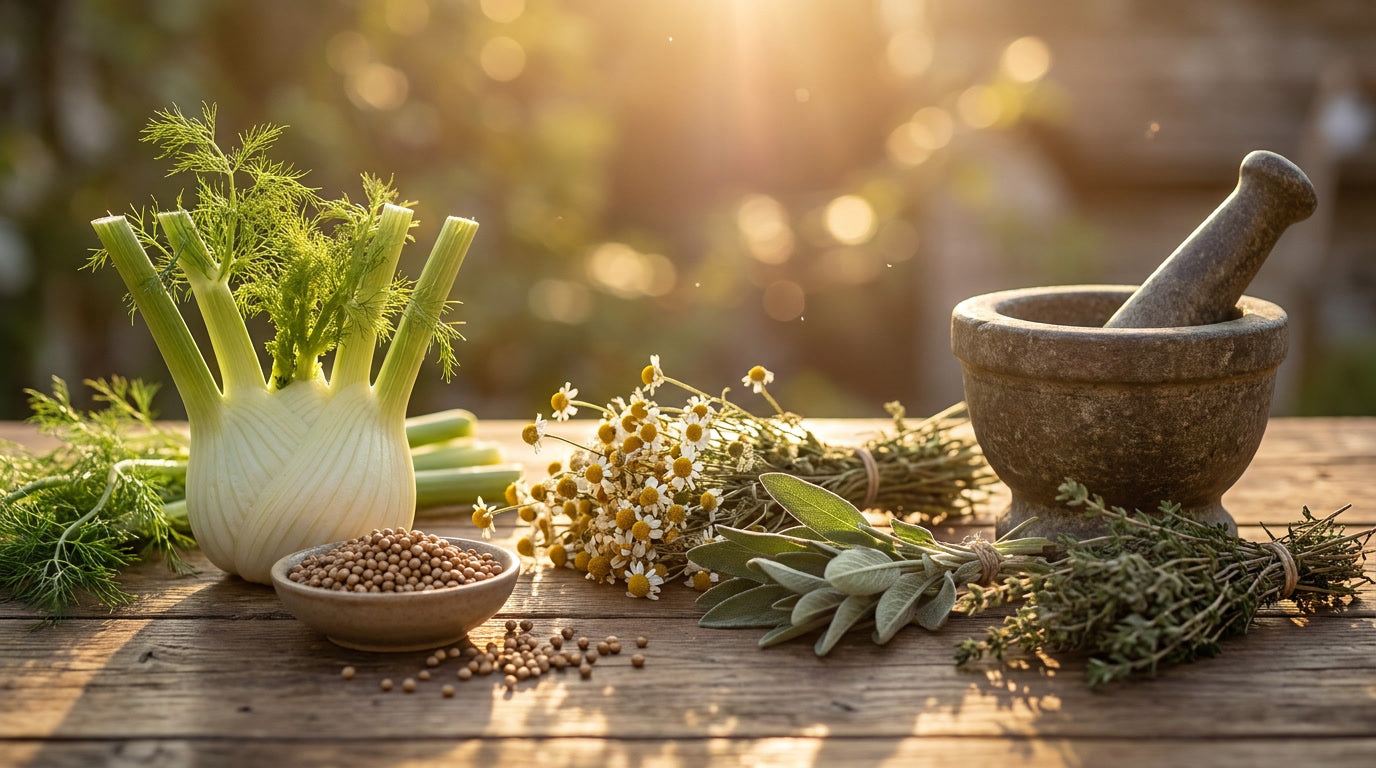
- Fenchel (Foeniculum vulgare): Von Hildegard ausdrücklich empfohlen; Samen, Kraut und Wurzel finden traditionell in der Kräuterküche und als Tee Verwendung.
Bitterkräuter sind ein unverzichtbarer Bestandteil der Hildegard-Gewichtskur: In der Klostermedizin wurden sie seit Jahrhunderten traditionell eingesetzt und begleiten auch heute viele Menschen bei ihrem Weg zu mehr Wohlbefinden und innerer Balance.
So gelingt der Einstieg in die Hildegard-Gewichtskur im Alltag
Eine Hildegard-Gewichtskur muss nicht mit einem radikalen Bruch mit dem bisherigen Leben beginnen. Gerade für Einsteiger empfiehlt es sich, schrittweise vorzugehen und zunächst einzelne Prinzipien in den Alltag zu integrieren. Ein guter Anfang ist die Umstellung des Frühstücks: Ein warmer Dinkelbrei mit frischen Früchten und einem Hauch Zimt oder Ingwer ist nicht nur nahrhaft, sondern entspricht perfekt dem Hildegard-Prinzip der sanften, wärmenden Morgenkost. Dazu ein Tässchen Kräutertee – und der erste Schritt ist getan.
Wer die Kur intensiver angehen möchte, kann einen klassischen Hildegard-Fastentag pro Woche einlegen. An diesem Tag wird die Ernährung bewusst vereinfacht: Dinkelsuppe zum Mittag, Gemüsebrühe am Abend, dazwischen Kräutertees auf Basis von Hildegards traditionsreichen Rezepturen. Dieser rhythmische Wechsel zwischen normalen Ernährungstagen und vereinfachten Fastentagen entspricht dem Grundprinzip der Mäßigung, das Hildegard so am Herzen lag. Viele Menschen berichten, dass schon nach wenigen Wochen ein verändertes Körpergefühl und eine neue Beziehung zu Essen entstehen. Fasten-Produkte
Praktische Tipps für den Einstieg in die Hildegard-Gewichtskur:
• Woche 1: Dinkel als Hauptgetreide einführen – Brot, Brei, Pasta aus Dinkelmehl
• Woche 2: Bitterkräutertee vor den Mahlzeiten als tägliches Ritual etablieren
• Woche 3: Einen Fastentag pro Woche einlegen – Dinkelsuppe, Gemüsebrühe, Kräutertee
• Laufend: Genussmittel reduzieren, Mahlzeiten in Ruhe einnehmen, Naturaufenthalte einplanen
Ebenso wichtig wie die Ernährung ist nach Hildegards Verständnis die Einbettung der Kur in einen sinnvollen Lebensrhythmus. Ausreichend Schlaf, tägliche Bewegung in der Natur und bewusste Ruhepausen gehörten für sie untrennbar zum gesunden Leben dazu. Wer eine Gewichtskur nach Hildegard von Bingen unternimmt, tut gut daran, auch diese Bereiche zu berücksichtigen – und die Zeit der Kur als Möglichkeit zur Entschleunigung und Reflexion zu nutzen. Schlaf- und Entspannungsprodukte
Für alle, die tiefer in die Welt der Hildegard-Medizin eintauchen möchten, bieten spezialisierte Naturheilkunde-Angebote eine wertvolle Unterstützung: Von traditionellen Kräuterpräparaten nach überlieferten Rezepturen bis hin zu Dinkel-Produkten und hochwertigen Bitterstoff-Komplexen gibt es heute eine Vielzahl von Möglichkeiten, die Weisheit der mittelalterlichen Äbtissin in den modernen Alltag zu integrieren. Die wichtigste Zutat bleibt dabei dieselbe wie vor 900 Jahren: die Bereitschaft, bewusst zu leben und dem eigenen Körper zuzuhören. Hildegard von Bingen Produkte
Die Gewichtskur nach Hildegard von Bingen ist mehr als eine Diät – sie ist eine Einladung zu einem achtsamen, rhythmisierten Lebensstil, der Ernährung, Natur und innere Einkehr als untrennbare Einheit begreift.

Hinterlasse einen Kommentar
Diese Website ist durch hCaptcha geschützt und es gelten die allgemeinen Geschäftsbedingungen und Datenschutzbestimmungen von hCaptcha.