





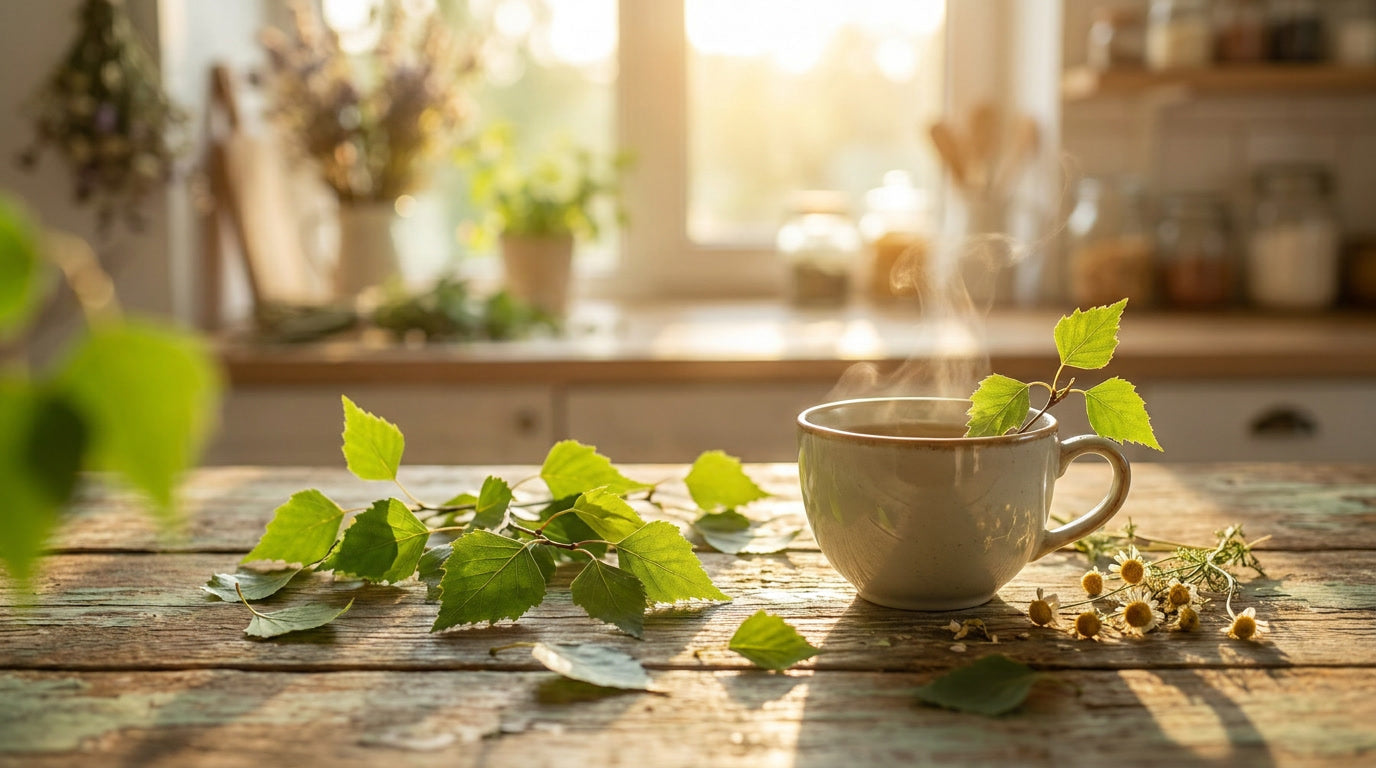
When the days grow longer and the first delicate leaves appear on the birch trees, one of the most beautiful seasons in natural medicine begins: the time of the spring cleanse. Hardly any herb is as closely associated with the fresh start after winter as the birch – especially its fresh, light green leaves. Birch leaf tea has been valued for centuries in European herbal tradition as a ritual accompanying the spring renewal, and its calm, slightly bitter taste perfectly matches the awakening nature. In this article, we delve into the history, ingredients, and traditional uses of this remarkable herb – and explain why Hildegard von Bingen and many other herbalists have repeatedly returned to the birch throughout the centuries.
The Birch in Natural Medicine: A Tree with a Long Tradition
The birch – Betula pendula – is probably one of the best-known trees in Central Europe. With its unmistakable white bark, delicate branches, and the bright rustling of its leaves in the wind, it is a symbol of spring and new beginnings. But the birch was not just an aesthetic natural spectacle: it was regarded in many cultures as a “tree of life” and considered a valuable medicinal plant in folk medicine from Scandinavia through Russia to the German-speaking countries. Already in ancient Germanic traditions, the birch appears as a symbol of fertility and purification.
In medieval monastic medicine, the birch was also highly valued. Hildegard von Bingen, the visionary abbess and natural healer of the 12th century, described the birch in her work “Physica” as a tree whose parts can be beneficial for human well-being. Her descriptions follow her typical concept of “Viriditas” – the green vitality that flows through nature and which humans can tap into through wise use of plants. The birch exemplifies this vitality perfectly: no other tree buds so early and so vigorously in the year. Hildegard von Bingen products
Particularly interesting is that in traditional use almost all parts of the birch were utilized – the bark, the sap, and especially the leaves. While birch sap was harvested directly from the tree in spring and regarded as an invigorating drink, herbal preparations focused on the fresh or dried leaves, which were brewed as tea. This birch leaf tea was especially consumed in spring when the body was considered particularly receptive to supportive herbal rituals after the long winter.
Hildegard von Bingen wrote in her “Physica” about the birch tree: “Birch is warm and has a certain dryness in it... and is useful to humans.” – This assessment from the 12th century shows how early the birch was established as a medicinal plant in European medical tradition.
Birch leaf tea also holds a firm place in Russian and Scandinavian folk medicine. In Finland, the birch is the national tree and symbolizes purity and strength. The use of birch branches in the sauna – known as “birch whisk” or Vihta – is just one of many cultural expressions of this deep connection between humans and the birch. Knowledge about the leaves was passed down from generation to generation, often by grandmothers who specifically collected the first fresh leaves in spring. Fasting products
What’s in the Leaves? The Key Ingredients of the Birch
The secret of birch leaf tea lies in its rich and complex composition. The leaves of the birch contain a remarkable variety of plant compounds that together form the traditional profile of this medicinal plant. Especially the young leaves harvested in spring are considered particularly rich – at a time when the plant channels all its energy into new growth.
The key ingredients of birch leaves:
Flavonoids (especially hyperoside and quercetin): These secondary plant compounds are present in birch in remarkably high concentrations. Flavonoids are indispensable in modern natural medicine and are used in numerous traditional herbal formulations.
Saponins: Birch leaves contain various triterpenoid saponins, which are characteristic components of the plant profile and have always been particularly emphasized in traditional contexts.
Tannins: They give the tea its slightly bitter, astringent taste and are typical for many traditionally used medicinal plants.
Essential oils: Present in small amounts, they contribute to the characteristic fresh-green scent of birch leaf tea.
Vitamin C: Especially present in fresh leaves, underscoring the tradition of spring harvest from a nutritional perspective.
Potassium salts: An important mineral component, frequently mentioned in the context of traditional diuretic use.
Particularly fascinating is the interplay of these ingredients. In phytotherapy, this is called the “ensemble effect”: the individual plant compounds do not act in isolation but in their natural combination as found in the living leaf. This is why natural medicine has historically relied on holistic plant preparations – whether as tea, tincture, or extract – rather than isolating single substances. The birch is a good example of how a seemingly simple leaf carries an impressive phytochemical complexity.
In traditional natural medicine, the natural potassium content of birch leaves was always described as an interesting feature of this plant – an aspect repeatedly mentioned in historical herbal literature. It is a beautiful example of how nature often holds an inner balance in its plant world that can benefit humans. all Bitterkraft products
Birch Leaf Tea as a Spring Ritual: Traditional Use and Preparation
The traditional use of birch leaf tea is closely linked to spring – and for good reason. In natural medicine and folk medicine of many European cultures, spring was considered the time when the body should undergo a kind of restart after winter. This was called the “spring cleanse” or “spring cure,” a ritual lasting several weeks in which certain herbs played a central role. Birch leaves were always among the first and most important companions. Fasting products
Birch leaf tea has been traditionally valued for centuries – as a plant traditionally called a spring “diuretic herb” in European natural medicine. Hardly any herb is as closely associated with the image of spring renewal as the birch.
Preparing the tea is very simple and follows a ritual that has hardly changed in its basic form over the centuries. For one cup of birch leaf tea, pour 250 ml of freshly boiled water over a heaping teaspoon (about 2–3 g) of dried birch leaves. Then let the tea steep for 10 to 15 minutes – somewhat longer than many other herbal teas to fully extract the ingredients. Then strain and enjoy calmly. In the traditional spring cleanse, the tea was often drunk two to three times daily over several weeks, usually between meals.
These traditional herbs complement birch leaf tea in the spring cleanse:
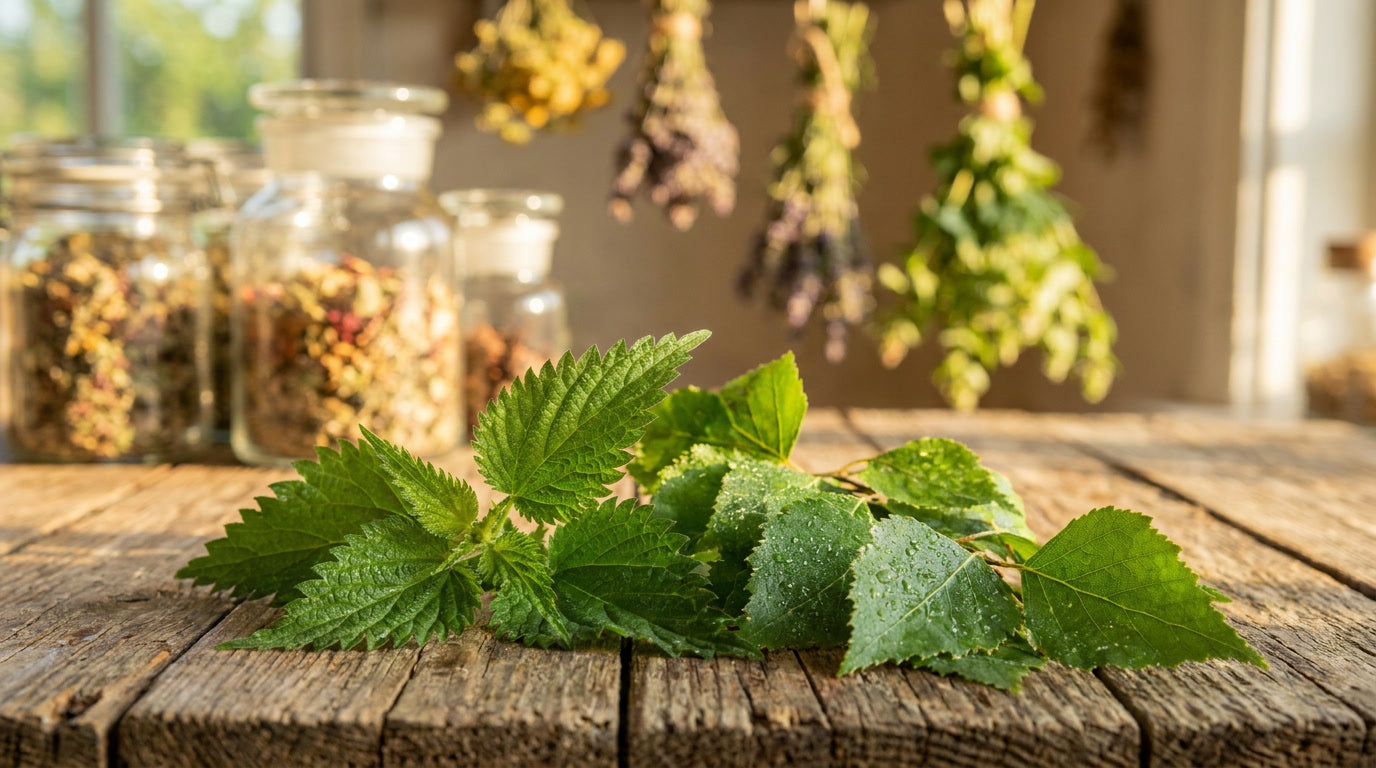
- Nettle: Known for centuries as a classic spring herb, nettle is traditionally used in the same season as birch leaves and is considered an ideal complement in a herbal spring combination.
- Dandelion: Historically called a “spring cleaning agent,” dandelion (root and leaf) is often mentioned together with birch leaves in traditional herbal medicine – especially in the context of liver and diuresis. Liver products from Bitterkraft
- Horsetail: In traditional herbal medicine, horsetail, rich in silica, is often combined with birch leaves and is considered a classic companion herb in mineral-rich spring blends.
- Elderflower: Known in folk medicine for its mild sweat- and diuretic effects, elderflower pairs well in taste and tradition with birch leaves, making the spring blend more aromatic and varied.
Besides the classic infusion as hot tea, there is also the option to prepare birch leaf tea cold: let the leaves steep overnight in cold water (so-called cold extraction), strain in the morning, and drink the herbal infusion throughout the day. This method preserves especially sensitive ingredients and delivers a milder, less bitter flavor profile. In the summer season, this makes for a refreshing herbal drink. Those who want to enhance the flavor can add a slice of lemon or a teaspoon of high-quality honey – without compromising the herbal character.
For the traditional spring cleanse, natural medicine recommends taking birch leaf tea daily as a ritual over a period of two to four weeks – preferably in the morning on an empty stomach or between meals to support general well-being during the spring season.
Collecting and Buying Birch Leaves Properly: Quality Makes the Difference
Those who want to collect birch leaves themselves should observe some important points. The ideal collection time is early spring – as soon as the leaves are fully unfolded but still young and light green. This is usually between April and May, depending on location and weather. At this time, the leaves are especially rich in valuable ingredients. Older, dark green summer leaves are much less suitable because their content of flavonoids and other plant compounds decreases with maturity.
The European Pharmacopoeia (Ph. Eur.) lists birch leaves (Betulae folium) as an official medicinal drug and sets clear quality standards – including a minimum flavonoid content of 1.5% (calculated as hyperoside). This standard is considered a quality benchmark for pharmaceutical-grade birch leaves in Europe.
When collecting, always harvest from clean, unpolluted locations – away from roads, industrial sites, and intensively farmed fields. Birches often grow at forest edges, in parks, or on natural meadows. Never harvest more than one-third of the leaves from a single branch to avoid harming the tree. Freshly harvested leaves should be dried as quickly and gently as possible – at room temperature or at a maximum of 40 degrees Celsius in the oven – to preserve the sensitive ingredients. Properly dried and stored in the dark, birch leaves can last up to a year.
Those who cannot collect themselves – or want to be sure about quality and purity – should opt for certified controlled products from natural medicine specialty stores. Look for the following quality features: organic certification (e.g., according to EU organic regulation), precise botanical name (Betula pendula or Betula pubescens), indication of harvest time or year, and preferably gentle drying methods. Ethanolic extracts or standardized dry extracts in capsule form can be a practical alternative to classic tea when on the go or to avoid the effort of tea preparation. all Bitterkraft products
Quality is not only determined by organic certification when buying birch leaves but also by the harvest time: only spring leaves from the first harvest contain the full concentration of flavonoids – this should be indicated on the package.
Birch Leaf Tea in Context: Complementing a Conscious Lifestyle
As effective as birch leaf tea is in its long tradition, it unfolds its full effect in the context of an overall conscious and nature-connected lifestyle. In natural medicine, the holistic approach is emphasized: no single herb alone can achieve what a balanced interplay of nutrition, exercise, sleep, and stress reduction can. Birch leaf tea is a wonderful companion and ritual anchor – but not a cure-all.
Birch leaf therapy fits especially well with a light, vegetable-rich spring diet. Those who simultaneously avoid heavy, fatty foods and alcohol provide their body with optimal conditions for a traditional spring cleanse. Sufficient exercise in fresh air – preferably where birches grow – completes the ritual. Many people report that the conscious ritual of daily tea drinking alone has a meditative, calming quality that contributes to overall well-being. Immune system products
In the context of Hildegard’s medical philosophy, one would say it is about the principle of “order” – the Latin ordo, which was a central health principle for Hildegard. The body needs rhythm, regularity, and conscious use of natural forces. In this sense, birch leaf tea is not just a drink but an expression of an attitude: the willingness to adapt to the rhythm of the seasons and to use spring as an opportunity for renewal. This wisdom is timeless – and perhaps more important than ever in our fast-paced world detached from the seasons. Hildegard von Bingen products
Finally, an important group of people should be noted: those with known kidney diseases or undergoing diuretic therapy should consult a doctor or naturopath before using birch leaf tea. The same applies to pregnant and breastfeeding women as well as people who regularly take medication. Birch leaf tea is a traditional natural remedy, not a substitute for medical treatment – and like all medicinal plants, it deserves informed, conscious use. Those who observe these principles can integrate birch leaf tea as an enriching spring ritual into their routine and benefit from knowledge that Europe has gathered and preserved over many centuries. all Bitterkraft products


Leave a comment
This site is protected by hCaptcha and the hCaptcha Privacy Policy and Terms of Service apply.