





Who doesn’t know it: You wake up in the morning, look in the mirror, and notice a slightly swollen face, puffy eyelids, or bloated hands—even though you actually had enough sleep. This phenomenon is widespread and causes confusion for many people. However, it is not a bad omen but a fascinating interplay of sleep phases, hormones, body position, and the natural water balance. In naturopathy—and especially in the rich experience of monastic medicine—these processes have always been carefully observed and accompanied by herbal knowledge. This article explains why morning water retention occurs, what the body actually does during the night, and which traditional remedies can help you start the day feeling fresher.
What happens to the water balance during sleep?
The human body consists of about 60 percent water—and this proportion is not a static pool but a constantly flowing system. During the day, fluids are continuously redistributed depending on activity, temperature, diet, and hormone levels. At night, however, the starting conditions change fundamentally: the body lies flat, gravity acts evenly, and many of the regulatory mechanisms active during the day reduce their intensity.
Particularly interesting is the role of the so-called antidiuretic hormone (ADH), also called vasopressin. This hormone is released more at night and signals the kidneys to excrete less water. This is evolutionarily sensible: the sleeping person should not be disturbed by frequent urination. As a result, more fluid remains in the body than during the day—and this fluid has to go somewhere. It distributes into the tissues, especially in loose areas like the face, eyelids, and hands.
Added to this is the changed body position. When lying down, the pressure in the blood vessels and lymphatic system is distributed differently than when standing. Fluid that during the day pooled in the legs due to gravity moves back into circulation at night and is redistributed in the tissues. Those who had swollen ankles in the evening often find them gone in the morning—but the face appears a bit fuller. This is not a sign of illness but the normal nightly balancing of the fluid balance.
In Hildegard medicine, nighttime rest was always seen as a time of inner cleansing and renewal. Hildegard of Bingen described sleep as a phase in which the body regenerates its “Viriditas”—its life force. Although the healer of that time did not know modern hormone terms, she intuitively recognized that the body follows different laws at night than during the day. Hildegard von Bingen products
Why some people experience more pronounced morning puffiness
Not everyone wakes up equally puffy. For some, the morning swelling is barely noticeable; for others, it is pronounced and bothersome. These differences have several closely linked causes. One of the most important factors is the diet the evening before—especially salt intake.
Sodium binds water in the tissues. Those who eat salty foods in the evening—whether processed foods, ready meals, salted snacks, or certain sauces—signal the body to retain more water. This fluid accumulates in the tissues overnight and appears as visible swelling in the morning. The same applies to alcohol: it initially inhibits ADH release (leading to frequent urination) but then triggers a counter-reaction in which the body hoards fluid—the classic “puffy face” after an evening with wine.
Sleep position and sleep quality also play a role. Sleeping on the stomach or on one side promotes uneven fluid distribution—the face presses against the pillow, restricting lymph flow. People with restless sleep interrupted by frequent awakenings also report morning swelling more often, indicating a connection between stress hormones and water retention. Cortisol, the stress hormone, can also contribute to fluid retention in higher concentrations.
There are also constitutional differences: people with naturally weaker lymphatic systems or a tendency to venous weakness are more prone to fluid retention. In naturopathy, this is called a “moist constitution type”—a concept known in Hildegard medicine as well as traditional Chinese and Ayurvedic medicine. For these people, targeted herbal and lifestyle measures are especially valuable. Sleep and relaxation products
Salt-rich evening meals, alcohol, and poor sleep are the most common triggers for morning puffiness—not a sign of illness, but a signal from the body that should be taken seriously.
Traditional herbal powers for a balanced water balance
Naturopathy has a rich treasure of plants that have been passed down for centuries in connection with the body’s water balance. Hildegard of Bingen devoted extensive chapters in her work “Physica” to numerous herbs—including those traditionally associated with balancing moisture and dryness in the body. This ancient body of knowledge is still alive today and finds its place in modern naturopathy.
It is important to emphasize: traditional herbal remedies are not medicines and do not replace medical diagnosis. They are used as a complement to everyday life and as an enrichment of personal well-being—in the spirit of the classic “adding instead of subtracting.” The goal is to supply the body with what it needs for its natural balance, not to fight symptoms. BitterKraft Original
In monastic medicine, the use of herbs was always holistic: not only the plant but also the person, their daily rhythms, diet, and mental state were considered. This perspective is more relevant than ever today—because those who struggle with fluid retention over the long term usually benefit not from a single herb but from a combination of herbal support, conscious lifestyle, and good sleep.
What lies behind the most important herbal remedies?
Many of the traditionally used herbs for water balance contain secondary plant compounds such as flavonoids, essential oils, or bitter substances, which have been valued in monastic medicine for generations. They are not considered remedies but a soothing addition to daily life—for example, as tea, tincture, or part of a mindful morning routine.
These herbs are traditionally known for supporting water balance:
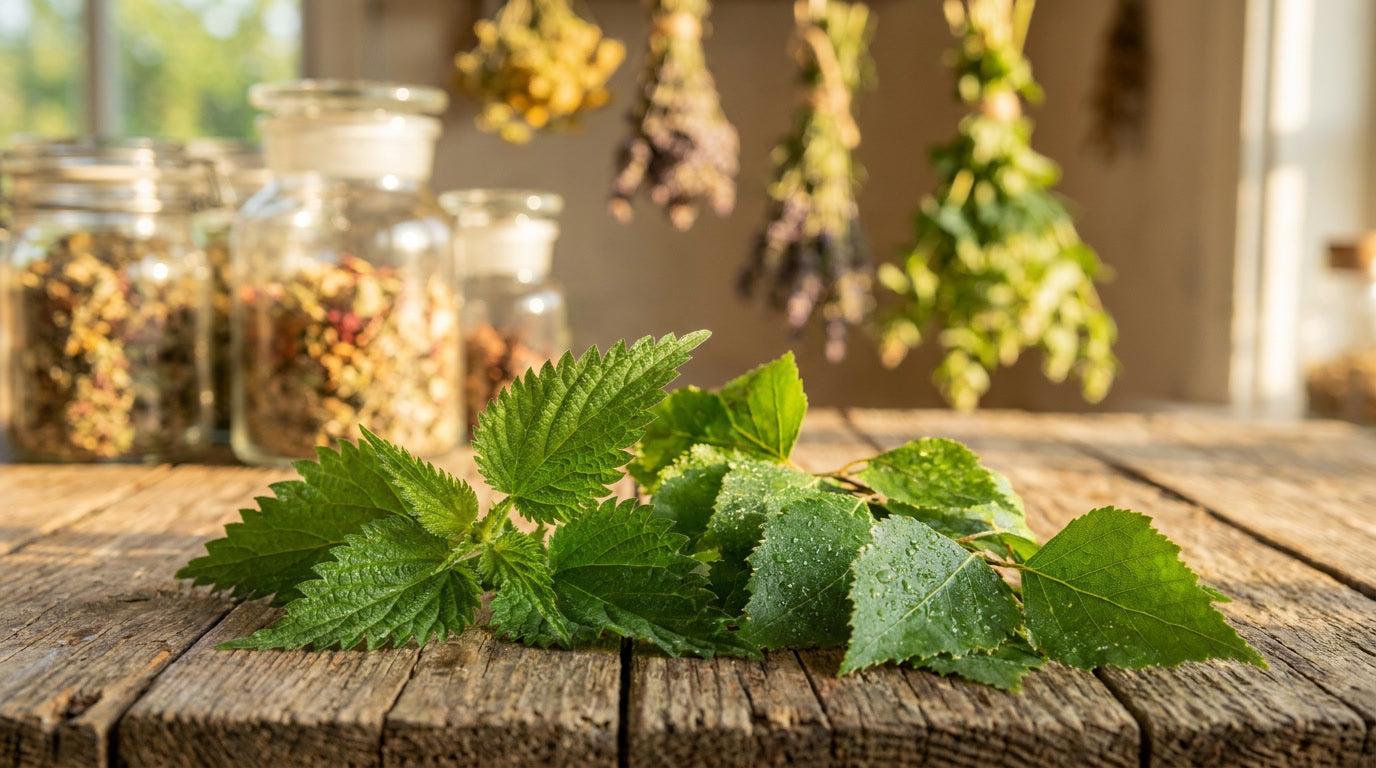
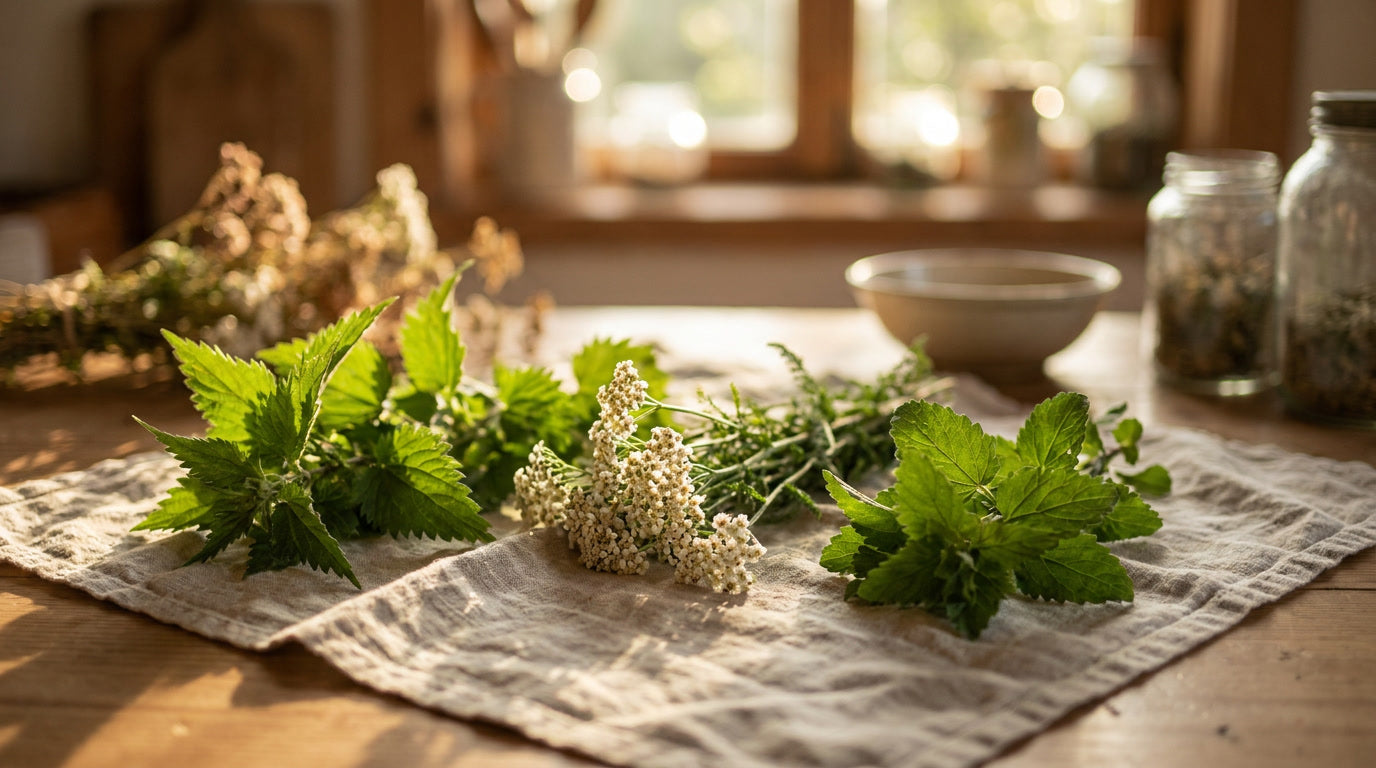
- Nettle (Urtica dioica): Nettle is one of Europe’s oldest medicinal plants and has been used traditionally for centuries. In monastic medicine, it was known as a plant that supports the body’s natural cleansing.
- Birch leaves (Betula pendula): Birch leaves have a long history in European herbal tradition and were historically valued in connection with natural water balance. Hildegard of Bingen mentioned birch as a plant with cleansing qualities.
- Dandelion (Taraxacum officinale): Dandelion is known in folk medicine of many cultures and has been traditionally used in spring herbal cures for generations. It is considered a classic spring plant in European naturopathy.
- Elderflower (Sambucus nigra): Elderflower has been valued in Central European herbal tradition since the Middle Ages. In Hildegard medicine, elder was given special mention as a versatile plant, especially for its balancing properties.
- Horsetail (Equisetum arvense): Horsetail is one of the oldest plants on earth and belongs to the traditional plant knowledge of many European healers. It has historically been associated with mineral balance and natural equilibrium.
“Nettle is warm and dry and strengthens what is weak in the person.” – Hildegard of Bingen, Physica (12th century). This historical attribution shows how nuanced monastic medicine viewed individual plants and the experiential knowledge passed down over centuries.
Practical measures for a fresher morning
Besides herbal support, there are a number of everyday habits that can noticeably reduce morning puffiness. These measures address the causes directly and can be easily integrated into a natural morning and evening routine—in the spirit of Hildegard medicine, which always emphasized the interplay of diet, exercise, sleep, and emotional balance.
One of the most effective and simplest measures is consciously planning the evening meal. Those who avoid heavily salted, heavy, or alcoholic foods in the evening remove an important trigger for nighttime fluid retention. Light, plant-based evening meals with little processing and moderate salt content fit perfectly with the naturopathic tradition of “moderation”—a virtue Hildegard of Bingen described as one of the most important foundations of health. Fasting products
Sleep position should not be underestimated either. Sleeping with the head slightly elevated—such as with a second pillow or an elevated headboard—promotes the return flow of tissue fluid and can reduce swelling in the face. At the same time, regular movement throughout the day is recommended: even an evening walk stimulates the lymphatic system and prevents too much fluid from accumulating in the legs or tissues.
Those who eat low-salt in the evening, drink moderately, and ensure enough movement give their body the best conditions for restful sleep without disturbing fluid retention.
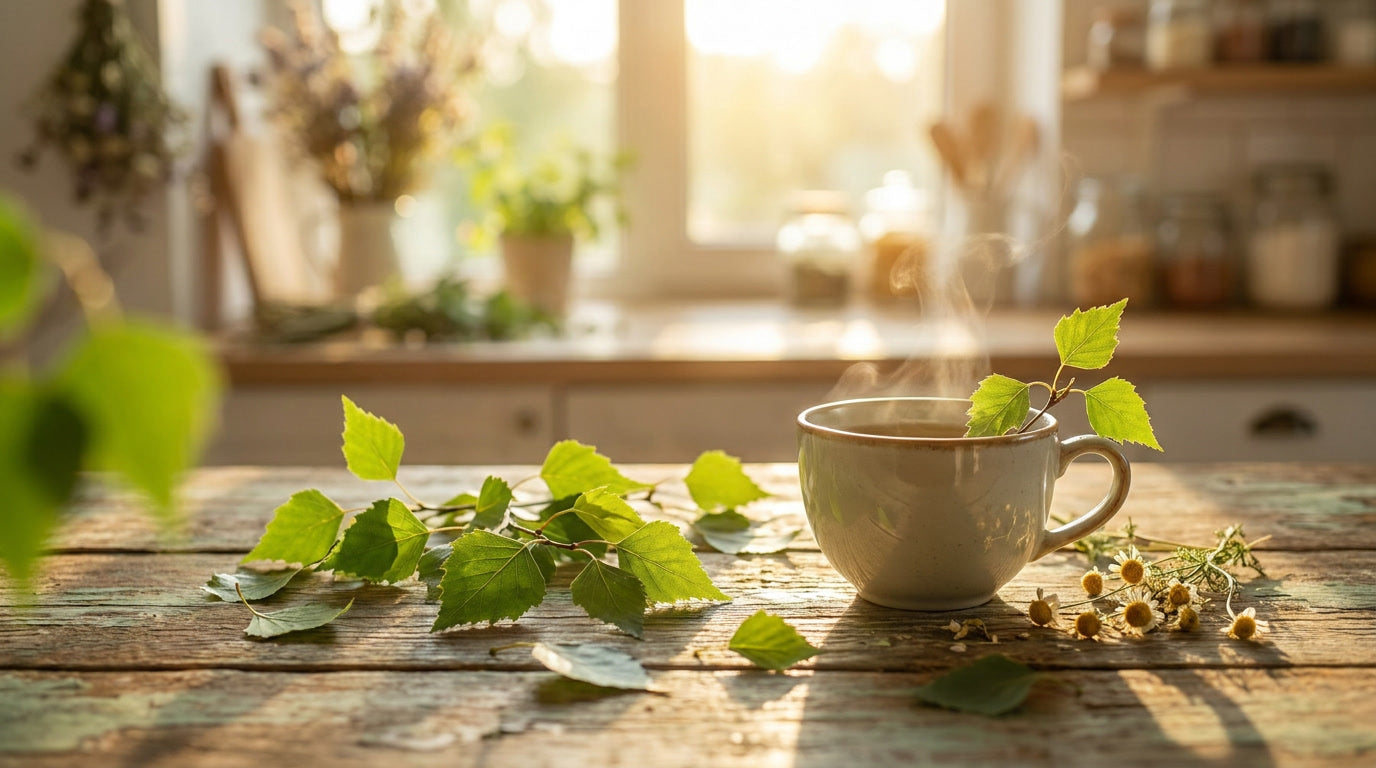
Another important aspect is drinking habits throughout the day. Paradoxically, too little drinking can promote fluid retention: the body reacts to fluid shortage with a storage mechanism. Those who drink enough water or unsweetened herbal tea during the day signal to the body that there is no shortage—and it can handle fluid regulation more relaxed. Herbal teas made from nettle, birch, or dandelion are especially recommended, as they have traditionally been valued in naturopathy for morning and midday consumption.
For the morning routine itself, some gentle measures rooted in monastic healing are suitable: a short lymphatic drainage massage of the face with cool water, alternating cold and warm showers, or simple stretching exercises that stimulate lymph flow. These rituals may seem small, but their regular use can noticeably enrich overall well-being. In Hildegard’s spirit: it is the daily small habits that make the difference in the long run.
Traditional Kneipp treatments such as alternating showers and water treading have been passed down in German naturopathy since the 19th century as measures to promote the body’s own balance. Sebastian Kneipp, the herbal pastor from Bad Wörishofen, recommended cold douches in the morning as a ritual to invigorate circulation—a tradition still maintained today in naturopathic health resorts.
Improving sleep quality and supporting the body’s night work
Sleep itself is perhaps the most underestimated factor when it comes to nighttime water balance. Not only the duration of sleep but especially its quality determines how well the body can perform its nightly regulatory tasks. Those who wake up frequently, suffer from sleep disorders, or are stuck in a chronic stress-related sleep pattern do not give the body the rest it needs for harmonious fluid distribution. Sleep and relaxation products
In naturopathy and especially in Hildegard medicine, sleep was attributed a central role in the body’s self-regulation. Hildegard spoke of sleep as “half of life” and recommended certain herbs and rituals to promote deep, restful sleep. These included, among other things, sniffing calming herbal scents, a warm foot bath before bedtime, and avoiding heavy meals late in the evening—all recommendations that seem plausible from today’s perspective.
Plants traditionally associated with calm sleep include valerian, lemon balm, and hops. These were cultivated in monastery gardens since the Middle Ages and processed by nuns and monks into teas and herbal blends. They are still used today as part of a conscious evening routine in the sense of traditional herbal knowledge—not as sleeping pills but as gentle companions into rest.
Traditional sleep herbs from the monastery garden:
- Valerian (Valeriana officinalis): Valerian is one of Europe’s best-known sleep herbs and has been cultivated in monastery gardens since the Middle Ages. It has been passed down for centuries as part of evening herbal rituals.
- Lemon balm (Melissa officinalis): Lemon balm was an indispensable part of medieval monastery gardens and is described in Hildegard medicine as a plant of the heart and inner calm. Traditionally, it is used as tea in the evening.
- Hops (Humulus lupulus): Hop cones were traditionally filled into herbal pillows in European folk medicine to promote restful sleep. The plant has been known in monastic medicine since the early Middle Ages.
- Lavender (Lavandula angustifolia): Lavender has been used as a fragrant and medicinal plant since antiquity and was widespread in medieval monasteries. Traditionally, its scent is associated with relaxation and evening calm.
Deeper, more restful sleep benefits the entire water balance: those who complete their sleep phases give the body the necessary time for its hormonal regulatory cycles—and wake up in the morning not only more refreshed but often less puffy. The combination of herbal sleep aids, a light evening meal, and regular sleep times is more than the sum of its parts.
Good sleep is not a minor matter: those who regularly sleep deeply and restfully support the body’s natural fluid regulation and can reduce morning puffiness naturally.
In conclusion: those who wake up puffy in the morning should first understand this as information from their body—as a sign that something in the evening routine, sleep, or diet could be adjusted. In most cases, it is small, consistent changes that make the biggest difference in the long term. The wisdom of monastic medicine—as old as it is—offers a surprisingly contemporary compass: observe your body, listen to its rhythms, support it with what nature gives you, and find your personal balance. Hildegard von Bingen products


Leave a comment
This site is protected by hCaptcha and the hCaptcha Privacy Policy and Terms of Service apply.