

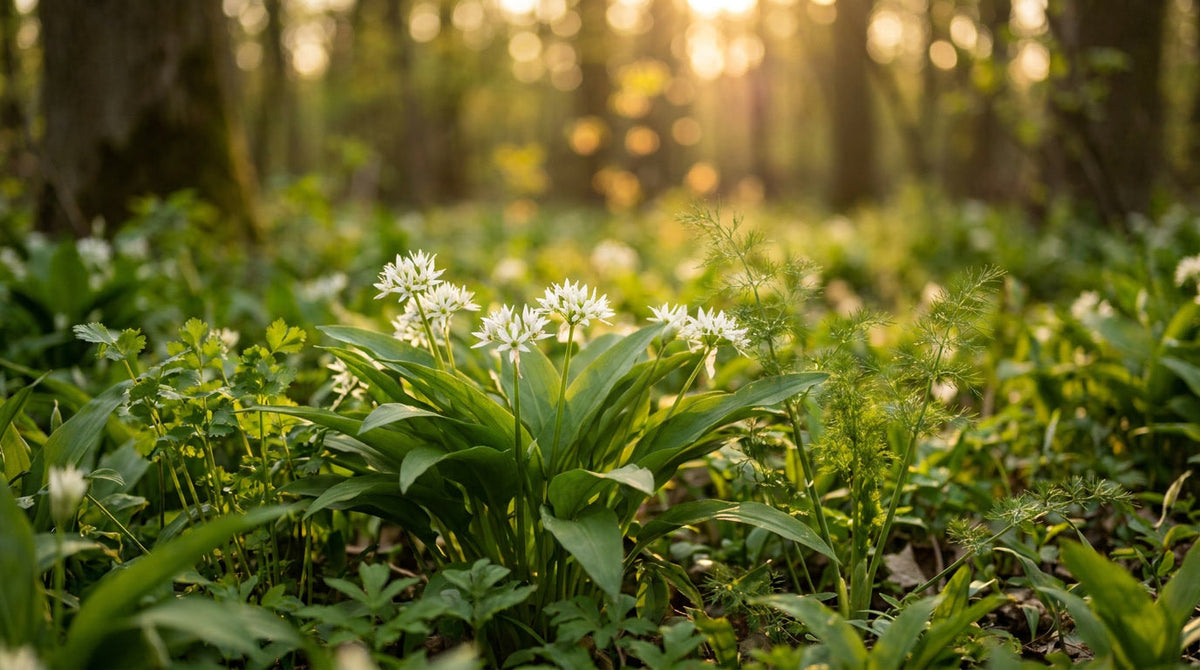
Wenn die ersten wärmenden Sonnenstrahlen des Frühjahrs durch die noch kahlen Äste der Laubwälder fallen, ist er längst schon da: der Bärlauch. Mit seinem frischen, knoblauchartigen Duft und seinen leuchtend grünen Blättern gilt er seit Jahrhunderten als eines der beliebtesten Frühjahrskräuter im deutschsprachigen Raum. Kaum ein anderes Wildkraut verbindet kulinarischen Genuss und naturheilkundliche Tradition so harmonisch wie dieser bescheidene Waldbewohner. Wer die Natur aufmerksam beobachtet, dem zeigt Bärlauch mit einer fast spielerischen Großzügigkeit, wo er zu finden ist – und er lohnt die Suche auf jede erdenkliche Weise. In diesem Artikel erfahren Sie alles über die faszinierenden Inhaltsstoffe des Bärlauchs, wie Sie ihn sicher und verantwortungsvoll sammeln, welche Bedeutung er in der historischen Kräutermedizin hatte und wie Sie ihn in der heimischen Küche verwenden können.
Was steckt im Bärlauch? Die wichtigsten Inhaltsstoffe im Überblick
Bärlauch (Allium ursinum) gehört zur Familie der Amaryllisgewächse und ist eng verwandt mit Knoblauch, Zwiebeln und Schnittlauch. Was ihn jedoch von seinen Verwandten unterscheidet, ist die besonders zarte Blatttextur und der vergleichsweise milde, frische Geschmack – verbunden mit einer bemerkenswert dichten Konzentration an bioaktiven Pflanzenstoffen. Die Inhaltsstoffvielfalt des Bärlauchs ist beeindruckend und macht ihn zu einem der interessantesten Wildkräuter des mitteleuropäischen Frühlings.
Die wichtigsten Inhaltsstoffe des Bärlauchs:
Schwefelhaltige Verbindungen (Alliine & Allicin): Ähnlich wie beim Knoblauch enthält Bärlauch schwefelige Verbindungen, die beim Zerreiben der Blätter entstehen und für den charakteristischen Geruch verantwortlich sind. Diese Verbindungen sind in der traditionellen Pflanzenkunde seit Langem bekannt.
Vitamin C: Bärlauch ist eine ausgesprochen reiche Quelle für Vitamin C – gerade im Frühjahr, wenn der Körper nach den langen Wintermonaten nach frischen Nährstoffen sucht, eine willkommene Ergänzung.
Flavonoide: Diese sekundären Pflanzenstoffe kommen in Bärlauch in nennenswerter Menge vor. Sie gehören zu den Polyphenolen und sind in der naturheilkundlichen Tradition vieler Kulturen geschätzt.
Ätherische Öle: Der unverwechselbare Geruch stammt auch von flüchtigen, ätherischen Ölverbindungen, die im Frühjahr besonders intensiv sind.
Mineralstoffe (Eisen, Mangan, Magnesium): Bärlauch liefert eine breite Palette an Mineralstoffen, die Teil einer ausgewogenen Ernährung sein können.
Saponine: Diese natürlichen Glykoside kommen ebenfalls im Bärlauch vor und sind in der ethnobotanischen Überlieferung verschiedener europäischer Kulturen Bestandteil der traditionellen Verwendung.
Besonders bemerkenswert ist der Vitamin-C-Gehalt des Bärlauchs: Frische Bärlauchblätter enthalten pro 100 Gramm bis zu 150 Milligramm Vitamin C – damit übertreffen sie sogar Zitronen oder Orangen. Kein Wunder also, dass Bärlauch in früheren Zeiten, als frisches Gemüse im Frühjahr noch Mangelware war, als wichtige Nahrungsergänzung im traditionellen Speiseplan galt. Die ersten Frühlingskräuter wurden nicht ohne Grund von Generation zu Generation als besonders wertvoll weitergegeben.
Bärlauch enthält in frischen Blättern bis zu 150 mg Vitamin C pro 100 g – mehr als Zitronen – und ist damit eines der nährstoffreichsten Frühjahrskräuter Mitteleuropas.
Die schwefelhaltigen Verbindungen des Bärlauchs ähneln strukturell denen des klassischen Knoblauchs, sind jedoch leichter verträglich, da der Schwefelgehalt etwas geringer ist. Wer Knoblauch aus kulinarischen Gründen schätzt, aber den anhaltenden Geruch nach dem Verzehr als unangenehm empfindet, findet im Bärlauch oft eine willkommene Alternative. Zudem ist die Bioverfügbarkeit der Inhaltsstoffe in frischen Blättern besonders hoch – weshalb traditionell stets die frische Verwendung bevorzugt wurde.
Bärlauch in der historischen Kräutermedizin – von Hildegard von Bingen bis zur Volksmedizin
Die Geschichte der Nutzung des Bärlauchs reicht weit in die Vorgeschichte zurück. Archäologische Funde belegen, dass bereits steinzeitliche Gemeinschaften in Mitteleuropa Bärlauch als Nahrungsmittel nutzten. In der germanischen und keltischen Überlieferung galt er als kraftspendende Pflanze des Frühjahrs – nicht zufällig trägt er seinen Namen nach dem Bären, der nach dem Winterschlaf als Erstes zu den frischen Bärlauchblättern greift, um seine Kräfte wiederzugewinnen. Dieses Bild des erwachenden Bären, der sich mit dem ersten Grün des Jahres erneuert, ist ein starkes kulturelles Symbol, das tief in der europäischen Naturheilkunde verwurzelt ist.
Hildegard von Bingen (1098–1179) beschreibt in ihren Schriften zahlreiche Kräuter des Waldes und der Wiesen als Teil einer ganzheitlichen Lebensweise. Bärlauch wurde in der Tradition der Klostermedizin als „Frühlingspflanze der Erneuerung" betrachtet – ein Kraut, das die Natur nach langen Wintermonaten schenkt, um den Menschen mit frischer Kraft für das neue Jahr zu versorgen. Die Klostermedizin des Mittelalters sah in der regelmäßigen Einnahme saisonaler Kräuter einen wesentlichen Bestandteil der Lebensordnung (Regula vitae).
Hildegard von Bingen, die bedeutende Universalgelehrte und Äbtissin des 12. Jahrhunderts, legte in ihren medizinischen Schriften – insbesondere in „Physica" und „Causae et Curae" – großen Wert auf die Nutzung einheimischer Heilpflanzen im Rhythmus der Jahreszeiten. Ihre Lehre der Viersäftelehre und die Betonung der natürlichen Ordnung (Ordo naturalis) spiegeln sich in der saisonalen Verwendung von Frühlingskräutern wie dem Bärlauch wider. Hildegard von Bingen Produkte Für Hildegard war die Natur selbst die erste Apotheke, und der Frühling mit seinem reichen Angebot an frischen Kräutern galt als besondere Zeit der Erneuerung und der Zuwendung zu sich selbst.
In der mitteleuropäischen Volksmedizin wurde Bärlauch traditionell als "Blutreinigungskraut" des Frühjahrs bezeichnet – ein Begriff, der heute zwar nicht mehr in pharmakologischer Bedeutung verwendet werden darf, jedoch kulturhistorisch das saisonale Bewusstsein widerspiegelt: Nach einem Winter mit wenig frischem Gemüse und viel schwerem, eingelegtem Essen galt der Bärlauch als das Kraut, das den Menschen wieder in Einklang mit dem Frühjahr brachte. Diese Vorstellung des "Fastens und Erneuerns" im Frühling Fasten-Produkte ist tief in der europäischen Heilkräutertradition verwurzelt und erlebt heute eine bemerkenswerte Renaissance.
Bärlauch wird seit der Steinzeit als Nahrungspflanze verwendet und gilt in der europäischen Klostermedizin als klassisches Frühjahrskraut der Erneuerung – ein Wissen, das heute wieder neu entdeckt wird.
Bärlauch sicher sammeln: So unterscheiden Sie ihn von giftigen Verwechslungspflanzen
Das Sammeln von Bärlauch in der Natur ist eine wunderbare Möglichkeit, das Frühjahr bewusst zu erleben und frische Wildkräuter in die eigene Ernährung zu integrieren. Allerdings erfordert es sorgfalt und Aufmerksamkeit – denn Bärlauch hat einige gefährliche Verwechslungspartner, die jedes Jahr leider zu ernsthaften Vergiftungen führen. Der verantwortungsvolle Umgang mit dem Wildsammeln ist daher das erste Gebot jedes Kräuterliebhabers.
Wichtige Unterscheidungsmerkmale – so erkennen Sie echten Bärlauch:
- Knoblauchgeruch: Das zuverlässigste Erkennungsmerkmal: Zerreiben Sie ein Blatt zwischen den Fingern. Echter Bärlauch verströmt sofort einen unverkennbaren, intensiven Knoblauchduft. Maiglöckchen und Herbstzeitlose riechen nicht nach Knoblauch.
- Blattform und -oberfläche: Bärlauchblätter sind lanzettlich-oval, hellgrün und haben eine matte Unterseite mit deutlichen Blattrippen. Sie wachsen einzeln aus dem Boden, nicht gegenständig.
- Blattstiel: Der Blattstiel des Bärlauchs ist lang, rund und hohl – im Gegensatz zu Maiglöckchen, deren Blattstiel gerillt ist und nicht hohl.
- Wuchsort und Jahreszeit: Bärlauch wächst bevorzugt in feuchten Laubwäldern, an Bachläufen und in schattigen Hanglagen. Er erscheint von März bis Mai – wer später sammelt, riskiert, keine guten Blätter mehr zu finden.
- Blüten: Die kleinen, weißen Sternblüten des Bärlauchs in Dolden sind ein weiteres sicheres Zeichen – allerdings erscheinen sie erst, wenn die Blätter schon etwas zäher werden.
Die drei häufigsten Verwechslungspflanzen sind Maiglöckchen (Convallaria majalis), Herbstzeitlose (Colchicum autumnale) und der Aronstab (Arum maculatum). Alle drei sind giftig, zum Teil stark giftig. Besonders tückisch: Im Frühjahr wachsen Maiglöckchen und Bärlauch häufig nebeneinander am gleichen Standort. Ein einziges Maiglöckchenblatt, das versehentlich mit geerntet wird, kann bereits zu ernsthaften Vergiftungserscheinungen führen. Verlassen Sie sich daher niemals allein auf das optische Erscheinungsbild – prüfen Sie immer den Geruch jedes einzelnen Blattes.
Für den nachhaltigen Umgang beim Wildsammeln empfiehlt sich zudem, nie mehr als ein Drittel des vorhandenen Bestands an einem Standort zu entnehmen, um den natürlichen Bestand zu erhalten. Bärlauch vermehrt sich über Zwiebeln und Samen – ein übermäßiges Sammeln kann lokale Populationen ernsthaft schädigen. Außerdem sollten Naturschutzgebiete grundsätzlich gemieden werden, da das Sammeln dort in der Regel verboten ist. Wer unsicher ist, greift am besten auf Bärlauch aus kontrolliertem Anbau zurück – mittlerweile wird er auf vielen Bauernmärkten und in Reformhäusern angeboten.
Bärlauch in der Küche: Traditionelle und moderne Rezepte für den Frühling
Sobald Sie frischen Bärlauch gesammelt oder gekauft haben, eröffnen sich Ihnen unzählige kulinarische Möglichkeiten. Bärlauch ist ein außerordentlich vielseitiges Kraut, das sich sowohl roh als auch leicht gegart verwenden lässt – wobei die rohe Verwendung den Vorteil hat, dass hitzeempfindliche Inhaltsstoffe wie Vitamin C erhalten bleiben. Grundregel in der Naturküche: Je weniger Hitze, desto mehr wertvolle Pflanzenstoffe bleiben erhalten.
Klassisches Bärlauch-Pesto:
Zutaten: 100 g frische Bärlauchblätter, 50 g Pinienkerne (oder Walnüsse), 50 g Parmesan (gerieben), 100 ml kaltgepresstes Olivenöl, Salz, Pfeffer, etwas Zitronensaft.
Zubereitung: Bärlauchblätter waschen, trocken schütteln und grob hacken. Pinienkerne in einer trockenen Pfanne kurz anrösten. Alle Zutaten in einem Mixer oder Mörser zu einer glatten Paste verarbeiten. Mit Salz, Pfeffer und Zitronensaft abschmecken. Das Pesto hält sich im Kühlschrank, mit einer dünnen Ölschicht abgedeckt, bis zu einer Woche. Es passt wunderbar zu Pasta, als Brotaufstrich oder als Dip zu frischen Gemüsesticks.
Tipp: Für ein längeres Haltbarkeitsdatum kann das Pesto auch in Eiswürfelformen eingefroren werden – so haben Sie den Frühling das ganze Jahr über griffbereit.
Bärlauchbutter ist ein weiteres klassisches Rezept der traditionellen Frühjahrsküche: Dafür werden frische Bärlauchblätter fein gehackt und mit weicher Butter sowie etwas Zitronensaft und Meersalz vermengt. Die fertige Bärlauchbutter lässt sich in Pergamentpapier zu einer Rolle formen und im Kühlschrank mehrere Tage aufbewahren oder einfrieren. Auf frischem Sauerteigbrot, zu gedünstetem Gemüse oder auf einem Stück Fisch ist sie ein einfaches, aber ausgesprochen aromatisches Genusserlebnis – und gleichzeitig ein kleines Ritual der Wertschätzung für das, was die Natur im Frühling schenkt.
Für alle, die Bärlauch gerne in warmen Gerichten verwenden möchten, bietet sich eine cremige Bärlauchsuppe an: Zwiebeln und Kartoffeln werden in etwas Butter angeschwitzt, mit Gemüsebrühe aufgegossen und weichgekocht. Kurz vor dem Pürieren gibt man eine großzügige Handvoll frischer Bärlauchblätter dazu und mixt alles cremig – zu langes Kochen sollte vermieden werden, da der Bärlauch beim Erhitzen schnell seinen Geschmack verliert. Ein Klecks Sauerrahm, etwas geröstetes Brot und ein paar frische Bärlauchblätter als Garnitur machen diese Suppe zu einem vollständigen Frühjahrsessen. BitterKraft Original
Frischer Bärlauch entfaltet seine Aromen und Inhaltsstoffe am besten in der rohen Verwendung – Pesto, Butter oder Smoothies sind daher ideal, um das Frühjahrskraut optimal zu genießen.
Auch in grünen Smoothies findet Bärlauch einen begeisterten Platz: Eine Handvoll frische Bärlauchblätter, kombiniert mit Gurke, Apfel, Ingwer und etwas Zitronensaft, ergibt ein erfrischendes Frühlingsgetränk. Besonders in der Fastentradition Fasten-Produkte werden solche grünen Frühlingssäfte als bewusste Hinzufügung zu einem ansonsten leichten Ernährungsrhythmus verstanden – ganz im Sinne des alten Gedankens, die Natur aktiv einzuladen, statt nur auf sie zu reagieren. Wer die Bärlauchsaison verlängern möchte, kann die Blätter auch fermentieren: Eingelegt in Salzlake nach Art der Wildfermentation hält sich Bärlauch mehrere Monate und bereichert als würzige Zutat Salate, Bowls und Aufschnittplatten.
Bärlauch ganzjährig nutzen: Konservierung, Trocknug und hochwertige Präparate
Die frische Bärlauchsaison ist leider kurz: Von Mitte März bis Ende April – in manchen Jahren bis Anfang Mai – stehen die Blätter in bester Qualität zur Verfügung. Danach schießt die Pflanze in die Blüte und die Blätter werden zäher und weniger aromatisch. Umso wichtiger ist es, die Ernte des Frühjahrs klug zu konservieren, um den Bärlauch auch in den übrigen Jahreszeiten genießen zu können – sei es als Zutat in der Küche oder als Nahrungsergänzung im Sinne der traditionellen Kräutermedizin. Hildegard von Bingen Produkte
Das Trocknen von Bärlauch ist möglich, aber nicht ideal: Da die flüchtigen Schwefelverbindungen und das Vitamin C hitze- und lichtempfindlich sind, verliert getrockneter Bärlauch einen erheblichen Teil seiner charakteristischen Eigenschaften. Wer trocknen möchte, sollte dies bei möglichst niedriger Temperatur (unter 40 Grad Celsius) im Schatten tun und das getrocknete Kraut luftdicht in dunklen Gläsern aufbewahren. Besser geeignet ist das Einfrieren frischer Blätter: Einfach waschen, trocken tupfen, grob hacken und portionsweise einfrieren. So bleiben die Inhaltsstoffe weitgehend erhalten, und Sie haben bis weit in den Winter hinein Zugriff auf das Frühjahrskraut.
Für Menschen, die Bärlauch gezielt und komfortabel in ihren Alltag integrieren möchten, ohne auf saisonale Verfügbarkeit angewiesen zu sein, bieten sich hochwertige Bärlauch-Präparate an – etwa Kapseln oder Tinkturen auf Basis standardisierter Bärlauchextrakte. Bei der Auswahl solcher Produkte lohnt ein Blick auf die Qualitätskriterien: Biologischer Anbau, schonende Verarbeitung und transparente Herkunftsangaben sind Zeichen seriöser Hersteller. Immunsystem-Produkte Im Sinne der ganzheitlichen Naturheilkunde ist es dabei immer empfehlenswert, Pflanzenprodukte als bewusste Ergänzung einer ausgewogenen Ernährung und Lebensweise zu verstehen – nicht als Ersatz, sondern als Bereicherung.
„Die traditionelle europäische Kräuterkunde sieht saisonale Wildpflanzen wie den Bärlauch als Teil eines größeren Kreislaufs: Der Frühling schenkt uns Kräuter, die im Winter fehlten. Wer diesen Rhythmus bewusst in seine Ernährung einbezieht, lebt im Einklang mit der Natur – eine Weisheit, die von Hildegard von Bingen bis zur modernen Phytotherapie anerkannt wird."
– Aus der Tradition der europäischen Klostermedizin
Abschließend lässt sich sagen: Der Bärlauch ist weit mehr als ein modischer Foodtrend. Er ist ein Zeitzeuge der europäischen Naturheilkunde, ein kulinarisches Juwel des Frühlings und ein eindrucksvolles Beispiel dafür, wie reich die heimische Natur an Pflanzenschätzen ist, die es zu entdecken und zu schätzen gilt. Ob frisch gesammelt im Wald, als selbst gemachtes Pesto auf dem Abendbrottisch oder als sorgfältig hergestelltes Naturpräparat – Bärlauch lädt uns jedes Frühjahr neu ein, innezuhalten, die Natur bewusst wahrzunehmen und das Wissen unserer Vorfahren lebendig zu halten. Ganz im Geiste Hildegards: Die Natur gibt uns alles, was wir brauchen – wir müssen nur lernen, hinzusehen.

Hinterlasse einen Kommentar
Diese Website ist durch hCaptcha geschützt und es gelten die allgemeinen Geschäftsbedingungen und Datenschutzbestimmungen von hCaptcha.