





Many women know the feeling: fingers seem swollen in the morning, knuckles feel tight in the evening, and the weight on the scale fluctuates from day to day, even though the diet has hardly changed. What lies behind this is often a hormonal imbalance—especially during menopause, when the body undergoes profound changes. Water retention is one of the most common accompanying symptoms of this life phase and can noticeably affect overall well-being. The good news: naturopathy, especially the traditional herbal knowledge of Hildegard von Bingen, has known for centuries about plant-based companions that can support women during this time. Products for women's health
When hormones shift the balance – What lies behind water retention
During menopause, the hormonal balance of the female body changes fundamentally. Estrogen and progesterone, the two central female sex hormones, fluctuate significantly in their concentration. This hormonal ups and downs have far-reaching effects on the entire organism—including how the body regulates fluids. Estrogen traditionally influences the tissue’s ability to retain water. When hormone levels fluctuate or drop, this delicate system gets out of sync.
The ratio of estrogen to progesterone plays a particularly crucial role. In perimenopause—the phase preceding actual menopause—there is often a relative estrogen dominance because progesterone declines earlier and more sharply. This imbalance has long been considered in naturopathy as one of the causes of tissue water retention. At the same time, the body’s handling of sodium and potassium also changes during this life phase, which can further promote water retention.
Additional factors common in menopause include sleep deprivation, increased everyday stress, and altered metabolism, which can further strain hormonal balance. Sleep and relaxation products The interplay of these factors makes it clear why water retention can be so persistent during this life phase. A holistic view of the body—as naturopathy has always practiced—is therefore especially valuable to effectively support women during this time.
Water retention during menopause is usually not an independent disease but an expression of hormonal change in the body—a signal that deserves to be heard.
The knowledge of monastic medicine: Hildegard’s herbs for women in transition
Hildegard von Bingen, the renowned abbess, polymath, and naturalist of the 12th century, devoted herself intensively to the physical and emotional needs of women. In her main works Physica and Causae et Curae, she described numerous herbs and their traditional uses—many explicitly related to female well-being and hormonal life cycles. The herbal knowledge she gathered and passed on in her monastery on the Rhine remains a valuable treasure of European naturopathy to this day. Hildegard von Bingen products
Hildegard viewed the human body as a system in constant exchange with nature. For her, the balance of the humors—inspired by ancient humoral pathology—was crucial for well-being. She interpreted water accumulation in tissues as a sign of disturbed balance, which could be restored through plant companions, moderate nutrition, and a conscious daily rhythm. This holistic perspective is remarkably timeless and continues to find confirmation in modern naturopathy.
Hildegard von Bingen wrote in Physica about the pellitory (Anacyclus pyrethrum): “It is warm and dry and has the power to lead impurities out of the body.” This traditional idea of herbs as “guiding” and “cleansing” companions still shapes the understanding of monastic medicine regarding detoxifying plants today.
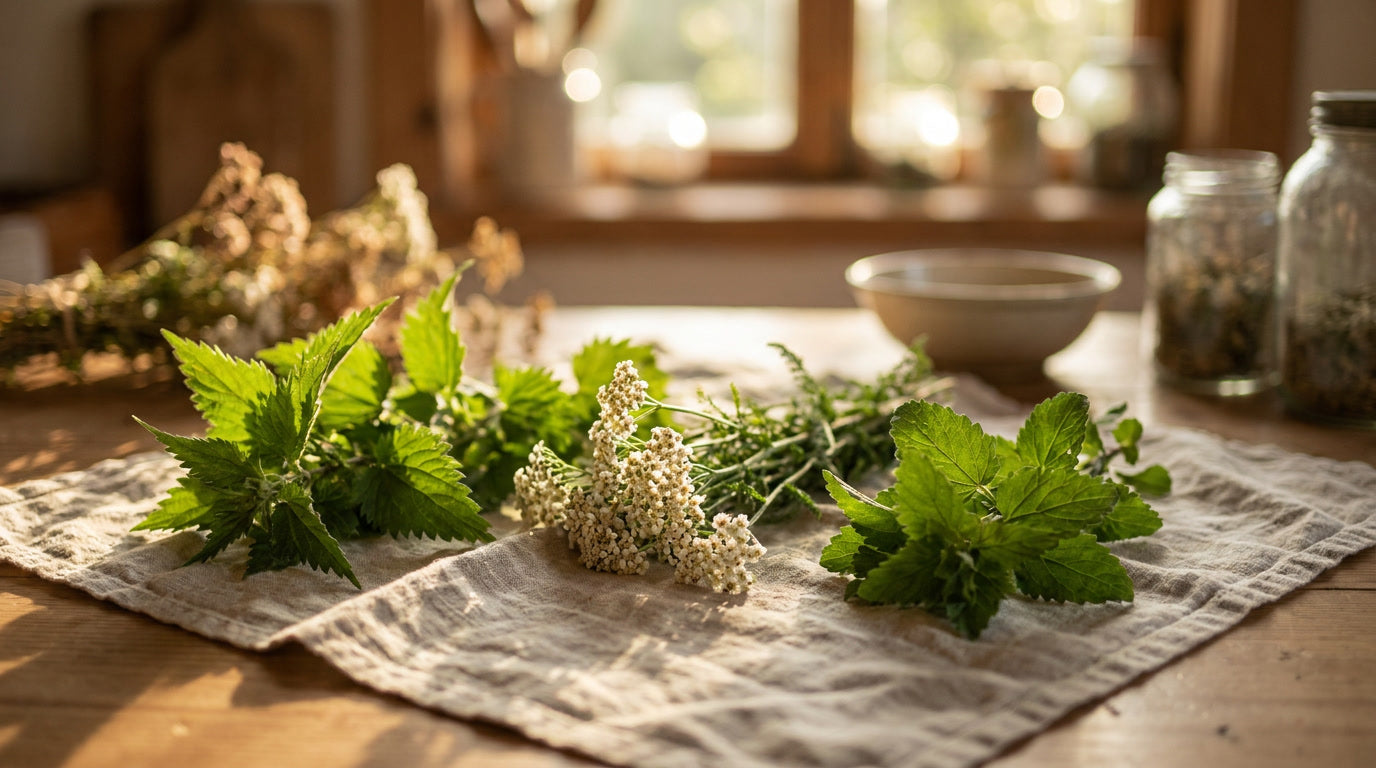
Particularly interesting is Hildegard’s use of bitter herbs, spices, and diuretic plants, which played a central role in her monastic medicine. Herbs such as nettle, dandelion, and yarrow were traditionally described in Hildegard’s teachings as companions for women undergoing physical transitions. The historical knowledge that certain plants can support women’s overall well-being thus originates from a long cultural tradition—and deserves to be rediscovered today. BitterKraft Original
Plant companions: These natural remedies are traditionally valued for women in menopause
Naturopathy knows a wealth of medicinal plants that have been traditionally used by women during transitional phases for centuries. Many of these plants were historically valued not only for their diuretic properties but also for their broader contribution to female well-being. In line with Hildegard’s holistic thinking, it is always about the big picture—adding plant knowledge to everyday life, not just treating individual symptoms.
The transition into menopause is a time when the body deserves special care. Plant companions can become part of a conscious ritual—as tea in the morning, as a tincture before meals, or as a mindful break with a cup of herbal tea in the evening. This “adding instead of subtracting” is a central principle of naturopathy and reflects Hildegard’s understanding of health as an active process. Products for women's health
These medicinal herbs are traditionally valued for women in menopause:
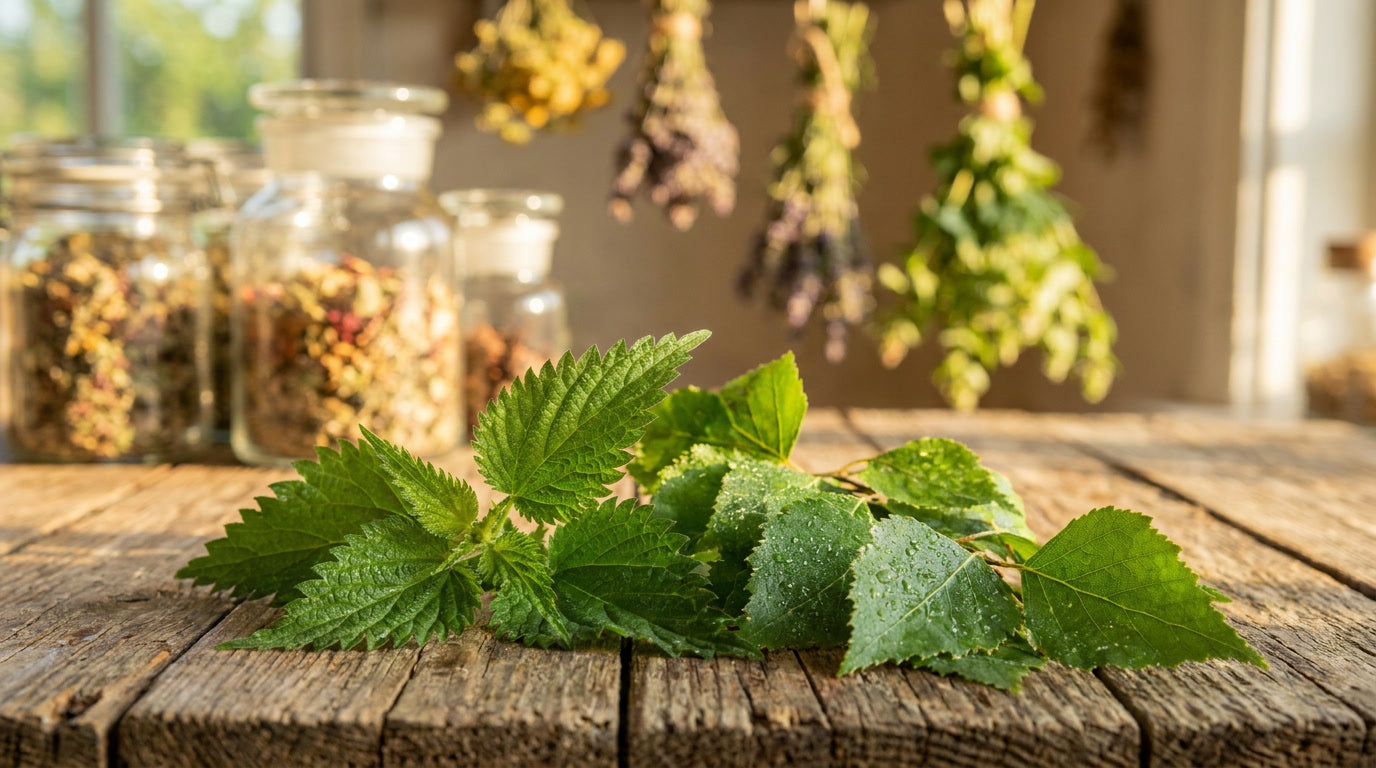
- Nettle (Urtica dioica): Used for centuries in European folk medicine and historically known as a classic “spring herb” meant to invigorate the body after winter. In monastic medicine, nettle was traditionally valued as a diuretic companion and can support overall well-being.
- Dandelion (Taraxacum officinale): Hildegard von Bingen valued dandelion as a versatile medicinal plant. It has been traditionally used in naturopathy for centuries and is historically known as a companion for people undergoing detox phases. Liver products from Bitterkraft
- Yarrow (Achillea millefolium): In monastic medicine, yarrow was one of the most important women’s plants. Hildegard described it as beneficial for the female system, and it is still traditionally used as a companion plant during menopause.
- Ladies’ mantle (Alchemilla vulgaris): Few plants are as closely linked to the female cycle as ladies’ mantle. It has been traditionally called a “women’s herb” for centuries and passed down in folk medicine as a companion during all hormonal transition phases of life.
- Red clover (Trifolium pratense): Historically known in folk medicine, red clover is today valued in modern naturopathy as a traditional companion for women in menopause. Its traditional reputation as a soothing women’s herb goes far back into European herbal tradition.
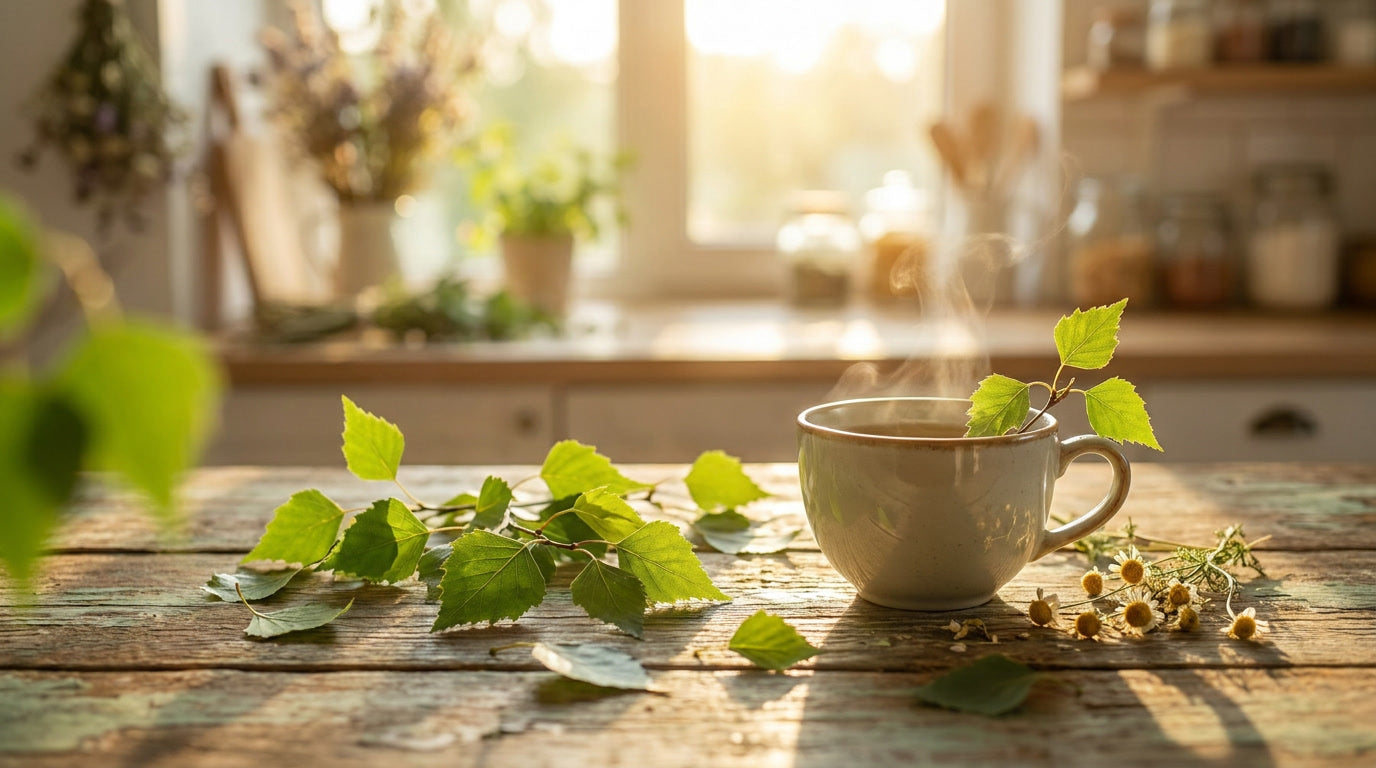
- Birch leaves (Betula pendula): Since antiquity, the birch has been a symbol of renewal and was traditionally used to support general well-being in spring and detox phases. In naturopathy, it is historically known as a gentle companion for water retention.
What is behind these plants?
Many of the medicinal herbs traditionally used for women contain secondary plant compounds such as flavonoids, phytoestrogens, and essential oils, which have historically played a central role in naturopathy. Phytoestrogens—plant compounds structurally similar to human estrogen—are found, for example, in red clover and ladies’ mantle. They have been used in traditional herbal medicine for centuries without implying any medicinal effect under pharmaceutical law. They are traditionally used companions that can support overall well-being as part of a balanced lifestyle.
In addition to medicinal plants, bitter substances also play an important traditional role in monastic medicine. Bitter herbs like gentian, artichoke, or wormwood were highly valued by Hildegard and have been a fixed part of European monastery pharmacies for centuries. BitterKraft Original They are traditionally used to generally support well-being and fit perfectly into a naturopathic daily ritual for women in menopause.
Plant companions unfold their effects best as part of a conscious daily ritual—regularly, mindfully, and as a complement to a balanced lifestyle.
Breathe holistically: Lifestyle and nutrition as natural allies
Plant-based support is more effective when embedded in a holistic lifestyle concept. Hildegard von Bingen emphasized in all her works that plant knowledge must always go hand in hand with nutrition, exercise, and inner balance. This wisdom is more relevant today than ever. Women in menopause can significantly support their well-being through some general everyday measures—independent of specific herbal preparations.
A potassium-rich diet is traditionally recommended in naturopathy to help the body naturally regulate fluid balance. Foods like avocado, bananas, spinach, legumes, and nuts are rich in this mineral and fit well into a conscious, plant-based diet. At the same time, traditional naturopathy advises moderate reduction of highly processed foods and high salt intake, which can disrupt balance. Adequate water intake—at least 1.5 to 2 liters daily—is also a basic principle of natural living.
Regular moderate exercise also plays an important role. Walking, yoga, gentle swimming, or tai chi are considered soothing companions in naturopathy that promote circulation and support the body’s natural balance. Hildegard herself emphasized the importance of moderation—neither overexertion nor laziness is beneficial to the body. This wise balance can also be implemented in modern everyday life. Fasting products
An evaluation of traditional European herbal traditions, published as part of the ESCOP monographs (European Scientific Cooperative on Phytotherapy), confirms the centuries-old use of nettle, dandelion, and birch leaves as traditional companion plants for water retention—without implying any medicinal claim.
Sleep also holds a special place in the holistic view. Since lack of sleep can further strain hormonal balance, it is worthwhile to pay special attention to restful night sleep. Sleep and relaxation products Soothing herbal teas made from lemon balm, valerian, or hops, an evening break from screens, and a regular sleep rhythm are simple but effective components of a nature-close evening ritual that Hildegard von Bingen would have recommended.
Herbal rituals, conscious nutrition, and a moderate lifestyle together form a strong foundation—especially during the hormonal transition of menopause.
Everyday rituals with plant power: Practical tips to get started
The beauty of naturopathy is that it can anchor itself in everyday life—in simple, sensory rituals that structure the day and give the body regular attention. Hildegard von Bingen was convinced that conscious use of herbs and foods can have a deep healing effect on body and mind. Such awareness can be wonderfully integrated into modern daily life.
A simple start is a daily herbal tea made from traditionally passed-down women’s plants. Ladies’ mantle, nettle, and yarrow combine well and create a mild-aromatic infusion that can be drunk in the morning or afternoon. For women who like to work with bitter substances, a small amount of bitter herb tincture or a bitter herbal elixir before meals is recommended—a practice firmly rooted in monastic medicine. BitterKraft Original
Additionally, a regular detox phase—such as in spring or autumn, in line with Hildegard’s seasonal medicine—can be a conscious signal to the body. Light fasting, herbal teas, plenty of outdoor movement, and avoiding highly processed foods for a few weeks can be part of such a seasonal ritual. Fasting products This practice is one of the oldest in naturopathy and connects us with a deep cultural heritage.
Practical guide: Herbal tea ritual for women in menopause
Ingredients for one daily portion (500 ml):
– 1 tsp dried ladies’ mantle
– 1 tsp dried nettle leaves
– 1 tsp dried yarrow
– Optional: a slice of fresh ginger or a pinch of pellitory powder according to Hildegard
Preparation: Pour 500 ml freshly boiled water over the herbs, let steep for 8–10 minutes, strain, and drink throughout the day. This traditional herbal ritual can be practiced daily as a mindful break.
For women who prefer a practical and well-dosed form, high-quality plant extracts and traditional herbal preparations are available, such as those offered at Bitterkraft.com. The rule is: quality over quantity. Organically grown, carefully processed medicinal plants extracted gently preserve the full traditional potential of the plant. Those looking for a reliable basis for their herbal ritual will find all Bitterkraft products—an overview of all natural remedies available in the Bitterkraft.com range.
Menopause is not a time of loss but a transition—a threshold, as Hildegard von Bingen described it, part of the natural rhythm of life. The body changes, and it deserves loving support through the inherited knowledge of nature. Plant companions, meaningful everyday rituals, and a conscious relationship with one’s own body can make this life phase a time when women become especially aware of their strength—carried by centuries of female herbal wisdom.


Leave a comment
This site is protected by hCaptcha and the hCaptcha Privacy Policy and Terms of Service apply.