




Many women know the feeling: hands appear swollen in the morning, legs feel heavy, the stomach bloated – even though hardly anything has been eaten or drunk. Especially during menopause, many women report this phenomenon, which is often accompanied by a feeling of heaviness, discomfort, and perceived weight gain. What many do not know: behind these water retentions often lies a hormonal cause closely linked to the changed balance in the female body. The good news is that there is a rich traditional knowledge of plants that can support women during this life phase – and Hildegard of Bingen has left valuable insights just as the millennia-old herbal medicine of other cultures has. This article explains why water retention occurs during menopause, which herbs and natural remedies have been valued for centuries, and how women can gently support their bodies during this special phase.
Why hormones change the water in the body
The female body is a highly sensitive system controlled by hormones. During menopause – that is, in perimenopause and menopause – the production of estrogen and progesterone changes significantly. This imbalance has far-reaching effects that go well beyond the well-known hot flashes. One of the less discussed but frequently experienced phenomena is the altered water regulation in the tissues. This is because estrogen and progesterone play an important role in how the body stores or releases fluid.
Progesterone is traditionally considered a natural antagonist to possible excess fluid in the tissues. When its level drops during menopause, it can contribute to the tissues temporarily retaining more fluid. At the same time, estrogen levels fluctuate during perimenopause – sometimes rising irregularly before permanently declining. These fluctuations can affect the sensitivity of body cells to hormonal signals. Many women literally feel the result in their own bodies: swollen ankles in the evening, tingling in the legs, or rings that suddenly feel too tight in the morning.
Water retention during menopause is not a sign of weakness or poor nutrition – it is a direct response to the hormonal changes in the female body.
Additionally, during menopause, the body regulates kidney function and vascular permeability differently than in younger years. The vessel walls can become more permeable, meaning fluid can more easily pass from the blood into surrounding tissues. The lymphatic system, responsible for removing tissue fluid, can also react more sensitively during this phase. Women who add lack of exercise, high-salt diets, or prolonged sitting often notice these connections particularly clearly. It is therefore an interplay of hormonal, physiological, and lifestyle factors – and this is exactly where traditional herbal knowledge comes in. Products for women's health
Hildegard’s view of the female body and the balance of humors
Hildegard of Bingen (1098–1179) was not only an abbess and mystic but also one of the most important natural healers of the Middle Ages. Her works “Physica” and “Causae et Curae” are still considered treasure troves of herbal and healing knowledge based on a holistic view of the human body. Hildegard understood health as a balance of the four bodily humors – blood, phlegm, yellow bile, and black bile – and saw disturbances as expressions of an inner imbalance. The term “phlegm” (Phlegma) played a special role: Hildegard described it as the substance that accumulates in the body during imbalance and leads to heaviness, sluggishness, and a feeling of overload.
“What is moist and cold gathers and thickens if it is not kept moving by warmth and dryness.” – Hildegard of Bingen, Causae et Curae (paraphrased)
Hildegard recommended warming herbs and spices to dissolve this phlegm accumulation and restore the body’s natural flow. Particularly spelt, cloves, anacyclus (bertram), and fennel were highly valued in her healing system. These plants were appreciated not for a single substance but for their holistic property – their “power,” as Hildegard called it. The concept of warming, moving plant power corresponds in a way to what we today would describe as support for natural body processes. Hildegard of Bingen products
What makes Hildegard’s perspective especially modern is her understanding that women have different needs in different life phases. She explicitly distinguished in her writings between a woman’s fertile phase and the years thereafter – recommending especially for the later life phase those herbs that provide warmth, stimulate circulation, and strengthen inner balance. The idea of not fighting the body but accompanying and supporting it is one of the central messages of Hildegard’s natural medicine – and it remains relevant today.
For women in menopause, Hildegard’s herbal knowledge offers a valuable framework: not as medical treatment but as a millennia-old tradition of accompaniment. Herbs are not understood as medicine that “repairs” something but as supporters of natural well-being – as daily care from within, comparable to skin care from outside. BitterKraft Original
These herbs and natural remedies are traditionally valued
Nature offers an impressive variety of plants that have been valued for centuries in folk medicine, monastic medicine, and international herbal traditions for women in transitional phases. Particularly interesting is that many of these plants were used not just for a single aspect but as comprehensive companions of female well-being. For women who want to expand their daily routine with herbal support, it is worth taking a look at these traditionally used herbs.
Traditionally valued herbs for water retention during menopause:
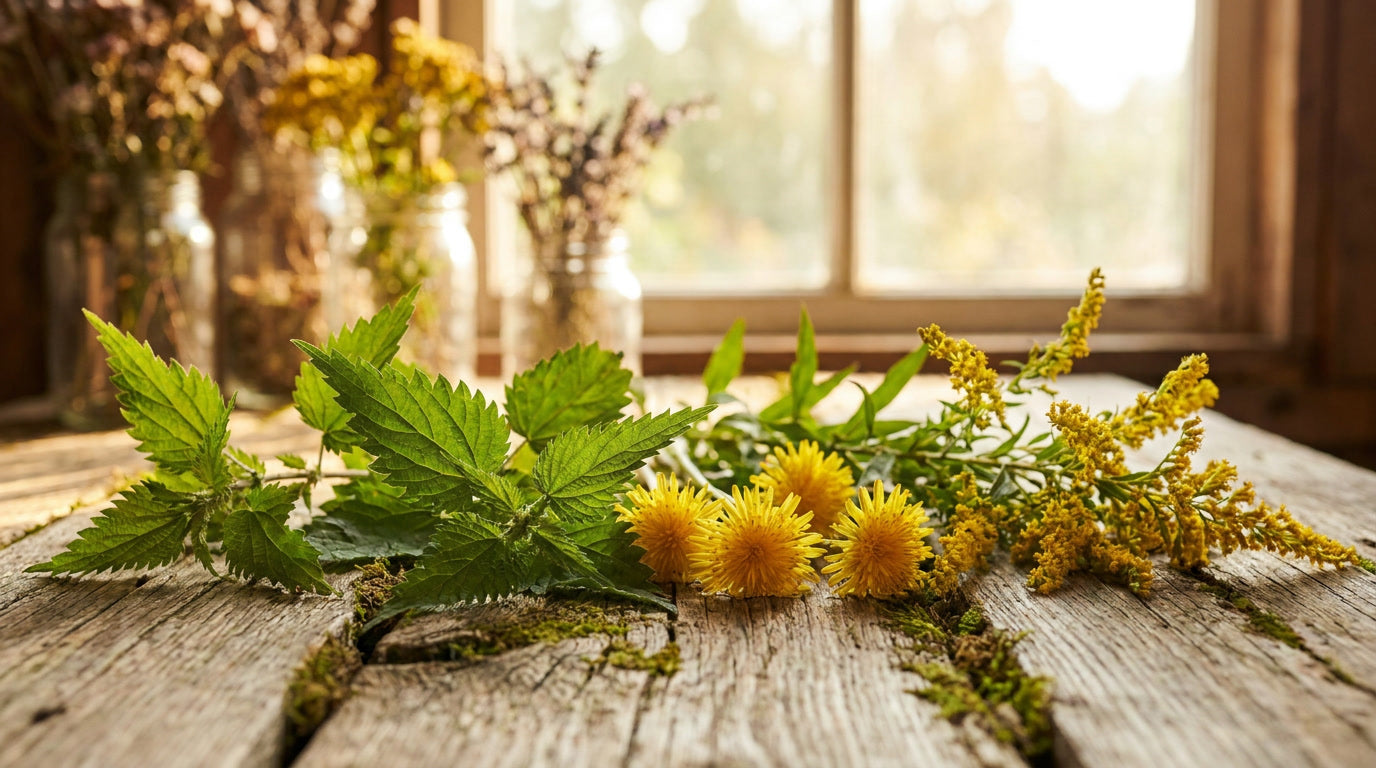
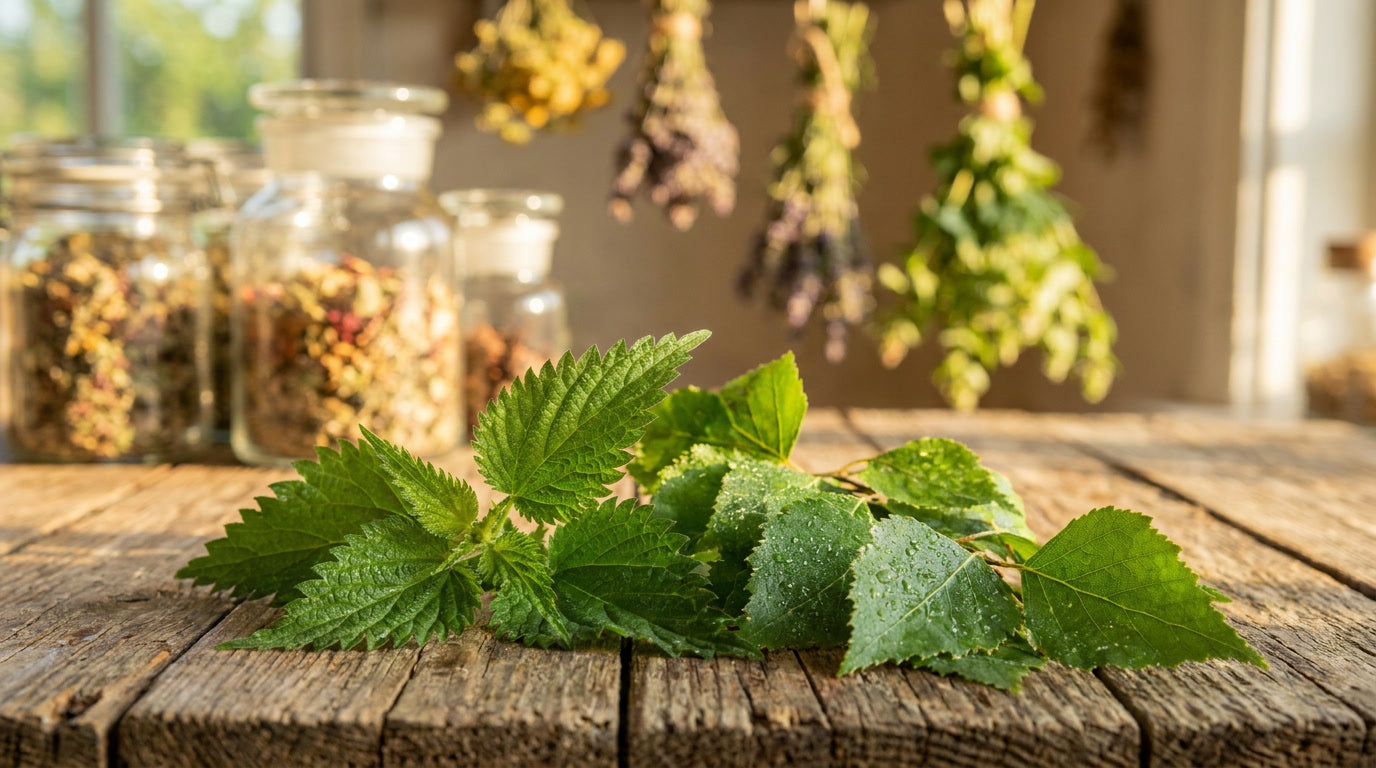
- Nettle (Urtica dioica): Nettle is one of the best-known medicinal herbs in European folk medicine and has been traditionally used for centuries to support the body’s natural elimination. In monastic medicine, it was considered a spring herb to get the body moving again after winter.
- Dandelion (Taraxacum officinale): Dandelion – leaf and root – is historically known as a companion of spring cleansing and was described in traditional herbal medicine as a diuretic herb. It contains potassium and was therefore traditionally considered particularly gentle in its effect on the body.
- Goldenrod (Solidago virgaurea): Goldenrod has been documented in European herbal tradition since the Middle Ages and is traditionally associated with the bladder and kidneys. Herbal books from the 16th century explicitly recommended it for women in later life phases.
- Chaste tree (Vitex agnus-castus): Chaste tree has a millennia-old tradition as a women’s herb and was already used in ancient Greece for women in hormonal transition phases. It is described in traditional herbal medicine as a companion for hormonal balance.
- Horsetail (Equisetum arvense): Horsetail, also called “tin herb,” is one of the oldest medicinal plants on earth and has been traditionally used since antiquity for water accumulation in tissues. Hildegard of Bingen mentioned horsetail in her writings as a plant with “cleansing power.”
- Red clover (Trifolium pratense): Red clover contains isoflavones and is described in modern herbal medicine as traditional support for women during menopause. In Central European folk medicine, it has been collected and used as a women’s herb for centuries.
- Anacyclus (Anacyclus pyrethrum): Anacyclus was one of Hildegard’s favorite plants and was described by her as a warming, invigorating herb that should dissolve inner heaviness. It is still used in Hildegard medicine as one of the central spice herbs for general well-being.
What lies behind the traditional appreciation?
Many of these plants are rich in minerals, secondary plant compounds, and bitter substances that have been valued in natural medicine for centuries. Especially nettle and dandelion are appreciated for their natural potassium content – potassium is a mineral that plays a role in fluid regulation in the body. Horsetail contains silica, which is considered important in traditional healing knowledge for connective tissue and cell structure. These plant ingredients are not to be understood as medicines but as natural components of a balanced daily herbal accompaniment.
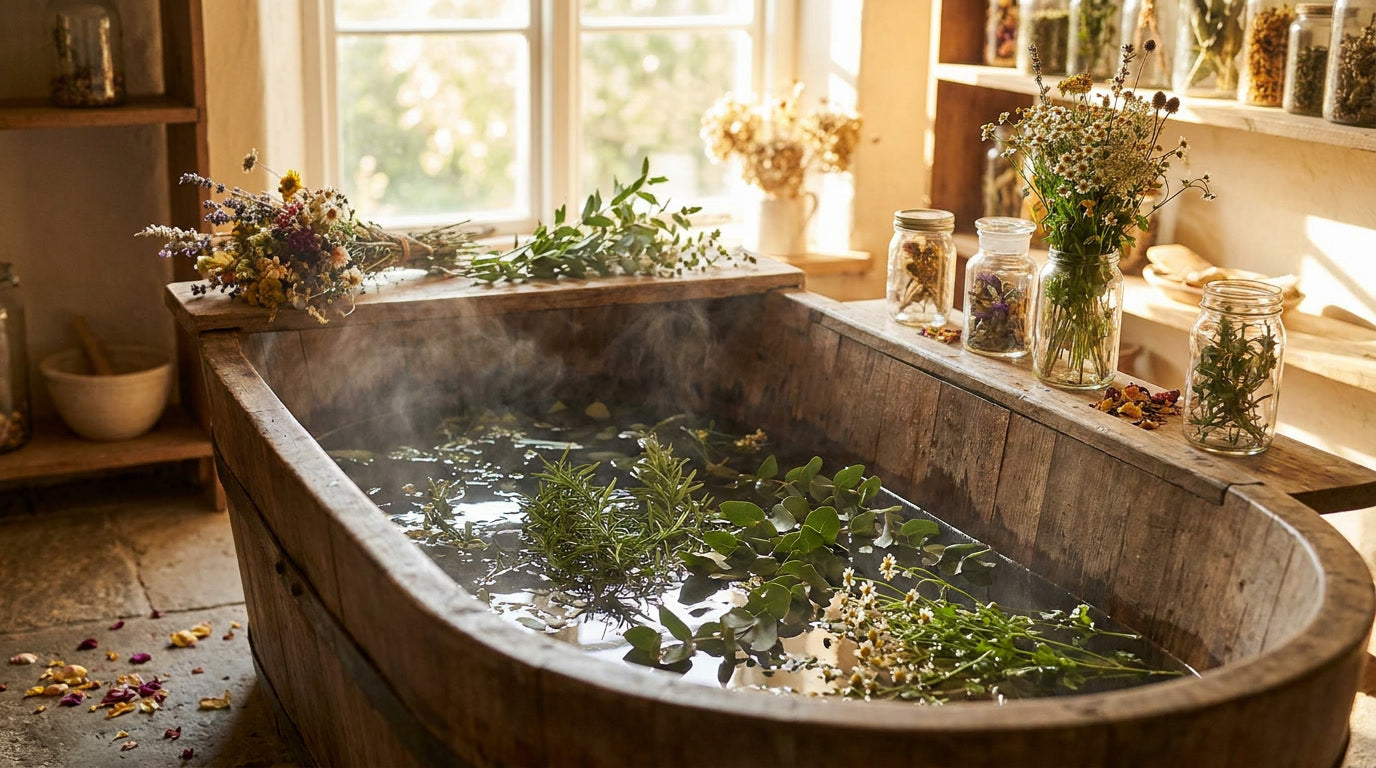
It is especially nice that many of these herbs can be integrated into daily life in the form of teas, tinctures, or herbal blends. A morning ritual with a warm herbal tea combining several of these traditional plants corresponds to the spirit of monastic medicine: regular, mindful, and with joy in nature. all BitterKraft products
Nutrition, exercise, and holistic daily routines
Besides herbal support, nutrition plays an important role in how strongly water retention is perceived in everyday life. A diet high in salt can contribute to the body retaining more fluid in the tissues – this is a physiological mechanism that applies at any age but can be especially noticeable during menopause. Women who prefer traditional natural foods often rely on fresh, minimally processed foods naturally rich in potassium: nuts, seeds, dark green vegetables, legumes, and fresh herbs.
Drinking 1.5 to 2 liters of still water or herbal tea daily supports the body in naturally eliminating excess fluid – a simple but often underestimated daily ritual.
Exercise is a central topic in menopause medicine – whether conventional or naturopathic. Gentle, regular movement such as walking, yoga, swimming, or Qi Gong can help keep the lymphatic system active and improve tissue fluid circulation. Hildegard of Bingen explicitly recommended daily walking in her writings – for body and mind. This recommendation sounds banal but is highly modern in its depth: movement as care, not performance.
Alternating showers and manual lymphatic drainage also have a long tradition in natural medicine. Water treatments inspired by Sebastian Kneipp – that is, warm and cold alternating douches on legs and arms – have been recommended since the 19th century to train the vessels and stimulate circulation. Women who integrate these simple rituals into their morning routine often report a noticeably lighter body feeling throughout the day. Combined with a warm breakfast tea of nettle and dandelion, this creates a holistic morning ritual deeply rooted in European natural healing tradition. Fasting products
Sleep should not be underestimated either. Many women suffer from poor or interrupted sleep during menopause – hot flashes, night sweats, and inner restlessness are common companions. Poor sleep, in turn, affects hormone levels, especially cortisol, which can indirectly influence fluid regulation in the body. Sufficient deep, restorative sleep is therefore not a luxury but an essential building block of well-being during this life phase. Sleep and relaxation products
What a conscious herbal ritual during menopause can look like
The idea of consciously working with herbs daily has a deep cultural significance in monastic medicine. Hildegard of Bingen described the daily use of medicinal plants not as a medical measure but as a form of self-care and inner order. This attitude – herbs as daily companions, not occasional remedies – is one of the most important messages we can take from medieval monastic knowledge. It also corresponds to the modern understanding of prevention and everyday health.
A possible daily ritual for women in menopause:
Morning: A glass of lukewarm water with fresh lemon juice to start the day – historically known as a classic spring remedy in European folk medicine. Then a tea made from nettle, goldenrod, and peppermint.
Midday: A meal rich in fresh vegetables, herbs, and potassium-containing foods. Anacyclus as a spice in soups or stews – entirely in Hildegard’s spirit.
Evening: A relaxing herbal tea, for example with lemon balm and chaste tree. Conscious leg elevation for 15–20 minutes to support lymph circulation.
This ritual is not a medical program but a form of loving daily care – and that is exactly the spirit Hildegard conveys in her writings.
Finished products and herbal blends from the natural food sector can complement and facilitate these rituals. High-quality tincture sets, certified organic herbal blends, or combined preparations from natural medicine make it possible to use traditional plant knowledge even when fresh herbs are not available. Quality is important: dried herbs should be gently processed, preferably organically grown, and free from pesticide residues. Products for women's health
Equally valuable is the social and emotional environment during menopause. Hildegard of Bingen always understood health as a unity of body, mind, and soul – she spoke of “viriditas,” the green life force that slumbers in every person and must be nurtured. Women who consciously perceive menopause as a life phase of change and new strength – not just as a time of loss – often report a deeper sense of well-being. Herbal rituals can be a beautiful bridge: they connect daily body care with mindful pause and the feeling of doing something good for oneself.
Menopause is not an illness but a transformation – and nature offers a rich array of plant support for every phase of a woman’s life.
Those who understand menopause as a time when the body deserves special attention will find a faithful companion in natural medicine. Whether nettle tea in the morning, a walk in nature, a warming spice blend inspired by Hildegard, or a good herbal preparation from the natural food trade – the building blocks of holistic well-being are often simpler than we think. It is not about doing everything perfectly. It is about being there for yourself a little more each day. And in this, Hildegard of Bingen and the entire tradition of natural medicine have always been masters. Hildegard of Bingen products


Leave a comment
This site is protected by hCaptcha and the hCaptcha Privacy Policy and Terms of Service apply.