





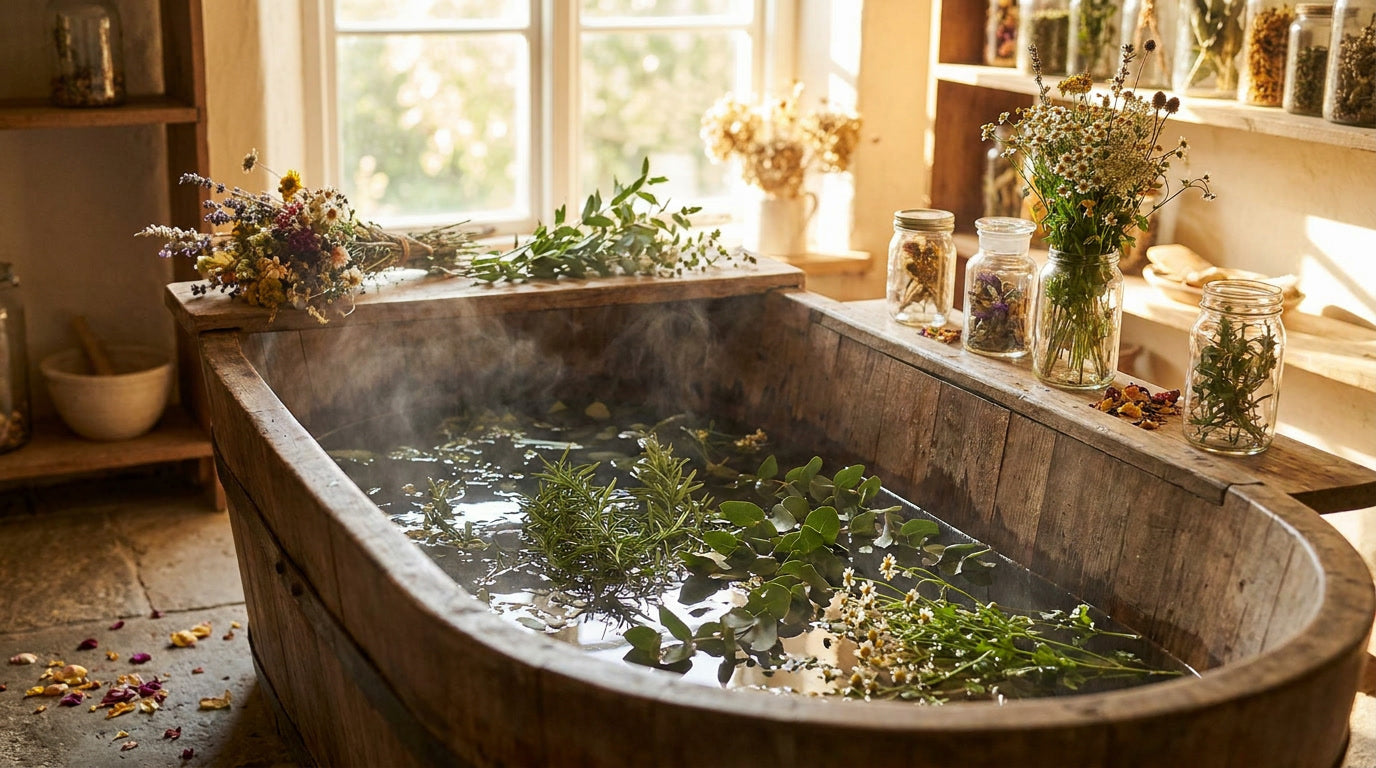
Water has always played a special role in natural medicine – not only as a drink but also as a medium for healing rituals. Even in the monastic medicine of the Middle Ages, herbal baths were an integral part of holistic well-being. Hildegard of Bingen, the significant abbess and naturalist of the 12th century, devoted herself intensively to the question of how a person can return to their natural balance through external applications. Her records on medicinal plants and their diverse uses remain a valuable source to this day – experiencing a remarkable renaissance in modern natural medicine. Herbal baths with Hildegard plants are considered one of the most beautiful and accessible ways to care for the body in a traditional manner.
Hildegard’s Bathing Philosophy: When Water and Plant Knowledge Unite
Hildegard of Bingen did not see bathing as mere body hygiene but as a holistic ritual. In her works “Physica” and “Causae et Curae,” she describes in detail which herbs are suitable for which applications and how warm water can enhance the effects of the plants. For Hildegard, humans were a reflection of nature, and every imbalance in the body could be addressed through the wise use of natural remedies. Her philosophy was based on the concept of “Viriditas” – the green life force of plants – which can be transferred to humans.
What is particularly fascinating is that Hildegard did not view the bath in isolation but placed it in a broader context. For her, an herbal bath was always embedded in a conscious lifestyle that included nutrition, exercise, and inner attitude. This holistic view remains relevant today and explains why herbal baths are so popular as part of a well-being ritual. The warm water opens the pores of the skin, creates warmth in the body, and fosters an atmosphere of calm – ideal conditions to experience traditional plant powers.
The combination of water and plants has its own unique quality. In the warm bath, essential oils and other plant ingredients dissolve, enveloping the body and creating a sensory experience that goes far beyond mere washing. Hildegard described this interplay with a poetry often missing in modern medicine: plants have a “soul” that connects with humans. Whether one shares this language or not – the practice of herbal bathing connects us with a long cultural tradition cherished over generations. Hildegard of Bingen Products
“Every person should know the warm bath, for it opens the pores and lets out what burdens the body.” – Paraphrased from Hildegard of Bingen, Causae et Curae, 12th century. In monastic medicine, baths with selected herbs were considered an important practice for body care and promoting general well-being.
Water Retention in the Body: What Traditional Natural Medicine Says
The feeling of heaviness, especially in the legs, swollen ankles in the evening, or the sensation that the body feels somehow “full” – many people know these conditions from personal experience. In traditional natural medicine and monastic medicine, such states were seen as signs of a disturbed internal balance. The term “dehydration” in this context does not mean a medical treatment but a traditionally passed-down concept: supporting the body through external and internal applications to naturally eliminate excess fluid.
Hildegard of Bingen was well acquainted with this condition and described various plants in her writings that she considered particularly suitable to support the body’s natural balance. Her recommendations included both internal applications – teas, herbal wines, juices – and external ones, such as compresses, herbal bags, and of course baths. The combination of these methods was characteristic of her holistic approach. Plants like nettle, horsetail, birch, and elderberry played a central role – herbs still firmly rooted in traditional European herbal medicine today.
It is important to understand: when “dehydration” through herbal baths is mentioned, it refers to a traditional cultural technique, not a medical therapy. Herbal baths have been appreciated for centuries as a pleasant complement to a balanced lifestyle. They do not replace medical treatment but can support general well-being as a soothing ritual. Especially in the context of modern everyday stresses, many people experience this old practice as a welcome return to nature-connected traditions. Fasting Products
Herbal baths with Hildegard plants have been traditionally valued since the Middle Ages as a ritual for caring for physical well-being – combining the relaxing element of warm water with the culturally significant power of selected medicinal herbs.
The Most Important Hildegard Herbs for the Dehydration Bath
Hildegard of Bingen left us with impressive plant knowledge. Not all of her recommended herbs are still easily accessible or well known today, but some have proven particularly timeless. For herbal baths traditionally associated with dehydration and relieving the body, certain plants stand out. These herbs have been anchored in European monastic medicine for centuries and are still appreciated in modern natural medicine.
Quality of the plants used is crucial for a good Hildegard herbal bath. Hildegard herself always emphasized the importance of fresh, strong plants harvested at the right time. In modern use, many people rely on high-quality dried herbs or concentrated herbal extracts. Basically, the more natural and gentle the processing, the more of the “Viriditas” – the green life force – is preserved, which Hildegard valued so highly.
The following list provides an overview of the most important traditional herbs for the Hildegard dehydration bath. They all share a long history in European herbal medicine and are mentioned in Hildegard’s plant writings or belong to her tradition. Combined in the bath, they create a special sensory experience – from the scent to the warmth to the gentle feeling of relief. Hildegard of Bingen Products
These Hildegard herbs are traditionally valued for dehydration baths:
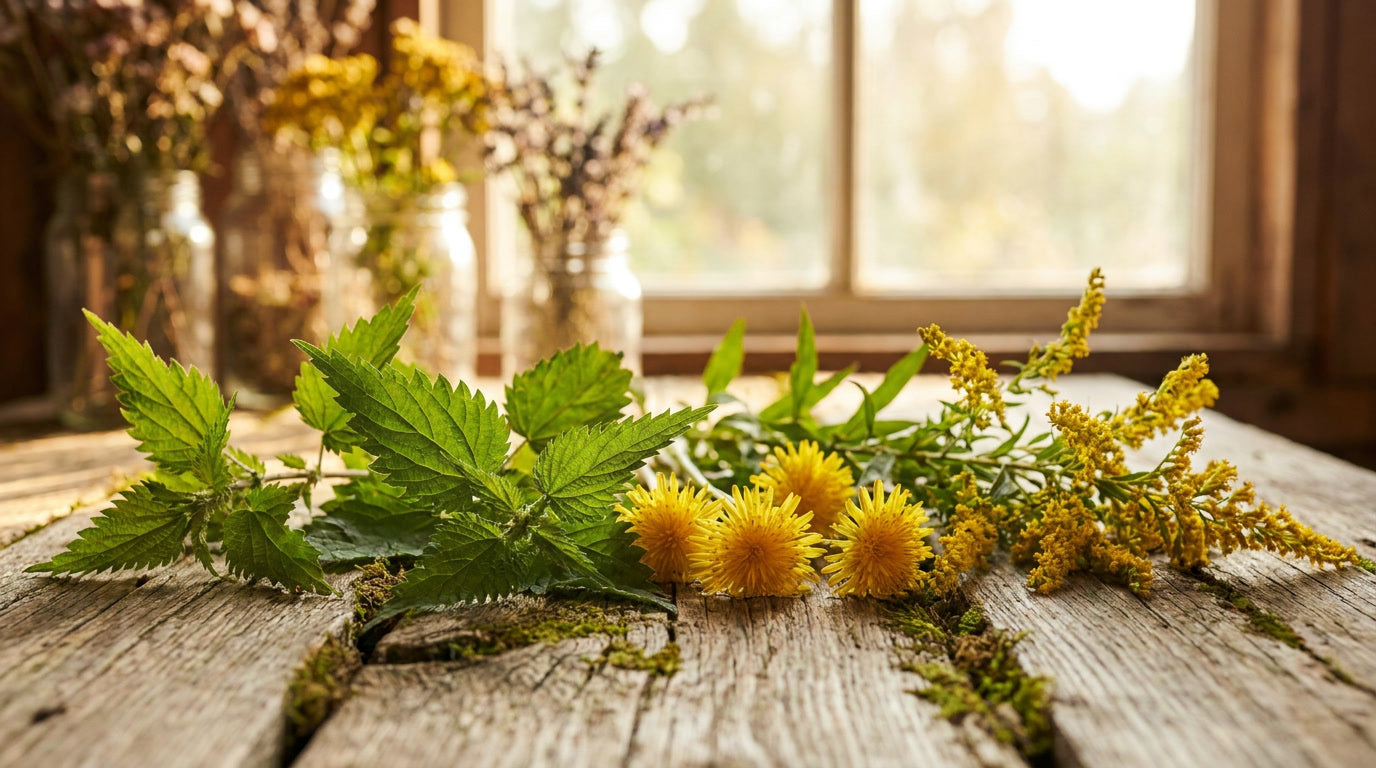
- Nettle (Urtica dioica): Known in monastic medicine for centuries and mentioned by Hildegard in many contexts. Traditionally used both internally as tea and externally in baths and compresses, it is considered one of the best-known native medicinal plants.
- Horsetail (Equisetum arvense): Historically called “scouring rush,” horsetail is one of the oldest medicinal plants on earth and firmly established in European herbal medicine. It has been valued for generations in traditional bath applications and fits perfectly into Hildegard’s plant tradition.
- Birch leaves (Betula pendula): Birch is one of the plants that play a central role in European folk medicine. Its fresh, slightly resinous-green aroma in the bath is perceived as refreshing and invigorating; in monastic medicine, birch applications were traditionally appreciated in spring as part of cleansing rituals.
- Elderberry (Sambucus nigra): Hildegard of Bingen highly valued elderberry – it appears in several of her writings. Both the flowers and berries were traditionally used; for baths, dried flowers are especially suitable, giving the water a pleasant, floral scent.
- Lovage (Levisticum officinale): Lovage was ubiquitous in medieval monastery gardens and explicitly mentioned by Hildegard in her writings. The strong, slightly spicy herb is traditionally cited in natural medicine in connection with supporting natural elimination processes.
- Parsley (Petroselinum crispum): Parsley also appears in Hildegard’s works, to which she attributed various properties. In concentrated form – as a strong herbal extract for bathwater – parsley is an interesting component of herbal baths with a long tradition.
What’s behind the Hildegard herbal bath?
An herbal bath works on several levels: the warm water (ideally 36–38 °C) opens the skin pores and creates a pleasant warmth in the body. The herbal ingredients – essential oils, tannins, flavonoids – disperse in the bathwater and create an intense sensory experience. The steam transfers volatile aromatic substances into the air. The interplay of warmth, scent, silence, and connection to nature makes the Hildegard herbal bath a holistic ritual that addresses both body and mind. In traditional monastic medicine, the regularity of use was especially emphasized: not the single bath, but the ritual over a longer period was considered the key to well-being.
How to Prepare Your Hildegard Herbal Bath Properly
Preparing a Hildegard herbal bath is easier than many think – and the effort is part of the ritual. Hildegard herself emphasized the importance of conscious preparation: collecting, smelling, and processing the herbs is already a first step to entering a calm, receptive mood. For modern use, high-quality dried herbs or herbal blends available in specialty shops or natural medicine stores are suitable. Look for organic quality and gentle drying to preserve as many plant aromas as possible.
For a classic Hildegard herbal infusion for the bath, boil a generous handful of the chosen herbs (or herbal blend) in about 1–2 liters of water and let the mixture steep for 15–20 minutes. Then strain the herbs and add the concentrated extract to the filled bathtub. Alternatively, you can put the herbs in a linen bag and hang it directly in the bathwater – a method also passed down in monastic medicine. The water temperature should be comfortably warm but not too hot – between 36 and 38 degrees Celsius is ideal.
The bathing time should be at least 20 minutes so that the ritual can fully unfold as a relaxing experience. Hildegard recommended enjoying the bath in silence or with soft music and using the time for inner reflection. After the bath, it is important to keep warm – best wrapped in a warm bathrobe and resting for an hour. During this rest phase, the body can “process” the experience. Many people report that after a Hildegard herbal bath, they experience a deep, restful sleep. Sleep and Relaxation Products
For optimal effect, traditional monastic medicine recommends regular use of the Hildegard herbal bath – about two to three times a week over several weeks – and always a rest period after the bath.
Hildegard research repeatedly points to the importance of the ritual itself. Dr. Gottfried Hertzka, a pioneer of Hildegard medicine in the 20th century, emphasized in his works that the conscious time-out and connection to nature have an independent value – regardless of the plants used. The combination of rest, warmth, and plant world is a key factor for subjective well-being.
Herbal Baths as Part of a Holistic Well-Being Ritual
Hildegard of Bingen never saw the bath as an isolated measure. In her teachings, the herbal bath was embedded in a comprehensive concept of nutrition, exercise, prayers, and harmony with the seasons. This holistic perspective remains extremely valuable today. Those who make herbal baths a regular part of their daily routine connect with a centuries-old tradition of conscious body care. In our fast-paced times, this may be more valuable than ever.
Herbal baths combine especially well with other aspects of Hildegard medicine. A complementary herbal tea made from nettle or birch leaves, a conscious, plant-focused diet, and regular walks in nature – all together create an atmosphere in which the body can return to its natural balance. Hildegard spoke of “order” as the fundamental principle of health: when body, mind, and soul are in harmony, a person is in their best condition. The herbal bath is a tool to maintain this order. BitterKraft Original
For people new to the world of natural medicine, the herbal bath is a wonderful introduction. It requires no special prior knowledge, is easily accessible, and immediately creates a sensual, positive experience. Anyone who has experienced the calm and well-being of a well-prepared Hildegard herbal bath intuitively understands why this tradition has endured so long. And those who want to delve deeper will find a wealth of further inspiration for a nature-connected, balanced life in Hildegard’s writings and modern Hildegard medicine. all Bitterkraft products
The Hildegard herbal bath is more than a wellness routine: it is a lived piece of cultural history, a connection to centuries-old plant knowledge, and a ritual of self-care that nourishes both body and mind equally.
Practical Tips for Your Hildegard Herbal Bath Ritual:
✦ Choose herbs: Start with a simple mix of nettle and birch leaves – both are easily available and well tolerated.
✦ Consider the season: Hildegard strongly oriented herself to the seasons. Spring and autumn are considered especially suitable times for cleansing and dehydration baths in monastic medicine.
✦ Quality over quantity: Less, but high-quality organic herbs are better than large amounts of inferior quality.
✦ Plan rest: Reserve at least 1.5 hours – 20 minutes for the bath, the rest for post-bath relaxation.
✦ Regularity: A single bath is nice, but tradition emphasizes regularity. Two to three baths per week over several weeks are considered the ideal rhythm.
✦ Awareness: Put your smartphone aside. The Hildegard bath is a time for inner reflection – use it consciously.


Leave a comment
This site is protected by hCaptcha and the hCaptcha Privacy Policy and Terms of Service apply.