

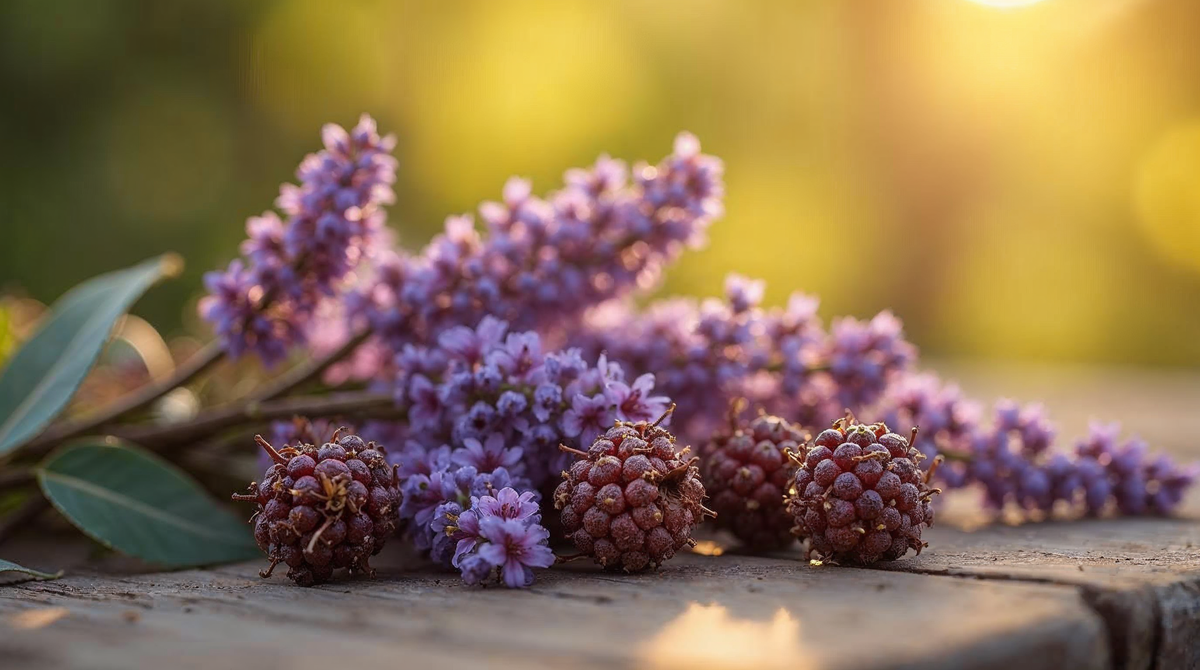
Jede dritte Frau kennt es: In den Tagen vor der Menstruation verändert sich etwas – die Stimmung schwankt, der Körper fühlt sich schwer an, und das innere Gleichgewicht scheint aus dem Takt geraten zu sein. Das prämenstruelle Syndrom, kurz PMS, begleitet viele Frauen regelmäßig durch ihren Zyklus und kann die Lebensqualität spürbar beeinflussen. Was die wenigsten wissen: Eine kleine, unscheinbare Pflanze aus dem Mittelmeerraum wird seit Jahrhunderten traditionsgemäß eingesetzt, um Frauen in dieser besonderen Phase ihres Zyklus zu begleiten – der Mönchspfeffer, botanisch Vitex agnus-castus. In der Naturheilkunde gilt er als eine der bekanntesten Frauenpflanzen überhaupt, und auch in der Klostermedizin der Hildegard von Bingen nahm er einen besonderen Platz ein. Dieser Artikel nimmt dich mit auf eine Reise durch die Geschichte und das Wissen rund um diese faszinierende Heilpflanze – und zeigt, wie sie heute als Teil eines bewussten Lebensstils betrachtet werden kann. Produkte für Frauengesundheit
Was ist Mönchspfeffer – Geschichte und Tradition einer besonderen Pflanze
Der Mönchspfeffer ist eine Pflanze mit einer langen und faszinierenden Geschichte. Bereits in der Antike war Vitex agnus-castus bekannt und geschätzt – Griechen und Römer nutzten die kleinen, pfefferkornähnlichen Früchte des Strauchs für verschiedene Zwecke. Der Name „Agnus castus" lässt sich mit „keusches Lamm" übersetzen, was auf den mittelalterlichen Ruf der Pflanze hinweist: Mönche sollen die Beeren ihrer Mahlzeit beigefügt haben, um die Keuschheit zu fördern – daher auch der volkstümliche Name „Keuschlamm" oder eben „Mönchspfeffer". Diese historische Verwendung macht deutlich, dass die Pflanze schon früh mit dem Thema Hormonsystem und Wohlbefinden in Verbindung gebracht wurde.
In der Klostermedizin des Mittelalters spielte der Mönchspfeffer ebenfalls eine beachtliche Rolle. Hildegard von Bingen, die große Naturheilerin und Mystikerin des 12. Jahrhunderts, beschrieb in ihren Schriften zahlreiche Pflanzen, die sie als Geschenke der Schöpfung betrachtete und für das körperliche wie seelische Wohlbefinden des Menschen empfahl. Zwar taucht der Mönchspfeffer nicht in allen ihren Werken mit gleicher Ausführlichkeit auf wie etwa Bertram oder Quendel, doch das Wissen um Vitex agnus-castus war im klösterlichen Heilwissen fest verankert. Die Nonnen und Mönche der mittelalterlichen Klostergärten pflegten dieses Pflanzenwissen mit großer Sorgfalt und gaben es von Generation zu Generation weiter. Hildegard von Bingen Produkte
Geografisch beheimatet ist der Mönchspfeffer vorwiegend im Mittelmeerraum – in Südeuropa, Nordafrika und Westasien wächst der sommergrüne Strauch wild an Flussufern und Küsten. Heute wird er jedoch in vielen Teilen der Welt kultiviert, da seine Früchte in der Naturheilkunde weltweit geschätzt werden. Die Ernte der kleinen, dunkelvioletten Beeren erfolgt im Herbst, wenn sie ihre volle Reife erreicht haben. Getrocknet duften sie leicht pfeffrig-aromatisch, was auch erklärt, warum man sie im Mittelalter tatsächlich als Pfefferersatz verwendete. Heute interessiert sich die Naturheilkunde vor allem für ihre traditionellen Anwendungsfelder im Bereich des weiblichen Wohlbefindens.
Pflanzenprofil: Vitex agnus-castus
Botanischer Name: Vitex agnus-castus
Familie: Lippenblütler (Lamiaceae)
Verwendete Teile: Früchte (Beeren), seltener Blätter
Heimat: Mittelmeerraum, Vorderasien
Traditionelle Anwendung: Seit der Antike in der Frauenheilkunde bekannt; klösterliche Überlieferung im europäischen Mittelalter
Besonderheit: Gehört zu den wenigen Heilpflanzen, die seit über 2.000 Jahren nahezu ausschließlich im Kontext des weiblichen Zyklus traditionsgemäß eingesetzt werden
Der weibliche Zyklus und PMS – wenn das innere Gleichgewicht schwankt
Um zu verstehen, warum der Mönchspfeffer im Kontext des weiblichen Zyklus so häufig erwähnt wird, lohnt sich ein kurzer Blick auf das komplexe Zusammenspiel, das jeden Monat im Körper einer Frau stattfindet. Der weibliche Zyklus ist ein faszinierendes Gesamtkunstwerk der Natur – ein fein abgestimmtes Wechselspiel aus verschiedenen Phasen, das nicht nur die Fruchtbarkeit, sondern auch Stimmung, Energie und allgemeines Wohlbefinden beeinflusst. In der ersten Zyklushälfte, der sogenannten Follikelphase, dominieren bestimmte Prozesse, die vielen Frauen ein Gefühl von Leichtigkeit und Energie bescheren. Nach dem Eisprung beginnt die Lutealphase – und genau hier setzt für manche Frauen eine Phase ein, die als besonders herausfordernd empfunden wird.
Das prämenstruelle Syndrom (PMS) bezeichnet eine Vielzahl von körperlichen und emotionalen Begleiterscheinungen, die in der zweiten Zyklushälfte auftreten können. Schätzungen zufolge erleben bis zu 80 % aller Frauen im gebärfähigen Alter zumindest gelegentlich prämenstruelle Veränderungen – rund 20–30 % beschreiben diese als deutlich beeinträchtigend für ihren Alltag.
Zu den häufig beschriebenen Begleiterscheinungen des PMS gehören Stimmungsschwankungen, Reizbarkeit, Antriebslosigkeit, Spannungsgefühle in der Brust, Wassereinlagerungen, Kopfschmerzen und Schlafveränderungen. Für viele Frauen ist es ein monatlich wiederkehrendes Muster, das sich wie ein Rhythmus in ihr Leben eingraviert hat – manchmal kaum wahrnehmbar, manchmal sehr belastend. Die gute Nachricht: In der Naturheilkunde und der überlieferten Pflanzenheilkunde gibt es eine reiche Tradition, Frauen in dieser Zyklusphase auf sanfte, natürliche Weise zu begleiten. Produkte für Frauengesundheit
Besonders interessant ist die Perspektive der Klostermedizin auf den weiblichen Zyklus: Hildegard von Bingen betrachtete den Körper der Frau als ein System, das in enger Verbindung mit den Rhythmen der Natur steht. In ihren Schriften beschreibt sie, wie innere Ungleichgewichte – die sie mit dem Begriff der „Viriditas", der Lebenskraft, in Verbindung brachte – das Wohlbefinden beeinflussen. Das Wissen um Heilpflanzen, Ernährung und Lebensstil war für Hildegard kein Selbstzweck, sondern Ausdruck eines tiefen Verständnisses der göttlichen Ordnung im menschlichen Körper. Dieses ganzheitliche Denken ist es, das die Klostermedizin bis heute so anziehend macht.
„Die Frau trägt in sich den Mond, der wächst und abnimmt. Wer ihr Wesen verstehen will, muss die Natur in ihrer ganzen Tiefe verstehen."
— Sinngemäße Überlieferung aus der mittelalterlichen Klostermedizin, angelehnt an Hildegards ganzheitliches Naturverständnis
Mönchspfeffer in der Naturheilkunde – traditionelle Anwendung und überliefertes Wissen
In der naturheilkundlichen Tradition Europas wird Mönchspfeffer seit Jahrhunderten traditionsgemäß als Begleitpflanze für Frauen in den verschiedenen Lebensphasen beschrieben. Besonders im Bereich des prämenstruellen Wohlbefindens ist er eine der meistgenannten Heilpflanzen überhaupt. Volksmedizinische Überlieferungen aus dem Mittelmeerraum und Mitteleuropa erwähnen ihn im Zusammenhang mit einem ausgeglichenen Empfinden während der zweiten Zyklushälfte – und dieses traditionsgemäße Wissen hat sich durch die Jahrhunderte erhalten und erlebt heute eine Renaissance in der modernen Naturheilkunde.
Mönchspfeffer gehört zu den wenigen Heilpflanzen, für die ein spezifisches Anwendungsfeld in der Frauengesundheit seit der Antike nahezu ununterbrochen überliefert ist. Diese Kontinuität über mehr als 2.000 Jahre macht ihn zu einem der traditionsreichsten Frauenkräuter der westlichen Phytotherapie.
Die Beeren des Mönchspfeffers enthalten eine Vielzahl von pflanzlichen Inhaltsstoffen, die in der Naturheilkunde als relevant für das weibliche Wohlbefinden betrachtet werden. Dazu gehören unter anderem iridoide Glykoside wie Aucubin und Agnusid, Flavonoide wie Casticin, ätherische Öle sowie Diterpene. In der traditionsgemäßen Anwendung wird angenommen, dass das Zusammenspiel dieser Inhaltsstoffe eine Rolle dabei spielt, warum die Pflanze so eng mit dem weiblichen Zyklus in Verbindung gebracht wird. Wichtig ist dabei: Es handelt sich um ein naturheilkundliches Kulturgut, keine Therapie – die Pflanze wird als Begleitung, nicht als Behandlung verstanden.
Was steckt im Mönchspfeffer? – Die wichtigsten Inhaltsstoffe der Früchte
Iridoide (Aucubin, Agnusid): Charakteristische Inhaltsstoffe der Mönchspfefferbeeren, die in der pflanzenheilkundlichen Literatur besondere Beachtung finden.
Flavonoide (Casticin u.a.): Pflanzliche Polyphenole, die auch in anderen naturheilkundlich geschätzten Pflanzen vorkommen und ein breites traditionelles Anwendungsspektrum haben.
Diterpene (Rotundifuran u.a.): Sekundäre Pflanzenstoffe, die in der Forschung zur Wirkstoffchemie von Vitex agnus-castus untersucht werden.
Ätherische Öle: Verleihen den Beeren ihren charakteristischen pfeffrig-aromatischen Duft und tragen zur sensorischen Qualität von Zubereitungen bei.
Fettsäuren und Flavonglykoside: Ergänzen das Wirkstoffprofil und machen den Mönchspfeffer zu einem phytochemisch besonders vielschichtigen Pflanzenmaterial.
Diese Heilpflanzen werden traditionell begleitend für den weiblichen Zyklus geschätzt:
- Mönchspfeffer (Vitex agnus-castus): Wird seit der Antike traditionsgemäß als Begleitpflanze für Frauen in der zweiten Zyklushälfte verwendet; eine der bekanntesten Frauenpflanzen der europäischen Naturheilkunde.
- Frauenmantel (Alchemilla vulgaris): In der mitteleuropäischen Kräuterheilkunde seit Jahrhunderten geschätzt; sein Name verrät bereits, für wen er traditionsgemäß vorgesehen war – für die Frau in all ihren Lebensphasen.
- Schafgarbe (Achillea millefolium): Hildegard von Bingen erwähnte die Schafgarbe in ihren Schriften als wertvolles Kraut; sie wird in der Volksmedizin seit Generationen mit dem weiblichen Wohlbefinden in Verbindung gebracht.
- Himbeere (Rubus idaeus): Besonders die Blätter der Himbeere sind in der Überlieferung als Frauenkraut bekannt; werden traditionsgemäß als Tee in der zweiten Zyklushälfte und während der Schwangerschaft verwendet.
- Passionsblume (Passiflora incarnata): Wird in der Naturheilkunde traditionell für das innere Gleichgewicht und ein ruhiges Gemüt geschätzt – eine wertvolle Ergänzung in Phasen, in denen die Stimmung schwanken kann.
In der heutigen naturheilkundlichen Praxis wird Mönchspfeffer häufig als Tinktur, Trockenextrakt in Kapselform oder als Tee eingenommen. Die Zubereitungsform beeinflusst dabei die Konzentration der Inhaltsstoffe – standardisierte Extrakte bieten eine gleichmäßigere Zusammensetzung als Hausteezubereitungen. Wer sich für Mönchspfeffer als Teil seines naturheilkundlichen Alltags interessiert, sollte auf Qualitätsprodukte aus kontrolliertem Anbau setzen, bei denen der Gehalt an den relevanten Inhaltsstoffen transparent kommuniziert wird. Produkte für Frauengesundheit
Mönchspfeffer im Alltag anwenden – Tipps für einen bewussten Umgang
Wer Mönchspfeffer als Teil seines naturheilkundlichen Alltags entdecken möchte, sollte zunächst verstehen, dass Heilpflanzen keine kurzfristigen Schnelllösungen sind. In der Tradition der Klostermedizin und der klassischen Phytotherapie wurden Heilpflanzen stets als langfristige Begleiter betrachtet – als Bestandteil eines bewussten Lebensstils, der auf Rhythmus, Geduld und Kontinuität aufbaut. Hildegard von Bingen betonte in ihren Schriften immer wieder die Bedeutung der Regelmäßigkeit und der inneren Haltung beim Umgang mit Heilkräutern. Dieses Verständnis lässt sich wunderbar auf die moderne Anwendung von Mönchspfeffer übertragen: Er ist kein einmaliger Eingriff, sondern eine monatliche Begleitung.
Praktisch gesehen wird Mönchspfeffer üblicherweise täglich über einen Zeitraum von mehreren Zyklen eingenommen – typischerweise morgens, zur gleichen Tageszeit, um einen gleichmäßigen Rhythmus zu unterstützen. Diese Regelmäßigkeit ist in der naturheilkundlichen Tradition bewusst verankert: So wie der Zyklus selbst einem Rhythmus folgt, soll auch die Einnahme der Begleitpflanze rhythmisch erfolgen. Ob als Kapsel, Tinktur oder Tee – entscheidend ist die Kontinuität der Anwendung über mehrere Monate. Viele Frauen integrieren die Einnahme in ein morgendliches Ritual, das ihnen dabei hilft, achtsam in den Tag zu starten und die eigene Zyklusgesundheit bewusst wahrzunehmen. Produkte für Frauengesundheit
Mönchspfeffer entfaltet seine traditionellen Vorzüge am besten im Rahmen eines ganzheitlichen Lebensstils – kombiniert mit zyklusgerechter Ernährung, ausreichend Bewegung und bewussten Erholungsphasen. In der Klostermedizin war die einzelne Heilpflanze immer nur ein Teil eines umfassenden Konzepts aus Ernährung, Bewegung und innerer Haltung.
Ein besonders schöner Aspekt der naturheilkundlichen Tradition ist das Bewusstsein für die Verbindung zwischen Innen und Außen. Hildegard von Bingen lehrte, dass der Mensch in einem ständigen Dialog mit der Natur steht – und dass das Wohlbefinden immer dann am größten ist, wenn dieser Dialog gepflegt wird. Im Kontext des weiblichen Zyklus bedeutet das: Frauen, die ihre Zyklusdynamik kennen und respektieren, können gezielter auf naturheilkundliche Unterstützung zurückgreifen. Das Führen eines Zyklustagebuchs, das Beobachten der eigenen Stimmung und körperlichen Empfindungen sowie das bewusste Einplanen von Ruhephasen vor der Menstruation sind einfache, aber wirkungsvolle Bausteine eines zyklusgerechten Lebensstils. Mönchspfeffer kann dabei ein natürlicher Begleiter sein – im Sinne eines „Hinzufügens" von pflanzlicher Unterstützung, nicht im Sinne einer Behandlung.
„In einer Untersuchung an einer deutschen Universität wurden Frauen, die Mönchspfefferextrakt über mehrere Zyklen einnahmen, zu ihrem subjektiven Wohlbefinden befragt. Die Teilnehmerinnen berichteten von einem veränderten Erleben der prämenstruellen Phase – ein Hinweis auf die subjektive Bedeutung dieser traditionsreichen Pflanze, der jedoch keine Wirkungsaussage darstellt und weiterer Forschung bedarf."
— Zusammenfassung eines wissenschaftlichen Beobachtungsberichts aus dem deutschsprachigen Raum (2019), zitiert im Sinne historisch-kultureller Dokumentation
Für Frauen, die Mönchspfeffer erstmals ausprobieren möchten, empfiehlt sich ein Gespräch mit einer Heilpraktikerin oder Ärztin, die Erfahrung in der Naturheilkunde hat. Besonders wichtig ist dieser Schritt für Frauen, die bereits pflanzliche oder synthetische Hormonpräparate einnehmen, da Wechselwirkungen in der Fachliteratur diskutiert werden. Auch während der Schwangerschaft und Stillzeit sollte Mönchspfeffer nicht ohne Rücksprache mit einer Fachkraft eingesetzt werden. Dieser verantwortungsvolle Umgang mit Heilpflanzen entspricht ganz dem Geist der Klostermedizin, die stets auf fundierten Kenntnissen und individueller Begleitung basierte – nie auf blindem Konsum. Hildegard von Bingen Produkte
Mönchspfeffer im Kontext: Ganzheitliche Zyklusgesundheit nach dem Vorbild der Klostermedizin
Die Klostermedizin des Mittelalters war ihrer Zeit in vielerlei Hinsicht weit voraus – nicht weil sie über moderne Laborgeräte oder pharmakologisches Fachwissen verfügte, sondern weil sie den Menschen immer als Ganzes betrachtete. Hildegard von Bingen unterschied nicht zwischen körperlichem und seelischem Wohlbefinden – für sie war beides untrennbar miteinander verbunden. Diese holistische Sichtweise prägt bis heute das naturheilkundliche Denken und macht sie so anschlussfähig für den modernen Alltag. Gerade im Bereich der Zyklusgesundheit zeigt sich, wie wertvoll dieser ganzheitliche Ansatz ist: PMS ist selten ein isoliertes körperliches Phänomen – es ist ein Signal des gesamten Systems.
Neben dem Einsatz von Heilpflanzen wie dem Mönchspfeffer empfiehlt die klostermedizinische Tradition auch eine angepasste Ernährung als zentralen Baustein des Wohlbefindens. Hildegard betonte die Bedeutung von „guten Speisen" – Lebensmitteln, die dem Körper Kraft geben, ohne ihn zu belasten. Im Sinne der Zyklusgesundheit bedeutet das: In der zweiten Zyklushälfte können wärmende, leicht verdauliche Speisen, ausreichend Magnesium aus Nüssen und grünem Blattgemüse sowie eine Reduktion von Zucker und Koffein dazu beitragen, dass sich der Körper insgesamt ausgewogener anfühlt. Ergänzend dazu schätzte die Klostermedizin die Bedeutung von Bewegung an der frischen Luft – moderate körperliche Aktivität, die den Körper belebt, ohne ihn zu überfordern. Hildegard von Bingen Produkte
Auch das Thema Schlaf ist im Kontext der Zyklusgesundheit nicht zu unterschätzen. Viele Frauen berichten, dass ihre Schlafqualität in der prämenstruellen Phase nachlässt – Einschlafschwierigkeiten, unruhiger Schlaf und frühes Erwachen sind häufige Begleiter dieser Zeit. Die Klostermedizin kannte den Wert des Schlafes als regenerativen Prozess sehr wohl – und empfahl für unruhige Nächte Kräuteranwendungen wie Lavendel und Melisse, warme Kräutertees vor dem Schlafengehen sowie das bewusste Abschalten von Aktivitäten in den Abendstunden. In Verbindung mit Mönchspfeffer als zyklusbegleitende Pflanze kann ein solches abendliches Ritual einen wertvollen Beitrag zu mehr Ausgeglichenheit leisten. Schlaf- und Entspannungsprodukte
Abschließend lässt sich sagen: Mönchspfeffer ist weit mehr als eine Modeerscheinung in der modernen Naturheilkunde. Er ist ein Zeuge einer jahrtausendealten Tradition, in der Frauen ihr Wissen über die eigene Natur pflegten und weitergaben – von Generation zu Generation, von Kräutergarten zu Kräutergarten. Wenn wir heute zu dieser Pflanze greifen, knüpfen wir an eine Kette des Wissens an, die bis in die Antike zurückreicht. Das ist etwas zutiefst Verbindendes – und gleichzeitig eine Einladung, die eigene Zyklusgesundheit mit Neugier, Respekt und Geduld zu erkunden. Die Natur hat uns mit diesem kleinen, pfeffrigen Strauch ein Geschenk hinterlassen. Wir müssen es nur annehmen. Produkte für Frauengesundheit

Hinterlasse einen Kommentar
Diese Website ist durch hCaptcha geschützt und es gelten die allgemeinen Geschäftsbedingungen und Datenschutzbestimmungen von hCaptcha.