





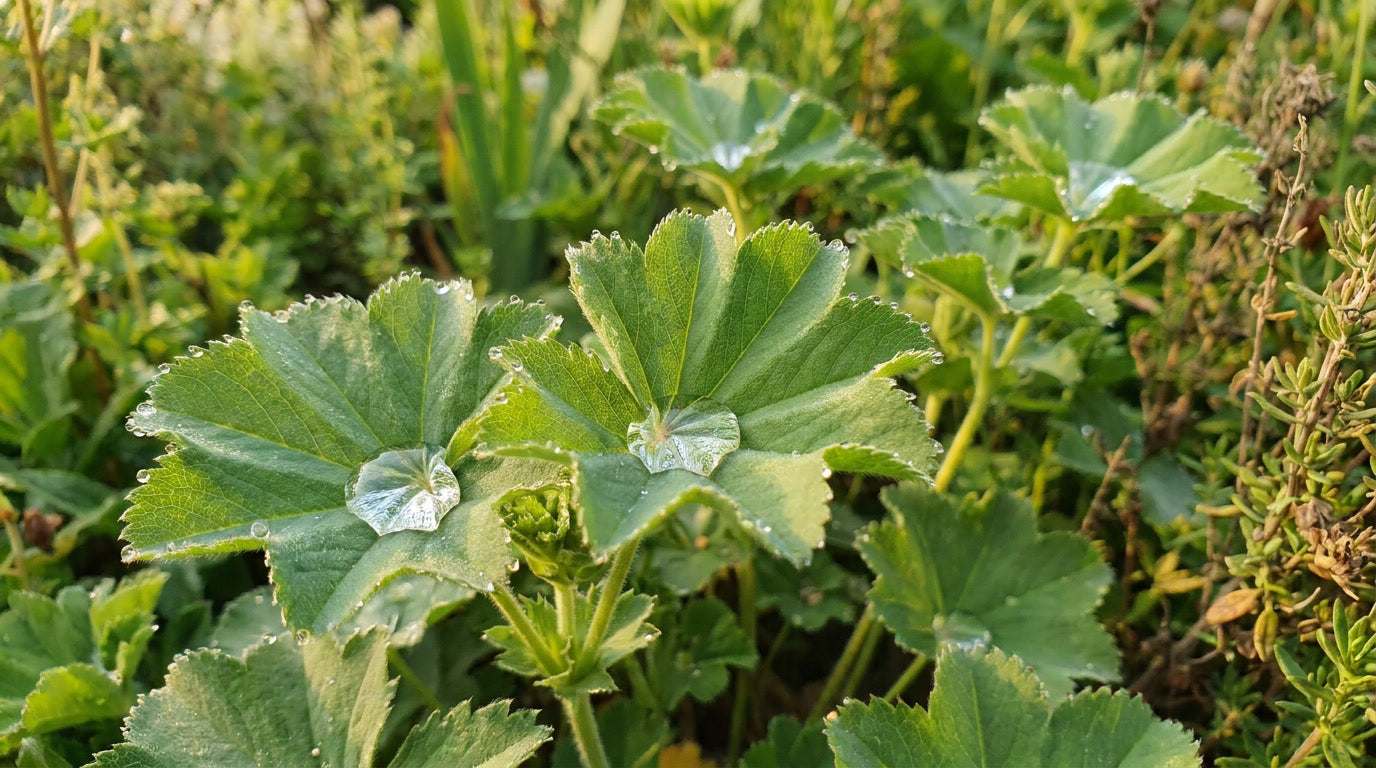
When hands appear swollen in the morning, legs feel heavy, and shoes barely fit by evening – many women know this uncomfortable feeling all too well. Water retention, medically known as edema, is one of the most common complaints addressed by women in naturopathy. What modern women often don’t know: as early as the 12th century, one of the most remarkable healers in history was aware of a special herb that played an important role in monastic medicine – lady’s mantle. Hildegard von Bingen products This delicate, dew-collecting medicinal herb with its characteristic folded leaf has a tradition spanning thousands of years as a companion to women’s health and is now being rediscovered.
Lady’s Mantle – A Herb with History and Feminine Symbolism
Lady’s mantle (Alchemilla vulgaris) is not named without reason. Its characteristic fan-shaped leaves, which resemble a pleated cloak, remarkably collect dew and raindrops in their center – a phenomenon that fascinated medieval alchemists, who called the water collected there “heaven’s tears” or “Aqua alchimistica.” This magical-seeming property gave the herb an early special status in herbal medicine.
Throughout the long history of European herbal medicine, lady’s mantle has been primarily regarded as a plant for women. From medieval monastery gardens to peasant gardens of past centuries, it was considered a faithful companion in all phases of a woman’s life. Whether young women seeking support during their menstrual cycle or older women in menopause – lady’s mantle was always part of the herbal support program. Products for women’s health This long tradition makes it one of the best-known women’s herbs in European naturopathy.
Botanically, lady’s mantle belongs to the rose family (Rosaceae) and is native throughout Europe on moist meadows, along paths, and in mountainous regions. Its small, yellowish-green flowers may seem inconspicuous at first glance, but the entire plant – from the delicate leaves to the flowers – unfolds a special effect within herbal tradition. In phytotherapy, mainly the above-ground herb is used, harvested during flowering and gently dried to preserve its valuable ingredients.
“Lady’s mantle has been regularly mentioned in Central European herbal books since the 16th century and was considered one of the most important women’s herbs. However, its folk medicinal use dates far back into pre-Christian times.” – Historical Herbal Medicine, Central Europe
Hildegard von Bingen and the Knowledge of Water Balance and Harmony
Hildegard von Bingen (1098–1179), Benedictine nun, mystic, and one of the most significant natural healers of the Middle Ages, dealt extensively with the effects of herbs on the human body in her main work “Physica” (also known as “Liber Subtilitatum”). Her herbal knowledge was extraordinarily nuanced for her time, distinguishing between different body types, seasons, and life phases. Hildegard von Bingen products Monastic medicine according to Hildegard views the body as a system of flowing forces, where inner balance – the so-called “Viriditas,” the green life force – is crucial.
Water retention was interpreted in monastic medicine as a sign that the natural flow within the body had come to a halt. The concept of “moisture” and “damp imbalance” played a central role in Hildegard’s herbal teachings. Many of the herbs she recommended were traditionally associated with striving for a balanced body fullness. Lady’s mantle fits this picture particularly well, as it has been regarded for centuries as an herb that can gently support a woman’s inner balance.
Whether Hildegard explicitly described lady’s mantle in its known form today is not fully clarified by research – but the monastic medicine tradition that draws on her legacy has established lady’s mantle as a fixed part of the female herbal program. Modern followers of Hildegard medicine, including naturopaths, herbalists, and natural healers, see lady’s mantle as a classic example of plants traditionally valued as gentle companions to the female body – without pharmacological promises but with deeply rooted cultural trust.
What’s in Lady’s Mantle?
Lady’s mantle contains various ingredients that play a role in herbal tradition:
• Tannins: Tannins are characteristic components of lady’s mantle and make it particularly interesting in herbal tradition.
• Flavonoids: These secondary plant compounds occur in many medicinal plants and have been the subject of herbal interest for centuries.
• Bitter substances: Lady’s mantle contains mild bitter substances, placing it in the large family of traditional bitter plants. BitterKraft Original
• Salicylic acid derivatives: Historically, these compounds were valued in folk medicine.
• Essential oils: The typical slightly herbaceous-spicy scent of lady’s mantle comes from its volatile oils.
Lady’s mantle has been traditionally used for centuries as a companion to women’s health – especially in life phases when physical balance is sought. Its reputation as a “women’s herb” goes far back into European herbal history.
Water Retention from a Naturopathic Perspective: What Women Should Know
Water retention occurs when tissue fluid in the body does not circulate optimally and accumulates in certain areas. Legs, ankles, feet, and sometimes hands and face are particularly affected. Statistically, women are more often affected than men – and this has biological reasons: hormonal fluctuations during the cycle, pregnancy, or menopause play a significant role. Estrogen, for example, influences water retention in tissues, explaining why many women feel tension in the second half of their cycle.
From a naturopathic and traditional perspective, water retention is viewed holistically. Diet, exercise, stress levels, and quality of rest all play a role. Fasting products Especially high salt intake, little movement, and prolonged standing or sitting can promote feelings of heaviness and tightness. Monastic medicine always complemented these practical insights with a herbal support program – and this is exactly where lady’s mantle had its traditional place.
Anyone exploring water retention from a naturopathic perspective quickly encounters a range of herbs and herbal preparations passed down in folk medicine for generations. Interestingly, lady’s mantle was never considered a standalone “remedy” in this tradition but always part of a comprehensive herbal program designed to support the whole person in their respective life phase – an approach that is very current in modern wellness and prevention culture.
Especially in hormonally active life phases – cycle, pregnancy, menopause – women have traditionally relied on plant knowledge. Lady’s mantle is considered one of the oldest transmitted women’s herbs in Europe.
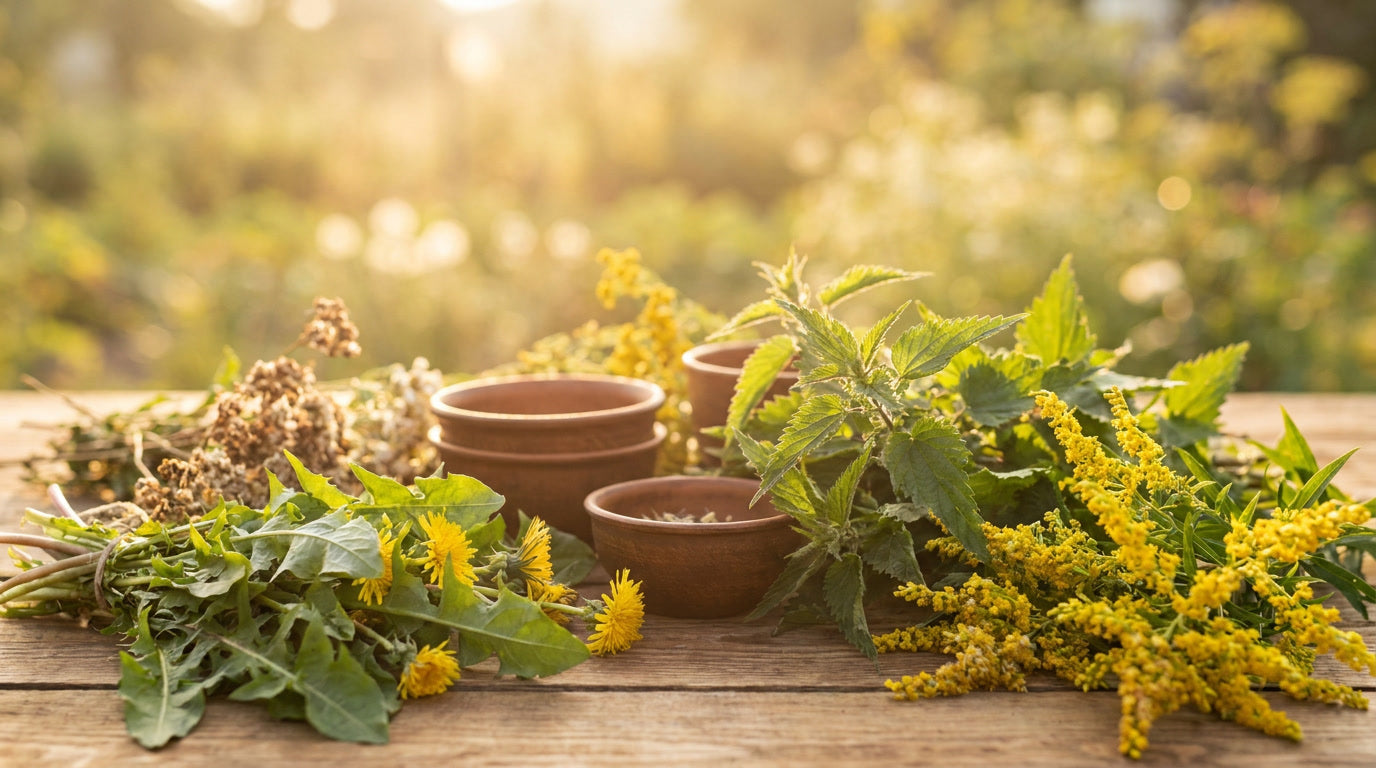
These medicinal herbs are traditionally valued for water retention:
- Lady’s Mantle (Alchemilla vulgaris): Known for centuries as a classic women’s herb and traditionally used in life phases when female balance is sought.
- Nettle (Urtica dioica): One of the best-known herbs in European folk medicine, historically associated with natural body drainage.
- Goldenrod (Solidago virgaurea): Valued in herbal tradition and mentioned in herbal books since the Middle Ages, especially in connection with water balance.
- Dandelion (Taraxacum officinale): Not only popular as a spring vegetable but also passed down in monastic and folk medicine as a supporting herb for inner balance. Liver products from Bitterkraft
- Birch leaves (Betula pendula): Traditionally used in herbal teas, birch leaves have been considered a refreshing herbal companion in spring and summer for generations.
- Horsetail (Equisetum arvense): One of the oldest medicinal herbs in the world – historically passed down in many cultures and firmly established in European folk medicine.
Lady’s Mantle in Everyday Life: Traditional Forms of Use and Rituals
The best-known and most traditional way to use lady’s mantle is as an herbal tea. In monastic medicine, fresh or dried lady’s mantle leaves were poured over with hot water and drunk as part of a daily herbal routine. This practice has lost none of its relevance: a warm lady’s mantle tea in the morning or evening can become part of a conscious ritual that prepares body and mind for the day or night – entirely in the spirit of Hildegard’s lifestyle, which emphasized regularity and mindfulness in dealing with nature.
For tea preparation, tradition recommends pouring about one teaspoon of dried lady’s mantle (approx. 1.5–2 g) with 250 ml of hot, not boiling water and letting the tea steep for 8–10 minutes. Straining and drinking in a calm atmosphere turns this simple act into a conscious ritual. In herbal tradition, lady’s mantle tea is often combined with other traditional women’s herbs such as yarrow, raspberry leaves, or lemon balm to create a balanced, individually tailored herbal program. Products for women’s health
Besides tea, lady’s mantle is also used in the form of herbal tinctures, capsules, and concentrated extracts. For those who do not like herbal tea or prefer a more practical form on the go, modern naturopathic preparations offer a good alternative. Quality of the raw material is always important: organic-certified lady’s mantle from controlled cultivation or gently harvested wild collection is superior in terms of the quality of plant ingredients compared to conventionally produced herb. Hildegard von Bingen products
Lady’s Mantle Tea – The Classic Monastery Recipe:
📌 Ingredients: 1 tsp dried lady’s mantle (approx. 1.5 g), 250 ml hot water (approx. 90 °C)
📌 Preparation: Place herb in a teapot or tea infuser, pour over with hot water, steep for 8–10 minutes, strain.
📌 Traditional recommendation: 1–3 cups daily, preferably at fixed times as a conscious ritual.
📌 Combination: Classically combined with yarrow, lemon balm, or raspberry leaf for a balanced women’s herbal program.
📌 Note: Lady’s mantle tea has a slightly herbaceous, pleasantly green taste. Those who prefer it milder can sweeten it with a little honey.
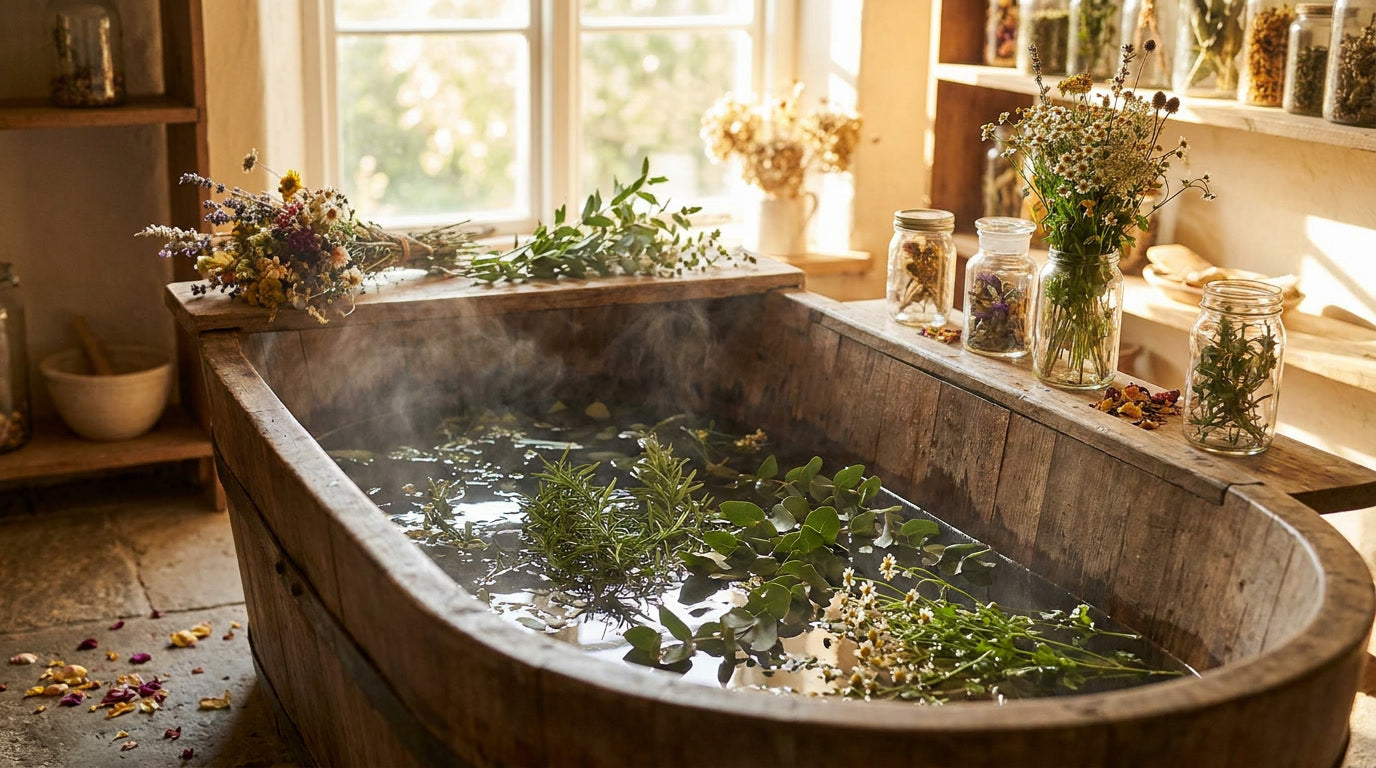
Besides internal use as tea or extract, lady’s mantle is also valued externally in herbal tradition. In folk medicine, lady’s mantle leaves were traditionally used as compresses or in baths – a practice that is finding followers again today in natural cosmetics and holistic body care. A foot bath with lady’s mantle tea infusion can serve as a relaxing evening ritual and heighten awareness of one’s own body – without promises of effects but with the soothing power of a conscious ritual.
The daily herbal routine according to Hildegard is not a complicated program – it begins with a simple ritual: a cup of consciously prepared herbal tea. Lady’s mantle has been a classic part of this female support program for centuries.
Integrating Lady’s Mantle Holistically: Female Balance as a Lifestyle
In modern naturopathy and in the spirit of the Hildegard tradition, lady’s mantle is never viewed in isolation. It is part of a bigger picture – a conscious, plant-supported lifestyle that perceives the woman as a whole. Water retention is not seen as an isolated problem to be “solved” with a single herb but as a signal from the body that calls for a holistic response. Sufficient exercise, a balanced, not overly salty diet, enough sleep, and regular relaxation form the foundation. Sleep and relaxation products
On this foundation, medicinal plants like lady’s mantle can unfold their traditional role as gentle companions. Monastic medicine according to Hildegard von Bingen taught that nature created nothing without reason – and that every plant has its place in the great fabric of life. Lady’s mantle, with its soft, protective leaf and long history as a women’s herb, symbolically represents this philosophy: not to intervene and dominate, but to accompany and gently support. This corresponds to a modern wellness approach that focuses on “adding rather than subtracting” – enriching everyday life with plant rituals rather than pursuing quick fixes.
Those who want to delve deeper into female health and plant knowledge are encouraged to explore the broad world of Hildegard medicine. From fasting concepts to bitter substances to specific women’s herbs – the legacy of this medieval natural healer is richer and more diverse than many initially assume. BitterKraft Original More and more naturopaths, herbalists, and informed consumers are rediscovering this knowledge and integrating it into their modern lives – as a complement, not a substitute for medical care.
“Since the 1990s, Hildegard medicine has experienced a significant renaissance. More and more women seek traditional plant knowledge as a complement to their modern health routines. Lady’s mantle is among the most frequently mentioned plants in traditional women’s medicine.” – Journal of Phytotherapy, Review Article on Monastic Medicine
Lady’s mantle is an herb that rewards patience – like so much in naturopathy. Those who embrace the tradition, integrate regular herbal rituals into their daily lives, and understand the herbal support program as a long-term lifestyle will discover a rewarding world in herbal medicine. Lady’s mantle, with its quiet, steady character, is a worthy companion – an herb that has stood for centuries for what many women seek: balance, gentleness, and a deep connection with nature. all Bitterkraft products


Leave a comment
This site is protected by hCaptcha and the hCaptcha Privacy Policy and Terms of Service apply.