





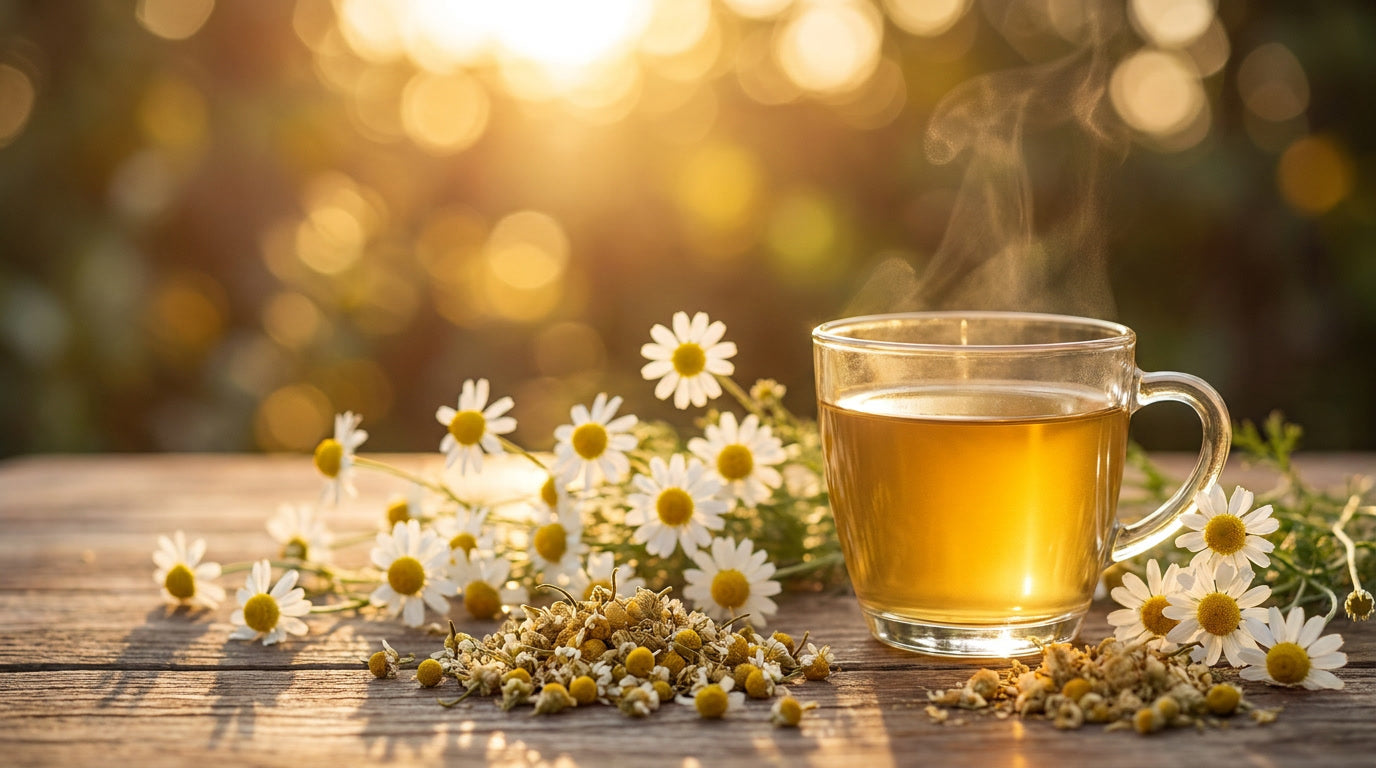
Hardly any medicinal plant is as deeply rooted in European herbal knowledge as chamomile. Its delicate white flowers with the characteristic yellow center are not only a familiar sight in meadows and along paths—they have been a staple of natural medicine, monastic medicine, and folk medicine traditions for centuries. From ancient herbal medicine through medieval monastery gardens to today’s natural healing practices, chamomile has maintained its firm place. Those who follow the trail of this modest yet exceptionally versatile plant discover a fascinating piece of botanical cultural history—and a companion for daily well-being that should not be missing in any nature-oriented household.
Chamomile and Its Place in Herbal History
True chamomile (Matricaria chamomilla) has one of the longest histories of use among native medicinal plants. It was already revered as a sacred plant and used in ritual contexts in ancient Egypt. The Romans and Greeks knew it by various names and valued its aromatic properties, as numerous ancient writings attest. In the German-speaking world, chamomile became a central element of monastic herbal medicine by the early Middle Ages—a tradition that preserved, developed, and translated ancient knowledge into practical applications.
Hildegard of Bingen, the notable 12th-century abbess, mystic, and naturalist, mentioned chamomile in her extensive herbal work with remarkable appreciation. She described the plant as warm and soothing and assigned it a special role in the context of human well-being. For Hildegard, chamomile was not only a plant for the body but also for the spirit—a gentle companion in restless times. This holistic understanding, which did not separate physical and mental aspects, is characteristic of Hildegardian medicine and remains relevant today. Hildegard von Bingen products
Over the centuries, chamomile was passed down from generation to generation by herbalists, pharmacists, midwives, and homemakers. It was among the first plants described in systematic herbal books of the 16th and 17th centuries—always with reference to its broad usability. This long chain of tradition is itself a testament: generations of people have tested chamomile, shared their experiences, and thus accumulated knowledge that goes far beyond any single generation. Chamomile is therefore not just a “trendy medicinal plant” but a cornerstone of European herbal medicine.
“Matricaria chamomilla is one of the best-documented medicinal plants in Europe and is listed as a traditional remedy in numerous national pharmacopoeias. Its flowers have been used both internally and externally since antiquity—a continuum unparalleled in herbal medicine.” – Historical Pharmacobotany, University of Vienna
Chamomile is one of the oldest documented medicinal plants in Europe and has been traditionally used for over 2,000 years in many cultures—as tea, oil, steam bath, and herbal infusion.
What’s Inside Chamomile? Ingredients and Their Traditional Significance
Chamomile’s exceptional status in herbal medicine is largely due to its complex profile of active ingredients. The flowers of true chamomile contain a combination of essential oils, flavonoids, bitter substances, mucilages, and other secondary plant compounds that together create the plant’s characteristic aroma and traditionally valued properties. In natural medicine, it is not a single isolated compound that matters but the interplay of all ingredients—the so-called total mixture that distinguishes the plant from the sum of its chemical parts.
The most important ingredients of chamomile flowers:
Essential oil (with chamazulene): The characteristic blue oil of chamomile is formed only during the distillation process and is recognizable by the intense blue color of high-quality chamomile oils. It is considered one of the most distinctive ingredients and forms the basis of many external applications in traditional herbal medicine.
α-Bisabolol: Another key component of the essential oil, long known in traditional natural cosmetics and herbal medicine. High-quality chamomile species like true chamomile are distinguished by a particularly high content.
Flavonoids (including apigenin): These secondary plant compounds are typical for many medicinal plants and are found in remarkable concentrations in chamomile flower heads.
Mucilaginous polysaccharides: Give chamomile infusions their gentle, mild-spicy note and are part of traditional internal use.
Bitter substances: Bitter plant compounds have always been especially valued in herbal tradition—chamomile also contributes to this spectrum. BitterKraft Original
It is particularly fascinating that the essential oil of chamomile in its fresh flower form does not yet exist in the familiar blue form. Chamazulene is only formed through the distillation process, i.e., through heat and steam—a beautiful metaphor for how the power of some medicinal plants fully emerges only through proper preparation. In monastic medicine, this knowledge of correct processing of medicinal plants was an art passed down through generations.
When choosing a good chamomile product, the quality of the starting flowers is crucial. High-quality chamomile flowers should be harvested at the optimal time—shortly after full bloom, when the essential oil content reaches its maximum. Chamomile cultivation in controlled organic quality, as is standard with responsible natural medicine providers, ensures that no unwanted residues enter the finished product. This care in the production chain is the difference between a discount store tea bag chamomile and a genuine quality product of natural medicine.
Chamomile Internally: Traditional Use as Tea and Infusion
Chamomile infusion is probably the best-known and most widespread form of internal use of this medicinal plant. The tradition of chamomile tea goes back centuries and is documented in almost all European folk medicines—from Mediterranean herbal medicine to Nordic herbal traditions. In monastic medicine, daily herbal tea was not a cure but part of a lifestyle focused on prevention and maintaining natural balance. A cup of freshly brewed chamomile tea in the evening or after a meal—this ritual has accompanied generations and remains a living part of natural medicine today.
For preparing a good chamomile infusion, traditional herbal knowledge recommends an important step often overlooked today: covering during steeping. Because the valuable essential oils of chamomile are volatile and evaporate with the rising steam, the tea vessel should always be covered during the five to ten minutes of steeping. Only then does the infusion contain the full spectrum of traditionally valued plant substances. This seemingly small gesture is an example of how inherited herbal knowledge is highly practical upon closer examination. Digestive and gut products
Traditional Preparation Methods of Chamomile at a Glance:
- Classic flower tea: Pour two heaping teaspoons of dried chamomile flowers with 250 ml boiling water, cover, and let steep for 5–10 minutes. Traditionally 2–3 cups daily, preferably after meals or in the evening.
- Concentrated infusion: Prepared with double the amount of flowers, traditionally used for external applications such as compresses and rinses—not intended for drinking but as a concentrated herbal essence.
- Chamomile tincture: Extracted in high-proof alcohol, which preserves the plant substances long-term. Known in monastery pharmacies for centuries and valued as a targeted, dosable form of application.
- Chamomile oil (macerate): Flowers macerated in high-quality carrier oil—not to be confused with distilled essential oil. Traditional base for massage oils and body care applications.
In the Hildegardian medical tradition, herbal tea was not understood as medicine but as part of a holistic lifestyle. Hildegard of Bingen emphasized the importance of moderation and regularity: a daily ritual with soothing herbs, performed in silence and mindfulness, was for her an expression of self-care and a path to inner balance. This approach—drinking tea not as therapy but as a life ritual—corresponds to the modern understanding of wellness and prevention and shows how relevant medieval herbal knowledge remains today.
A freshly brewed chamomile infusion, always prepared covered, has been one of the most popular herbal rituals in European natural medicine for centuries—and remains a fixed part of nature-oriented living.
Chamomile Externally: Steam Baths, Compresses, and Skin Care
The external use of chamomile is at least as old and diverse as its use as tea. The best-known external application ritual is the chamomile steam bath—a practice firmly rooted in European folk medicine and found in similar forms from Ireland to the Balkans. For a classic chamomile steam bath, a concentrated infusion of chamomile flowers is prepared, over which one covers oneself with a cloth and lets the rising steam act on the skin. In monastic tradition, this application was especially practiced during the transitional seasons of autumn and winter—as a ritual of self-care and preparation for the colder months. Immune system products
Chamomile compresses are another classic external application. A clean cloth is dipped into a cooled, concentrated chamomile infusion and applied to the affected body part. This practice is well known from historical herbal care and was maintained in monasteries as well as rural households. Especially for eye care—such as tired, strained eyes after a long workday—the chamomile compress is a traditionally proven home remedy explicitly mentioned in many herbal guides from the 16th to 19th centuries. Important: the infusion should be cooled to body temperature before applying to the sensitive eye area.
“In medieval monastic medicine, chamomile was not only drunk but also used externally as an herbal remedy in the form of baths, compresses, and rubs. Herbal books of the 16th century, including the work of Tabernaemontanus, dedicate extensive chapters to the external use of chamomile.” – Historical Herbal Medicine of Europe
In modern natural cosmetics, chamomile has experienced a remarkable renaissance. Chamomile extracts and chamomile-based essential oils are found in high-quality skin care products, hair rinses, and body oils—and this is by no means a marketing trend but a continuation of a centuries-old tradition. Chamomile-containing natural cosmetics directly connect to the knowledge of monastery pharmacists, who knew herbal macerates and herbal oils as natural parts of daily body care. The combination of internal and external use—a basic principle in Hildegardian medicine—makes chamomile one of the most holistic medicinal plants known to European herbal medicine.
The chamomile steam bath is one of the oldest preserved external herbal applications in Europe—a simple, inexpensive ritual that can be easily replicated at home and has been maintained for generations as part of nature-oriented self-care.
Chamomile in Holistic Natural Medicine: Combinations and Everyday Rituals
Chamomile’s true strength lies in its ability to harmoniously integrate into a holistic natural medicine concept. It is rarely a plant that “acts alone”—in traditional herbal medicine, it is often combined with other medicinal plants whose properties it complements and which it enriches in turn. In monastic medicine, such herbal mixtures were an art: combining the right plants in the right amounts and at the right time was considered an expression of profound botanical knowledge. Chamomile, as a gentle, balancing plant, was often chosen as a base to which other, stronger herbs could harmoniously relate. all Bitterkraft products
Medicinal herbs traditionally combined with chamomile:
- Lemon balm: Since antiquity, lemon balm has been described as a calming herb and is found in many traditional evening tea blends together with chamomile. In monastic medicine, the combination of both plants for evening herbal tea was a classic recommendation. Sleep and relaxation products
- Peppermint: The fresh-aromatic mint complements the mild warmth of chamomile and is one of the most popular combination partners in traditional herbal medicine—especially in the context of traditional post-meal tea blends.
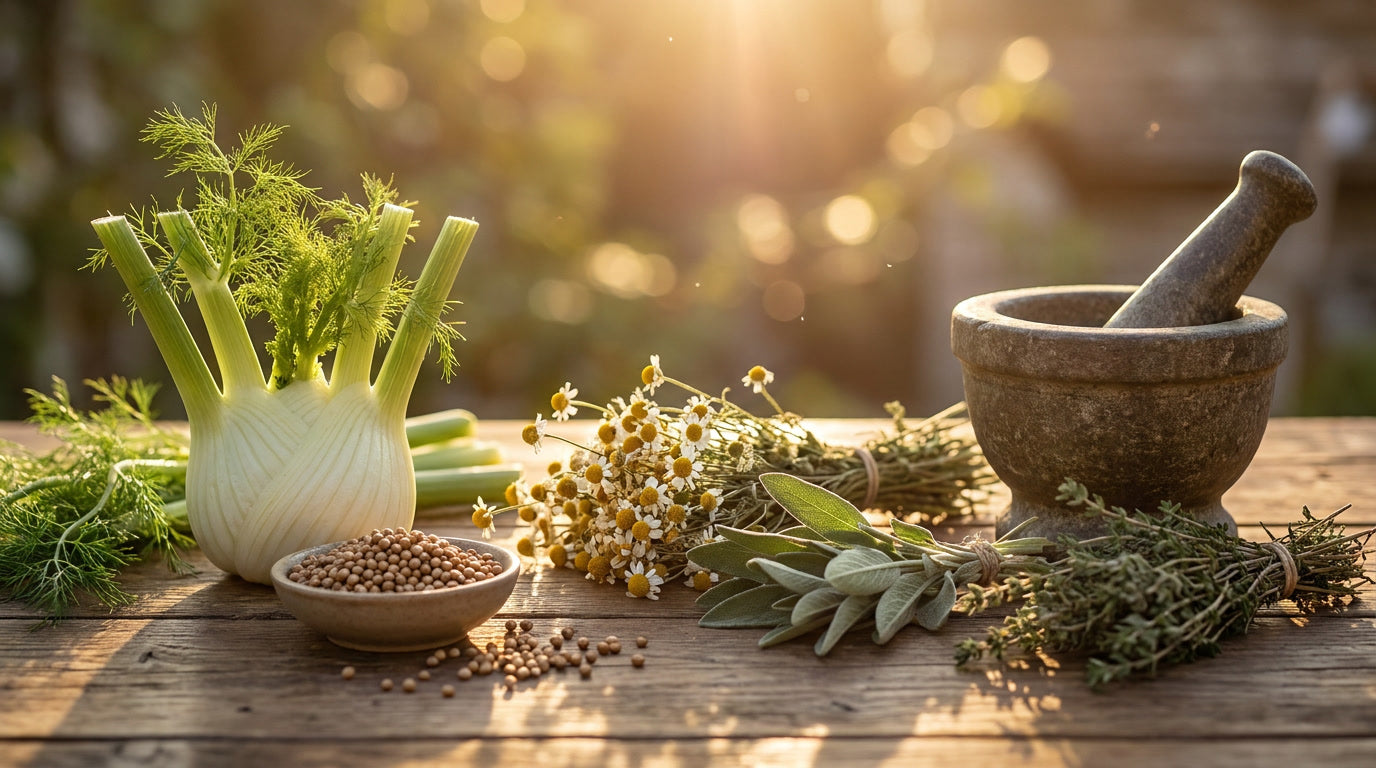
- Fennel: Fennel seeds and chamomile flowers are a proven combination in European folk medicine, appearing in almost every historical herbal book. This combination frequently appears in traditional children’s medicine.
- Yarrow: One of chamomile’s closest “allies” in folk medicine tradition. Both plants belong to the daisy family and are traditionally used in similar contexts—often as part of classic stomach tea blends in herbal medicine.
- Lavender: In Hildegardian herbal tradition as well as Provençal folk medicine, the combination of chamomile and lavender is described for evening relaxation rituals—both as tea and as a scent combination in herbal pillows.
Today, chamomile is also used in natural medicine within holistic approaches—such as fasting and natural cleansing. A supporting chamomile infusion has been described for centuries as gentle support during fasting periods, as it combines the ritual of tea drinking with a soothing aromatic note and focuses attention on experiencing one’s own body. Fasting products Chamomile also traditionally holds a special place in women’s natural medicine—historical herbal guides repeatedly mention it as a companion for women in special life phases. Women’s health products
Those who want to integrate chamomile permanently into their daily routine today find many options: from classic dried flower tea to high-quality dry extracts to chamomile oil for external use. The decisive factor for quality is always the plant’s origin and the care taken in processing. At Bitterkraft.com, we place great value on tested raw material quality and traditional processing methods—so that the chamomile infusion in your cup contains the power that generations of herbalists have recognized in this modest flower.
“Chamomile, Matricaria chamomilla, is recognized by the European Medicines Agency (EMA) as a traditional herbal medicinal product. The EMA monograph describes the use of chamomile flower infusions and extracts based on established traditional use—a significant signal for the legitimacy of centuries-old herbal knowledge.” – EMA, Community herbal monograph on Matricaria recutita
In the end, chamomile is a wonderful example that natural medicine does not need to be reinvented—it needs to be lived. A daily prepared chamomile infusion, enjoyed with mindfulness and calm, an occasional chamomile steam bath as a seasonal ritual, chamomile oil for evening body care: these are not heroic interventions but small, continuous gestures of self-care. This is exactly what Hildegard of Bingen meant when she spoke of harmony between humans and nature. And this is the spirit in which Bitterkraft.com develops and offers herbal products—not as a quick fix but as an invitation to a nature-oriented lifestyle rooted in centuries-old knowledge and lived anew every day.


Leave a comment
This site is protected by hCaptcha and the hCaptcha Privacy Policy and Terms of Service apply.