

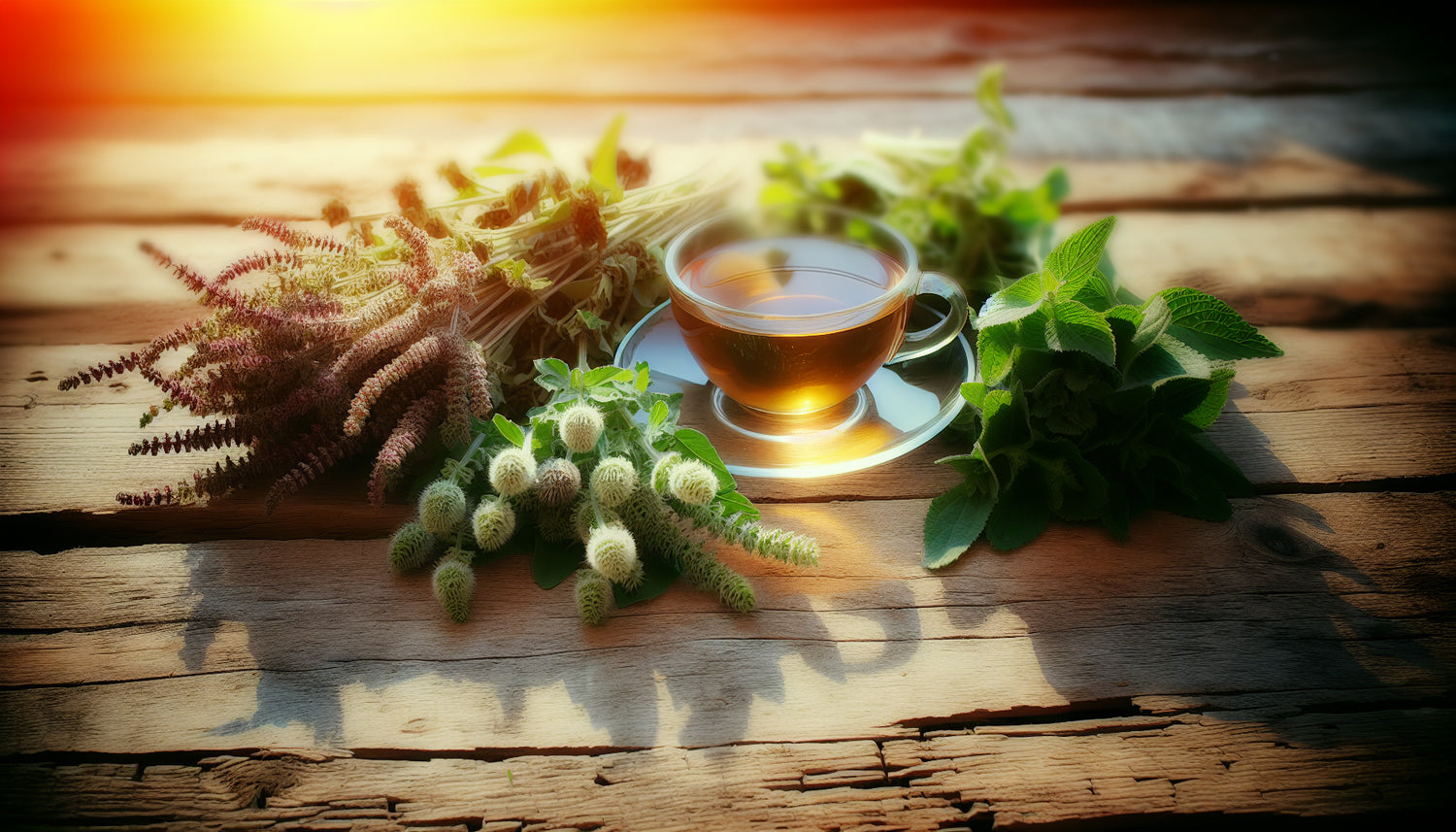
Wenn die kalte Jahreszeit naht oder das Wohlbefinden der Atemwege in den Fokus rückt, sehnen wir uns nach bewährten Begleitern aus der Natur. Bereits im 12. Jahrhundert erkannte die visionäre Äbtissin Hildegard von Bingen die besondere Kraft bitterer Heilpflanzen für die Atemwege. Ihre jahrhundertealte Weisheit zeigt uns auch heute noch Wege auf, wie wir unser Wohlbefinden auf natürliche Weise unterstützen können.
📋 Inhaltsverzeichnis
Hildegards Sicht auf die Atemwege und ihre natürliche Balance
Nach Hildegards Lehre entstehen Unwohlsein im Bereich der Atemwege oft durch ein Ungleichgewicht der Körpersäfte und eine Ansammlung von "schlechten Säften". Diese traditionelle Sichtweise beschreibt, wie das natürliche Wohlbefinden der Atemwege beeinträchtigt werden kann. Die große Heilkundige sah in den bitteren Kräften der Natur einen Schlüssel, um diese Balance wieder herzustellen.
Besonders faszinierend ist Hildegards Verständnis der "Viriditas" – der grünen Lebenskraft, die sie in verschiedenen Pflanzen erkannte. Diese Lebensenergie sollte nach ihrer Lehre helfen, stagnierende Prozesse im Körper wieder in Bewegung zu bringen. Gerade für das allgemeine Wohlbefinden der Atemwege sah sie in dieser grünen Kraft einen wertvollen Verbündeten.
Die Äbtissin betonte auch die Bedeutung der rechten Zeit und Dosierung. Ihrer Ansicht nach war es wichtig, die Heilkräfte der Natur nicht nur zu kennen, sondern sie auch im richtigen Moment und in der angemessenen Form anzuwenden. Diese ganzheitliche Betrachtung macht ihre Lehren auch heute noch so wertvoll für alle, die sich für Hildegard von Bingen Produkte interessieren.
Bewährte Bitterpflanzen aus Hildegards Schatzkammer
Unter den von Hildegard geschätzten Pflanzen nimmt der Andorn eine besondere Stellung ein. Diese seit Jahrhunderten bekannte Pflanze mit ihren charakteristisch bitteren Eigenschaften wird traditionell für das Wohlbefinden der Atemwege geschätzt. Hildegard beschrieb den Andorn als "warm und trocken" und sah in ihm eine Kraft, die traditionell für die Begleitung des natürlichen Wohlbefindens verwendet wurde.
Ebenso bedeutsam in der hildegardischen Heilkunde ist der Ysop, dessen intensive Bitterstoffe seit alters her geschätzt werden. Diese aromatische Pflanze wurde von Hildegard besonders für ihre traditionelle Verwendung zur Unterstützung der Atemwege gerühmt. Der Ysop galt ihr als bewährter Begleiter und wurde traditionell als Tee oder in anderen Zubereitungen verwendet, um das Wohlbefinden der Atemwege zu unterstützen.
Auch die Königskerze fand ihren Platz in Hildegards Pflanzenheilkunde. Mit ihren sanften, aber geschätzten Bitterstoffen wird sie seit Generationen traditionell für das Wohlbefinden der Atemwege verwendet. Hildegard schätzte besonders ihre beruhigenden Eigenschaften, die traditionell zur Unterstützung des allgemeinen Wohlbefindens eingesetzt wurden. Diese Vielfalt an BitterKraft Original Heilpflanzen zeigt die Weitsicht der großen Heilkundigen.
Die Wirkweise der Bitterstoffe auf die Atemwege
Die in den hildegardischen Heilpflanzen enthaltenen Bitterstoffe sind seit Jahrhunderten für ihre traditionelle Verwendung bekannt. Diese natürlichen Verbindungen werden traditionell für ihr Potenzial geschätzt, das allgemeine Wohlbefinden zu unterstützen. Dadurch wird traditionell eine natürliche Balance gefördert, was das Wohlbefinden der Atemwege unterstützen kann.
Darüber hinaus werden Bitterstoffe seit jeher für ihre traditionellen Eigenschaften auf das allgemeine Wohlbefinden geschätzt. Diese sanfte traditionelle Anwendung kann dazu beitragen, dass die natürlichen Prozesse des Körpers begleitet werden. Die natürlichen Reinigungsmechanismen des Körpers können durch die traditionelle Anwendung bitterer Heilpflanzen in ihrem natürlichen Ablauf unterstützt werden.
Ein weiterer wichtiger Aspekt ist die traditionell bekannte beruhigende Eigenschaft vieler Bitterpflanzen. Gerade für das allgemeine Wohlbefinden können diese natürlichen Verbindungen dabei helfen, ein Gefühl der Entspannung zu fördern und so zu einem ausgeglichenen Wohlbefinden beitragen. Diese vielschichtige traditionelle Verwendung macht deutlich, warum Hildegard die BitterKraft Original Kräfte der Natur so sehr schätzte.
Praktische Anwendung und moderne Nutzung
Die traditionelle Verwendung bitterer Heilpflanzen nach hildegardischen Prinzipien ist seit Jahrhunderten bekannt. Traditionell werden diese Pflanzen häufig als Tee zubereitet, wobei die Bitterstoffe durch das heiße Wasser gelöst und für den Körper verfügbar gemacht werden. Ein solcher Tee wird historisch schluckweise getrunken und war traditionell eine geschätzte Begleitung für das allgemeine Wohlbefinden.
Auch die traditionelle Verwendung von Pflanzenzubereitungen in Form von Dampfbädern ist eine bewährte historische Methode. Der aufsteigende Dampf wurde traditionell geschätzt, um das allgemeine Wohlbefinden zu unterstützen und gleichzeitig ein Gefühl der Entspannung zu fördern. Diese Form der traditionellen Anwendung wurde besonders für das allgemeine Wohlbefinden geschätzt und kann eine wohltuende Ergänzung zur innerlichen Anwendung darstellen.
In der modernen Naturheilkunde werden die hildegardischen Heilpflanzen auch in Form von standardisierten Extrakten oder Kombinationspräparaten angeboten. Diese ermöglichen eine präzise Dosierung und können bequem in den Alltag integriert werden. Wichtig ist dabei immer, auf die Qualität der verwendeten Pflanzen zu achten und bei anhaltenden Beschwerden fachkundigen Rat einzuholen. Die Verbindung von traditionellem Wissen und modernen Anwendungsformen macht die Schätze der Hildegard von Bingen Produkte Heilkunde auch heute noch zugänglich und wertvoll.
🤖 Das Beitragsbild dieses Artikels wurde mit DALL·E 3 (OpenAI) mithilfe von Künstlicher Intelligenz generiert (gemäß EU AI Act Art. 50 gekennzeichnet).

Hinterlasse einen Kommentar
Diese Website ist durch hCaptcha geschützt und es gelten die allgemeinen Geschäftsbedingungen und Datenschutzbestimmungen von hCaptcha.