

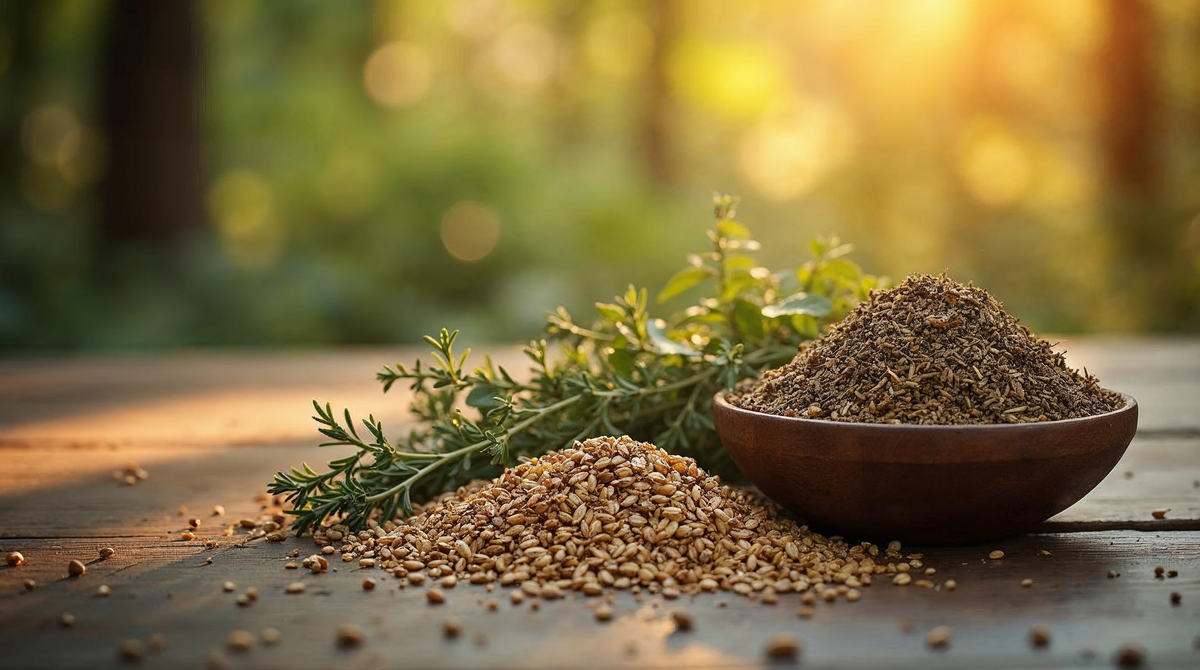
Lange bevor die moderne Ernährungswissenschaft das Wort ergriff, wusste eine Frau im Mittelalter bereits mit bemerkenswerter Präzision, welche Kraft in Gewürzen steckt: Hildegard von Bingen (1098–1179), Äbtissin, Mystikerin und eine der bedeutendsten Heilerinnen ihrer Zeit. Ihre Aufzeichnungen – allen voran das Werk „Physica" – lesen sich wie ein Kompendium jahrhundertealter Beobachtungen über Kräuter, Gewürze und Lebensmittel. Wer sich heute für Naturheilkunde interessiert, kommt an ihrem Namen nicht vorbei. Denn was Hildegard über die Wirkung von Galgan, Fenchel, Bertram und Liebstöckel schrieb, klingt auch heute noch erstaunlich zeitgemäß – und inspiriert zahlreiche Menschen, ihre Küche neu zu entdecken. Hildegard von Bingen Produkte
Hildegard von Bingen und ihre Kräuterphilosophie
Hildegard von Bingen lebte in einer Zeit, in der die Grenze zwischen Kochen und Heilen kaum existierte. In den Klöstern des Mittelalters war die Küche gleichzeitig Apotheke, Labor und Ort der Fürsorge. Hildegard verstand Gewürze nicht als bloße Geschmacksgeber, sondern als lebendige Bestandteile einer ganzheitlichen Lebensweise. Ihre Lehre fußte auf dem Begriff der „Viriditas" – der grünen Lebenskraft –, die sie in Pflanzen, Kräutern und Gewürzen am Werk sah. Für sie war jedes Kraut ein Geschenk der Schöpfung, das dem Menschen helfen sollte, im Gleichgewicht zu leben.
Was Hildegards Schriften so besonders macht, ist ihre Verbindung aus spirituellem Denken und praktischer Beobachtung. Sie beschrieb einzelne Kräuter und Gewürze mit einer Detailliebe, die für ihre Zeit außergewöhnlich war. Dabei unterschied sie zwischen Pflanzen, die dem Menschen „gut bekommen", und solchen, die ihm eher schaden. Ihr Maßstab war nicht die Chemie im modernen Sinne, sondern das Zusammenspiel von Temperamenten, Jahreszeiten und dem individuellen Befinden des Menschen. Dieses Denken in Wechselwirkungen, in Ganzheit statt Einzelsymptom, macht ihre Lehre heute wieder so attraktiv für Menschen, die Ernährung und Wohlbefinden neu denken möchten.
Hildegards Kräuterwissen wird heute in der Klostermedizin und der naturheilkundlichen Tradition weitergetragen. Zahlreiche Heilpraktiker, Ernährungsberater und Naturkostläden beziehen sich auf ihre Aufzeichnungen. Dabei geht es nicht darum, das Mittelalter zu kopieren, sondern darum, das überlieferte Wissen in den Alltag zu übersetzen – in Form von Tees, Kochgewürzen oder sorgfältig zusammengestellten Kräutermischungen. Hildegard von Bingen Produkte
„Hildegard schrieb in ihrer ‚Physica' über mehr als 230 Pflanzen und Kräuter – und legte damit eines der frühesten systematischen Kräuterbücher des europäischen Mittelalters vor." – Historische Einordnung durch die Hildegard-Forschung, Universität Mainz
Die wichtigsten Gewürze aus Hildegards Küche im Überblick
Hildegard von Bingen hatte klare Favoriten unter den Küchenkräutern – Gewürze, die sie in ihren Schriften immer wieder lobte und für deren regelmäßigen Gebrauch sie sich aussprach. Diese Gewürze wurden seit Jahrhunderten in der Klosterküche und der volksmedizinischen Praxis verwendet. Wer sie heute in seine Küche integriert, knüpft an eine lebendige Tradition an, die weit über bloße Kulinarik hinausgeht.
Galgan, Bertram, Fenchel und Liebstöckel gehören zu den meistgenannten Gewürzen in Hildegards Schriften – und sind bis heute in der europäischen Klostermedizin fest verankert.
Interessant ist, dass viele dieser Gewürze auch in der modernen Naturkost und Naturheilkunde eine Renaissance erleben. Menschen suchen bewusst nach traditionellen Lebensmitteln, nach Zutaten mit Geschichte und Bedeutung – und stoßen dabei unweigerlich auf Hildegards Küche. Das ist kein Zufall: Diese Gewürze zeichnen sich durch intensive Aromen, eine reiche Pflanzenstoffkultur und eine jahrtausendealte Anwendungsgeschichte aus. BitterKraft Original
Hildegards wichtigste Küchenkräuter im Überblick:
- Galgan (Alpinia officinarum): Galgan war Hildegards erklärtes Lieblingsgewürz – sie bezeichnete ihn als „Gewürz des Lebens". Seit Jahrhunderten wird er traditionell in der Klosterküche geschätzt und in Kräutermischungen verwendet.
- Bertram (Anacyclus pyrethrum): Bertram galt in der mittelalterlichen Küche als wärmendes Gewürz und wurde historisch bei Mahlzeiten eingesetzt, die als „schwer" galten. Hildegard widmete ihm ausführliche Passagen in der Physica.
- Fenchel (Foeniculum vulgare): Fenchel – ob als Samen, Kraut oder Gemüse – zählte für Hildegard zu den vielseitigsten Küchenpflanzen. Er wird seit Jahrhunderten traditionell in der europäischen Kräuterküche verwendet.
- Liebstöckel (Levisticum officinale): Liebstöckel, auch „Maggikraut" genannt, war in mittelalterlichen Klostergärten weit verbreitet. Hildegard schätzte ihn als kräftiges Würzkraut für herzhafte Speisen.
- Dill (Anethum graveolens): Dill wurde in Hildegards Tradition als mildes, alltagstaugliches Würzkraut beschrieben, das sich gut für die tägliche Küche eignet.
- Petersilie (Petroselinum crispum): Petersilie zählte in der Klostermedizin zu den unverzichtbaren Küchenkräutern und wurde bereits im frühen Mittelalter in Klostergärten kultiviert.
- Quendel / Thymian (Thymus serpyllum): Quendel, eine wilde Thymian-Art, wurde von Hildegard als wärmendes, kräftiges Würzkraut beschrieben und ist bis heute ein klassisches Klosterkraut.
Was steckt hinter Hildegards Gewürzauswahl?
Die meisten Gewürze, die Hildegard empfahl, zeichnen sich durch einen ausgeprägten Eigengeschmack aus – oft würzig, aromatisch oder leicht bitter. Genau diese Geschmacksrichtungen stehen in der Naturheilkunde in enger Verbindung mit einer traditionell als positiv bewerteten Wirkung auf das allgemeine Wohlbefinden. Bittere und aromatische Pflanzenstoffe sind in vielen Kulturen seit Jahrtausenden fester Bestandteil der täglichen Ernährung – nicht trotz ihres intensiven Geschmacks, sondern gerade deshalb.
Galgan und Bertram: Hildegards Lieblingsgewürze genauer betrachtet
Unter all den Gewürzen, die Hildegard von Bingen in ihren Schriften erwähnte, stechen zwei besonders hervor: Galgan und Bertram. Beide sind heute in deutschen Küchen eher selten anzutreffen – dabei haben sie eine lange Geschichte als geschätzte Klostergewürze und verdienen eine Wiederentdeckung. Galgan kennen viele vielleicht noch aus der asiatischen Küche, wo er eng mit dem Ingwer verwandt ist. In Hildegards Tradition nimmt er jedoch eine ganz besondere Stellung ein.
Hildegard beschrieb Galgan in ihrer „Physica" mit den Worten: „Wer an Herzschmerzen leidet und an Herzschwäche, der esse Galgan, und es wird ihm besser gehen." Dieses Zitat ist selbstverständlich als historischer Hinweis zu verstehen – keine Heilaussage im modernen Sinne. Aber es zeigt, welchen Stellenwert Galgan in der mittelalterlichen Kräuterlehre hatte: Er galt als stärkendes, wärmendes Gewürz, das in der Klostermedizin seit Jahrhunderten traditionell verwendet wird. Heute findet man ihn in vielen Hildegard-Kräutermischungen und -Nahrungsergänzungsmitteln wieder. Hildegard von Bingen Produkte
Bertram, botanisch verwandt mit der Kamille, wurde in der mittelalterlichen Klosterküche als kräftiges Gewürz für Fleischgerichte und Suppen eingesetzt. Er hat einen leicht scharfen, pfeffrigen Geschmack und war in Klostergärten des Mittelalters weit verbreitet. Hildegard empfahl ihn besonders für Menschen, die zu Kälte und Schwere neigen – ein Konzept, das an die Temperamentenlehre der antiken Medizin anknüpft. Heute wird Bertram vor allem in der Hildegard-Medizin und der Naturheilkunde verwendet, wo er als traditionelles Küchen- und Klostergewürz geschätzt wird.
„Galgan zählt in der Hildegard-Medizin zu den sogenannten ‚Erwärmenden' – Gewürzen, denen in der mittelalterlichen Humoralpathologie eine ausgleichende Wirkung auf kalte Temperamente zugeschrieben wurde." – Aus: Gottfried Hertzka / Wighard Strehlow, „Große Hildegard-Apotheke", 1987
Galgan gilt als Hildegards „Gewürz des Lebens" – und erlebt heute als Bestandteil von Kräutermischungen und Naturprodukten eine bemerkenswerte Renaissance in der Naturheilkunde.
Gewürze im Alltag: Hildegards Küche neu entdecken
Das Schöne an Hildegards Kräuterwissen ist, dass es sich unmittelbar im Alltag umsetzen lässt – ganz ohne Umwege über Apotheken oder Fachpraxen. Ihre Gewürze sind Lebensmittel, die sich in die tägliche Küche integrieren lassen: als Würze für Suppen, Eintöpfe, Kräuterbutter oder Tees. Das Prinzip lautet „Hinzufügen statt Weglassen" – es geht nicht darum, auf irgendetwas zu verzichten, sondern darum, dem Alltag mehr Tiefe, mehr Geschmack und mehr Bewusstsein zu schenken.
Ein klassisches Hildegard-Rezept, das bis heute beliebt ist, ist das sogenannte Gewürzwein-Elixier – eine Mischung aus Galgan, Fenchel, Bertram und weiteren Gewürzen, in Wein oder Wasser aufgezogen und täglich in kleinen Mengen genossen. Auch Hildegards Dinkelküche ist legendär: Sie schätzte Dinkel als das „Getreide der Getreide" und kombinierte ihn gerne mit aromatischen Kräutern wie Liebstöckel, Quendel und Petersilie. Wer heute nach Hildegard kochen möchte, findet in ihrer Überlieferung ein reichhaltiges Repertoire an Ideen – von einfachen Kräutertees bis hin zu aufwendigen Kräuterschmalzen und Elixieren.
Für Menschen, die Naturheilkunde und traditionelle Ernährung schätzen, bietet Hildegards Gewürzwelt eine einzigartige Möglichkeit, Geschichte und Gegenwart zu verbinden. Die Auseinandersetzung mit ihren Schriften ist gleichzeitig eine Einladung, die eigene Küche bewusster zu gestalten – mit Zutaten, die eine Geschichte haben, und mit einem Bewusstsein dafür, dass Essen mehr sein kann als Energieaufnahme. Es ist ein Ritual, ein Akt der Fürsorge für sich selbst. Hildegard von Bingen Produkte
Hildegards Gewürze im Alltag – so gelingt der Einstieg:
Galgan-Tee: Getrockneten Galgan in heißem Wasser ziehen lassen – ein klassisches Klostergetränk, das seit Jahrhunderten traditionell genossen wird.
Bertram-Würzöl: Bertram gemeinsam mit Thymian und Liebstöckel in hochwertigem Olivenöl einlegen – ideal für herzhafte Gerichte.
Hildegard-Gewürzmischung: Eine klassische Mischung aus Galgan, Bertram, Fenchelsamen und Quendel eignet sich als universelle Würze für Suppen, Eintöpfe und Saucen.
Fenchel-Dinkel-Suppe: Ein einfaches Rezept aus der Klosterküche – Dinkel, Fenchel, Liebstöckel und Kräuterbrühe bilden eine sättigende, aromatische Mahlzeit.
Warum Hildegards Kräuterwissen heute noch relevant ist
In einer Zeit, in der viele Menschen den Überblick über Inhaltsstoffe, Zusatzstoffe und Nahrungsergänzungsmittel verloren haben, bietet Hildegards Ansatz eine erfrischend klare Orientierung: zurück zur Pflanze, zurück zur Einfachheit, zurück zu Zutaten, die seit Jahrhunderten Teil der europäischen Ernährungskultur sind. Ihre Kräuterküche ist keine Geheimwissenschaft – es ist gelebtes Alltagswissen, das in den Klöstern über Generationen hinweg verfeinert und weitergegeben wurde.
Besonders relevant ist Hildegards Denken in der heutigen Zeit auch deshalb, weil es einen ganzheitlichen Blick auf Ernährung und Wohlbefinden legt. Essen ist für sie nie nur Nahrungsaufnahme, sondern immer auch ein Akt der Selbstfürsorge, der Achtsamkeit und der Verbindung mit der Natur. Dieses Denken findet sich heute in vielen Bereichen der Naturheilkunde und des bewussten Lebens wieder – von der Klosterheilkunde über die Naturkostbewegung bis hin zu modernen Wellnesskonzepten. Fasten-Produkte
Wer sich für Hildegards Gewürzwelt interessiert, dem empfiehlt sich ein schrittweiser Einstieg: Ein gutes Hildegard-Kräuterbuch, einige wenige Grundgewürze wie Galgan, Fenchel und Bertram sowie die Bereitschaft, die eigene Küche als Ort der Entschleunigung und Achtsamkeit zu begreifen. Das ist keine Frage des Geldbeutels oder des kulinarischen Talents – es ist eine Frage der Haltung. Und genau diese Haltung, diese tiefe Wertschätzung für die Schöpfung in all ihren Erscheinungsformen, war es, die Hildegard von Bingen zu einer der bedeutendsten Figuren der europäischen Naturheilkunde gemacht hat.
Hildegards Kräuterküche ist kein mittelalterliches Relikt – sie ist ein lebendiges Erbe, das Menschen heute einlädt, Ernährung und Wohlbefinden neu zu denken: bewusst, traditionsbewusst und mit einem tiefen Respekt vor der Natur.
„Die Hildegard-Medizin zählt heute zu den am besten dokumentierten Systemen der mittelalterlichen Naturheilkunde in Europa. Ihre Grundprinzipien – Mäßigung, Naturverbundenheit und die Wertschätzung tradierter Pflanzenkenntnisse – finden in der modernen Naturheilkunde breite Resonanz." – Strehlow, Wighard: Hildegard von Bingen. Heilkraft der Natur. Beuroner Kunstverlag, 2012

Hinterlasse einen Kommentar
Diese Website ist durch hCaptcha geschützt und es gelten die allgemeinen Geschäftsbedingungen und Datenschutzbestimmungen von hCaptcha.