

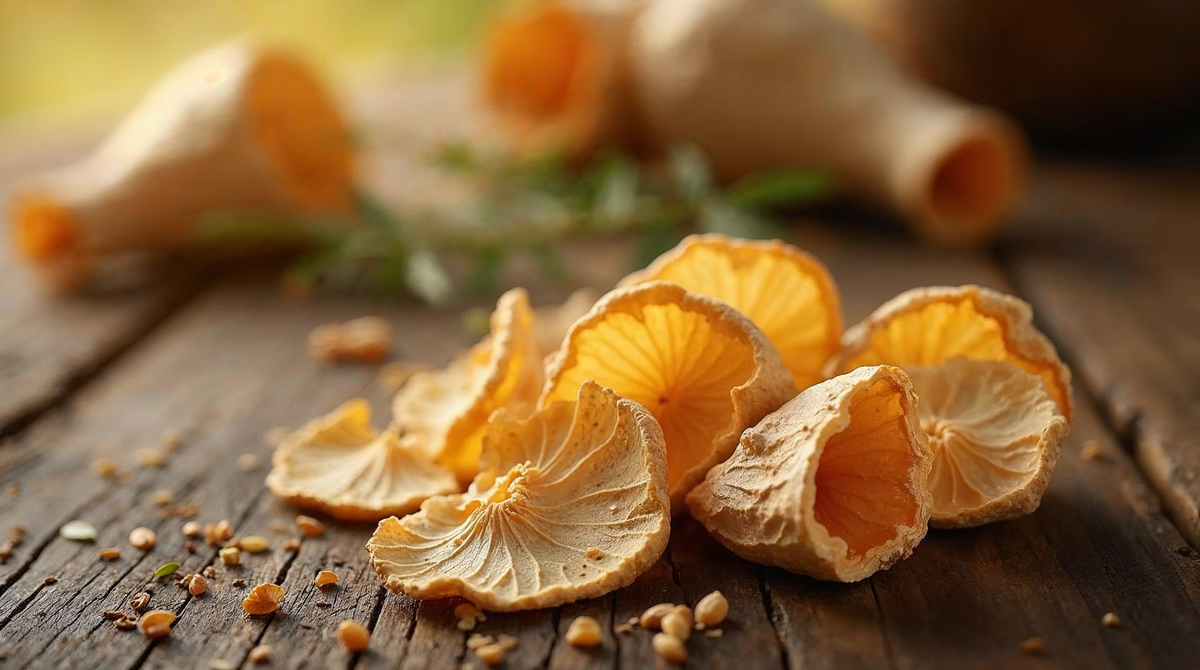
Es gibt Gewürze, die still und bescheiden in der Küche stehen – und solche, denen eine Heilige ganze Lobeshymnen gewidmet hat. Galangal gehört eindeutig zur zweiten Kategorie. Die mittelalterliche Äbtissin, Visionärin und Kräuterkundige Hildegard von Bingen (1098–1179) zählte die Wurzel des Galangals zu ihren allerwichtigsten Heilpflanzen und sprach ihr eine besondere Bedeutung für Herz und Lebenskraft zu. In einer Zeit, in der das Wissen über Pflanzen in den Klöstern gehütet und weitergegeben wurde wie ein kostbarer Schatz, war Galangal kein Exot, sondern ein hochgeschätztes Heilmittel im klösterlichen Alltag. Heute erlebt diese faszinierende Wurzel eine Renaissance – und das aus gutem Grund. Hildegard von Bingen Produkte
Was ist Galangal? Die Wurzel mit der langen Geschichte
Galangal – botanisch Alpinia officinarum (Echter Galgant) oder Alpinia galanga (Großer Galgant) – ist ein ausdauerndes Kraut aus der Familie der Ingwergewächse (Zingiberaceae). Seinen Ursprung hat die Pflanze in Südostasien, insbesondere in China und auf den indonesischen Inseln. Schon früh wurde sie von arabischen Händlern nach Europa gebracht, wo sie zunächst in den Klostergärten Einzug hielt und von Mönchen und Heilkundigen kultiviert und geschätzt wurde. Der Name „Galgant" leitet sich vermutlich vom arabischen „khalanjân" ab, das wiederum auf ein chinesisches Wort zurückgeht – ein sprachliches Zeichen für die weiten Handelswege, auf denen dieses Gewürz einst reiste.
Äußerlich erinnert die Wurzel des Galangals stark an Ingwer: knorrig, gelblich-bräunlich im Innern, mit einem aromatischen, leicht scharf-würzigen Duft. Der Geschmack ist intensiver und harziger als der von Ingwer, mit einer blumigen, fast pfeffrigen Note. In der traditionellen asiatischen Küche ist Galangal bis heute unverzichtbar – man findet ihn in der thailändischen Tom-Kha-Suppe ebenso wie in indonesischen Rendang-Gerichten. In Europa hingegen geriet er nach dem Mittelalter weitgehend in Vergessenheit, bis das wachsende Interesse an Hildegard-Medizin und Klosterheilkunde ihn wieder ins Licht rückte. BitterKraft Original
Die Pflanze enthält eine Vielzahl bioaktiver Verbindungen: ätherische Öle (darunter Cineol und Eugenol), Scharfstoffe wie Galangol und verwandte Diarylheptanoide sowie Flavonoide und Gerbstoffe. Diese Zusammensetzung macht Galangal zu einem komplexen pflanzlichen Rohstoff mit einem langen Einsatzfeld in der Volksmedizin verschiedener Kulturen. In der traditionellen chinesischen Medizin (TCM) wird er seit über tausend Jahren verwendet, in der ayurvedischen Heilkunde ist er ebenfalls bekannt. Die europäische Klostermedizin übernahm ihn und bereicherte ihn um eine ganz eigene spirituelle und ganzheitliche Deutung.
Wissenswertes zu den Inhaltsstoffen des Galangals:
Der Echte Galgant (Alpinia officinarum) enthält hauptsächlich ätherische Öle mit den Hauptkomponenten 1,8-Cineol (Eukalyptol) und Methylcinnamat. Hinzu kommen charakteristische Scharfstoffe der Diarylheptanoid-Gruppe sowie Flavonoide (u. a. Galangin und Kaempferid). Die Gesamtheit dieser sekundären Pflanzenstoffe macht Galangal zu einem der aromatisch reichhaltigsten Ingwergewächse überhaupt. Historisch wurde besonders die getrocknete, fein gemahlene Wurzel verwendet – entweder als Pulver, in Tees oder eingearbeitet in Speisen und Latwergen (mittelalterliche Heilkompositionen).
Hildegard von Bingen und ihr besonderes Verhältnis zum Galgant
Kaum eine andere Pflanze wird in den Schriften Hildegard von Bingens so enthusiastisch beschrieben wie der Galgant. In ihrem Hauptwerk Physica, einer umfassenden Naturkunde, widmet sie ihm eigene Passagen und hebt ihn aus der Fülle der beschriebenen Kräuter und Wurzeln deutlich heraus. Hildegard betrachtete den Menschen als ganzheitliches Wesen, das aus Körper, Seele und Geist besteht, und jedes Heilmittel war für sie Teil einer größeren, göttlichen Ordnung. Der Galgant nahm in dieser Ordnung einen Ehrenplatz ein: Er galt ihr als „Spezerei des Herzens".
„Der Galgant ist warm und es liegt eine überaus große Tugend in ihm. Wer ein schwaches Herz hat und an Herzbeschwerden leidet, der esse Galgan und es wird ihm besser." – Hildegard von Bingen, Physica (12. Jahrhundert)
Dieses vielzitierte Hildegard-Zitat verdeutlicht, mit welcher Überzeugung die Äbtissin diese Wurzel empfahl. Für Hildegard war das Herz nicht nur ein körperliches Organ, sondern Sitz der Lebensenergie, des Mutes und der Freude – eine Vorstellung, die sich von der modernen Kardiologie natürlich erheblich unterscheidet, aber in der ganzheitlichen Heilkunde ihre eigene Tiefe und Gültigkeit hat. Die „Wärme" des Galgants, von der sie spricht, entspricht dem humoralpathologischen System ihrer Zeit: Pflanzenstoffe wurden nach ihrer Qualität (warm/kalt, trocken/feucht) eingeteilt, und dem Galangal wurde eine wärmende, belebende Qualität zugesprochen. Hildegard von Bingen Produkte
Hildegard empfahl Galangal nicht nur als Einzelmittel, sondern auch als Bestandteil ihrer berühmten Komposita – komplexer Mischungen aus mehreren Heilpflanzen. Besonders bekannt ist die „Nervenkekse"-Tradition, die auf ihre Rezepturen zurückgeht und Galangal oft als eine der Zutaten enthält. Auch in ihrer Beschreibung des „Cardiaca" (Herzgewürz-Latwerge) spielt Galgant eine zentrale Rolle. Es ist bemerkenswert, dass Hildegard in einer Zeit, in der viele Heilkräuter primär als Luxusgüter galten, so klar auf den praktischen, alltagstauglichen Einsatz dieser Wurzel bestand. Ihr Wissen war nicht elitär, sondern hatte stets den leidenden Menschen im Blick.
Hildegard von Bingen bezeichnete Galangal als ihre wichtigste Herzpflanze und empfahl ihn in der Klostermedizin als erstes Mittel bei körperlicher Schwäche und mangelnder Lebensenergie – eine Einschätzung, die in der traditionellen Naturheilkunde bis heute nachwirkt.
Galangal in der Klostermedizin: Tradition, Ritual und Alltagspraxis
Die Klöster des Mittelalters waren nicht nur Orte der Spiritualität, sondern gleichzeitig Apotheken, Krankenhäuser und Forschungsstätten. In den sogenannten Hortuli – den Klostergärten – wurden Heilpflanzen nach genauen Vorgaben angebaut, geerntet, getrocknet und weiterverarbeitet. Galangal war in diesen Gärten zwar aufgrund seiner Herkunft aus Asien nicht immer als frische Pflanze verfügbar, wurde aber in Form von getrockneten Rhizomen oder Pulver gehandelt und war in gut versorgten Klöstern stets vorrätig. Seine Verwendung war vielseitig: als Würze in Klosterbier (Grutbier), als Bestandteil von Magen- und Herzlatwergen, als Räuchermittel und in aromatischen Bädern.
Die rituelle Dimension darf dabei nicht unterschätzt werden. In der Hildegard-Medizin war die Einnahme von Heilmitteln stets eingebettet in ein ganzheitliches Konzept aus Gebet, Besinnung und bewusster Zuwendung zum eigenen Körper. Galangal als „Herzgewürz" wurde nicht einfach geschluckt, sondern bewusst eingenommen – als Akt der Selbstfürsorge und des Vertrauens in die heilende Kraft der Natur. Diese rituelle Qualität ist es, die viele Menschen heute wieder für die Hildegard-Tradition begeistert: In einer schnelllebigen Zeit sehnen wir uns nach Entschleunigung, nach bewusstem Umgang mit uns selbst – und die Klostermedizin bietet genau das. Fasten-Produkte
Im Verlauf des Spätmittelalters und der frühen Neuzeit verlor Galangal in Europa zwar an Bedeutung als Heilmittel, blieb aber in der Küche und in der Likörherstellung präsent. Galangalwurzel war eine der Zutaten von Magenbitter-Rezepturen wie dem bekannten schwedischen Kräuterbitter, der ebenfalls auf mittelalterliche klösterliche Tradition zurückgeht. In diesem Zusammenhang ist es sinnvoll, Galangal im größeren Kontext der Bitterkräuter-Tradition zu verstehen: Er ist ein Teil jener reichen europäischen Pflanzenheilkunde, die auf dem Wissen von Generationen beruht und heute als wertvolles Kulturerbe neu entdeckt wird. BitterKraft Original
Diese Heilpflanzen werden traditionell gemeinsam mit Galangal verwendet:
- Ingwer (Zingiber officinale): Nah verwandt mit dem Galangal und ebenfalls seit Jahrhunderten in der Kloster- und Volksmedizin geschätzt. Wird traditionell in aromatischen Mischungen und Gewürztees verwendet.
- Kardamom (Elettaria cardamomum): Ein weiteres Ingwergewächs, das Hildegard von Bingen kannte und schätzte. Traditionell ein Bestandteil von Herzgewürzmischungen und klösterlichen Komposita.
- Zimtrinde (Cinnamomum verum): In der Hildegard-Medizin hochgeschätzt für seine wärmenden Eigenschaften. Historisch oft mit Galangal kombiniert in Latwergen und Kräuterweinen.
- Nelken (Syzygium aromaticum): Ebenfalls ein Gewürz mit langer klösterlicher Tradition. Wurde nach Hildegard neben Galangal als wertvoll für das allgemeine Wohlbefinden angesehen.
- Lavendel (Lavandula angustifolia): Die „Klosterpflanze" schlechthin, von Hildegard intensiv beschrieben. Wird in der Naturheilkunde traditionell zur Förderung von innerem Gleichgewicht und Entspannung eingesetzt.
Galangal heute: Traditionelles Wissen für das moderne Leben
Das Wissen Hildegards erlebt heute eine eindrucksvolle Renaissance. Immer mehr Menschen wenden sich von synthetischen Präparaten ab und suchen nach natürlichen, traditionsreichen Alternativen zur Unterstützung ihres Wohlbefindens. Galangal steht dabei symbolisch für einen ganzen Ansatz: die Idee, dass die Natur uns mit allem versorgt, was wir brauchen – sofern wir ihr Wissen zu lesen verstehen. In der modernen Naturheilkunde wird Galangal traditionell als Bestandteil von Kräutertees, Tinkturen, Pulvern und Kapselzubereitungen verwendet und kann das allgemeine Wohlbefinden auf wohltuende Weise ergänzen.
Galangal wird seit Jahrhunderten in der europäischen Klostermedizin als wärmendes Herzgewürz traditionell verwendet – eine Überlieferung, die in der modernen Naturheilkunde als wertvolle Ergänzung eines bewussten Lebensstils neu entdeckt wird.
Wie nimmt man Galangal am besten ein? Die traditionelle Verwendung kennt verschiedene Formen. Als Pulver kann er in warme Getränke eingerührt, unter Speisen gemischt oder in Form von Kräuterkapsel täglich eingenommen werden. Als Tee eignet sich getrocknetes, fein geschnittenes oder gemahlenes Galangal-Rhizom, das mit heißem Wasser übergossen und einige Minuten gezogen wird. In der Hildegard-Tradition wurde Galangal auch in Rotwein gegeben – eine aromatische Kombination, die als sogenannter Herzwein bekannt ist. Dabei sei betont: Es geht um eine bewusste, genussvolle Ergänzung des Alltags, nicht um eine medizinische Behandlung. Die klösterliche Weisheit verstand Heilpflanzen immer als Teil eines umfassenden Lebensstils – mit ausreichend Schlaf, Bewegung in der Natur, gutem Essen und innerer Einkehr. Schlaf- und Entspannungsprodukte
Wer Galangal neu in seinen Alltag integrieren möchte, sollte auf Qualität achten. Bio-zertifizierter, naturbelassener Galangal ohne chemische Zusätze ist der konventionell verarbeiteten Ware in jedem Fall vorzuziehen. Das Pulver sollte aromatisch-würzig riechen und eine warme, goldbraune Farbe haben. In hochwertigen Hildegard-Präparaten wird Galangal oft mit anderen traditionellen Herzgewürzen kombiniert – gemäß den klösterlichen Rezepturen, die über Jahrhunderte verfeinert wurden. Wer sich tiefer mit dem Thema beschäftigen möchte, findet in der Welt der Klostermedizin eine faszinierende, lebendige Tradition, die weit über einzelne Heilpflanzen hinausgeht. Hildegard von Bingen Produkte
Galangal in der Praxis – traditionelle Anwendungsformen im Überblick:
Als Pulver: Täglich 1 Messerspitze (ca. 0,5–1 g) in warmen Getränken oder Speisen. Eignet sich gut für die unkomplizierte tägliche Anwendung.
Als Tee: 1 TL getrocknetes Galangal-Pulver oder -Scheiben mit 200 ml heißem Wasser überbrühen, 10 Minuten ziehen lassen, abseihen. Traditionell nach den Mahlzeiten genossen.
Als Herzwein (Hildegard-Tradition): Galangal-Pulver in naturtrübem Rotwein einrühren und in kleinen Schlucken trinken – ein klassisches Hildegard-Ritual, das in der Klostermedizin überliefert ist.
Als Kapsel: Praktische Einnahmeform für unterwegs; auf hochwertige, standardisierte Qualität aus kontrolliertem Anbau achten.
Die Symbolkraft des Herzgewürzes: Was Galangal über unser Verhältnis zur Natur lehrt
Galangal ist mehr als eine Pflanze – er ist ein Symbol. Ein Symbol dafür, dass das Wissen um die heilende Kraft der Natur niemals wirklich verloren geht, auch wenn es phasenweise in Vergessenheit gerät. Hildegard von Bingen hat dieses Wissen für uns aufgezeichnet und in ein ganzheitliches Weltbild eingebettet, das bis heute eine ungeheure Anziehungskraft besitzt. Ihr Verständnis vom Menschen als Teil der Natur, ihr Respekt vor der Schöpfung und ihr Mut, das Wissen der Pflanzen ernstzunehmen und weiterzugeben – das sind Qualitäten, die wir heute dringender denn je brauchen.
Wenn wir Galangal verwenden, knüpfen wir an eine Kette von Generationen an, die vor uns gelebt, beobachtet, experimentiert und ihr Wissen weitergegeben haben. Es ist eine Form von Demut und gleichzeitig von Ermächtigung: Demut gegenüber dem, was größer ist als wir – die Natur, die Geschichte, die Weisheit der Vergangenheit. Und Ermächtigung, weil wir erkennen, dass wir selbst tätig werden können, dass wir nicht passiv auf Wohlbefinden warten müssen, sondern aktiv dazu beitragen können, durch bewusste Ernährung, durch Ritualpflege, durch die Rückkehr zu natürlichen Rhythmen. Immunsystem-Produkte
Wer sich mit Galangal und der Hildegard-Medizin beschäftigt, entdeckt nicht nur eine faszinierende Heilpflanze, sondern einen ganzen Kosmos traditionsreichen Wissens – einen Weg zurück zu sich selbst und zur heilenden Kraft der Natur.
Die Renaissance der Klostermedizin und des Hildegard-Wissens ist kein nostalgischer Rückschritt, sondern eine kluge Integration: Sie verbindet das Beste aus Jahrhunderten pflanzlicher Überlieferung mit dem heutigen Bewusstsein für Selbstfürsorge und nachhaltigen Lebensstil. Galangal, das Herzgewürz der Hildegard, steht dabei wie ein altes, leuchtendes Symbol am Anfang dieses Weges. Es lädt uns ein, innezuhalten, zu fragen, was uns wirklich stärkt – und dann, ganz bewusst, den ersten Schritt zu machen. Mit einer Prise Galangal, einem warmen Tee, und dem Wissen, dass Generationen vor uns denselben Weg gegangen sind. alle Bitterkraft Produkte

Hinterlasse einen Kommentar
Diese Website ist durch hCaptcha geschützt und es gelten die allgemeinen Geschäftsbedingungen und Datenschutzbestimmungen von hCaptcha.